
For Solomon, a freight driver based in Hawassa, the journey north to Modjo used to take close to five hours—often longer, depending on road conditions. “You’d leave early and still arrive late,” he recalls. “The road was narrow, always crowded, and sometimes unpredictable.”
Today, as Ethiopia moves toward the completion of the Modjo–Hawassa Expressway, Solomon’s experience is already changing. Travel times have dropped, driving conditions have improved, and the route now offers more reliable movement for freight operators and passenger vehicles alike.
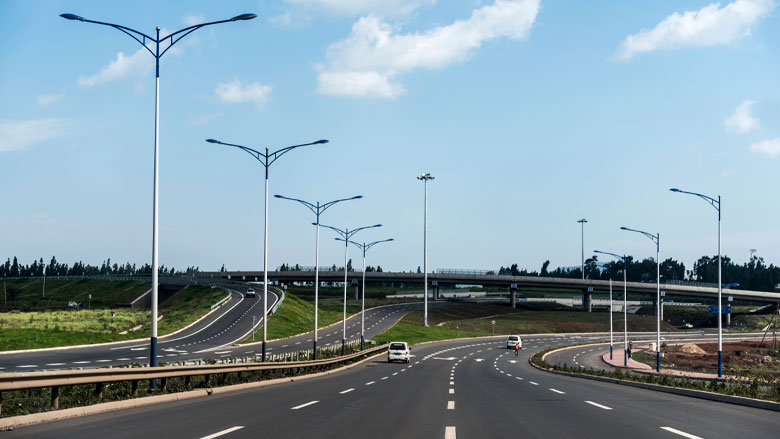
The Modjo–Hawassa Expressway is Ethiopia’s second major toll road and the first expressway built to international standards, extending south of Addis Ababa. Spanning 202 kilometers, it connects growing urban and industrial centers—Modjo, Batu, Shashamene, and Hawassa—forming a strategic corridor for domestic trade and cross-border logistics.
The project supports Ethiopia’s long-term transport development strategy, as articulated in its 10-Year Development Plan (2021–2030), which emphasizes the expansion of strategic economic corridors, improved logistics performance, and enhanced regional integration. With support from development partners and national investment, the expressway was designed to reduce transport costs, enhance economic competitiveness, and expand access to services for the more than 1.5 million people living along the corridor.
The Batu–Arsi Negele segment—financed through a $295 million credit from the World Bank—is now over 85% complete (March 2025). The expressway has been constructed to international quality and safety standards and features dual carriageways, grade-separated interchanges, dedicated wildlife crossings, and electronic tolling infrastructure to support sustainable maintenance.
In line with World Bank policy, the project was developed under comprehensive environmental and social safeguard frameworks. These standards helped mitigate construction risks, support resettlement planning, and ensure inclusive community engagement throughout implementation.