
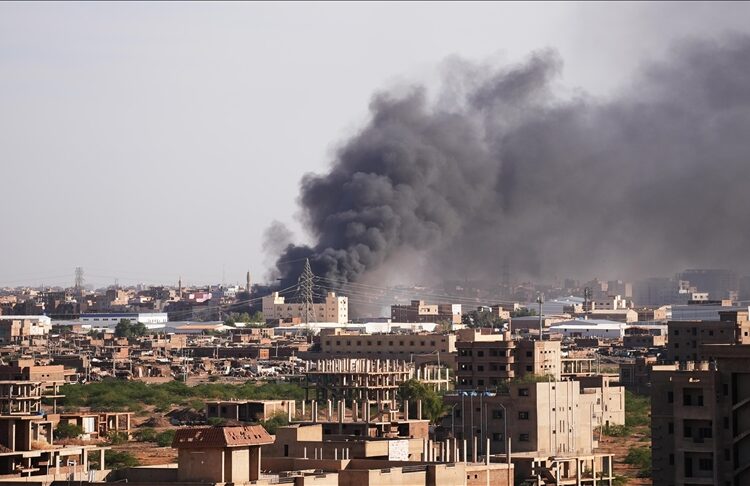
Rabat – More than 4,500 people have fled Sudan’s North Kordofan state amid intensified attacks by the paramilitary Rapid Support Forces (RSF), the Sudan Doctors Network reported today.
The surge in violence has compounded an already dire humanitarian crisis across Sudan’s western and central regions.
According to the medical organization, roughly 2,000 civilians have managed to reach El-Obeid, the state capital, after escaping Bara locality, recaptured by RSF fighters last week.
The remaining displaced residents “remain en route under harsh conditions and facing severe shortages of food, water, and shelter,” the network said, warning that North Kordofan faces a “deteriorating security situation.”
Bara, located about 60 kilometers north of El-Obeid, has been a flashpoint between the RSF and the Sudanese Armed Forces (SAF) for months.
In July, RSF fighters raided several villages in the area, killing nearly 300 people, including children and pregnant women. While the army briefly retook control in September, the RSF has since reasserted dominance.
The exodus from North Kordofan comes as the RSF continues a campaign of atrocities in El-Fasher, the capital of neighboring North Darfur.
Human rights monitors have documented mass killings of more than 1,500 people, summary executions, and widespread sexual violence.
Although more than 36,000 people have tried to flee the city, thousands remain trapped, with survivors describing bodies left unburied in the streets.
The ruinous civil war, now in its second year, began in April 2023 following a power struggle between General Abdel Fattah al-Burhan’s SAF and RSF commander Mohamed Hamdan Dagalo, known as Hemeti.
Since then, the RSF has seized control of more than one-third of the country. The civil war has killed tens of thousands and displaced over 12 million people —nearly a quarter of Sudan’s population — making it the world’s largest humanitarian crisis, according to the UN.
During an emergency UN Security Council session yesterday, Assistant Secretary-General for Africa Martha Pobee described the RSF’s takeover of El-Fasher as “a significant shift in the security dynamics,” warning that “the territorial scope of the conflict is broadening.”
The city was “already the scene of catastrophic levels of human suffering, and has descended into an even darker hell,” Tom Fletcher told the UN Security Council.
Sudan’s ambassador to the UN, Al-Harith Idriss Al-Harith Mohamed, condemned the RSF’s actions, calling them part of a “systematic pattern of killing and ethnic cleansing” that has unfolded since the group’s rebellion began.
Analysts fear the fall of El-Fasher could mark a turning point in Sudan’s fragmentation, raising the specter of another national split more than a decade after South Sudan’s secession.