
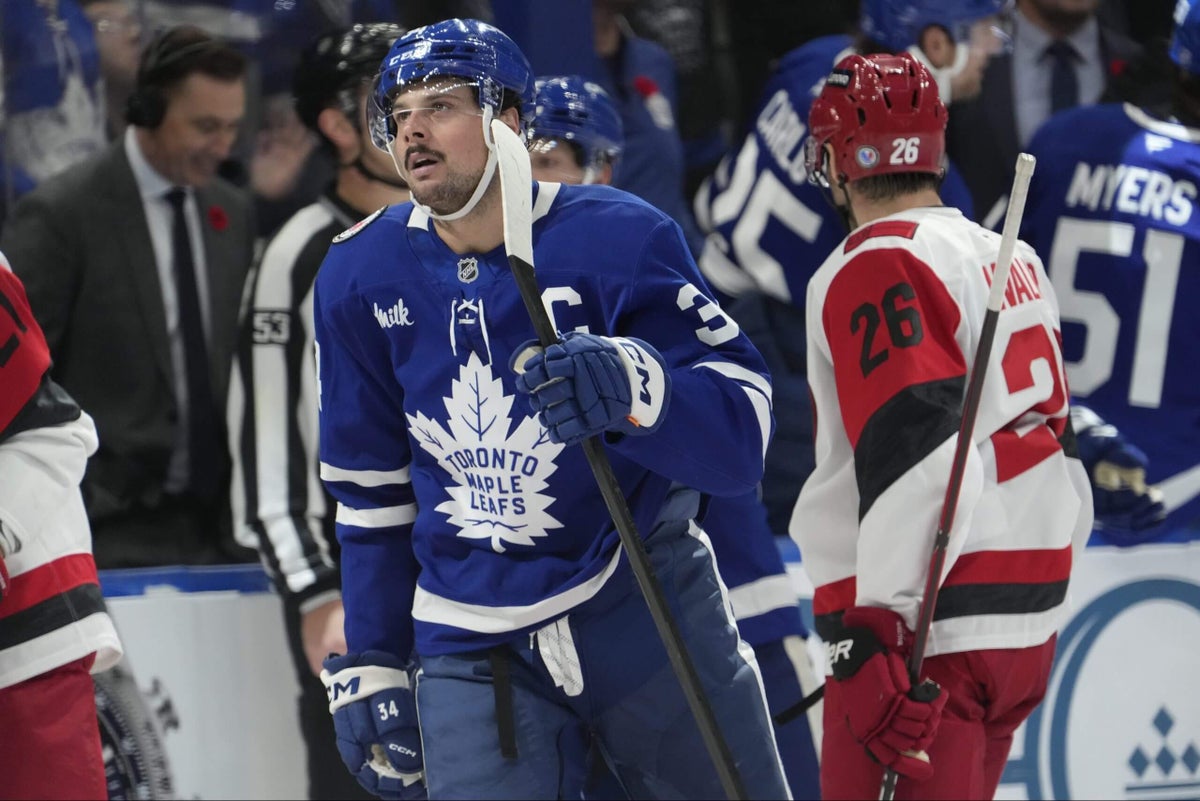
It’s starting to feel like it’s on the verge of becoming one of those seasons.
A nightmare kind of season when everything that can go wrong does go wrong for the Toronto Maple Leafs.
The catalogue of negatives is rather long at the moment, from a slow start and injury to the team’s best player, to major drop-offs in defending and goaltending, to a punch-less power play, to injuries and front-office decision making that’s stung.
It’s not too late for a turnaround. Sixty-five games remain.
But there’s a lot to fix right now.
The Auston Matthews situation
It wasn’t going great, by Auston Matthews’ standards, even before he walked down the tunnel to the dressing room at TD Garden and left Tuesday’s game against the Boston Bruins.
Matthews more resembled the player he was last season than the one who stomped all over the league like Godzilla the season prior and in many seasons before that.
And now he’s hurt again. (Is it a repeat of last season’s issue or something else?)
It’s not just his absence that’s concerning, even if it’s only a game or two. It’s the possibility that this latest injury will all but rule out the return to MVP form that both he and the team were searching for whenever he does return.
Adding William Nylander to Matthews’ right wing did seem to be opening some things up for him offensively. But there were also evident downsides defensively, a reminder of what this team lost when you know who chose to go to Vegas. And while Matthews still seems to be in the right spots on that side of the equation more often than not, a shrewd and smart defender still, he no longer swipes pucks away from opponents with ease.
It’s not nearly as worrisome as the drop in goal production, but the sustained dip in takeaways from the dominant years is troubling no less. He used to steal pucks from guys like they were beer leaguers.
Matthews’ takeaway rate
SeasonTakeaways/60
2019-20
3.2
2020-21
2.5
2021-22
3.7
2022-23
2.7
2023-24
3.0
2024-25
1.3
2025-26
1.2
Because the Leafs are spending so much time defending, Matthews hasn’t had the same opportunities to generate offence as he did in earlier years. From shots to scoring chances to high-danger attempts to expected goals, the Leafs have never generated this little with Matthews on the ice with five a side.
Leafs 5-on-5 production with Matthews
Per 60 minsThis seasonSeason rankBest season per 60
Shots
29.1
Worst
38.6
Scoring chances
26.3
Worst
41.9
HD attempts
11.0
Worst
17.0
Expected goals
2.7
Worst
3.7
The offensive system
Craig Berube continues to lean on Matthews for a lot of defensive-zone draws. And there are moments when the Leafs coach hasn’t turned his line’s way in offensive spots when he could have.
For instance, after a strong shift by John Tavares’ line procured the Leafs an offensive-zone draw in the first period on Tuesday night, Berube turned not to Matthews’ line to close the deal but to the trio of Sammy Blais, Steven Lorentz and Max Domi.
The Bruins made it 3-1 a few minutes later.
Berube doesn’t always stuff his advantage down an opponent’s throat like his predecessor, Sheldon Keefe, used to.
There’s no longer any getting around the fact that the head coach’s offensive system — low to high — might be partly to blame for Matthews’ goal-scoring drop-off, not to mention the team’s inability to sustain offensive-zone pressure.
An emphasis on point shots can result in chaos around the opposition net, but it can also result in blocked shots, missed shots and/or pucks that are otherwise turned over.
A lot of one-and-done then for the Leaf attack.
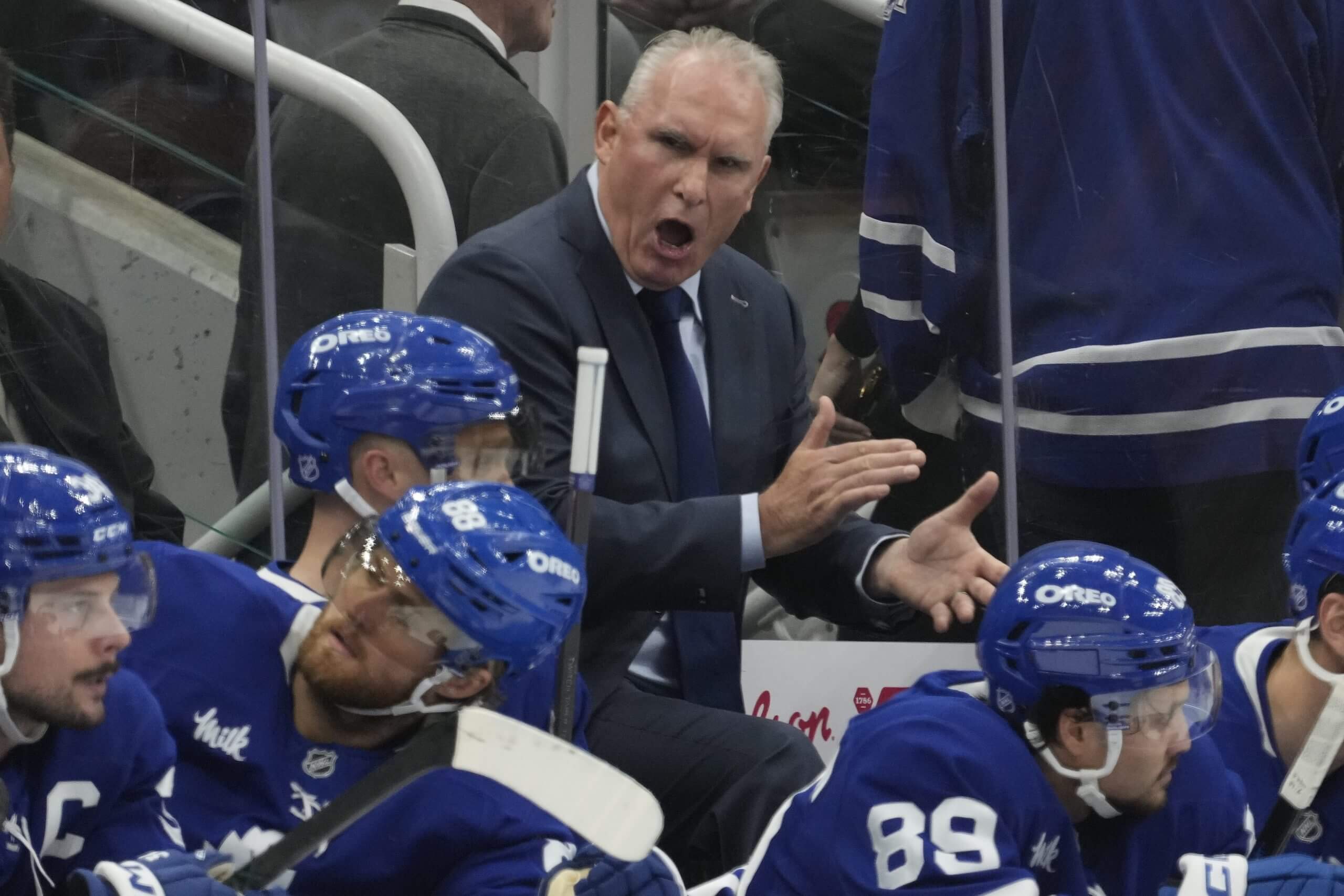
Craig Berube is trying to get his team moving in the right direction. It hasn’t worked so far. (John E. Sokolowski / Imagn Images)
Matthews has often been left to hunt for tips around the net, hardly ideal for his skill set.
The Leafs had issues controlling play last season, and those issues have only been magnified this fall amid the disappearance of elite goaltending. Only the conference-worst Buffalo Sabres give up more attempts on net than the Leafs.
Troubles in the crease
Anthony Stolarz has already surrendered three goals or more 10 times. That happened only 12 times for him last season.
Has it simply been hard-hitting regression for the 31-year-old goalie the Leafs extended before the season? The result of a busier workload for, until last season, a career backup? A goaltender under too much siege night after night?
It’s probably been a little bit of everything.
Not having Joseph Woll for the first five weeks of the season obviously didn’t help matters.
Management was put in a difficult spot when Woll left the team shortly after training camp began. Ultimately, choosing Cayden Primeau over James Reimer (among others available on waivers) backfired.
Primeau won two of his three starts but performed so poorly that the team couldn’t trust him to play more. That spurred more action for Stolarz, which spurred, at least in part, a dip in performance and now an injury.
Even at 37, Reimer likely would have been a more effective stopgap. Unlike Primeau, Reimer has been a solid NHL goalie for a long time, just last season even, when he stopped seven goals more than expected across 22 games for a bad Buffalo team.
The Leafs downplayed the severity of the injury that prompted Stolarz to leave Tuesday’s game. At minimum, he’s worn down and should fill only a tandem goalie’s workload when he returns.
Even if Woll can’t reach last season’s level, he’s at least someone the coaching staff will feel comfortable playing regularly.
Too many leaks
It doesn’t matter who is in goal if the Leafs can’t find a way to tighten up defensively.
“We gotta get back to where we’re not giving up odd-man rushes,” Berube said this week.
Priority one for that: “Don’t turn pucks over.”
“For me,” Berube said, “the forwards getting caught in the offensive zone, three guys, and giving up odd-man rushes is not good for our D or our goalies. That’s one area that we can be better at for sure.”
He’s also looking for more urgency in puck battles and more plays, as a result, that die quicker in the defensive zone.
Berube said he believes he has the buy-in of the group, but the results haven’t yet followed in any meaningful or lasting way.
Is that because this group can’t do it — whether because of the abilities of the personnel, Berube’s system or both? Or is it because they won’t do it? Because the coach’s message isn’t getting through for some reason.
If management deems it more of the latter, Berube’s job could eventually be in jeopardy, if it isn’t already.
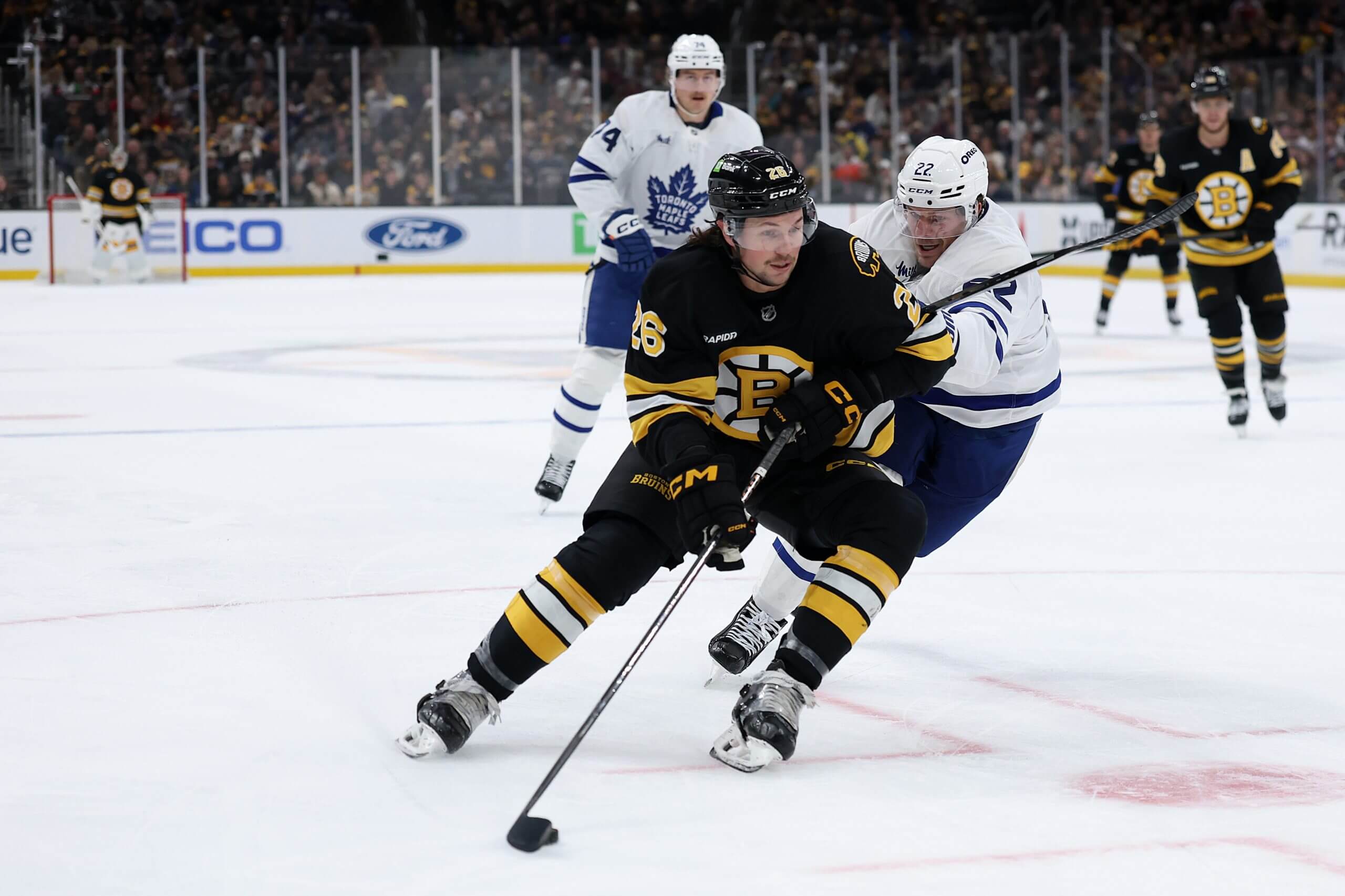
The Leafs have struggled to defend all season. (Maddie Meyer / Getty Images)
The Leafs surrendered a lot of shot attempts last season. The quality of those attempts, as well as the quantity, has gone up this season. Does the swap of Lane Lambert for Derek Lalonde, in the direction of defensive coverage, have anything to do with that?
The Leafs need their forwards to do more to help a crew on defence that’s leaking right now with Chris Tanev.
Not unlike the stretch a few seasons ago when the team was without its three best defenders — Jake Muzzin, TJ Brodie and Morgan Rielly (as well as starting goalie Ilya Samsonov) — and still managed to defend at a high level. Or past stretches without Matthews.
One suggestion from Nicolas Roy came in regard to the execution of cleaner breakouts.
“Give (the defencemen) more options,” Roy said. “I feel like sometimes we’re a little too far, especially in the neutral zone.”
Berube hasn’t just implied but said flat out that his team as a whole needs to make keeping pucks out a bigger priority. It’s on the coach to ensure that happens. The fact that it hasn’t happened with any regularity, despite Berube’s repeated pleas, is worrisome.
The Leafs piled up wins playing heavy hockey last season, with underlying results hardly befitting a contender. They did so on the strength of not just terrific goaltending but a quick-strike offence that included a five-forward power-play unit that became almost impossible to stop.
One of those forwards left in free agency and Marc Savard, the assistant coach who runs the power play, has struggled to find an alternative that works.
There have been encouraging hints recently. Cleaner breakouts and better looks from the flanks for Matthews and Nylander.
A top-10 power play is almost a must for any kind of sustained turnaround. All the more so with the penalty kill perhaps due for a dip, which may have started in Boston.
Personnel issues
Whether this team is deep enough to withstand lesser goaltending and key injuries remains to be seen.
Philippe Myers has been exposed of late. And attempts to prop him up and balance the defence pairs have failed so far.
In all fairness, it’s hard to identify an obvious solution in Tanev’s absence.
Jake McCabe has struggled in his move back to the right side and it’s asking a lot, too much, to have Simon Benoit defend top lines alongside him. Five-on-five shot attempts are 73-35 in the McCabe minutes in the last three games.
The front office came out of last season knowing it needed more mobility and puck-moving on the back end and didn’t get it.
That decision has been magnified already as a large but slow and stodgy defence has struggled to defend and get the team moving onto offence. The three primary forward additions have been so-so fits at best.
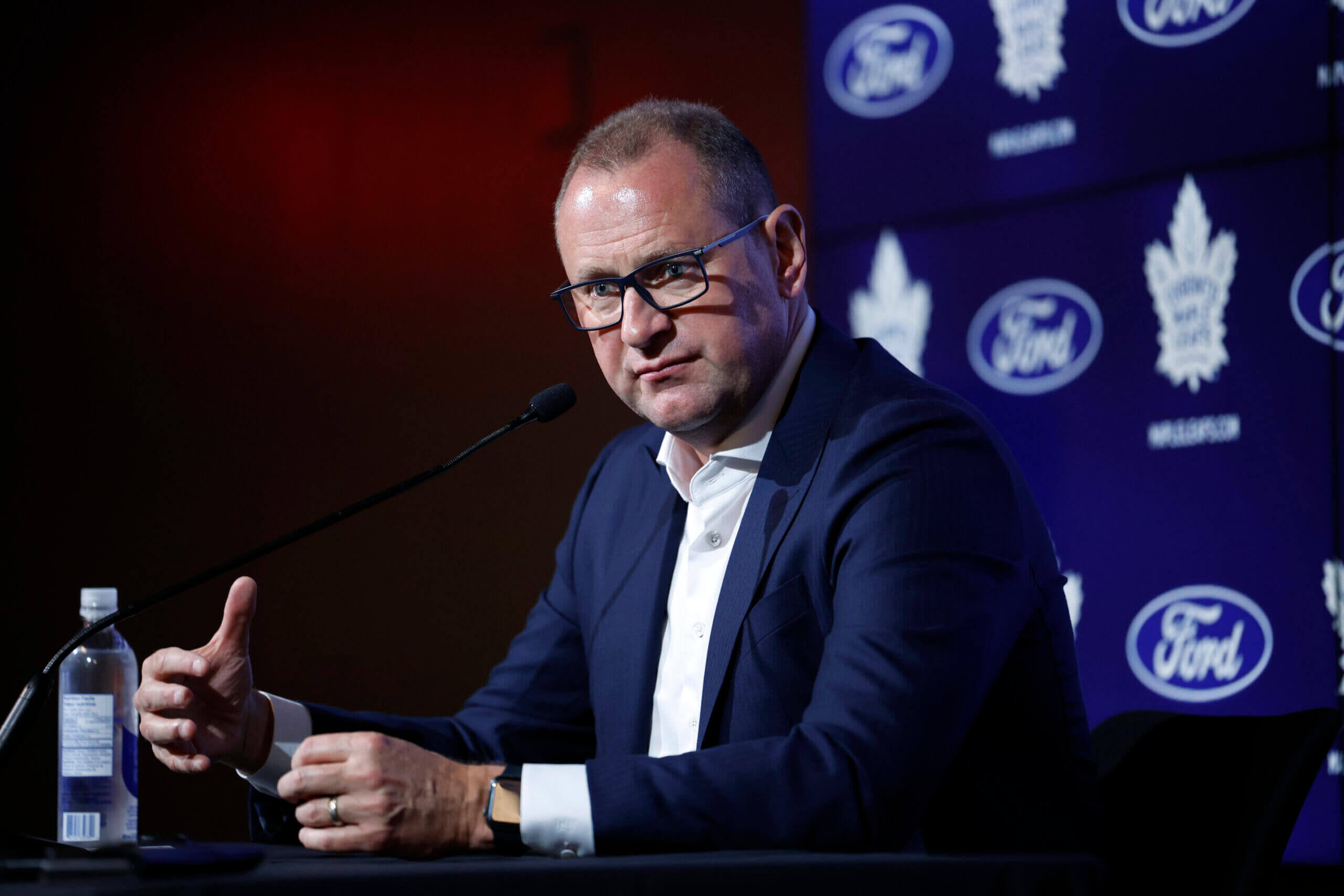
The pressure is building for Brad Treliving after a challenging offseason. (R.J. Johnston / Toronto Star / Toronto Star via Getty Images)
Meanwhile, the ramifications of last year’s trade deadline continue to linger.
Acquired at the cost of Fraser Minten and a 2026 first-round pick, Brandon Carlo hasn’t been the steady presence next to Rielly so far this season that the Leafs need him to be. It was Carlo who, with time to make a better play, threw the puck away that former Leaf Alex Steeves eventually beat Stolarz with, giving Boston a 3-1 lead on Tuesday.
The 28-year-old has enough of a track record to think that he can still turn things around, though the Leafs are asking more of him than the Bruins did in recent years.
The aftershocks of the Scott Laughton trade have been more problematic.
It’s not just that the Leafs sacrificed a prized first-round pick in 2027 to get him. It’s his inability to fill the position the team thought he could lead, eventually, to the still needless banishment of David Kämpf, who continues to count ($1.25 million) against the cap.
Laughton has barely played this season because of injuries and can still offer the Leafs a gusty skill set. But he might not even be an upgrade on Kämpf as a fourth-line centre and the Leafs dealt a first to get him — and now lack that pick for a more prominent addition.
Fixing the current roster to the point that the Stanley Cup feels legitimately possible again won’t be easy as a result.
General manager Brad Treliving has almost no prized futures left to deal and he might be reluctant now to deal the ones he’s got left — Easton Cowan, Ben Danford and a second-round pick in 2027.
Which might mean only minor tinkering.
The time had come for the Leafs to move on from Brendan Shanahan last spring. However, it’s hard to see how the front office is better off today with no team president for Treliving to lean on — and Keith Pelley, the head of MLSE, there to offer guidance instead.
The Leafs clearly need at least one more legitimate top-six forward and perhaps even another top-nine option who can defend and play with some pace.
That and the aforementioned help on the blue line.
A lot in other words. Too much, maybe.
It’s troubling that the Leafs are here at this point, languishing near the bottom of the Eastern Conference, despite Nylander looking like a threat to lead the league in scoring and Tavares brushing back Father Time.
The Leafs also boast one of the highest shooting percentages in the league, luck that may be bound to turn.
“Generally at this point, I think it’s a little bit early to have a really high level of concern,” Rielly told The Athletic before the most recent loss in Boston. “I think we believe in our group and we believe in each other and our staff. And everyone within the organization has belief in ourselves.”
Though he believed the parade of mistakes was “fixable and not hard to identify,” Rielly couldn’t say why they continued to happen so frequently.
“I don’t have the explanation,” he said. “But we want to fix it.”
— Stats and research courtesy of Natural Stat Trick, Hockey Reference, NHL EDGE, Puck Pedia and Evolving Hockey