
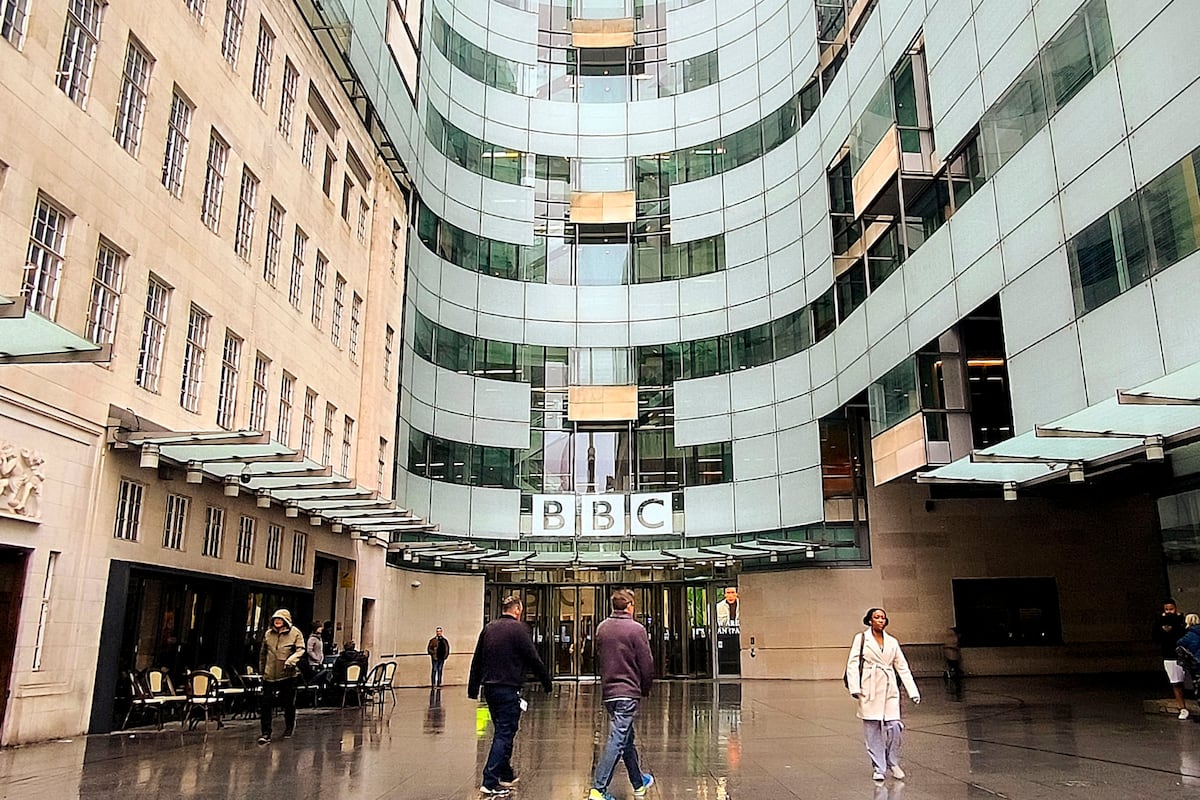
Everything related to Donald Trump is subject to exaggeration, whether it be praise or attacks. Many BBC supporters have this week called for the British public broadcaster to respond to the U.S. president in the same vein as the famous letter that the satirical magazine Private Eye sent in 1971 in response to threats of a defamation lawsuit by a businessman named James Arkell: “The nature of our reply is as follows: fuck off.” Since then, it has become common to joke, “I refer you to the case of Arkell v. Pressdram [Pressdram was the name of the magazine’s owner],” to defuse any frivolous legal threat against a media outlet.
The public broadcaster, however, has decided to take a more diplomatic approach to try to mitigate one of the biggest credibility crises it has ever faced. The BBC has apologized to Trump and removed the controversial documentary, which aired on the program Panorama, from its digital platform. Firstly, because the error did occur and had to be corrected. The misleading splicing of two audio clips from the U.S. president’s January 6, 2021 speech, which appeared to suggest a direct order to his supporters to storm the Capitol, ultimately led to the resignation of the BBC’s director general, Tim Davie, and the head of the news division, Deborah Turness.
But the network’s legal team insists that what happened was an “error in judgment,” and not manipulation stemming from the “ideological bias” that the BBC’s enemies, both internal and external, have attributed to it for decades. For this reason, they have refused to accept Trump’s demand for financial compensation for the “overwhelming financial and reputational harm” that the documentary may have caused.
“The BBC should shame their American broadcasters for their spineless capitulation by refusing to be bullied into abject apologies or donations to Trump’s presidential library. The corporation made an error. It has (belatedly) corrected it. It has expressed regret. Now move on,” argued Alan Rusbridger, the legendary editor of The Guardian, now at the helm of Prospect magazine.
Trump, who has turned politics into a negotiation game and a power struggle, has used the same tactic — threatening multimillion-dollar lawsuits — against all media outlets, law firms and academic institutions that annoy or criticize him. Some, like ABC and CBS, have agreed to pay enormous sums in out-of-court settlements to relieve the pressure.
The BBC case, however, has acquired a symbolic significance that transcends the U.S. sphere. The network enjoys an international prestige that is virtually unmatched, and, despite its mistakes, it commands the respect and admiration of millions of viewers, who consider it an example of serious and rigorous journalism amidst the morass of disinformation fueled by social media and so beloved by authoritarian politicians like Trump.
A lawsuit of dubious merit
The U.S. president reiterated late Friday that he will seek damages ranging from $1 billion to $5 billion (€860 million to €4.6 billion), and announced that he will file the lawsuit next week in Florida, where he legally resides. The reason given is that in Florida, the statute of limitations for defamation is two years, compared to just one year in the U.K. The controversial documentary aired in October 2024.
Trump also revealed that British Prime Minister Keir Starmer asked to speak with him, and that he planned to call him over the weekend. However, many legal experts doubt that Trump’s move will gain traction, because the constitutional and legal doctrine of the United States firmly protects freedom of the press.
In any case, the BBC has tiptoed around the political battle to focus on a practical and measured response to the White House’s challenge. The corporation’s legal team has summarized its reasons for rejecting the claim in five points.
First, the program Panorama was not broadcast on any U.S. channel. Second, the documentary did not harm Trump, who was re-elected president shortly afterward. Furthermore, they add, the splicing of the speech was done with the intention of shortening it, without any malice, they claim. It was, moreover, only 12 seconds within an hour-long report that contained many voices favorable to Trump. Finally, they point out, U.S. law protects any opinion on public or political matters.
“The BBC offered an apology and a retraction. This was right and proper, given the breach of broadcasting standards. The BBC should not defend the indefensible. When mistakes are made apologies and retractions should follow,” wrote David Allen Green, former legal correspondent for The New Statesman magazine. “The BBC, however, has refused to pay any damages, either of one billion dollars or at all. This also is right and proper.”
The BBC’s measured response to Trump’s campaign could ultimately prove a boon for the network, which needs to bolster its reputation more than ever. The U.K.’s conservative media and right wing have been targeting it for decades. Previous right-wing governments, such as Boris Johnson’s, threatened to withdraw its public funding and filled its board with like-minded directors, such as Robbie Gibb, a well-known ultraconservative, who have worked tirelessly to undermine the broadcaster’s image.
Mistakes have occurred — more or less exaggerated by critics — such as the clumsy editing of Trump’s speech, or the recent broadcast of a documentary about Gaza where it was concealed that one of the children narrating the situation in the Gaza Strip was the son of a Hamas leader. And the BBC has corrected them. That is also part of a media outlet’s credibility. Many friendly voices have denounced the crisis this week as an excessive and unfair response to the coordinated campaign of attacks against the corporation waged by the British right wing and Trump’s team, and have welcomed the public broadcaster’s measured yet firm response.
Sign up for our weekly newsletter to get more English-language news coverage from EL PAÍS USA Edition