
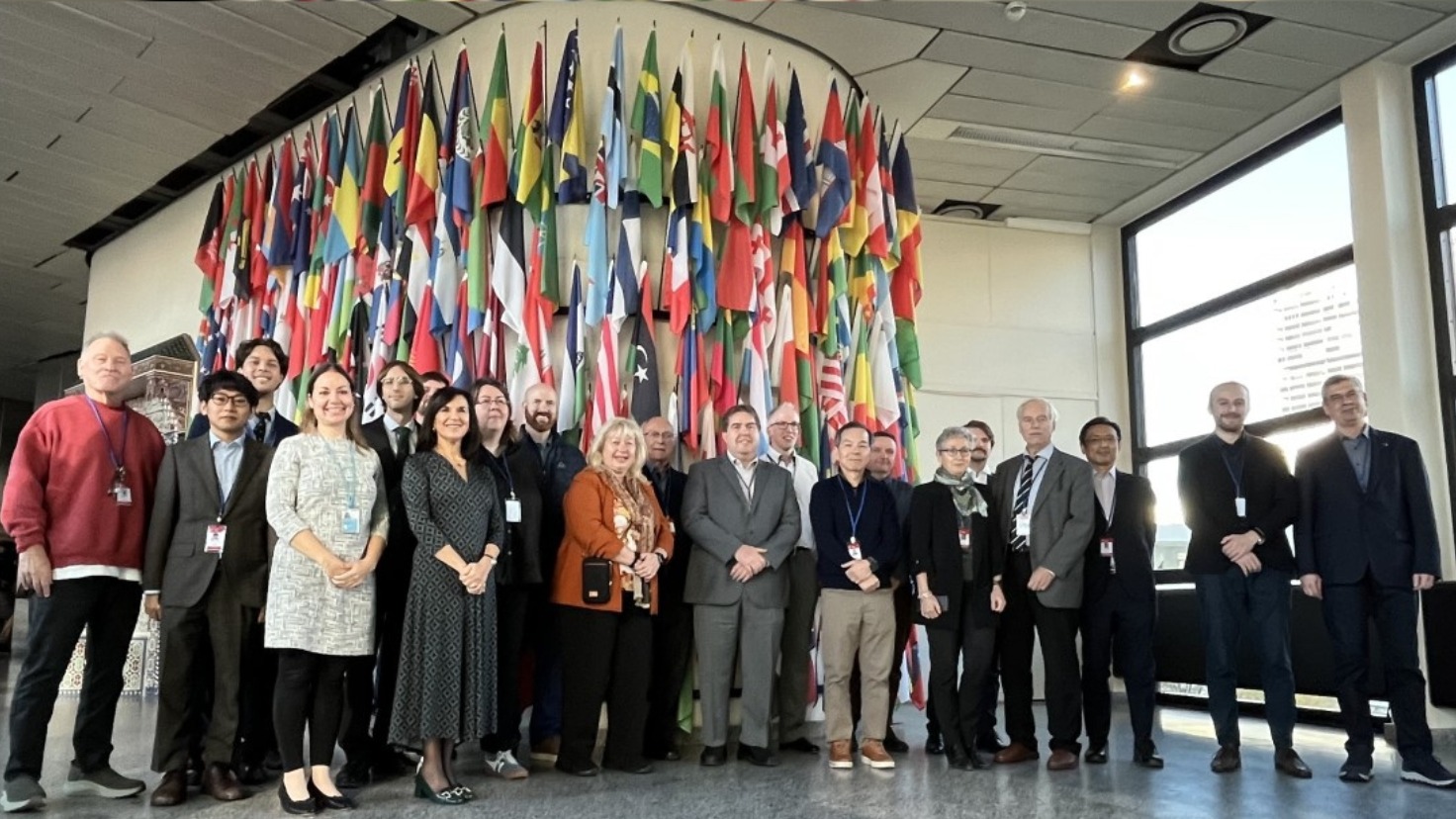
Expertise in molten-salt reactor (MSR) fuel-cycle science has reached a pivotal moment. A week-long workshop, organised by the International Atomic Energy Agency (IAEA), the Nuclear Energy Agency (NEA) and the European Commission Joint Research Centre (EC-JRC), took place at the IAEA in Vienna, Austria, on 3-7 November 2025. The event aimed to harmonise technical language and classification for MSR fuel-cycle options. Reactor physics specialists, chemistry and fuel-cycle researchers, industry vendors, representatives from standardisation bodies and international organisations contributed to a co-ordinated effort to structure the field through a unified taxonomy and clear terminology.
The agenda centred on developing a shared classification of fuel-cycle options specific to liquid-fuel MSRs, covering fluoride and chloride salt systems in open versus closed fuel cycles, and drafting a glossary of terms to ensure consistent communication across research and development (R&D), regulation and deployment communities.
Key workshop outcomes
Through multiple working sessions, participants developed a draft taxonomy for MSR fuel-cycle options, covering various options such as once-through or multiple recycling fuel cycles for moderated and fast fluoride-based and fast chloride-based MSRs.
Over 20 technical presentations were delivered, spanning reactor physics, salt chemistry, separation technologies, waste-management pathways and standardisation challenges.
Working sessions also focused on alignment of terminology between MSR-specific fuel-cycle concepts, identifying overlaps and divergence.
Contributions from industry and standards organisations featured vendor-driven fuel-cycle architectures, safeguards perspectives and proposals for International Organization for Standardization / International Electrotechnical Commission (ISO/IEC) alignment on terminology.
Final conclusions of the workshop will be captured in a technical document scheduled for publication in 2026, encapsulating the taxonomy, glossary and recommendations for future R&D and regulatory actions.
Findings of this workshop will also provide additional input and support to the NEA Critical EvAluation of fuel Management during and after MSR operation (CREAMM) activity.