
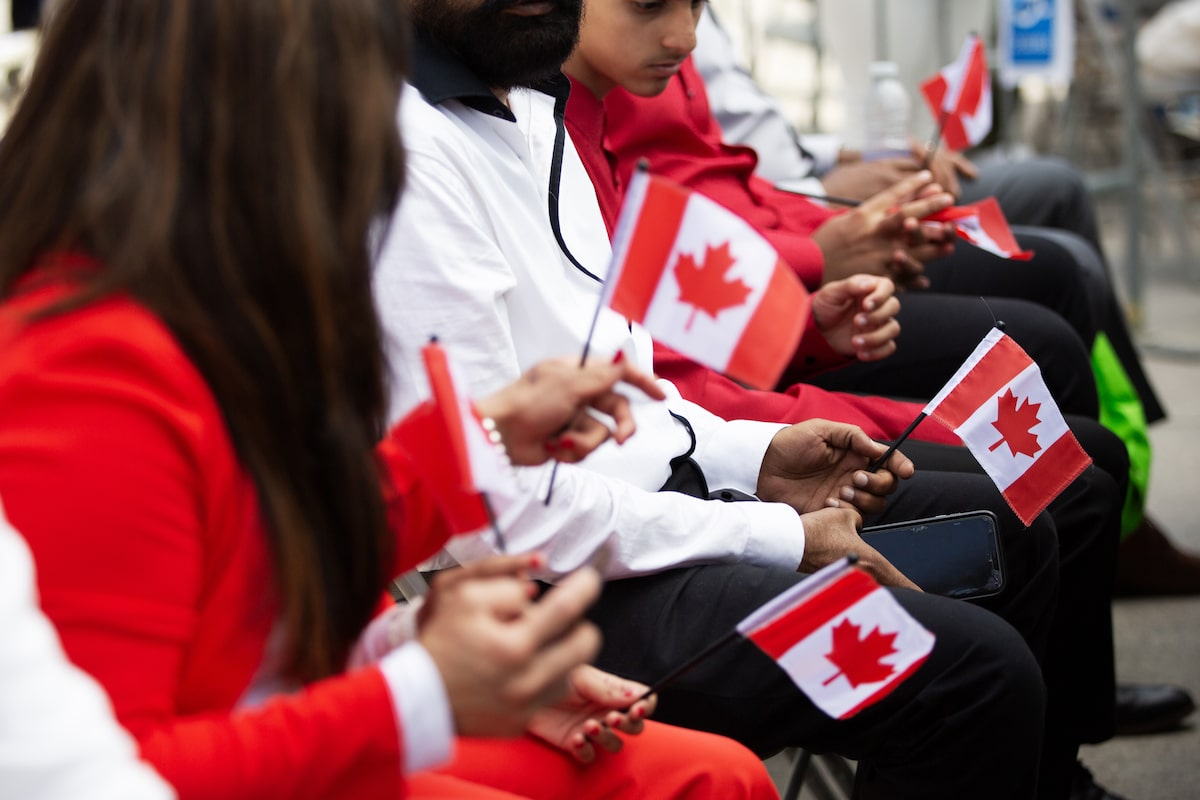
‘Lost Canadians’ refers to people who were born outside of the country to Canadian parents who were also born in another country.Abhijit Alka Anil/The Globe and Mail
A bill allowing Canadians born outside the country to pass on their citizenship to future generations born abroad gained royal assent on Thursday, after years of parliamentary and judicial battles.
The legislation, which cleared its final parliamentary stage in the Senate Wednesday night, reinstates rights of Lost Canadians and reverses 2009 changes made to the Citizenship Act by Stephen Harper’s Conservative government, which stripped descendants of Canadians born abroad of their automatic right to citizenship.
The government predicts tens of thousands of Lost Canadians could benefit from the change, but the Parliamentary Budget Officer estimates about 115,000 could gain citizenship.
The Liberals introduced a bill in the last Parliament to restore citizenship to “Lost Canadians.” But it was one of more than 20 bills stopped in its tracks by the proroguing of Parliament ahead of the federal election.
The Editorial Board: There can’t be two types of Canadian citizen
After the election, the Liberals reintroduced Bill C-3 so they could comply with an Ontario court decision in December, 2023, that ruled it is unconstitutional to deny citizenship to children born overseas to Canadians also born outside the country.
The new law requires a Canadian parent born abroad to demonstrate substantial ties to Canada, and to have spent 1,095 days (the equivalent of three years) in the country, before they can pass on citizenship to a child born outside Canada.
Bill C-3 was backed by the NDP but the Conservatives and Bloc Québécois attempted to introduce more stringent criteria for inheriting citizenship, including prior security checks and language tests, to ensure the new Canadians can speak English or French.
The Conservative changes in committee were however reversed by the Liberals with the backing of the NDP on the floor of the House of Commons.
Senators faced calls to amend the bill this week, so parents who adopt children from abroad have the same rights to pass on citizenship as those adopted from within Canada.
Lawyers and politicians warned that the distinction in the rules – which requires those adopted from abroad to pass a test of a substantial connection test to Canada before passing on their citizenship – could prompt a legal challenge.
Robyn Urback: The Conservatives are right: Canada should end birthright citizenship
But senators, despite expressing misgivings about the distinction at a lengthy committee hearing earlier this week, did not amend the bill amid fears that it could hold up its passage into law.
The bill gained royal assent on Thursday, which was welcomed by Don Chapman, the long-time campaigner to restore Lost Canadians’ citizenship rights. He said the new law was the result of decades of battles in Parliament.
“Today is international day of the child – how ironic this is the day we got royal assent,” he said.
Among the Lost Canadians who gained Canadian citizenship this week was soccer player Alfie Jones, the newest member of Canada’s national soccer team. The Bristol-born defender who plays for second-tier English team Middlesborough on Monday took the citizenship oath in time to play for Canada on Tuesday in a pre-World Cup friendly match against Venezuela.
Mr. Jones’s application for Canadian citizenship was made possible because he had an Alberta-born grandmother.