
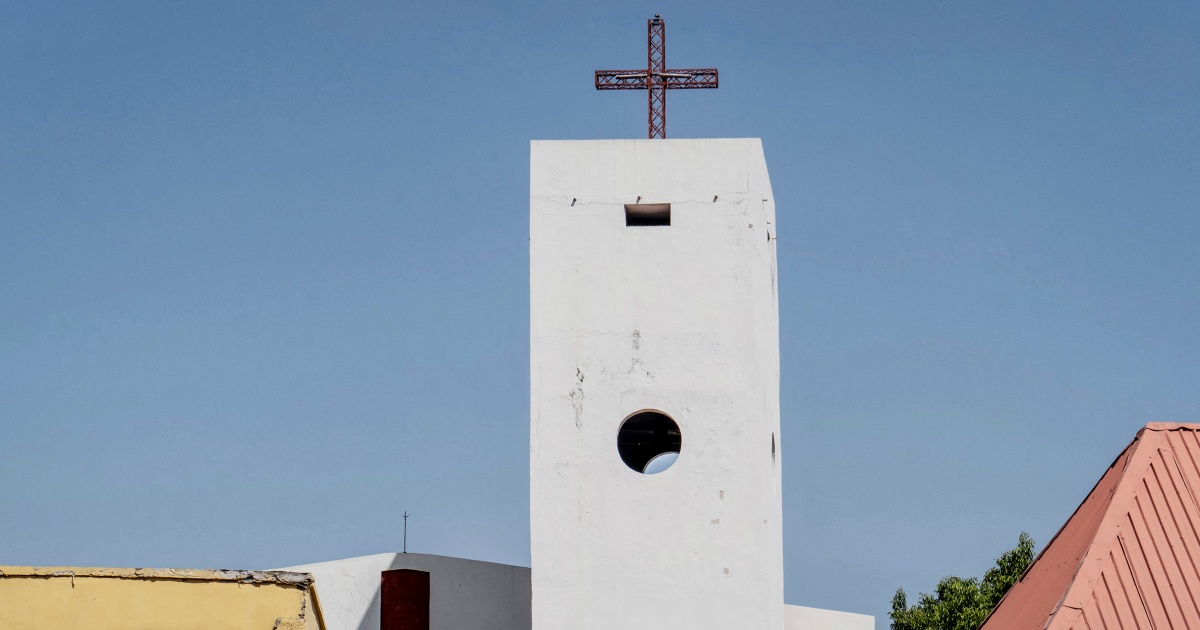
ABUJA, Nigeria — A total of 303 schoolchildren and 12 teachers were abducted by gunmen during an attack on St. Mary’s School, a Catholic institution in north-central Nigeria’s Niger state, the Christian Association of Nigeria said Saturday, updating an earlier tally of 215 schoolchildren.
The tally was changed “after a verification exercise and a final census was carried out,” according to a statement issued by the Most. Rev. Bulus Dauwa Yohanna, chairman of the Niger state chapter of CAN, who visited the school on Friday.
He said 88 other students “were also captured after they tried to escape” during the attack. The students were both male and female and ranged in age from 10 to 18.
The school kidnapping in Niger state’s remote Papiri community happened four days after 25 schoolchildren were seized in similar circumstances in neighboring Kebbi state’s Maga town, which is 170 kilometers (106 miles) away.
No group has yet claimed responsibility for the abductions and authorities have said tactical squads have been deployed alongside local hunters to rescue the children.
Yohanna described as false a claim from the state government that the school had reopened for studies despite an earlier directive for schools in that part of Niger state to close temporarily due to security threats.
“We did not receive any circular. It must be an afterthought and a way to shift blame,” he said, calling on families “to remain calm and prayerful.”
School kidnappings have come to define insecurity in Africa’s most populous nation, and armed gangs often see schools as “strategic” targets to draw more attention.
UNICEF said last year that only 37% of schools across 10 of the conflict-hit states have early warning systems to detect threats.
A satellite image shows that the school compound is attached to an adjoining primary school, with more than 50 classroom and dormitory buildings. It’s located near a major road linking the towns of Yelwa and Mokwa.
Dauda Chekula, 62, said that four of his grandchildren, ranging in age from 7 to 10, were among the schoolchildren abducted.
“We don’t know what is happening now, because we have not heard anything since this morning,” Chekula said. ”The children who were able to escape have scattered, some of them ran back to their houses and the only information we are getting is that the attackers are still moving with the remaining children into the bush.”
The statement by the secretary to the Niger state government said that the abduction occurred despite prior intelligence warning of heightened threats.
“Regrettably, St. Mary’s School proceeded to reopen and resume academic activities without notifying or seeking clearance from the State Government, thereby exposing pupils and the staff to avoidable risk,” it read.
Umar Yunus, a Papiri resident, said there were only local security arrangements and no official police or government forces securing the school at the time of the attack on Friday.
The Catholic Diocese of Kontagora said in a statement that a security staffer was “badly shot” during the attack.
Authorities, meanwhile, closed 47 of the country’s federal unity colleges that are mostly in conflict-battered northern states. The unity colleges — a group of elite government schools with attendance drawn from across the country — are to be closed immediately, according to a circular issued by Nigeria’s Federal Ministry of Education.
Spate of abductions
The abductions took place days after gunmen on Monday attacked a high school and abducted 25 schoolgirls in the neighboring Kebbi state, in Maga, around 170 kilometers (105 miles) from Papiri. One of the girls later escaped and is safe, the school’s principal said.
In a separate attack on Monday in Kwara state, which borders Niger state, gunmen attacked a church, killing two people. During the attack, 38 worshippers were also abducted, Femi Agbabiaka, secretary of the Christ Apostolic Church, told The Associated Press on Friday. He said that the kidnappers are demanding a ransom of 100 million naira ($69,000) for each person taken.
Nigerian President Bola Tinubu canceled his trip to this weekend’s Group of 20 summit in South Africa over the recent events. Vice President Kashim Shettima will represent the president at the summit, the presidency said on X on Friday.
“We will use every instrument of the state to bring these girls home and to ensure that the perpetrators of this wickedness face the full weight of justice,” Shettima said during a visit to Kebbi state on Wednesday.
No group has claimed responsibility for the attacks in Niger and Kebbi state, but analysts and locals say gangs often target schools, travelers and remote villagers in kidnappings for ransom. Authorities say the gunmen are mostly former herders who have taken up arms against farming communities after clashes between them over strained resources.
At least 1,500 students have been abducted in the region since Boko Haram jihadi extremists seized 276 Chibok schoolgirls more than a decade ago. But bandits are also active in the region, and analysts say gangs often target schools to gain attention.
Nigeria was recently thrust into the spotlight after U.S. President Donald Trump singled the country out, stating that Christians are being persecuted — an allegation that the government rejected.
While Christians are among those targeted, analysts say that the majority of victims of armed groups are Muslims in Nigeria’s Muslim-majority north, where most attacks occur.
Community upset
Analysts and residents blame the insecurity on a failure to prosecute known attackers, and the rampant corruption that limits weapons supplies to security forces while ensuring a steady supply to the gangs.
Eze Gloria Chidinma, 27, a Lagos-based influencer, also known as “Riaz Kitchen,” told The Associated Press her sister was able to escape the school during the attacks by jumping a fence.
Chidinma said it’s not the first time her family has been affected by the rampant kidnappings in the country.
“My mother and my older brother were kidnapped last year. We called security, we called the police, and they just said there is nothing they can do,” she said, noting the family had to pay “a huge amount of money” to rescue them.
“My message to the authorities right now is to think about the people. Your job is to protect lives and properties. People’s lives should matter to you,” Chidinma added.
Yohanna Buru, a pastor and head of the Peace Revival And Reconciliation Foundation, an organization focused on interfaith dialogue, called on authorities to increase security around schools in areas affected by the security crisis.
“If the government was doing enough, then rampant kidnappings all over the country would not have happened,” he said. “It’s as if they don’t care about the future of our children.”