
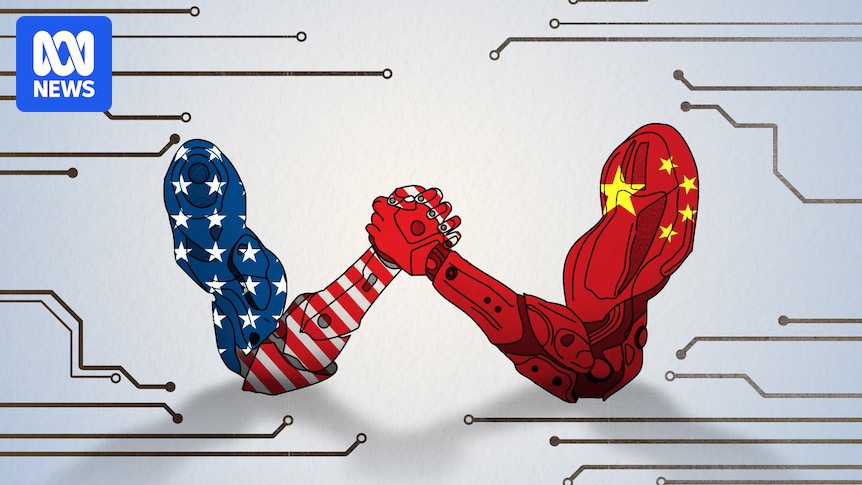
The Trump administration risks squandering America’s edge over China in Asia, with signs emerging that US power in the region could be ebbing, research has shown.
The Lowy Institute’s 2025 Asia Power Index has found that the United States remains the top power in Asia, with “resources and influence that will survive any single administration”.
But China has closed the gap, with this year’s index finding that tariffs have damaged US diplomatic influence in Asia, while Beijing continues to erode America’s military advantage in the region.
Meanwhile, Australia’s relative power is slipping.
It has dropped to sixth position, with Russia overtaking it to become the fifth most powerful nation in the region, despite the federal government’s success inking a range of agreements with Pacific and South-East Asian nations.
The index says that Russia’s economy has managed to grow slightly despite the pressures imposed by Western sanctions, and that it has redoubled efforts to strengthen diplomatic ties with a number of South-East Asian countries while doubling down on its alliance with North Korea.
China and US running tight race for influence in South-East Asia
Australia has struck a host of landmark deals with countries in the region — including Nauru, Tuvalu, PNG and Indonesia — but Lowy Institute South-East Asia program director Susannah Patton said the real question was “whether Australia has the resources to make these partnerships meaningful”.
“Australia’s economy is becoming relatively smaller when compared to others in the region who are growing faster,” she said.
Ms Patton said while Australia had also announced significant investments in its defence forces, this has not yet been translated into the delivery of “tangible new military capabilities”.
“That means Australia is going backwards, relatively, at the same time that our ambition is rising,” she told the ABC.
“This is a long-term challenge — will we have the resources that we need to follow through on the security partnerships we’re signing?”US, China remain top powers in region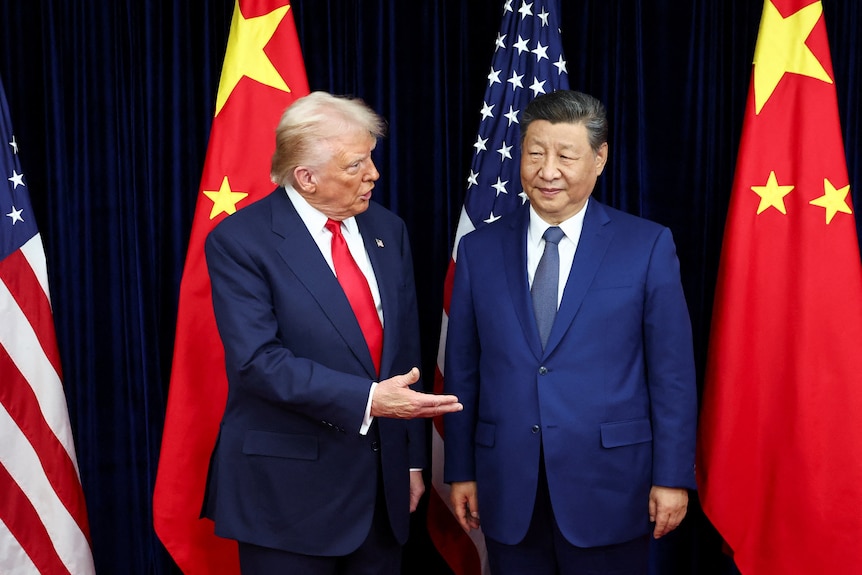
Donald Trump’s America is losing its advantage over Xi Jinping’s China in the Asia region. (Reuters: Evelyn Hockstein)
The 2025 index says that China and the US remain far more powerful than any other country in Asia, with a massive lead over the two next most powerful nations, India and Japan.
Ms Patton said the Trump administration’s sweeping tariffs on Asian nations had undermined America’s diplomatic standing, and that the US was also facing “longer-term structural challenges to its power in Asia”.
China chipping away at US military might in Asia
“The US economy is growing, but it isn’t growing as fast as some of the rapidly growing economies in Asia, like China, which poses a long-term challenge to US presence in Asia,” she said.
“That’s gone hand in hand with China’s rapid military modernisation which is challenging US military dominance in Asia — China has steadily eroded that US lead since 2018.”
The index also said China “appears well-prepared and confident in its responses to US economic coercive policies, retaliating with its own tariffs and export controls”.
“Beijing has also successfully positioned itself to regional countries as a reliable partner opposing protectionism and unilateralism, benefiting from uncertainty about the Trump administration’s approach to Asia,” it said.
However, China has not succeeded in building any meaningful defence or military ties with other Asian nations, with the US maintaining “clear dominance” on that front with its extensive network of military alliances and defence partnerships across Asia.