
More than 24 hours after the first tower caught fire, the Hong Kong residential complex was still burning. Fire crews blasted water from cherrypickers at the mid-level floors, but above that, the fires were roaring out of reach.
Wang Fuk Court, in the northern Hong Kong district of Tai Po, was home to about 4,800 people. The eight-tower complex had been under renovation for years, clad in bamboo scaffolding and mesh.
On Wednesday afternoon, for reasons that are under investigation, one of them caught fire. The blaze spread inside the building, and then across to neighbouring towers. By evening, seven buildings were ablaze, and the death toll had already surpassed Hong Kong’s previous worst ever building fire disaster.
At least 65 people have been killed, including one firefighter, and dozens injured. At least 55 were rescued but more than 250 are missing. Firefighters were still unable to reach the top levels of some of the 31-storey towers, although one elderly man was rescued alive from his high up apartment earlier in the day.
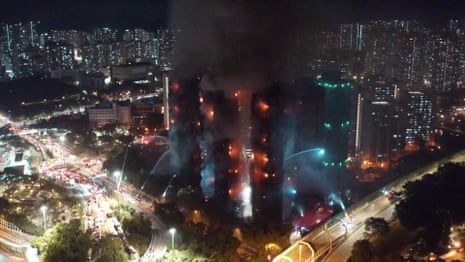 Aerial video shows scale of Hong Kong apartment complex fire
The air was still filled with acrid smoke, which reminded some of how the city smelled during the worst violence of the 2019 protests. A brief panic broke out when a flickering light in the window of a different block was mistaken for another fire, and onlookers exchanged nervous looks when the breeze picked up: Wednesday’s fire was fanned by a stiff winter northerly, said James Tang, who lives in one of the towers.
Tang was not home when the building caught fire. He received a call from his brother-in-law who saw it from across the river. He rushed home but was stopped from entering.
“I watched from the outside as the building burned,” he said, speaking to the Guardian outside a local primary school, which is one of the shelters for evacuated residents.
Firefighters have been unable to reach the top levels of some of the 31-storey towers. Photograph: Maxim Shemetov/Reuters
Tang’s friends in the complex were not among the missing, he said. “But a lot of people died, especially the fireman. We are very sorry about this. The fireman tried to save us from the fire, tried to stop the fire and then he lost his life.”
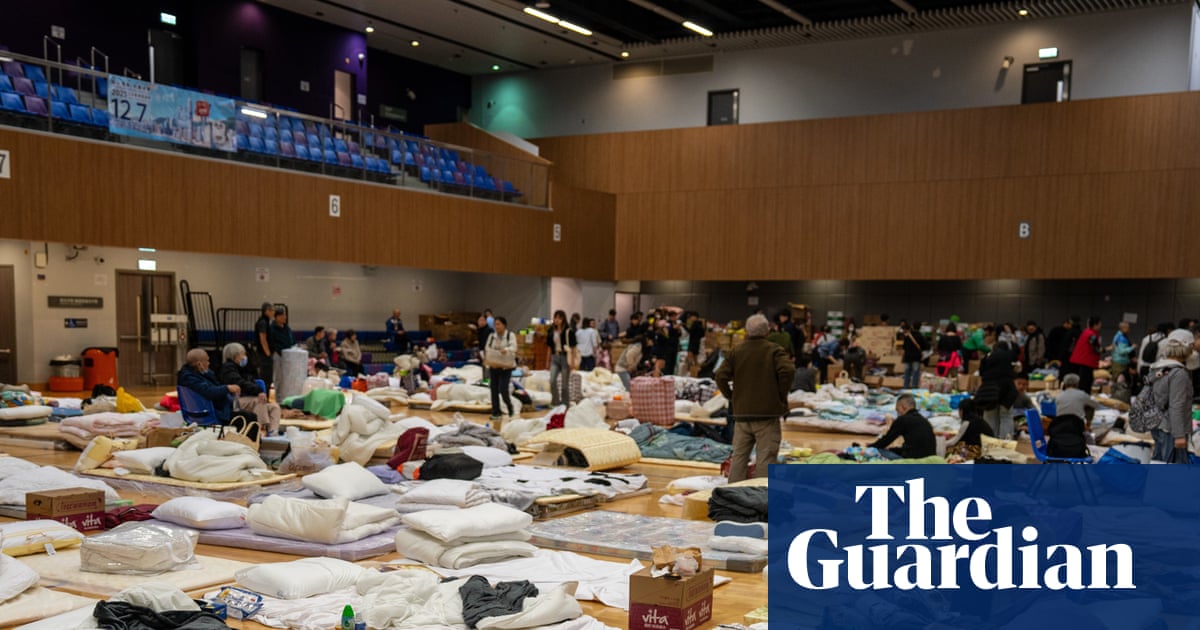
Nearby, volunteers had set up a market of donated clothes, food and essentials for the now homeless residents of Wang Fuk Court and the hundreds of others temporarily evacuated from neighbouring buildings.
Volunteers have set up a market of donated clothes, food and essentials for people who are now homeless or have been evacuated from neighbouring buildings. Photograph: Ryan KW Lai/Shutterstock
Connie Chu had just returned home from grocery shopping to the apartment she had lived in for 42 years when she saw a mass of fire trucks. A neighbour told her to leave, even though none of them had heard a fire alarm.
“There should have been [an alarm],” she said. “When I came out I saw one building on fire, it was a horrible, huge fire. We were so worried.”
Chu and her neighbours were lucky – their building was the only one of the complex’s eight not to burn. “I have a friend who lives in one of the other buildings and she’s in hospital. It seems quite serious. I spoke to her on the phone yesterday, she said a lot of smoke had entered her home.”
The community is reeling, and some are angry: police suspect the fire was caused by “grossly negligent” action. Hong Kong police have alleged unsafe scaffolding and foam materials used during maintenance work may have been behind the rapid spread of the fire, and three people from the related construction company have been arrested. The Independent Commission Against Corruption has already announced a taskforce.
There have been long-running complaints about the renovation, including allegations the alarms were switched off months ago by construction workers, and that workers smoked on site. There have also been broader concerns about the safety standards for the mesh used on sites. A video being widely shared on Thursday shows a local council member setting fire to a piece of green construction mesh and watching it quickly melt and burn.
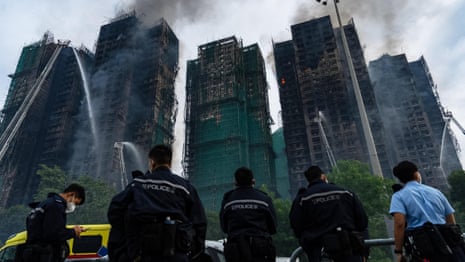 Three arrested as Hong Kong tower fire leaves dozens dead – video
By nightfall on Thursday, the surrounding area was still filled with people – emergency services, onlookers, neighbours, victims and their families. Outside a building where the deceased were being identified, people left sobbing, clutching at each other. Some wore blankets over their heads to avoid the cameras.
Pastor Samson Wong, from the Cumberland Presbyterian church, was waiting with a crowd of volunteers to give emotional and psychological support to the families who have lost people.
“They have enough material supplies, but they need emotional support,” he said.
Quick GuideContact us about this storyShow
The best public interest journalism relies on first-hand accounts from people in the know.
If you have something to share on this subject, you can contact us confidentially using the following methods.
Secure Messaging in the Guardian app
The Guardian app has a tool to send tips about stories. Messages are end to end encrypted and concealed within the routine activity that every Guardian mobile app performs. This prevents an observer from knowing that you are communicating with us at all, let alone what is being said.
If you don’t already have the Guardian app, download it (iOS/Android) and go to the menu. Select ‘Secure Messaging’.
SecureDrop, instant messengers, email, telephone and post
If you can safely use the Tor network without being observed or monitored, you can send messages and documents to the Guardian via our SecureDrop platform.
Finally, our guide at theguardian.com/tips lists several ways to contact us securely, and discusses the pros and cons of each.
Illustration: Guardian Design / Rich Cousins
Thank you for your feedback.