
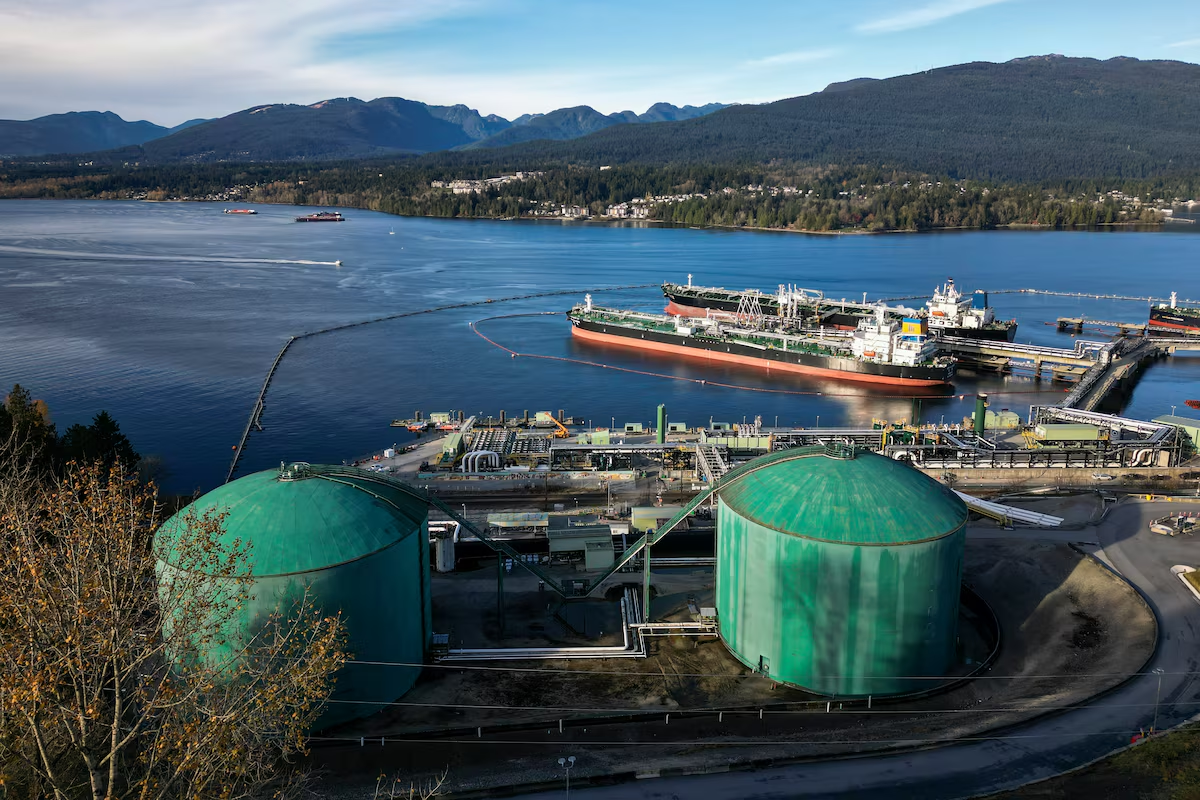
Crude oil tankers docked at the Westridge Marine Terminal in Burnaby, B.C., on Nov. 19.Jimmy Jeong/The Globe and Mail
B.C. Premier David Eby says he would be prepared to talk with Alberta and Ottawa about the prospect of a new oil pipeline, but only if the existing ban on tanker traffic off his province’s northern coast remains in place.
Prime Minister Mark Carney and Alberta Premier Danielle Smith signed a memorandum of understanding last week that, among other things, includes a potential exemption to the north coast tanker ban if a bitumen pipeline is eventually approved.
Mr. Eby has opposed lifting the tanker ban and also complained that he had been cut out of talks about the agreement. The Coastal First Nations, an alliance of nations on British Columbia’s north coast, have condemned the agreement and said they intend to fight it.
“If we can agree that the oil tanker ban is going to stay in place, then let’s have those conversations,” Mr. Eby said in an interview with CTV broadcast on Sunday.
“I think that would make life a lot better and easier in British Columbia in terms of our relationship with Coastal First Nations. [It] would definitely take down the temperature and maybe enable some creative solutions.”
Opinion: Ottawa risks billions in investments for a pipeline to nowhere
Mr. Eby said scrapping the ban would be a “grave mistake,” adding, “I think that the risk of an oil spill is really significant in terms of the economic harm.”
Alberta has long advocated for an oil pipeline to the north coast, an idea that was rejected by the government of former prime minister Justin Trudeau when it blocked the proposed Northern Gateway pipeline nearly a decade ago.
Ms. Smith has repeatedly called on Ottawa to repeal the tanker ban, and her province is now working with several companies on a potential proposal. The Alberta Premier has made it clear that her preferred route for a new pipeline would end on the north coast.
Carolyn Svonkin, a spokesperson for federal Energy Minister Tim Hodgson, said in an interview Sunday that it’s “not impossible” to approve a pipeline while still maintaining the tanker ban – if the proposed route ends somewhere not covered by the ban, such as in the Vancouver region.
She said the federal government plans to have talks with Alberta and B.C. on a path forward.
Opinion: A pipeline is just the beginning: More threats coming for Indigenous rights
Ms. Svonkin said that a route has yet to be decided for a potential pipeline. She added that “formal and robust consultation” with First Nations in northern B.C. would also take place.
She said maintaining a tanker ban was potentially feasible if the pipeline’s terminal is at a port where tankers are currently allowed, such as Trans Mountain Pipeline’s Westbridge marine terminal in Burnaby, near Vancouver, which already handles crude oil exports.
“Alberta has been clear that they would like it to go from B.C.’s north coast,” Ms. Svonkin said. “In particular, Prince Rupert would be their stated preference.”
She said she expected Alberta, as the federal government had done, had “noted the Premier’s comments, and this will be a point of discussion.”
“I’m sure they’ll be factoring it into their work as they proceed,” she added.
Mr. Hodgson met with Mr. Eby on Friday.
The B.C. Premier had previously expressed frustration about his province’s exclusion from negotiations between the federal government and Alberta on the memorandum of understanding.
Coastal First Nations in B.C. say they’re prepared to challenge pipeline projects in court
The agreement removes the oil and gas emissions cap, suspends clean electricity regulations and includes a commitment from Ottawa to enable the export of bitumen, a viscous oil product, from a deepwater port to Asian markets. The deal states this could include adjusting a 2019 law that prohibits oil tankers carrying more than 12,500 tonnes of oil from loading or unloading at ports along B.C.’s northern coast.
Ms. Smith’s and Mr. Eby’s offices did not respond to requests for comment on Sunday.
The route of the proposed pipeline, which will not receive federal funding, is expected to provoke intense debate.
Richard Masson, executive fellow at the University of Calgary’s School of Public Policy and former chief executive officer of the Alberta Petroleum Marketing Commission, said maintaining the tanker ban could mean the pipeline going to Vancouver, rather than Prince Rupert or Kitimat, further up the coast.
He said Prince Rupert’s deepwater port is closer to both Edmonton and the Asian markets, and is less congested than the Vancouver port.
“My understanding is that there are no other ports that could work,” he said.
Rather than a new pipeline, Mr. Eby has proposed increasing the amount of oil that could be shipped through the existing Trans Mountain pipeline. This could boost its capacity by about 40 per cent. The province has given the go-ahead for the Vancouver Fraser Port Authority to dredge the Second Narrows waterway to allow tankers to load more oil at the Trans Mountain marine terminal.
Ms. Svonkin said the final decision about a potential route for a new pipeline would need to follow studies and conversations with First Nations.
“You can’t do formal consultation on a project if you don’t know what the route is,” she said.