
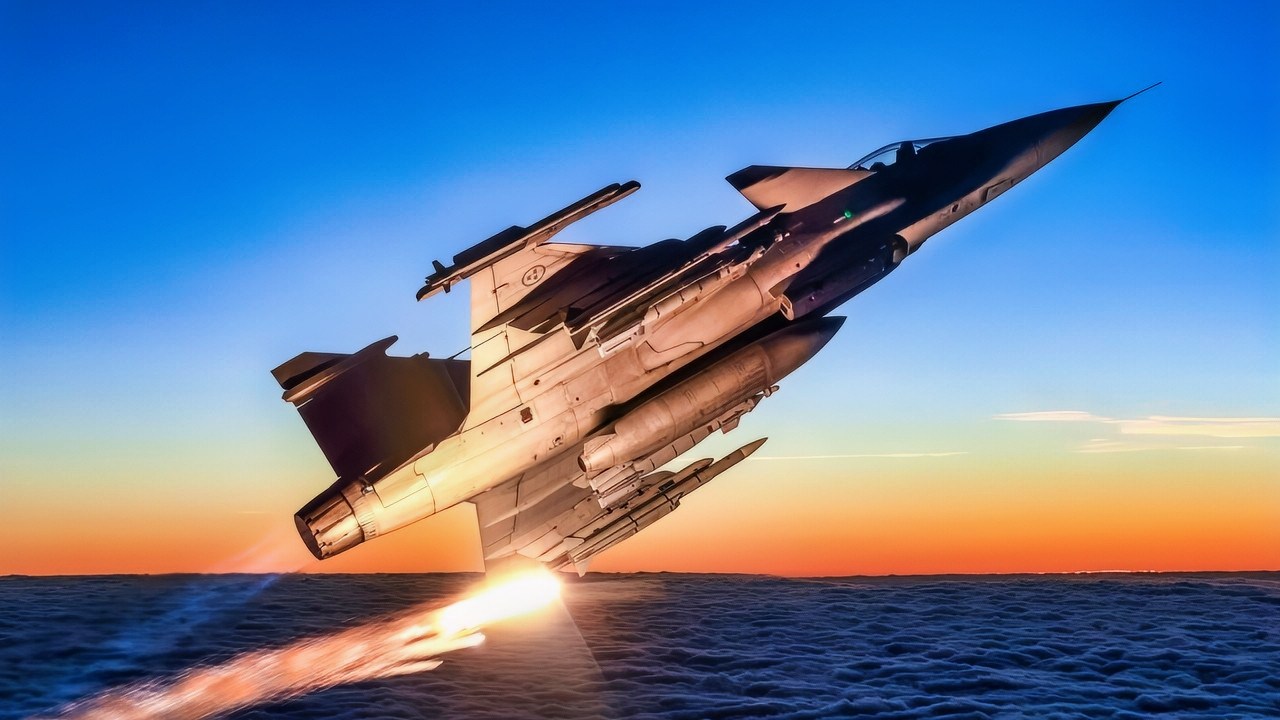
Key Points and Summary – The Saab JAS 39 Gripen is a 4.5-generation multirole fighter built around one big idea: do almost everything a top-tier jet can do, at a fraction of the cost.
-Its real edge is weapons flexibility.
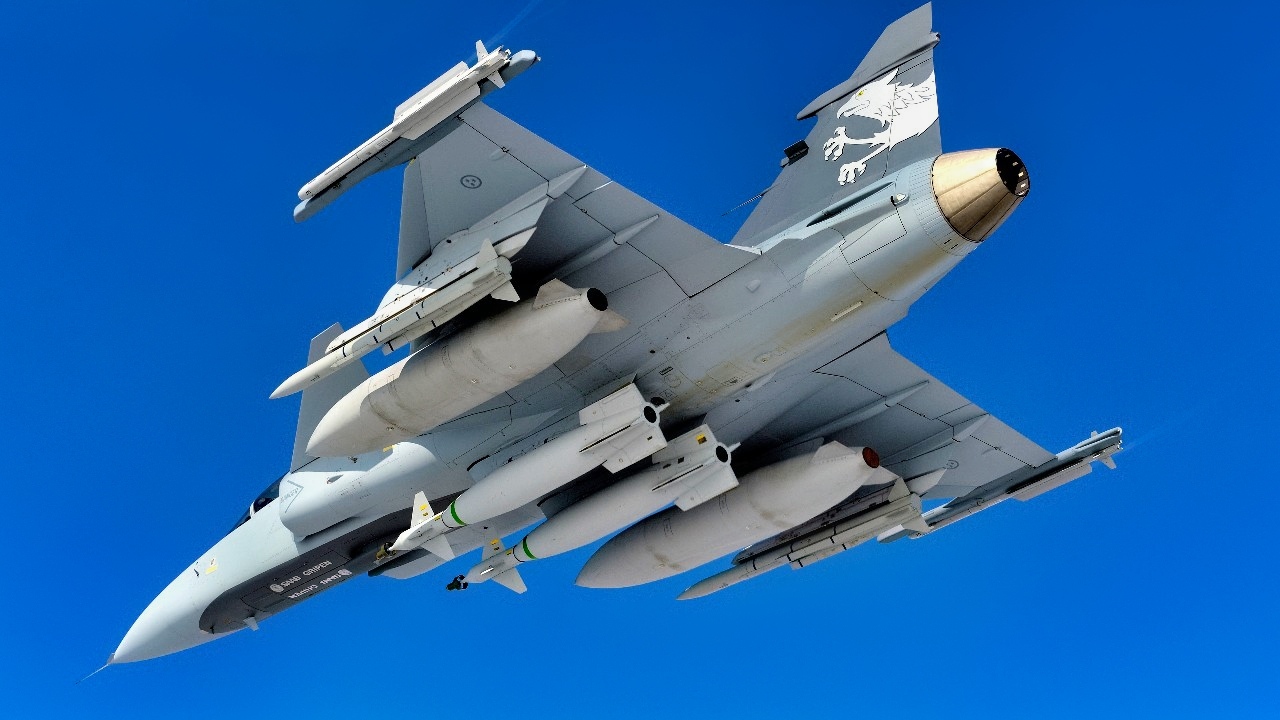
JAS 39 Gripen. Image Credit: Creative Commons.
-Gripen can carry elite European missiles like Meteor and IRIS-T, AMRAAM, precision Paveway and Maverick strike weapons, and even long-range Taurus cruise missiles.
-A modular, IP-based avionics architecture lets customers bolt on their own weapons with minimal redesign.
-Backed by strong electronic warfare, sensor fusion, and low operating costs, the Gripen gives smaller air forces first-rate combat power without a fifth-gen price tag.
Saab Gripen’s Secret Weapon: Why This ‘Cheap’ Fighter Hits Above Its Weight
The Saab JAS 39 Gripen is known for its efficiency, versatility, and cost-effectiveness as a 4.5-generation, quasi-stealthy multirole fighter aircraft.
One of its strongest attributes is its highly flexible weapons platform, designed to integrate a wide variety of air-to-air, air-to-ground, EW and reconnaissance systems.
The Gripen’s weapons suite reflects Sweden’s strategic defensive strength, while also enabling compatibility with NATO and international partners.
The JAS 39 Gripen’s weapons are considered powerful not simply because of the individual missiles or bombs it can carry, but because of the advanced systems that support them.
The Gripen combines modern sensors, data fusion, electronic warfare capabilities, and modular design to maximize the effectiveness of its weapons, giving it a combat advantage disproportionate to its size and cost.
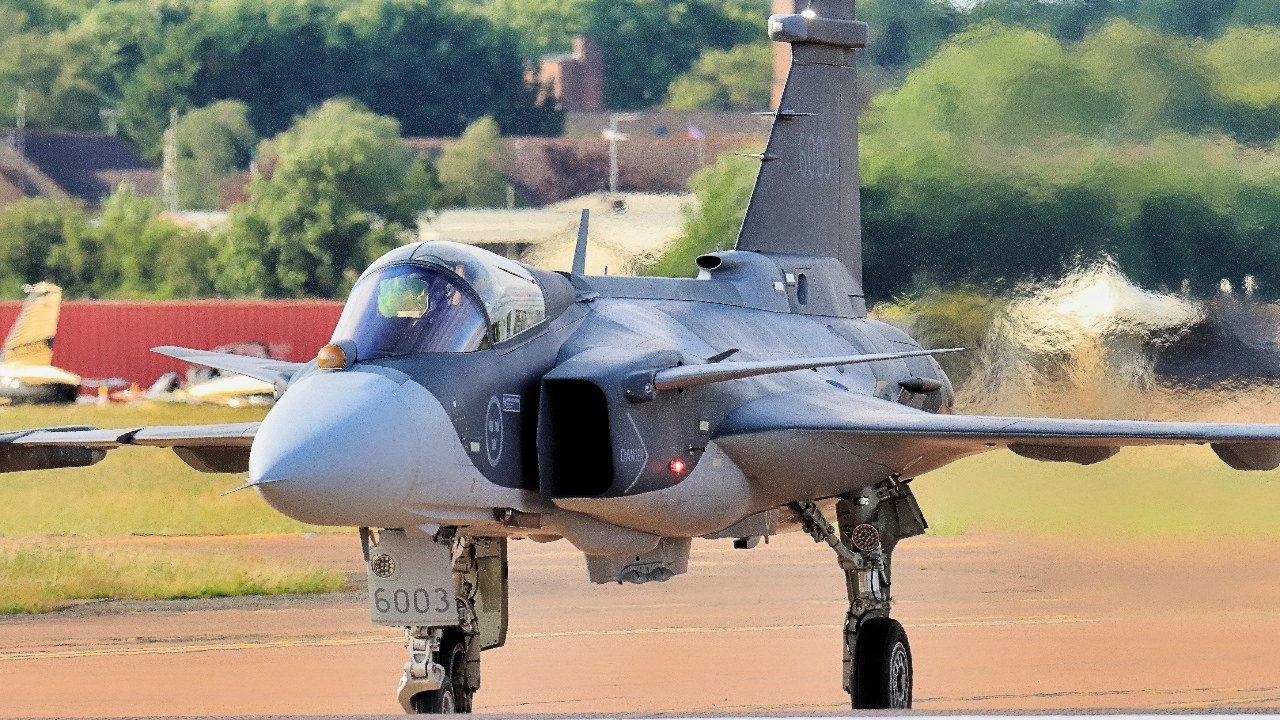
JAS 39 Gripen. Image Credit: Creative Commons.
The aircraft has long been optimized for defending Swedish airspace, and thus it carries some of Europe’s most advanced missile systems.
The primary weapon is the AIM-120 AMRAAM or the indigenous beyond-visual-range air-to-air missile (BVRAAM).
Meteor Missile
One of the primary reasons for the Gripen’s weapons strength is its integration of the advanced MBDA Meteor.
The Meteor can essentially outrun enemy aircraft and defenses trying to intercept it. Meteor is often regarded as one of the most capable beyond-visual-range missiles in the world due to its ramjet propulsion and long engagement envelope.
When paired with the Gripen’s radar and network-centric data-link systems, the aircraft can guide the missile with exceptional accuracy, even against maneuvering or distant targets.
For short-range combat, the IRIS-T missile offers high agility and off-boresight targeting, making the Gripen lethal in close-in encounters.
Overall, the Gripen can deploy a wide range of air-to-ground precision munitions, including laser- and GPS-guided bombs, anti-armor missiles, and long-range cruise missiles like the Taurus KEPD 350.
This allows the Gripen to shift seamlessly between air defense, strike missions, and support roles. Its onboard electronic warfare suite further enhances the effectiveness of its weapons by disrupting enemy sensors and protecting the aircraft during high-risk missions.
Air-to-Ground Attack for JAS 39 Gripen
The Gripen is also known for its air-to-ground attack capabilities. Designed as a true multirole fighter, it can deploy a variety of precision-guided munitions for strike missions.
One of its key weapons is the GBU-49 Paveway II, a dual-mode laser/GPS-guided bomb suited for both moving and stationary targets.
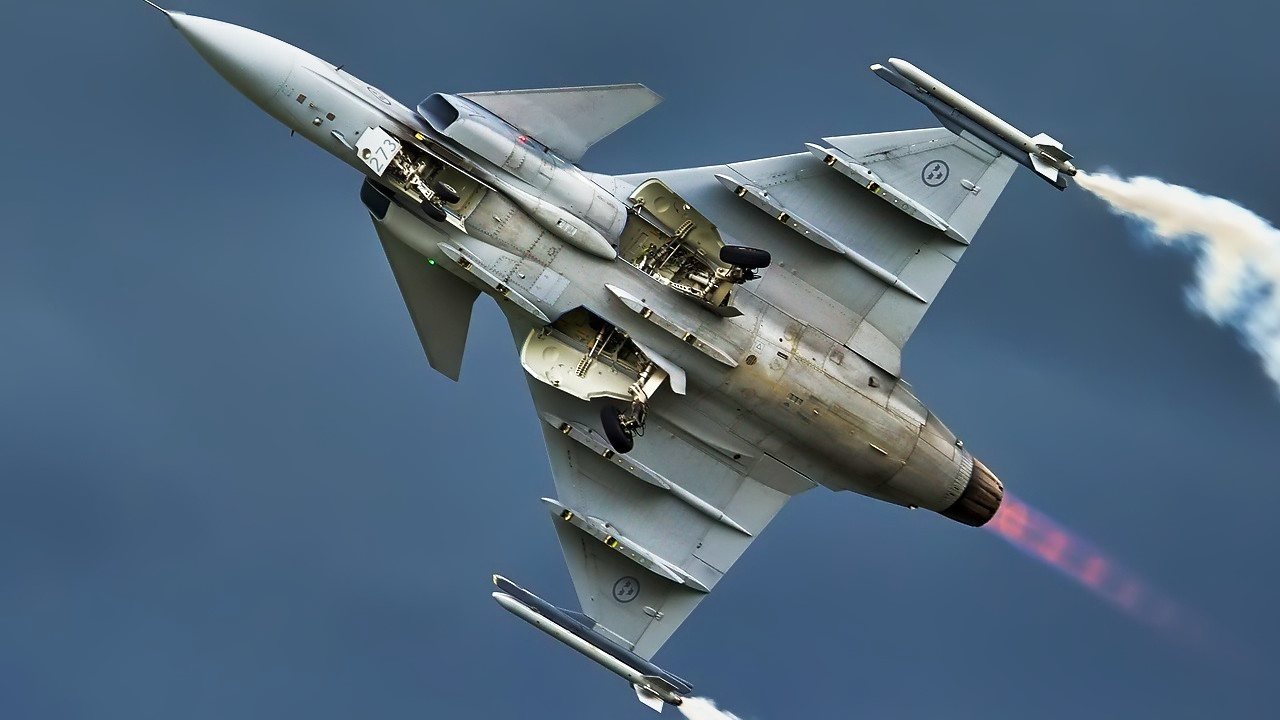
JAS 39 Gripen. Image Credit: Creative Commons.
The aircraft can also carry the Mk 82 bomb series, BK90 submunitions dispenser, and AGM-65 Maverick missiles for anti-armor and precision strike roles.
For modern deep-strike and high-precision missions, the Gripen can be equipped with the Taurus KEPD 350 cruise missile, offering long-range capability against fortified or high-value targets. This wide variety of strike weapons allows the Gripen to perform interdiction, close air support, and suppression of enemy air defenses.
In addition to missiles and bombs, the Gripen is armed with an internal 27mm Mauser BK-27 cannon, capable of delivering high-rate, accurate fire for air-to-air engagements or strafing ground targets.
Although cannon weaponry is sometimes considered secondary in modern air combat, it remains an essential tool for situations where missiles are impractical or unavailable. The BK-27’s reliability and power make it a valuable component of the aircraft’s overall armament.
A key advantage of the Gripen’s weapons system is its often-discussed modular avionics architecture, which uses standard IP protocols to enable the integration of new weapons and sensors. Unlike many legacy aircraft, the Gripen was designed from the outset for rapid software and hardware updates.
As a result, customer nations can integrate their preferred weaponry—ranging from NATO-standard munitions to regionally produced missiles—without requiring extensive redesign of their airframes.
This adaptability is evident in the latest Gripen E version, which includes expanded weapon compatibility and enhanced sensor fusion to maximize the performance of modern weapons systems.
About the Author: Kris Osborn
Kris Osborn is the President of Warrior Maven – Center for Military Modernization. Osborn previously served at the Pentagon as a highly qualified expert in the Office of the Assistant Secretary of the Army—Acquisition, Logistics & Technology. Osborn has also worked as an anchor and on-air military specialist at national TV networks. He has appeared as a guest military expert on Fox News, MSNBC, The Military Channel, and The History Channel. He also has a Masters Degree in Comparative Literature from Columbia University