
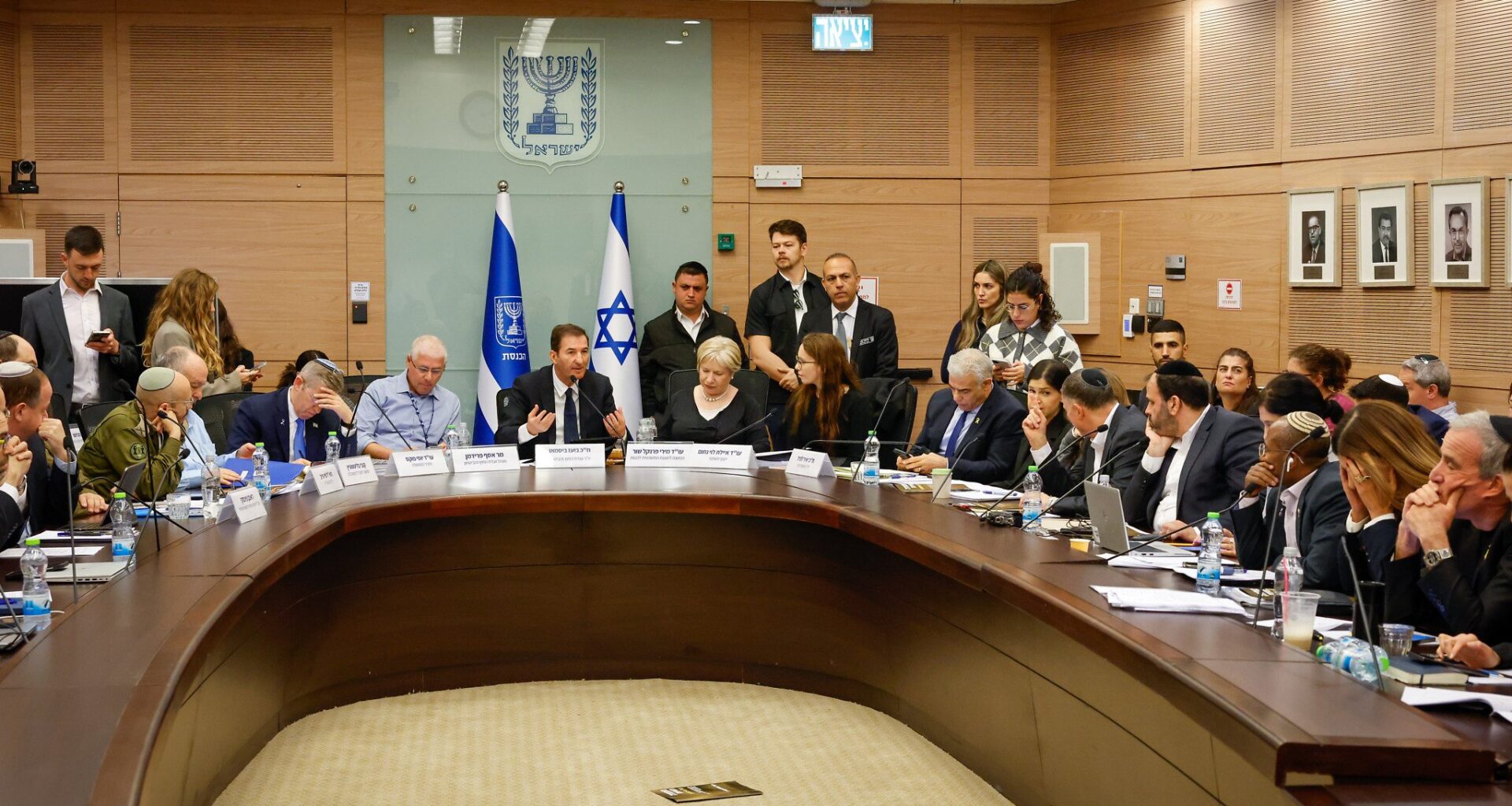
Multiple coalition lawmakers, including members of Prime Minister Benjamin Netanyahu’s ruling Likud party, expressed vocal opposition on Monday to the government’s proposed bill regulating ultra-Orthodox draft exemptions as the Knesset Foreign Affairs and Defense Committee resumed deliberations on the controversial legislation.
“The purpose of this law could be anything — apparently maintaining the coalition or something else — but it is certainly not recruitment. It is definitely not recruitment,” declared Likud MK Yuli Edelstein, who was removed as committee chair by his party this summer after drafting a strict enlistment bill that angered Netanyahu’s ultra-Orthodox coalition partners.
Asserting that the bill “will harm national security,” Edelstein said that it would lead to the enlistment of far fewer than the 12,000 soldiers the Israel Defense Forces has said it needs, while also lacking sanctions and “real measures aimed at drafting the Haredi public” — ensuring that “nothing will happen.”
Amid rising dissent from within the coalition, it is unclear whether the bill in its current form would win a majority in its second and third readings to become law without first undergoing major revisions. So far, at least eight coalition lawmakers have voiced their public opposition, with multiple others thought to quietly hold similar views.
Revised ‘evasion bill’
Current committee chairman Boaz Bismuth (Likud) released the text of the long-awaited revised conscription bill last Thursday, prompting harsh criticism from both the coalition and opposition, as well as, reportedly, his own committee’s legal adviser.
Get The Times of Israel’s Daily Edition
by email and never miss our top stories
By signing up, you agree to the terms
For the past year, the Haredi leadership has been pushing for the passage of a law that would largely keep its constituency out of the IDF, after the High Court ruled that decades-long blanket exemptions from army duty informally afforded to full-time Haredi yeshiva students were illegal.
Some 80,000 ultra-Orthodox men aged between 18 and 24 are currently believed to be eligible for military service, but have not enlisted. The IDF has said it urgently needs 12,000 recruits due to the strain on standing and reserve forces caused by the war against Hamas in Gaza and other military challenges.
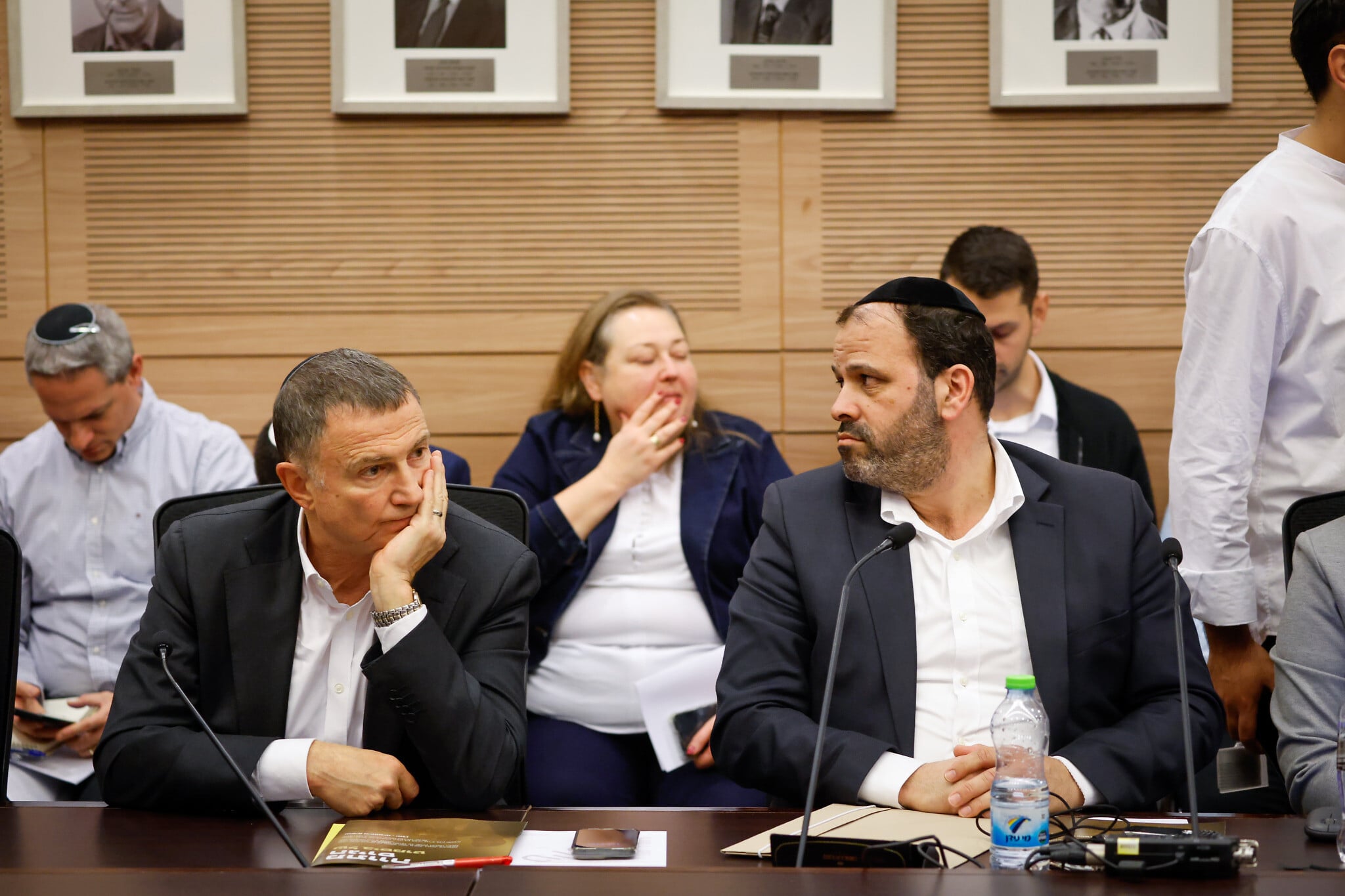
Likud MK Yuli Edelstein and Shas MK Yinon Azoulay attend a meeting of the Knesset Foreign Affairs and Defense Committee, December 1, 2025. (Noam Moskowitz, Office of the Knesset Spokesperson)
The legislation, as currently laid out, would continue to grant military service exemptions to full-time yeshiva students while ostensibly increasing conscription among graduates of Haredi educational institutions.
However, the bill would also remove various provisions from Edelstein’s draft that were intended to ensure that those registered for yeshiva study are actually studying, and cancel all sanctions on draft evaders when they turn 26.
Likud dissent
Addressing the Foreign Affairs and Defense Committee, Likud MK Dan Illouz reiterated his previously stated objections to the bill, arguing that without significant revisions “the law won’t be good enough, and it won’t bring the change we need in Israel, both from a security and from a social perspective.”
“And in my opinion, you can’t call this a conscription law if we remove the existing sanctions that encourage enlistment,” he said. “You can’t call it a conscription law and expand the definition of Haredim to include people who are no longer Haredi, people who are no longer part of the Haredi public.”
For the purposes of the law, Haredim will be defined as those who studied at a Haredi educational institution for at least two years between the ages of 14 and 18. Critics have said this means that people who are no longer members of the ultra-Orthodox community may be counted toward recruitment targets.
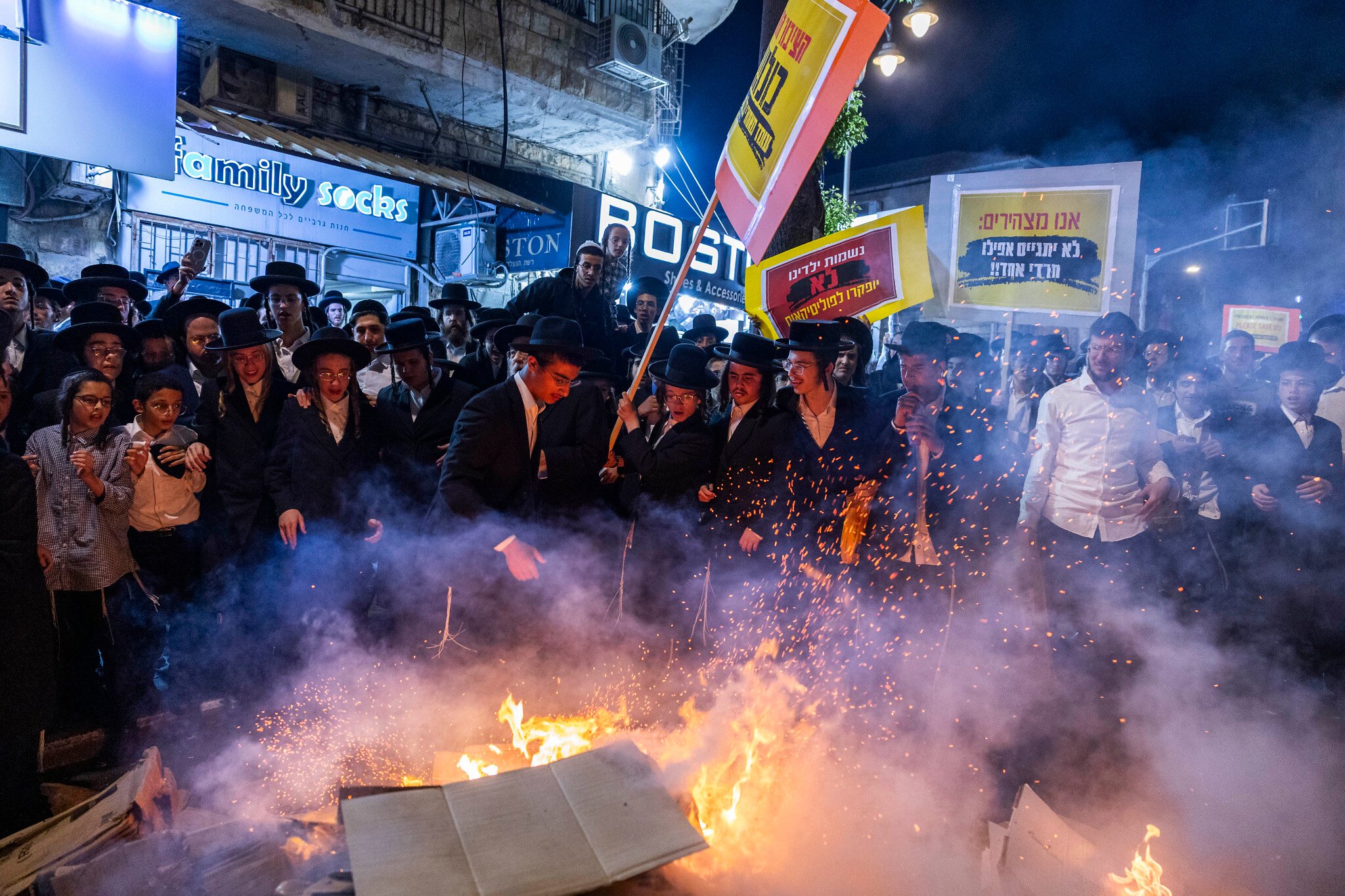
Ultra-Orthodox Jews protest against the conscription of yeshiva students in the Jerusalem neighborhood of Mea Shearim, October 19, 2025. (Noam Revkin Fenton/Flash90)
Fellow Likud MK Eliyahu Revivo declared that in its current form, “there will not be a majority” in favor of the bill, and “not in the coalition either.”
The bill will not lead to a significant increase in the scope of recruitment and “many members of Likud” will not vote “in favor of a bill supported by Arab faction votes,” he added — referencing reports, denied by Likud, that it has sought out the support of the Islamist Ra’am party.
Speaking with The Times of Israel during the committee meeting, Likud MK Tsega Melaku said that while the legislation “isn’t perfect,” it is a “good start,” and that she believes lawmakers on the committee will “need to fix it before the final readings.”
Pushing back against the criticism, Cabinet Secretary Yossi Fuchs insisted that the bill would “recruit 23,000 Haredi soldiers within three and a half years,” a claim contested by Likud MK Moshe Saada, who has previously called the legislation “toothless.”
Such an increase is impossible to guarantee because the bill does not set a quota for how many recruits will serve in combat roles, Saada argued, demanding that the bill condition state benefits on military service, arguing that a failure to do so will ensure that it does not pass judicial review.
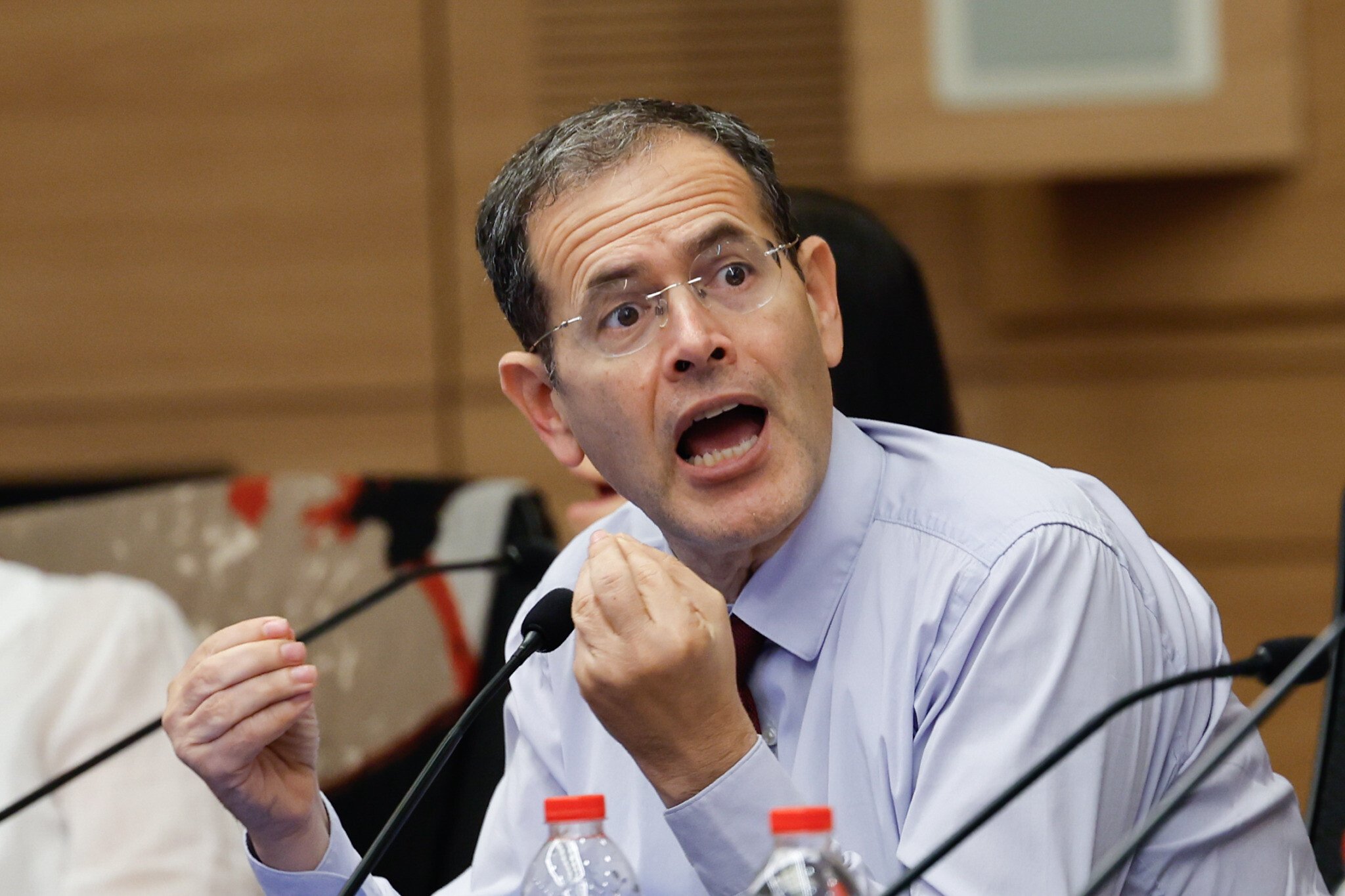
Likud MK Moshe Saada speaks at a hearing of the Knesset Constitution, Law and Justice Committee, September 30, 2025. (Oren Ben Hakoon/Flash90)
Opposition MK Chili Tropper (Blue and White) also pushed back against Fuchs’s claim, saying that because the law allows ten percent of those conscripted as part of its annual recruitment target to serve in non-military roles, and does not specify how many recruits must enter combat tracks, it will likely only boost recruitment by several hundred conscripts at best.
The bill also came under fire from bereaved parents during Monday’s committee meeting, with Haggai Luber — whose son Sgt. Yehonatan Luber was killed in battle in the south of Gaza in December 2023 — calling on “members of the coalition that I voted for” to “completely” oppose the law, warning that “whoever votes in favor, we will hold them politically accountable.”
Religious Zionist opposition
The legislation was also harshly criticized by members of Finance Minister Bezalel Smotrich’s Religious Zionism party, with MK Moshe Solomon telling Bismuth during the hearing that “in its current form, it will be difficult for me to support this law.”
His comments came after MK Michal Woldiger told the national-religious news site Kipa on Sunday that “the law as it stands will not provide a solution” to the IDF’s manpower shortage.
As debate raged in the Foreign Affairs and Defense Committee, Immigration Minister Ofir Sofer called a press conference to express his own opposition.
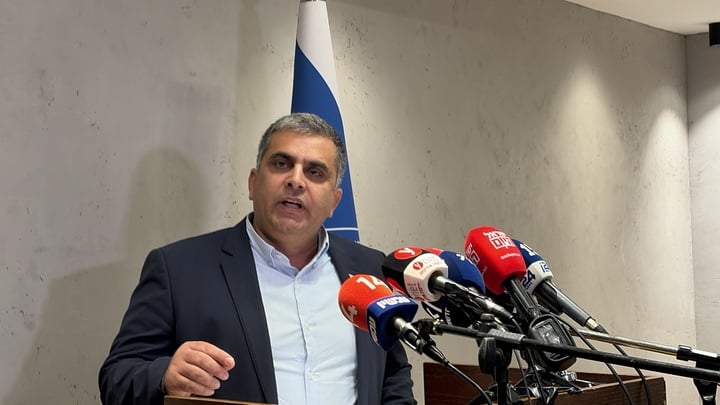
Immigration Minister Ofir Sofer holds a press conference in the Knesset, December 1, 2025 (Sam Sokol/Times of Israel)
“This is a shameful law, devoid of any public courage, a law that struggles to look our ultra-Orthodox partners in the eye and tell them it is time to take action,” he said, declaring that he would “vote against this law, even if it means the prime minister will fire me.”
Pledging to “do everything I can to persuade my colleagues in Religious Zionism to oppose the proposed disgrace,” Sofer said that his position on conscription was informed by three principles: “first, the support and endorsement of the ultra-Orthodox leadership; second, real and immediate change; third, a temporary measure [on exemptions], not an exemption extending decades into the future.”
Slamming the government’s “bluff,” Sofer said that the easiest thing to do was “to legislate in a way that gives us time, which won’t be overturned by the Supreme Court” and allow the government to get past the next elections.
Criticizing the fact that the bill would postpone sanctions for a year and a half, Sofer demanded the immediate conscription of four battalions’ worth of soldiers for the IDF’s ultra-Orthodox Hasmonean Brigade.
Asked if he would oppose the measure even if its failure would mean the fall of the government, Sofer responded that he has long stated that he would not topple the government but that there are values that “we go to the grave with.”

Soldiers from the Hasmonean Brigade take part in a ceremony at the Western Wall in Jerusalem’s Old City on August 6, 2025. (Chaim Goldberg/Flash90)
Asked by The Times of Israel if he believed there is sufficient opposition to the bill within the coalition to ensure its failure, Sofer replied that “coalition members must face reality” and that “there are enough votes” to reject it.
While Smotrich has not explicitly stated that he will oppose the bill, following Sofer’s press conference, the party released a statement that its MKs would “only vote on a law that will lead to a real and rapid recruitment of Haredim into the IDF.”
“We are consulting and formulating our comments on the bill, and we will insist on their inclusion as the legislation progresses. In any case, we will make joint decisions and act as a united faction,” the statement added.
Speaking with The Times of Israel outside Sofer’s press conference, Deputy Foreign Minister Sharren Haskel (New Hope) said that the bill does not provide the necessary manpower for Israel’s “next confrontation” with its enemies and that “there is not a majority in the coalition” in favor of passing it into law.
She later tweeted that she had counted at least 10 definite opponents of the legislation within the coalition.
Haredi opposition
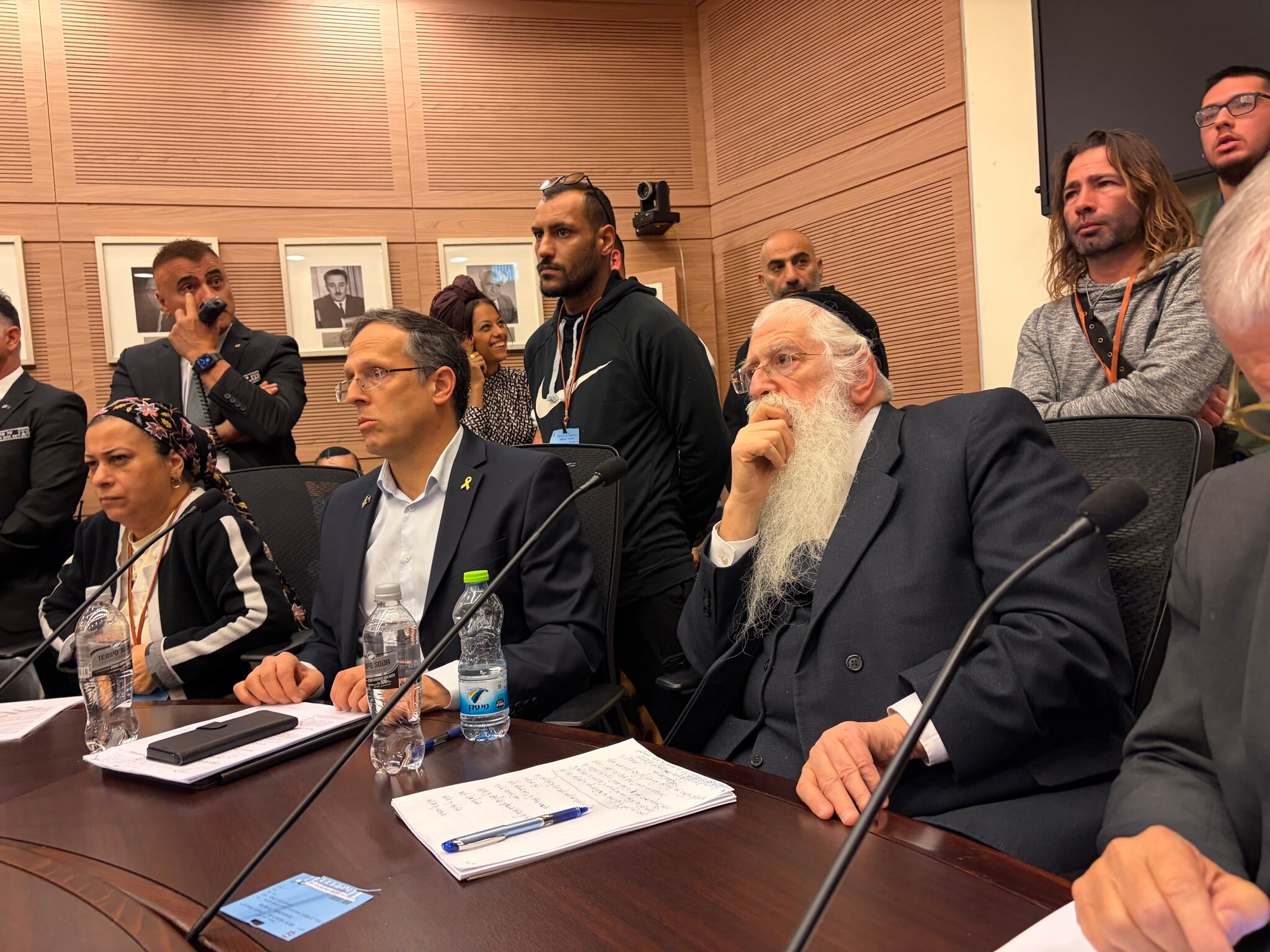
United Torah Judaism MK Meir Porush in the Knesset Foreign Affairs and Defense Committee, December 1, 2025. (Sam Sokol/Times of Israel)
While Opposition Leader Yair Lapid and former prime minister Naftali Bennett both decried the bill on Monday as a betrayal of the troops, the bill also received criticism from the Hasidic Agudat Yisrael faction of the ultra-Orthodox opposition United Torah Judaism party, which quit the coalition this summer to protest Edelstein’s previous draft of the legislation.
“Many here don’t respect Torah learners. But I am proud to represent them,” said UTJ MK Meir Porush.
“So what are we hearing here? That the Haredim don’t enlist? Yesterday I approached the Knesset Research and Information Center and found out that there are many Bedouins who don’t enlist. There are Druze who don’t enlist and there are others who don’t enlist. But under the pressure of the attorney general, the law applies only to the Haredim even though there are others who don’t enlist? And this is happening in a country under Jewish rule,” complained Porush.
“As when [Chaim] Herzog of blessed memory tore up that miserable UN resolution, it would be appropriate to tear up this law,” he said, referring to the then-UN ambassador’s tearing up a resolution equating Zionism with racism at the General Assembly in 1975.
While UTJ’s Degel HaTorah faction and the ultra-Orthodox Shas party have reluctantly supported the bill, Agudat Yisrael has expressed opposition to any legislation containing sanctions against yeshiva students, no matter how weak.
Speaking with The Times of Israel on Sunday evening, a senior Haredi political source who supports the bill explained that from his point of view it is “very bad, but everyone understands that the current situation is even worse.”

Likud MK Boaz Bismuth chairs a meeting of the Knesset Foreign Affairs and Defense Committee, August 12, 2025. (Yonatan Sindel/Flash90)
The coalition currently holds 60 out of 120 seats in the Knesset. Should Agudat Yisrael’s four MKs vote join the rest of the opposition and coalition rebels in opposing the measure, it will likely fail to pass its final two readings in the plenum.
According to Hebrew media reports, Likud’s David Bitan and Religious Zionism’s Ohad Tal are also considered likely opponents of the measure, although they have not stated so publicly. Tal did not immediately respond to a request for comment.
Should Bismuth amend the bill, it could help mitigate opposition by coalition lawmakers, who Edelstein last week warned will be under significant pressure from Netanyahu.
Defying his critics, Bismuth told lawmakers on Monday that “the bill, including the changes that we will undoubtedly make during the deliberation, will reveal a simple truth — whoever votes in favor of it, will be voting in favor of the State of Israel’s future.”
However, “whoever opposes it will prove that he prefers the petty political game at the expense of national security,” he claimed.
Bismuth has previously stated that he intends to pass the bill during December, which would leave little time for substantive revisions.