
The professor did not know his neighbour, who worked at a different university and lived three floors above. The two men had adjacent parking spaces in their residential block for academics in Tehran and would nod in greeting when they crossed paths as they arrived home from work.
Then, early on the morning of June 13, their lives crashed together. “We were sleeping when all of a sudden we were woken by the explosions,” Professor Iraj Rasouli recalled. “We opened our eyes and felt as if the entire building was rotating.”
In what would become the opening salvo of the 12-day Israel-Iran war, a missile ripped through their building. It was aimed at Mohammad Mehdi Tehranchi, the professor upstairs, a theoretical physicist and nuclear scientist in Iran’s atomic programme. The 2,000C heat it generated collapsed three floors on top of Rasouli’s family, who had travelled to Tehran for the weekend.

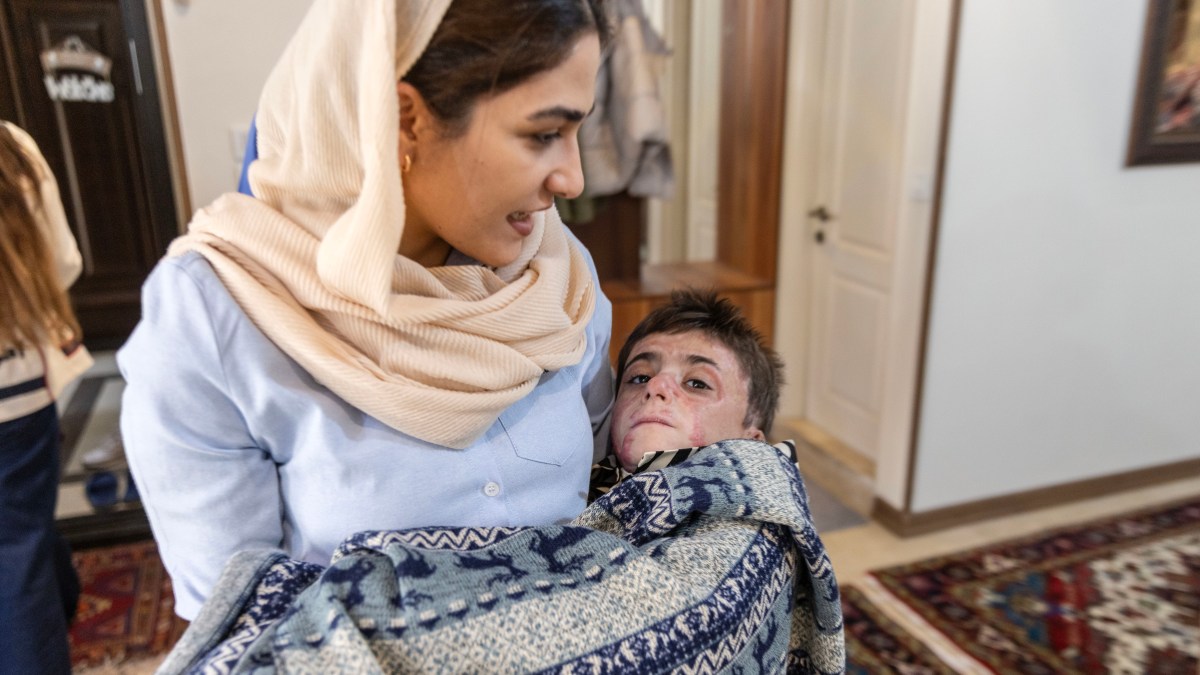
Professor Iraj Rasouli and Ghasemian, the sister of his son-in-law, Behnam
TIMES PHOTOGRAPHER JACK HILL
Rasouli’s daughter, Zohreh Rasouli, an obstetric surgeon, was sleeping in the living room with her husband, Behnam Ghasemian, and their two sons, Kian, four, and Rayan, two months. “Everyone was severely burnt but they were still conscious,” Rasouli said. With the lift disabled, the only way out was to walk down the stairs.
At the bottom, where others from the building gathered, his daughter collapsed. Rasouli said: “She lifted her hands and asked her sister: ‘Do you think I can still perform surgery with these hands?’” She spent three days in hospital before dying from her burns. Rayan died within 24 hours while Ghasemian lasted 72 hours. Zohreh Rasouli died four hours after her husband.
Sixteen people died in the attack that targeted Tehranchi, one of at least five nuclear scientists killed that night. The only survivor from the living room was Kian, who spent 73 days in hospital being treated for burns that have left him with painful, livid scars.
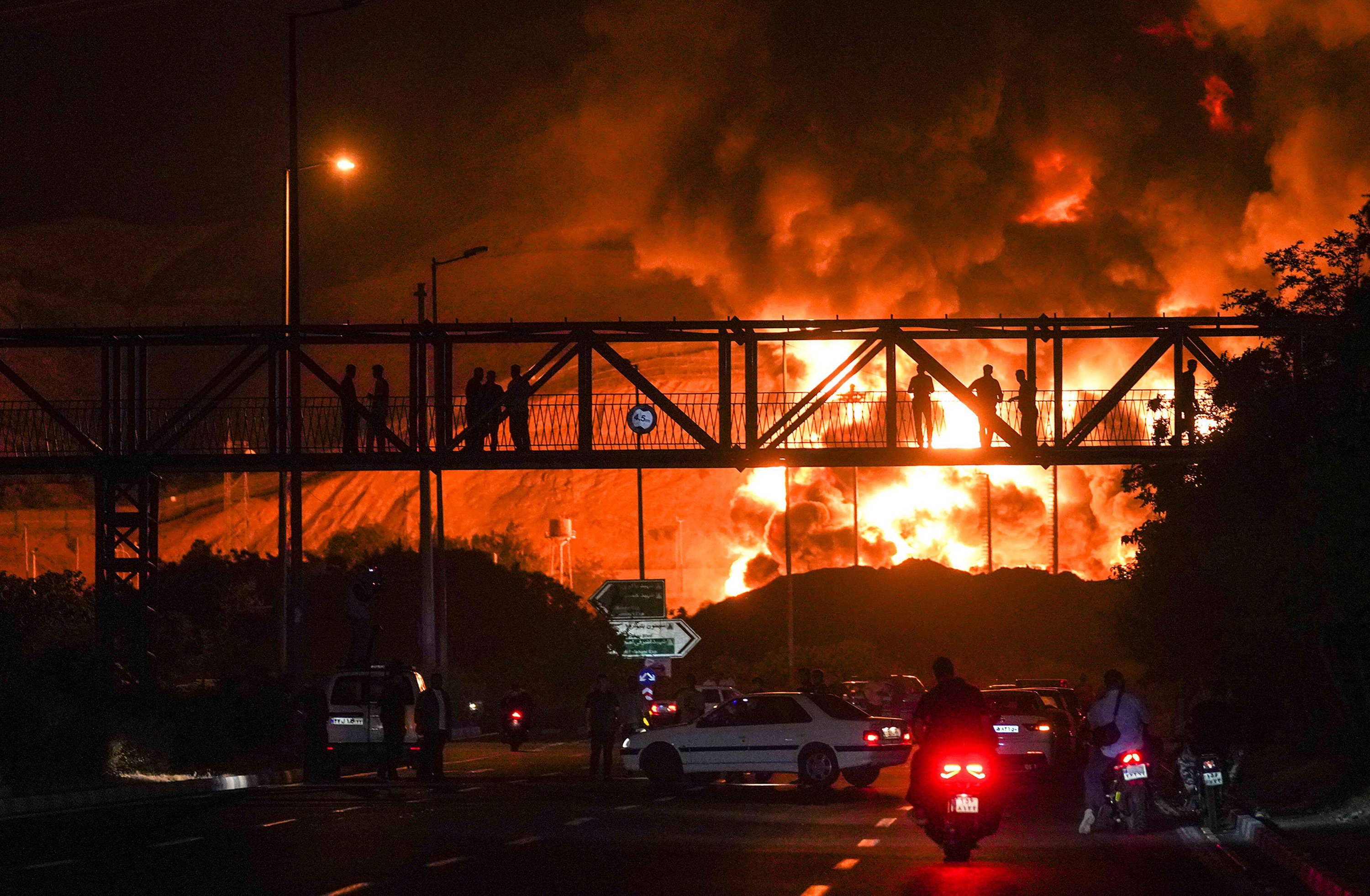
An attack on an oil refinery in the capital on June 15
AHMAD HATEFI/UPI/ALAMY
“Kian is a gift to us but seeing his pain is killing us,” said Haniyeh Ghasemian, Ghasemian’s sister, who shut her dental practice to look after her injured nephew full-time. “Every single step in his life is going to be a challenge. What do we want to say when he grows up and asks what his parents are gone for? He doesn’t understand the meaning of war, he doesn’t know the meaning of death. But he will ask very soon: what was that war for?”
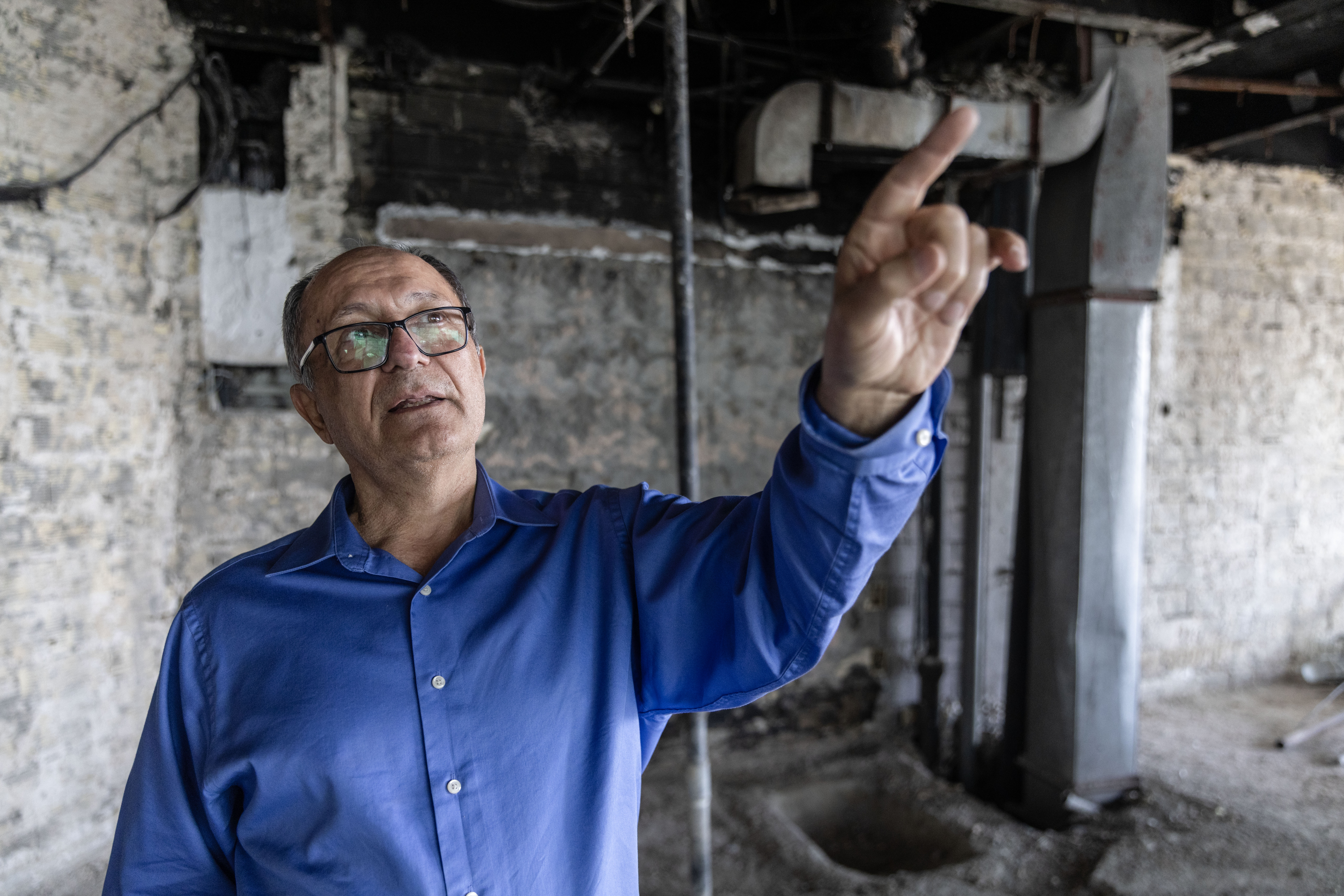
Rasouli in the destroyed flat in northern Tehran
TIMES PHOTOGRAPHER JACK HILL
Israel wanted a ‘second revolution’
It is a question that has reverberated across Iran since the 12-day war with Israel ended in a ceasefire imposed by President Trump.
The US joined Israel’s Operation Rising Lion for one night, June 22, striking three nuclear sites in Iran before calling for hostilities to end.
Iran’s military and its nuclear programme were the main targets for Israel’s attacks but their bombs also hit a hospital, residential buildings and Evin prison, Iran’s most notorious detention site for political prisoners.
According to Tehran, more than 1,000 people were killed, about 700 of whom were civilians, in strikes that Israel’s prime minister, Binyamin Netanyahu, made clear were aimed not just at destroying Iran’s nuclear capabilities but at overthrowing the Islamic regime.

An injured man on Keshavarz Boulevard in Tehran
MAJID KHAHI/ISNA/AFP/GETTY IMAGES
“The time has come for the Iranian people to unite around its flag and its historic legacy, by standing up for your freedom from the evil and oppressive regime,” Netanyahu declared the night Operation Rising Lion was launched.

Benyamin Netanyahu, the Israeli prime minister, and President Trump in the Oval Office on April 7
SAUL LOEB/AFP/GETTY IMAGES
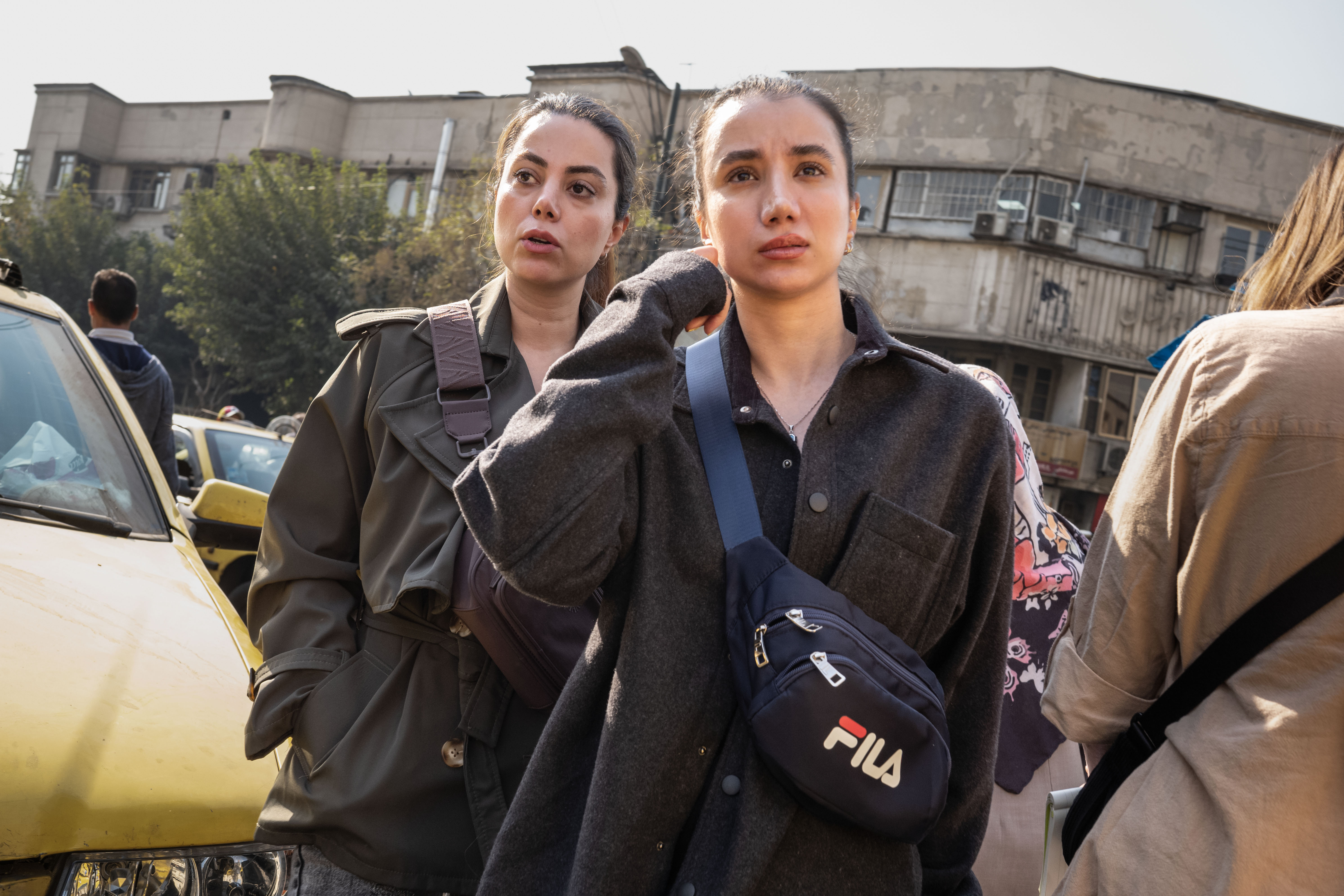
Iranian women now regularly ignore the legal requirement to wear a hijab in public
TIMES PHOTOGRAPHER JACK HILL
Iran responded with hundreds of missiles and drones aimed at Israel. Although most were intercepted by the Iron Dome defence system, some got through, killing 28 Israelis and injuring several dozen more.
The civilian deaths in Tehran deeply shocked its residents, upending the bargain Iran’s repressive regime promised its people: security on their own soil in return for political acquiescence.
The missiles that hit Tehran represented a dramatic escalation after years of shadow war with Israel far from Iranian soil. While most Iranians still despise their regime, they have stopped well short of turning on it.
The Times visited Iran on a rare journalist’s visa after the conflict with Israel. The team were accompanied at all times by a translator from a government-approved agency but checked translations afterwards with an independent Farsi speaker. All the translations were accurate and people spoke, sometimes in English, with candour, including criticism of the regime. All interviews were at The Times’s request, including with the Rasouli family at their rented property in central Tehran.

An anti-US mural in the city
TIMES PHOTOGRAPHER JACK HILL
Rasouli, 65, a microbiologist who lived and studied in Canada for years, said he had no idea his building housed someone involved in Iran’s nuclear programme.
He added: “It seems [Israel] intended to get some non-nuclear scientists, non-military people, just to create instability among people so that people can rise against the government, or even perform a second revolution. I was even expecting that but it didn’t happen.
“We know their technology is very advanced. Their target in our building was one person, one single person. And for that, they risked everyone in the building and they took away our loves.”
Cemetery’s special section for martyrs
On a Thursday night, Tehran’s streets fill with traffic as people leave for the weekend or head towards the capital’s vast cemetery Behesht-e-Zahra to pay their respects to the dead.
Reverence for martyrs is key in the Shia Islamic faith that guides Iran’s clerical regime and it was this cemetery to which its first supreme leader, Ayatollah Khomeini, came on his return from exile in 1979 to launch his revolution.
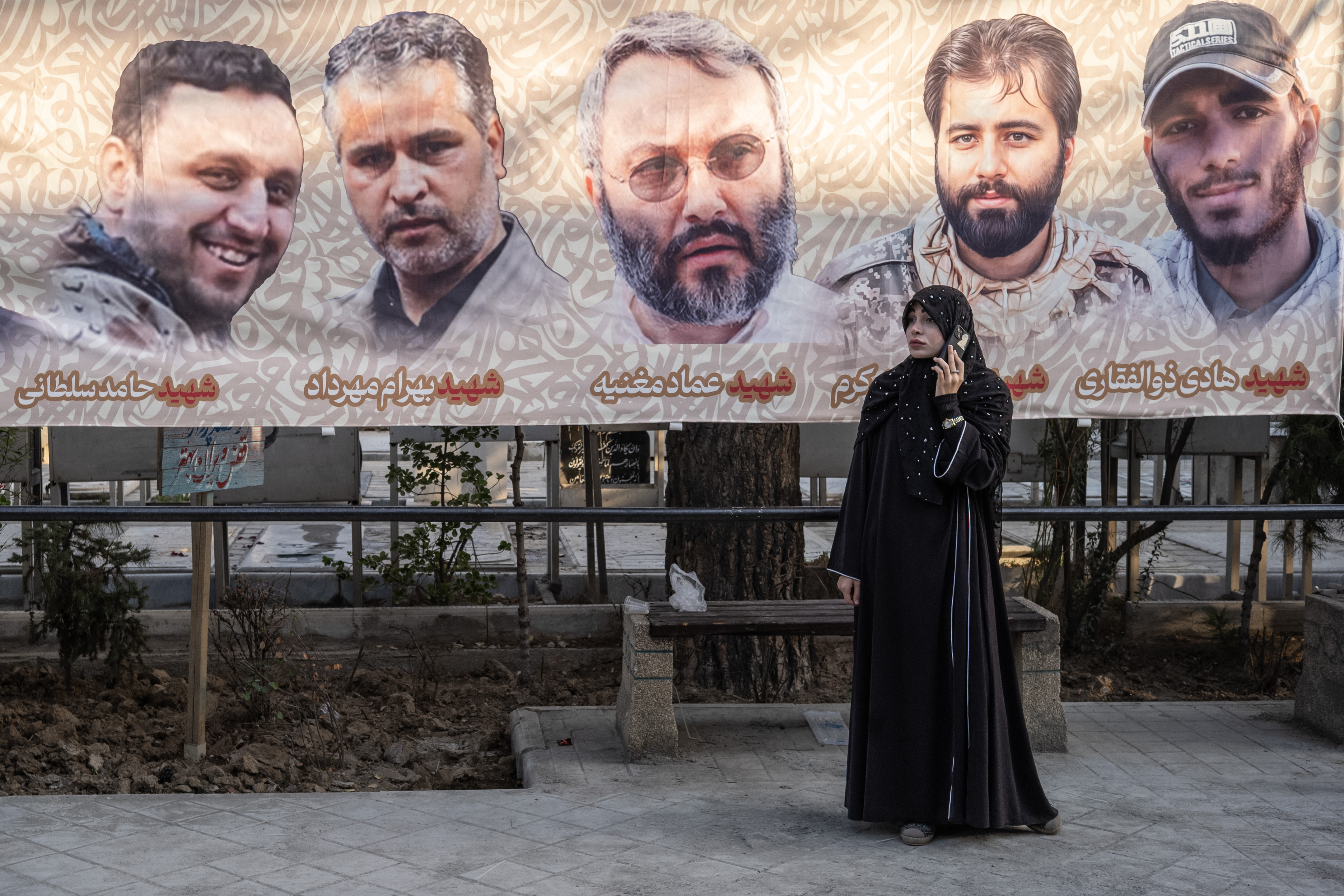
The martyrs’ section of Behesht-e-Zahra cemetery
TIMES PHOTOGRAPHER JACK HILL
Here, a special section has sprung up for the martyrs of the 12-day war. A white marble tombstone of a military commander lies alongside that of Rasouli and her baby. Either side of her grave, families were gathered around the tombstones of their loved ones, murmuring verses from their open Qurans and scattering rose petals on the white marble. A woman clad in a black chador offered up a platter of small sweet pastries.
The woman was the mother of Zahra Chobini, 27, a trainee accountant killed by an Israeli strike on a busy junction by Tajrish metro station in northern Tehran. Video of the attack shows a building, believed to contain the apartment of a Revolutionary Guard commander, hit in an airstrike before another missile strikes the junction, sending cars idling at the red lights flying into the air.
• Why a strapless wedding dress threatens Iran hardliner Ali Shamkhani
Minutes earlier, Chobini was on the phone to her father, Mohammed, telling him she was leaving work and would soon be home. “She was an innocent bystander,” her father said. He was called to the hospital, which told him that Chobini had a broken leg. By the time he arrived she was dead. Four months later, they do not confine their visit to her grave to Thursday afternoons. “When we miss her, we come here,” he said. “That’s about four times a week.”
Near by, Haniyeh Tahere, 25, was visiting the grave of her older sister, Sayeeda, 40, who was visiting her husband in Evin prison when it was hit in an Israeli airstrike. The attack resulted in the single biggest casualty toll of the 12-day conflict, with 79 killed including prisoners, guards and visiting relatives, according to Iranian officials. Israel appeared to believe it would free some of the regime’s most powerful incarcerated opponents. “I have no idea why they did it,” Tahere said. “Perhaps they believed the prisoners would break free and rise up against the regime.”
‘Who chooses to accept this loss?’
The tone was different at the Imanzadeh Saleh shrine, close to the junction where Chobini was killed. Here the regime stages a festival of official martyrdom, with paintings of the dead military commanders and nuclear scientists adorning newly erected screens. In the plaza outside the mosque, labourers were laying freshly engraved black granite slabs memorialising those killed in service to the regime. “I have visited here every week since the war,” Ali Akbar, 65, said. “These people were the brains of Iran and the world. But the science will not stop, we have a new generation.”
Another of the mourners was Abbas Ali Zalli, a former agricultural minister in the post-revolutionary government. While Iran says its nuclear programme is wholly peaceful, Zalli suggested it was necessary for the country’s defence. “During the Iran-Iraq war, nobody from the outside would give us weapons,” he said, referring to the 1980s conflict in which the US armed Saddam Hussein to fight the newly constituted Islamic republic after the fall of the Shah. “And so it is important that we can do things for ourselves, show our independence. Iran must be able to defend herself.”

The former US embassy in Tehran
TIMES PHOTOGRAPHER JACK HILL
Few here are confident the active war is over. In the months since, the regime has conducted a crackdown on dissent and the rounding up and execution of suspected spies working for Israel.
For Ghasemian, Kian’s care is all that matters. Doctors have told the family he is likely to need continued surgery until he reaches adulthood.
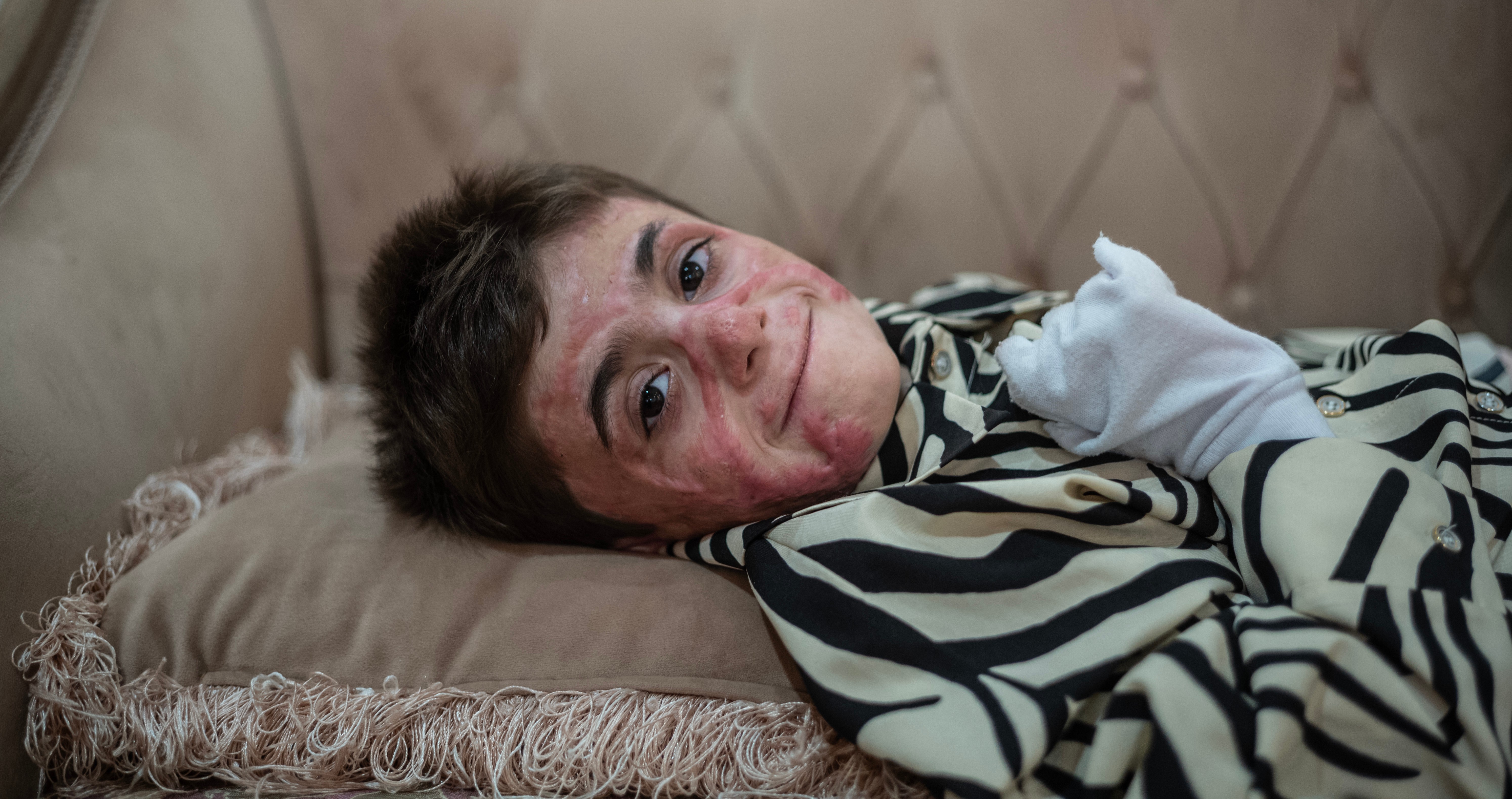
Kian Ghasemian
TIMES PHOTOGRAPHER JACK HILL
“We are his life but at the end of the day he has lost his parents,” she said. “I don’t know how to explain that to him. I took him to the park and a child said: ‘Mummy, why is he ugly?’, pointing to the scars on his face. Now I only take him after dark. He knows that he doesn’t have parents, but he doesn’t want to accept it. Who chooses to accept this loss?”