
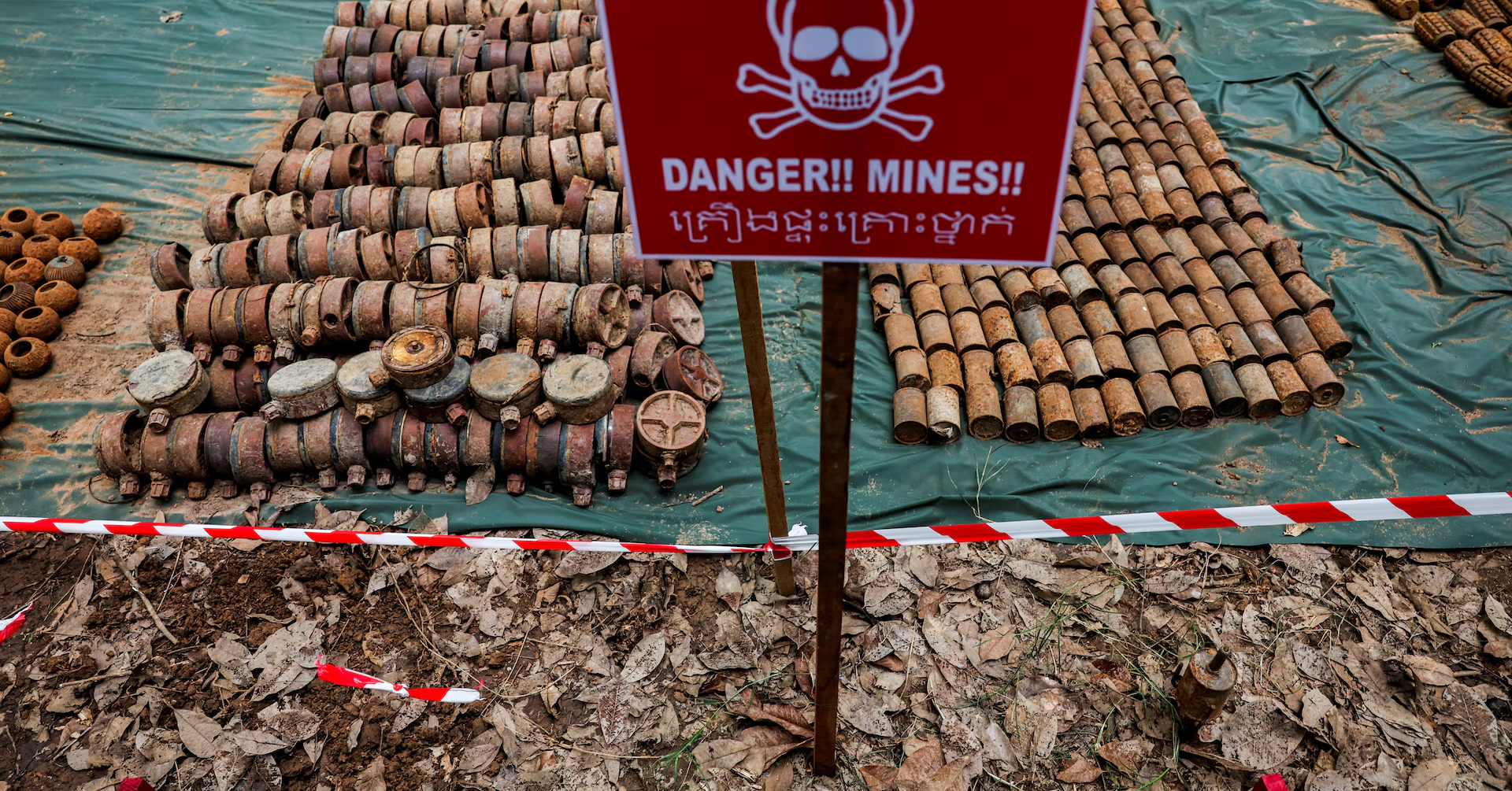
Item 1 of 2 Old landmines that Thailand says were detonated and recovered near the disputed border between Thailand and Cambodia are displayed during a media visit organized by the Royal Thai Army, following a ceasefire between Cambodia and Thailand, in Surin province, Thailand, August 20, 2025. REUTERS/Chalinee Thirasupa
[1/2]Old landmines that Thailand says were detonated and recovered near the disputed border between Thailand and Cambodia are displayed during a media visit organized by the Royal Thai Army, following a ceasefire between Cambodia and Thailand, in Surin province, Thailand, August 20, 2025…. Purchase Licensing Rights, opens new tab Read moreOver 6,000 incidents recorded, highest since 2020, mostly civiliansEuropean nations withdrawing from treaty amid Russian threatsDonor funding cuts impact mine clearance and survivor support
GENEVA, Dec 1 (Reuters) – Deaths and injuries from landmines and unexploded ordnance hit a four-year high in 2024, driven by conflicts in Syria and Myanmar, a new report showed on Monday.
The data comes as a number of European countries move to withdraw from a treaty banning landmine use, citing the threat of Russian aggression.
Sign up here.
More than 6,000 incidents were recorded last year, including 1,945 deaths and 4,325 injuries, the highest annual total since 2020, according to the Landmine Monitor 2025 report. Nearly 90% of victims were civilians, with almost half women and children.
The surge was seen mainly in conflict zones in Syria and Myanmar. In Syria, returning residents face growing risks from unexploded ordnance following the fall of former President Bashar al-Assad, the report said.
Myanmar recorded the highest number of incidents, over 2,000, due to increased use by both the army and non-state armed groups, the report said.
EUROPEAN COUNTRIES SEEK EXIT FROM LANDMINE BAN
Several European nations are seeking withdrawal from the Ottawa Convention banning anti-personnel landmines.
The treaty, which came into effect in 1999, prohibits 166 states from using, stockpiling, producing and transferring anti-personnel mines, and requires parties to clear contaminated areas and assist victims.
Ukraine announced its withdrawal from the Convention on June 29, with military analysts saying that doing so could help slow, opens new tab Russian advances in the country. Russia and Myanmar, non-signatories of the treaty, used landmines extensively, the report said.Estonia, Finland, Latvia, Lithuania and Poland are all in the process of legally exiting the convention in the face of what they say are growing military threats from Russia, the report stated.
“A few states have taken actions that concretely threaten the continued health of the convention,” Yeshua Moser-Puangsuwan, Landmine Monitor 2025 ban policy editor, told reporters in Geneva on Monday.
ACTION PROGRAMS HIT BY FUNDING CUTS
Donor funding cuts, including from the U.S., resulted in reduced survivor support and termination of several humanitarian mine action programs compared with prior years, according to the report.
Looking ahead to 2026, “it’s likely that all states could see a decline in funding,” said Ruth Bottomley, Landmine Monitor 2025 mine action funding research lead.
Landmine action programs have ended in Afghanistan, Iraq, Yemen, Colombia, Tajikistan and Zimbabwe following cuts in U.S. funding, which had previously accounted for a third of the international total, Bottomley said.
States party to the Mine Ban Treaty meet in Geneva this week.
Reporting by Olivia Le Poidevin; Additional reporting Emma Farge; Editing by Deepa Babington and Jan Harvey
Our Standards: The Thomson Reuters Trust Principles., opens new tab