
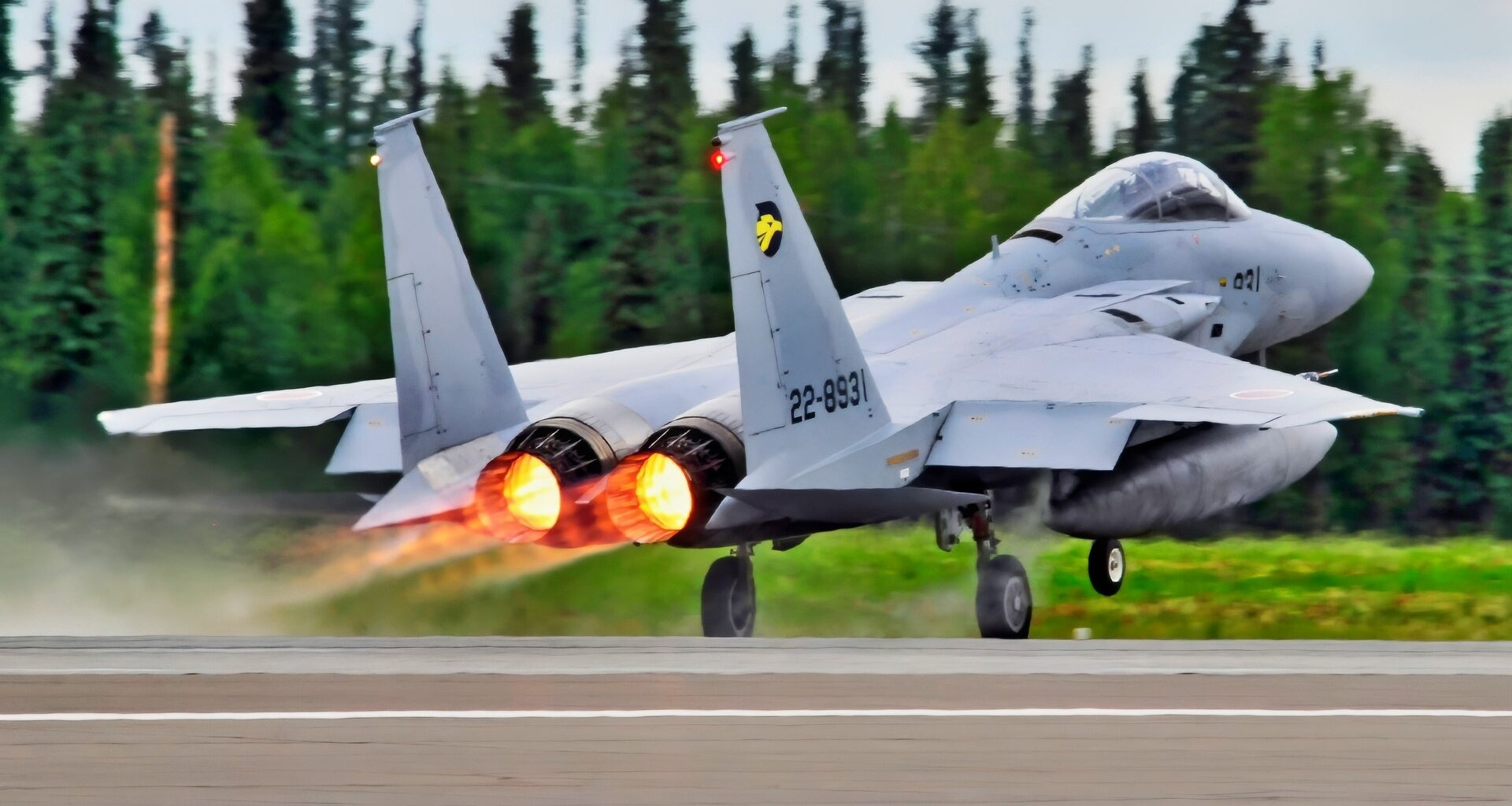
Key Points and Summary: A diplomatic spat between China and Japan over Taiwan is escalating into a regional showdown, forcing smaller Asian nations to pick sides.
The Spark: Beijing is using trade coercion to bully Japan’s new Prime Minister, Sanae Takaichi, into retracting statements linking Taiwan’s security to Japan’s survival.
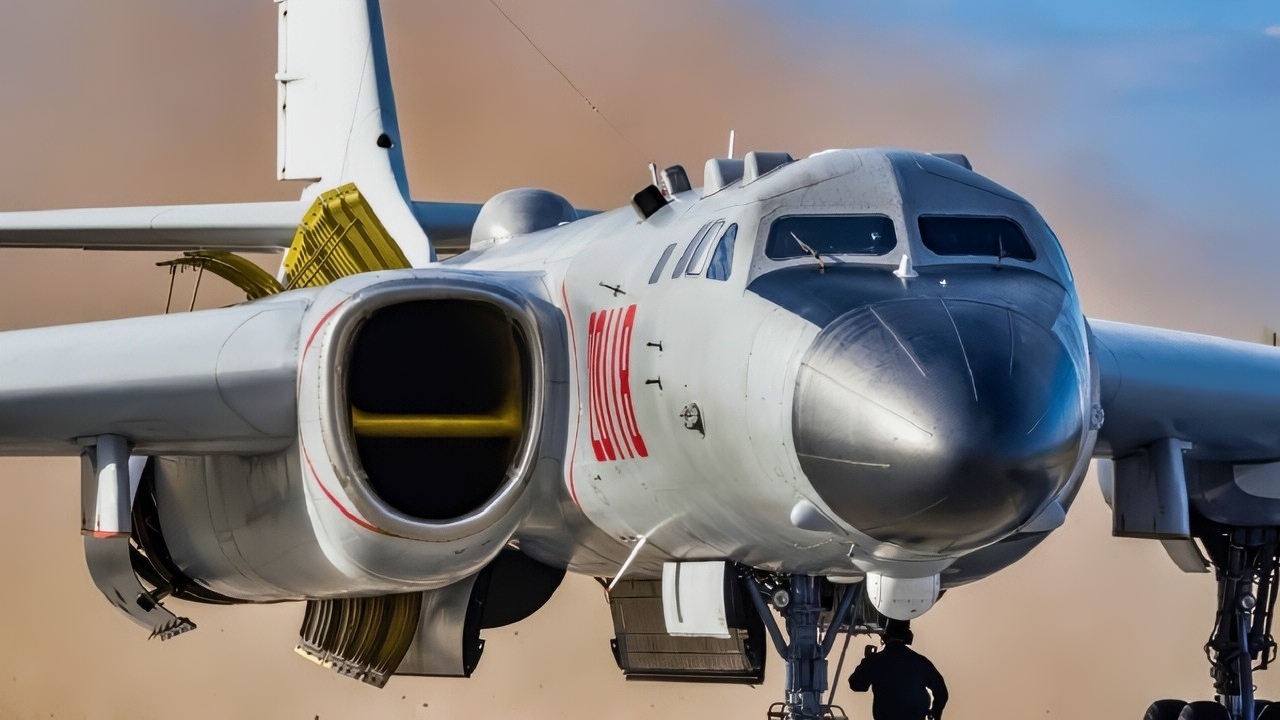
H-6 Bomber from China. Image Credit: Creative Commons.
The Stakes: A Japanese capitulation would signal dominance to the region, but Tokyo cannot afford to blink.
The Dilemma: South Korea faces an acute crisis; maintaining neutrality on Taiwan threatens the very logic of its alliance with the United States.
Japan and China Lock Horns over Taiwan: What Happens Now?
Japan and China are now locked in a protracted spat over China’s claims to Taiwan.
What started as a minor flap is growing into a major contest in which regional players are desperately trying to avoid taking sides between the two rivals and are increasingly staking out opposed positions.
China’s designs on Taiwan are well known, but Beijing appears to have suddenly decided to force the issue in the region.
Beijing is using new Japanese Prime Minister Sanae Takaichi’s words—that a Chinese assault on Taiwan would inevitably become a security issue for Japan—to bully the region to accept the Chinese position on Taiwan, namely, that it should be permitted to invade and conquer it with no outside intervention.
Japan is China’s primary antagonist in the region. No other economy is large enough to compete with China, and the US alliance with Japan is the linchpin of the US position in East Asia.
The Showdown East Asia Has Been Waiting For
This position is turning into a major showdown. If Beijing can humble Japan—if it can force Takaichi, via trade coercion and military threats, to retract her words—then it will establish rhetorical dominance over its regional rival.
A Japanese capitulation will signal to other regional powers, such as South Korea and the Philippines, that they, too, should find an accommodation with Beijing.
For this reason, Japan is unlikely to back down. It cannot afford to swerve in a direct chicken contest with its primary competitor. This stalemate will therefore likely continue for a while.
That Japan and China might fall into a cold war over the future of East Asia is not a new observation.
The chill began under the premiership of Shinzo Abe in Japan and the presidency of Xi Jinping of China. But both sides had strong economic incentives to keep security competition muffled.
Their trade relationship is substantial. Both would suffer from a prolonged fallout. When the history of this standoff is written, much focus will be on why China chose this moment to plant its flag. Does it now feel ready to take Japan on directly?
Forcing East Asia’s Smalls to Pick a Side
That Japan and China would be the ‘poles’ in any bipolar regional security competition was foreordained.
Trickier is the position of the smaller states in the region that wish to maintain working relationships with both poles and avoid being sucked into their standoff. If pressed, states like Vietnam and Australia will likely choose Japan over China. China is far more threatening than Japan.
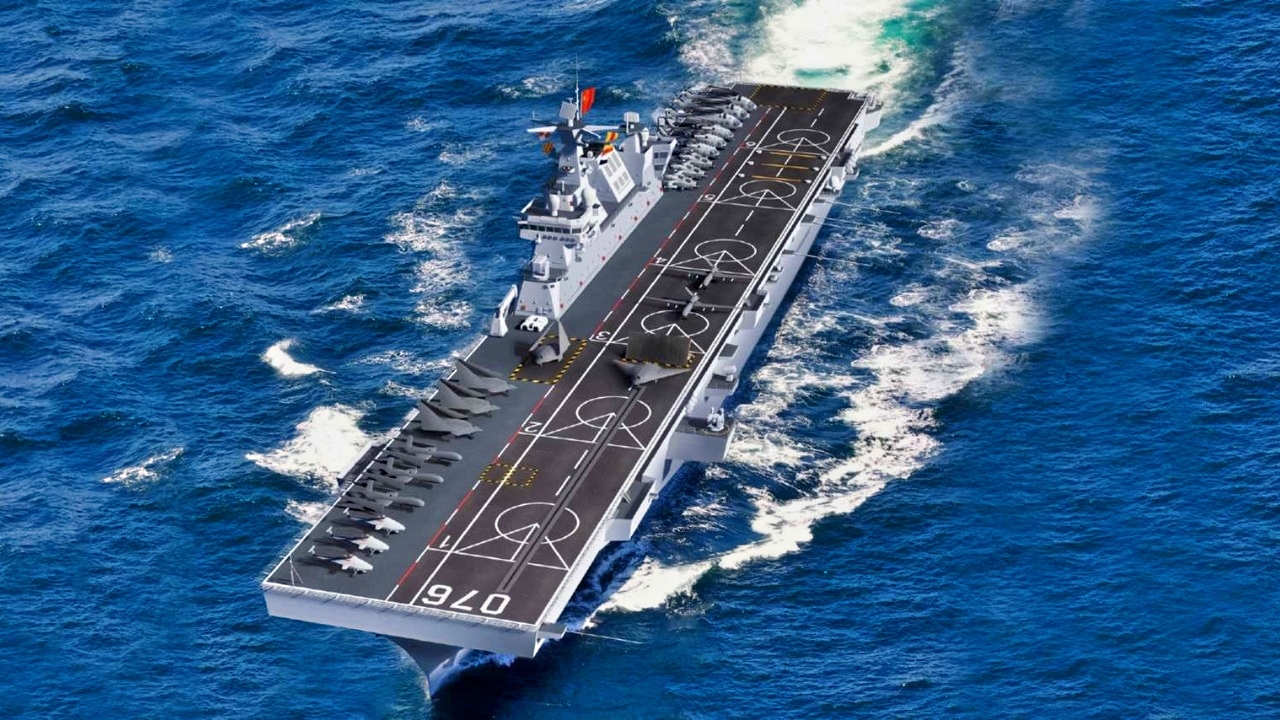
China Type 076 from Chinese Weibo Screenshot.
But ideally, the region’s small states would like to stay out of this showdown altogether and trade with all regional players to pursue their development goals.
Southeast Asian Muslim states Malaysia and Indonesia have done a particularly good job of this. They are politically and culturally distinct enough from northeast Asia to claim some distance from the Sino-Japanese/Taiwanese/American standoff.
And they are distant enough to avoid being chain-ganged into a northeast Asian conflict, at least initially.
Far more challenging will be South Korea’s position. It has tried vigorously for decades to walk between the raindrops, desperately avoiding a public choice for or against China. As a US ally, South Korea is ostensibly aligned against China in a showdown.
But its governments have pointedly avoided saying as much. South Korea’s left-progressives, in particular, have been careful to avoid antagonizing China.
The current South Korean president even stated, as a candidate last year, that South Korea should not participate in a Sino-US war over Taiwan.
South Korea’s second-largest trading partner, after the US, is China. And the South Korean left is traditionally hostile to Japan. Alignment with Japan against China would cause a deep fissure in South Korean society.
On the other hand, if South Korea does not aid the US and Japan in what could become a major war, then there is no reason for the US to be allied with South Korea.
Seoul does not need US assistance to tackle the North Korea problem. It is capable of doing that alone.
The alliance only makes sense to the US if South Korea helps America with regional issues—most obviously Taiwan. The South Koreans are stuck with a tough choice.
The Decision Fork is Approaching
South Korea’s dilemma is only the most acute of what all the region’s small states face.
If Sino-Japanese tensions worsen and the region slides into an overt cold war, most smaller powers will feel pressured by the larger players to choose a side.
Dithering strategies have worked surprisingly well for them. But China’s surprising recalcitrance in the current dispute suggests the long-awaited decision fork is approaching.
Author: Dr. Robert Kelly, Pusan National University
Dr. Robert E. Kelly is a professor of international relations in the Department of Political Science and Diplomacy at Pusan National University in South Korea. His research interests focus on Security in Northeast Asia, U.S. foreign policy, and international financial institutions. He has written for outlets including Foreign Affairs, the European Journal of International Relations, and the Economist, and he has spoken on television news services such as the BBC and CCTV. His personal website/blog is here; his Twitter page is here.