
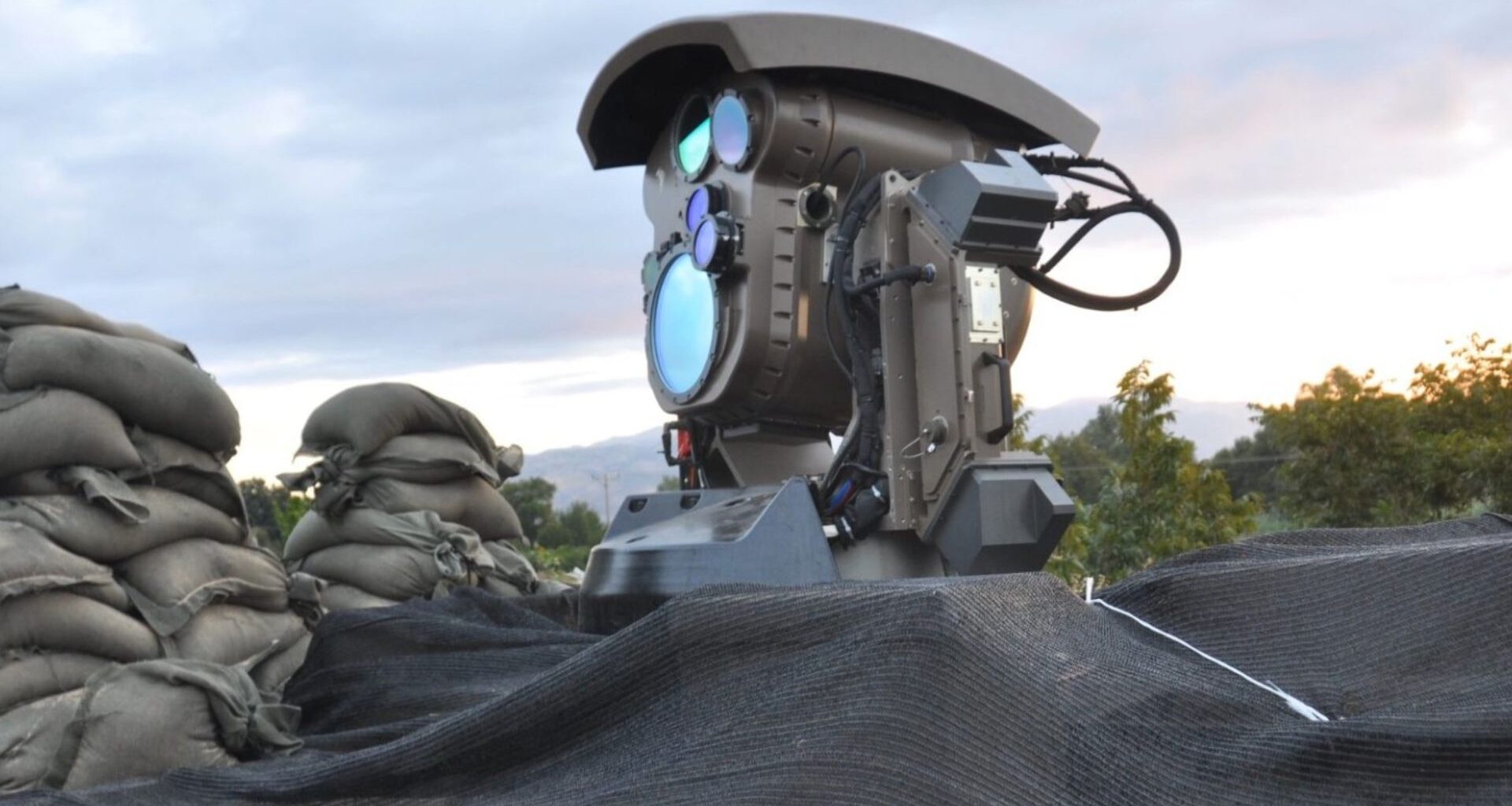
Israel plans to deploy its first operational high-power laser air-defense system by the end of the year, marking a significant shift in how the country counters drones, rockets, and other aerial threats, the Defense Ministry said.
The system, known as Iron Beam, completed operational testing in September and will become the world’s first combat-ready laser interceptor.
The 100-kilowatt system is designed to destroy targets within seconds and at a fraction of the cost of traditional missile-based defenses.
High-power drone-killing laser weapon
During several weeks of trials, Iron Beam successfully intercepted rockets, mortar shells, unmanned aerial vehicles, and other airborne threats, according to the ministry.
Defense officials said the laser demonstrated “precise and reliable” performance in scenarios meant to replicate combat conditions.
Iron Beam will add a fifth tier to Israel’s multilayered air-defense architecture, which includes Iron Dome, David’s Sling, and the Arrow 2 and Arrow 3 systems.
While those systems have achieved interception rates of 90% to 95% against rockets and ballistic missiles, they have been less effective against drones and low-flying unmanned aircraft, sometimes reaching only about 50%, Israeli officials say.
The new laser is designed to counter small, slow targets flying close to the ground, an area in which traditional radar-guided interceptors often struggle.
Need for a new weapon
Israel has faced an increasing threat from Iranian-made Shahed drones, which have been used repeatedly in attacks by Hezbollah and other Iran-backed groups.
The Shahed-136, a loitering munition with a carbon-fiber body and electric motor, is difficult to detect on radar.
Larger variants carry heavier payloads: the Shahed-149 can release up to 13 bombs, while the Shahed-191 can fire two precision-guided missiles with a combined payload of about 50 kilograms.
Shahed drones have struck multiple communities in northern Israel, including Eilat and the Jordan Valley.
One drone, launched from Lebanon, reached Prime Minister Benjamin Netanyahu’s home in Caesarea, Israeli officials said. Soldiers along Israel’s northern border have struggled to stop the growing number of UAV incursions.
A lower-powered variant of the Iron Beam was already pressed into service during fighting in October 2024, when it intercepted 35 to 40 Hezbollah drones, according to military officials.
A few cents per shot
Defense analysts say the primary advantage of Iron Beam is its low cost. Each engagement requires only a few cents’ worth of electricity to generate a full-power laser discharge.
By comparison, interceptor missiles fired by systems like Iron Dome can cost between $10,000 and $100,000 per shot.
The laser also requires no ammunition, logistics chain, storage, or resupply, and it cannot run out during prolonged engagements.
Iron Beam integrates its own radar, electro-optical sensors, tracking cameras, and a fire-control computer to lock onto and destroy targets. The system was developed by Rafael Advanced Defense Systems, one of Israel’s three major defense firms, along with Israel Aerospace Industries and Elbit Systems.
Rafael is known for producing the Spike anti-tank missile family, used by 39 countries, and the Trophy active-protection system, which the U.S. Army has adopted. The company also manufactures David’s Sling, recently purchased by Finland.
Israel views Iron Beam as a critical addition as the drone threat expands across the region, and defense officials say the system will be integrated into operational forces before the end of the year.