
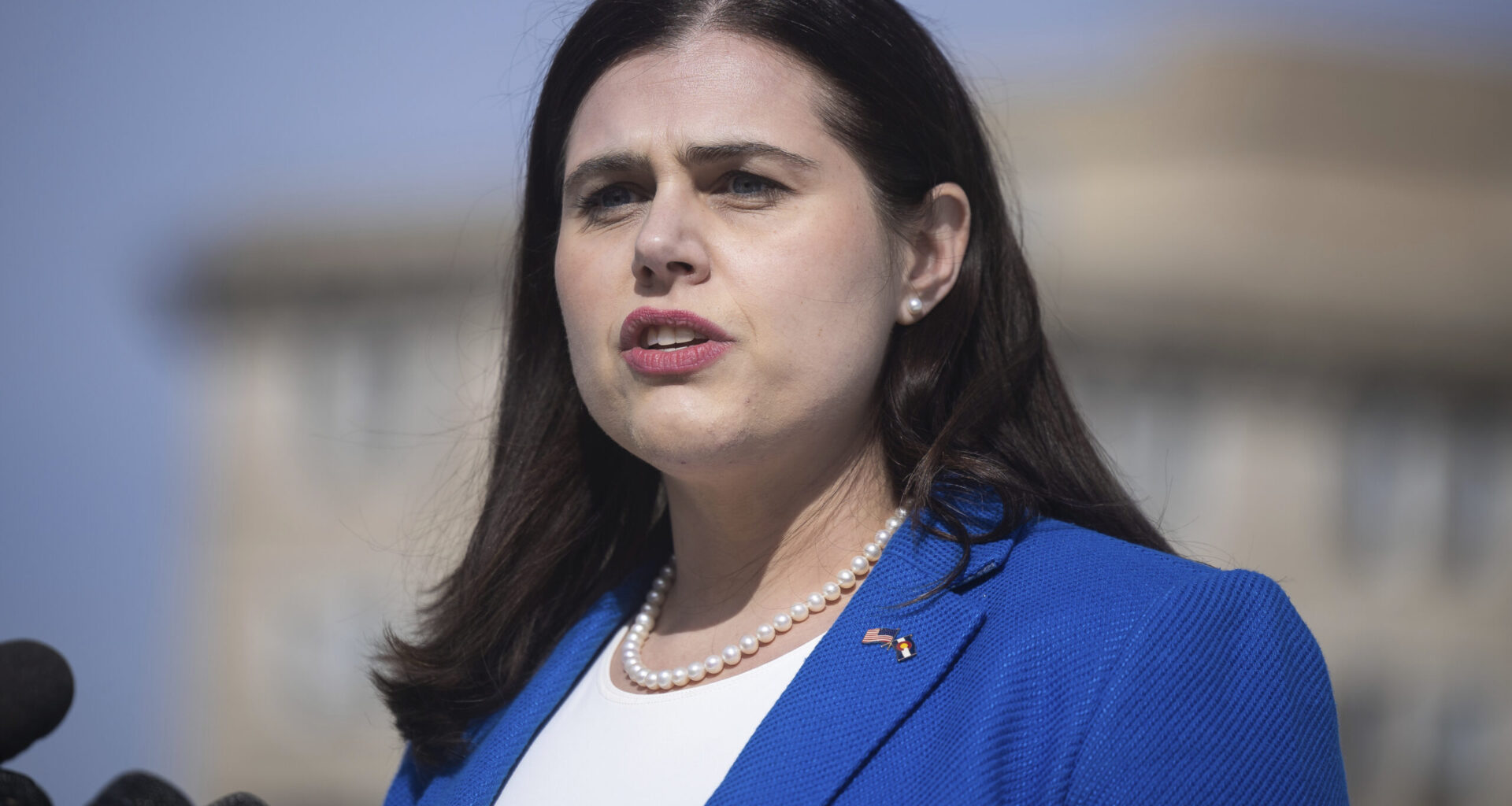
 Colorado Secretary of State Jena Griswold speaks outside the U.S. Supreme Court in Washington, D.C. Feb. 8, 2024 after oral arguments in Trump v. Anderson, a case on whether or not former President Trump can remain on the ballot in Colorado for the 2024 presidential election. (Francis Chung/POLITICO via AP Images)
Colorado Secretary of State Jena Griswold (D) is the latest state election leader to reject a request from the U.S. Department of Justice (DOJ) to share private, unredacted voter data with the federal government.
“We will not comply with the Trump Department of Justice’s request for Coloradans’ sensitive voting information,” Griswold said in a statement. “The DOJ can take a hike; it does not have a legal right to the information. Colorado will not help Donald Trump undermine our elections and hurt the American people.”
In an interview with Democracy Docket, Griswold went further.
“Is it disorganization, or are they lying to our faces?” she asked, in reference to conflicting statements from DOJ about why it wants the data.
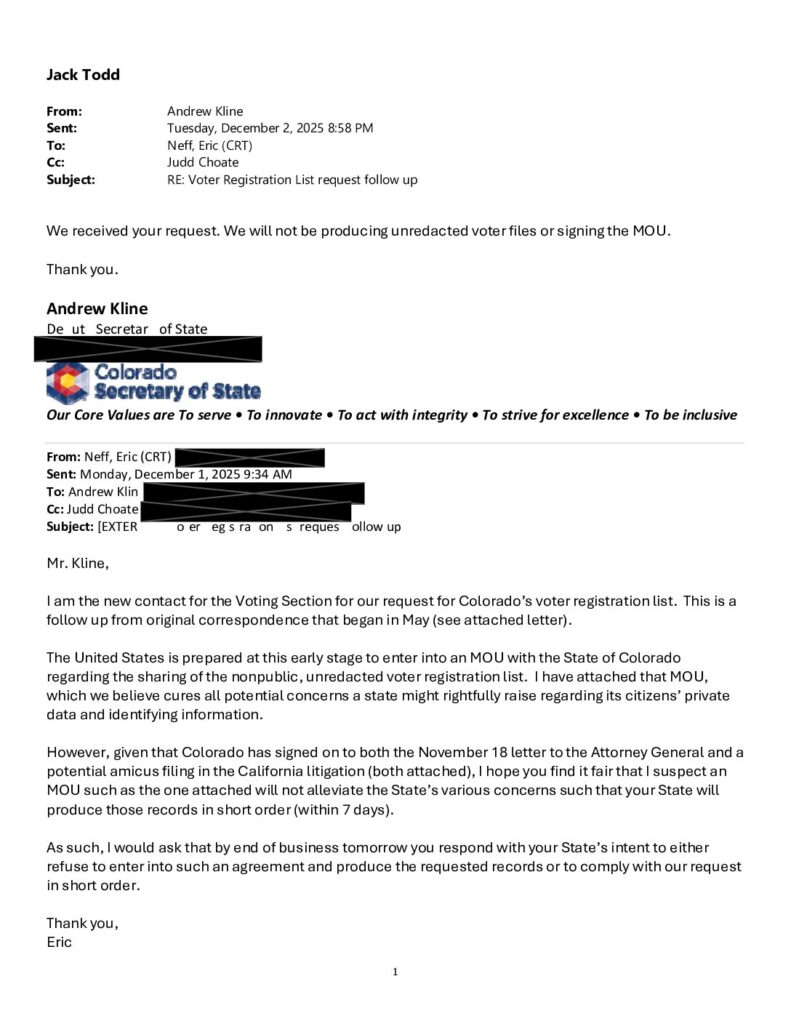
A lawyer in DOJ’s voting section contacted Griswold’s office Monday offering a memorandum of understanding (MOU) for Colorado to share its “nonpublic, unredacted voter registration” with the department, according to an email obtained by Democracy Docket.
According to a copy of the MOU, which was also obtained by Democracy Docket, DOJ said it wants access to Colorado’s voter registration list (VRL) “to test, analyze, and assess states’ VRLs for proper list maintenance and compliance with federal law.”
Deputy Colorado Secretary of State Andrew Kline rejected DOJ’s offer.
“We will not be producing unredacted voter files or signing the MOU,” Kline wrote in an email to DOJ.
Over the past few months, DOJ’s civil rights division, along with prosecutors from the criminal division, have contacted state election leaders with offers to enter into a data-sharing agreement with the federal government, in hopes that states will grant the department unfettered access to sensitive voter data. A number of states, including Arizona, Oregon and Rhode Island similarly rejected DOJ’s proposal to share their voter data with the Trump administration.
More broadly, however, DOJ has been trying to seize states’ voter registration rolls, which include private data — like individual voters’ name, address, driver’s license number and partial social security number. The effort started with a series of letters sent to nearly every state demanding access to voter rolls and other sensitive voting systems, but has since escalated to DOJ suing 14 states to obtain access to private voter data.
In September, the Department of Homeland Security (DHS) confirmed to Democracy Docket that it was sharing voter registration with DOJ as part of a broad push to remove noncitizens from the rolls. But Heather Honey, a senior “election integrity” official at DHS later contradicted that statement, claiming the department wasn’t using DOJ voter data.
The confusion led Griswold and nine other state election leaders to send a letter to DHS and DOJ last month demanding answers about what the agencies are using states’ voter registration data for.
“They are making unprecedented requests,” Griswold said in an interview with Democracy Docket. “DOJ and DHS are saying conflicting information to secretaries of state. Is it disorganization, or are they lying to our faces? Americans deserve to know what Trump is doing, collecting mass voter data and whether it’s being quietly run through an unproven citizen check system.”
Colorado was an early target of DOJ’s effort to collect election data; in May the department made an unprecedented sweeping demand of Griswold’s office to produce all records of the 2024 election, and any records that remain of the 2020 election.
“What they’re going to do with all this data, I don’t know,” Griswold reportedly said at the time of the request. “But I’m sure they will use it to push their ridiculous disinformation and lies to the American public.”