
Roots of conflict traced back to Rwandan genocidepublished at 16:22 GMT
16:22 GMT
The origin of the current fighting can be traced back to the genocide in Rwanda in 1994 when about 800,000 people – mostly from the Tutsi community – were slaughtered by ethnic Hutu extremists.
The genocide ended with the advance of a force of Tutsi-led rebels commanded by Paul Kagame, who is now president of Rwanda.
Fearing reprisals, an estimated one million Hutus then fled across the border to what is now DR Congo. This stoked ethnic tensions as a marginalised Tutsi group in the east – the Banyamulenge – felt increasingly under threat.
Rwanda’s army twice invaded DR Congo, saying it was going after some of those responsible for the genocide, and worked with members of the Banyamulenge and other armed groups.
After 30 years of conflict, one of the Hutu groups, the Democratic Forces for the Liberation of Rwanda (FDLR), which includes some of those responsible for the Rwandan genocide, is still active in eastern DR Congo. Rwanda describes the FDLR as a “genocidal militia” and says its continued existence in the DR Congo’s east threatens its own territory.
In February, Rwandan government spokesperson Yolande Makolo told the BBC the FDLR wanted to return to Rwanda to “finish the job”, and this is why Rwanda had to defend its territory.
Rwanda accuses the Congolese authorities of working with the FDLR. DR Congo denies this, but in the recent peace deal, both sides agreed to ending “state support” for the FDLR. The agreement also says the group should be neutralised and Rwanda should row back on its “defensive measure”.
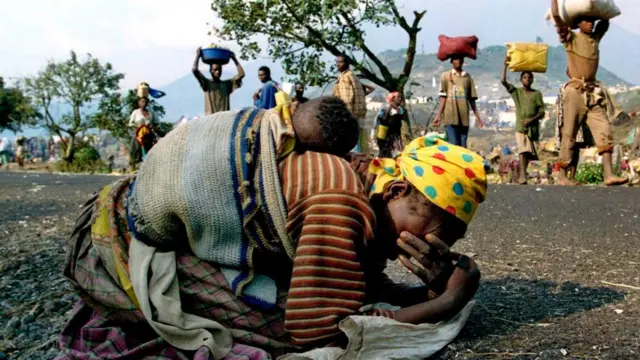 Image source, Reuters