

Listen to this article
Estimated 3 minutes
The audio version of this article is generated by text-to-speech, a technology based on artificial intelligence.
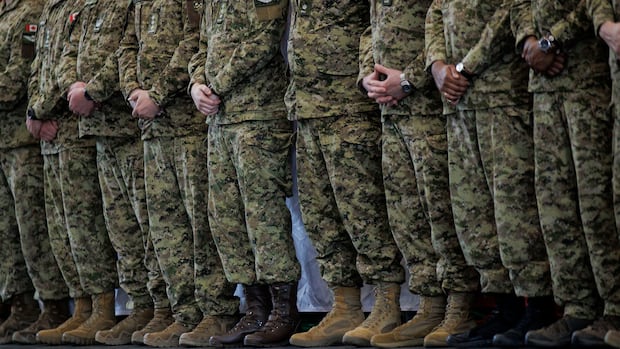
The Canadian military is undertaking a structural reorganization designed to make the force more nimble and adaptable to new technology, the Department of National Defence said Thursday.
Following the lead of allies such as Australia, it has created a new joint forces command that will house major support elements such as military health services, logistics and operational support branches and the military police.
In addition, the organization will be in charge of the new and emerging field of counter-drone warfare as well as — eventually — integrated air and missile defence, said Lt.-Gen. Darcy Molstad, the new commander of Canadian Joint Forces Command (CJFC).
He said his organization is responsible for joint military capabilities, which span all domains — land, sea, air, cyber and space.
Although this kind of reorganization has been talked about for the better part of 15 years, Molstad said the recent war between Russia and Ukraine has put the necessity of the changes into sharp relief and underlined the importance of having one command overseeing elements that don’t fit easily into the traditional mould of army, navy, air force and special forces.
“We’re seeing that as a great example in Ukraine where their command and control systems, their use of dual-use technologies and communication systems, provide situational awareness,” Molstad said. “Their use, prolific use, of uncrewed systems and autonomy and counter-uncrewed systems is really game-changing.”
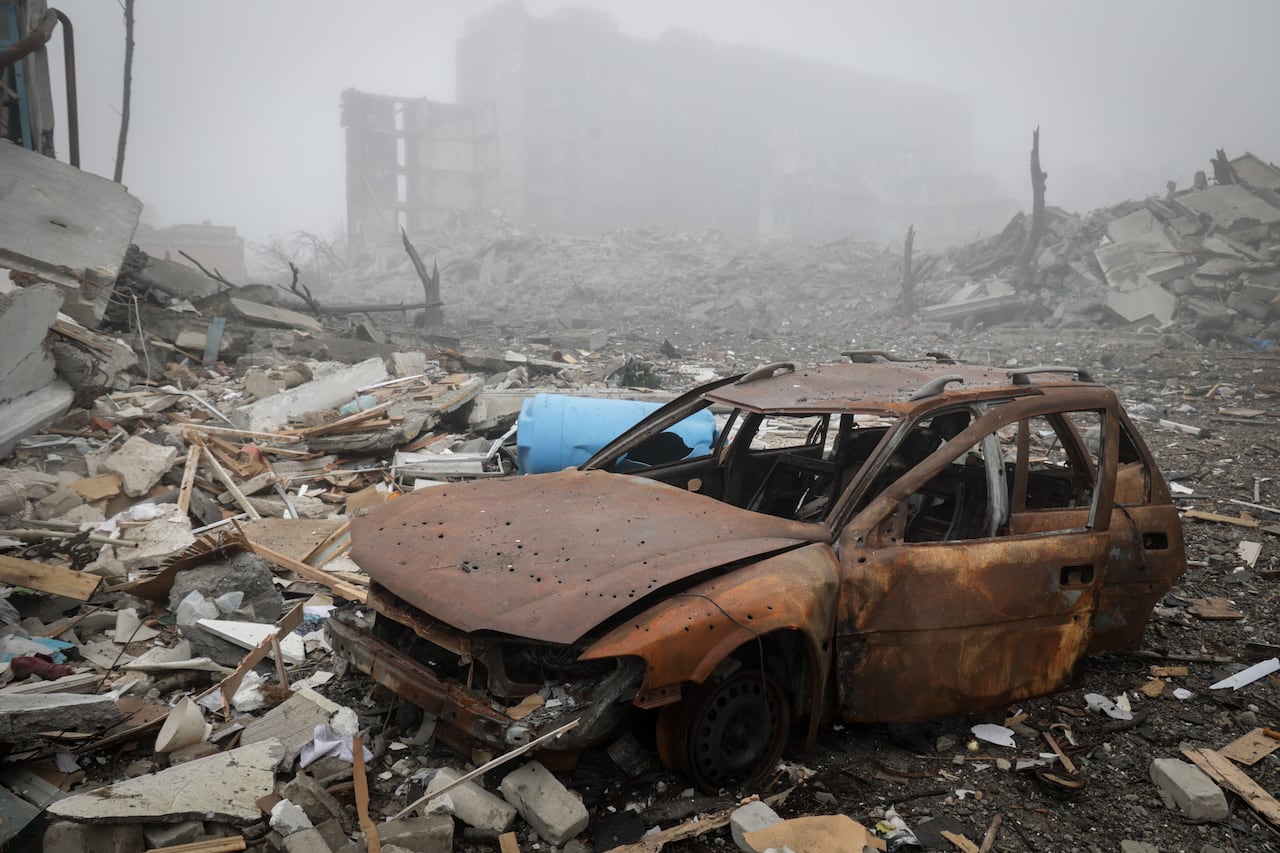 A car sits amid rubble in what was the town of Kostyantynivka, the site of heavy battles with Russian troops in the Donetsk region of Ukraine on Nov. 28. (Oleg Petrasiuk/Ukraine’s 24th Mechanized Brigade/The Associated Press)
As part of the reorganization, one of the first priorities will be to bolster the Canadian Forces Health Services Group.
“We’ve got to expand our capacity to provide not just spectrum of care but to build out to be able to provide health services in extremis in a potential conflict,” Molstad said.
Some of that is being driven by Canada’s commitments to NATO, he added.
The change in ownership of the military police won’t happen right away.
Right now, the Canadian Forces Provost Marshal (CFPM) is supervised by the vice chief of the defence staff. But legislation before Parliament — Bill C-11 — changes that once the legislation receives royal assent.
Molstad said while CJFC will soon be responsible for the military police, the organization would continue to execute its policing functions with independence.