
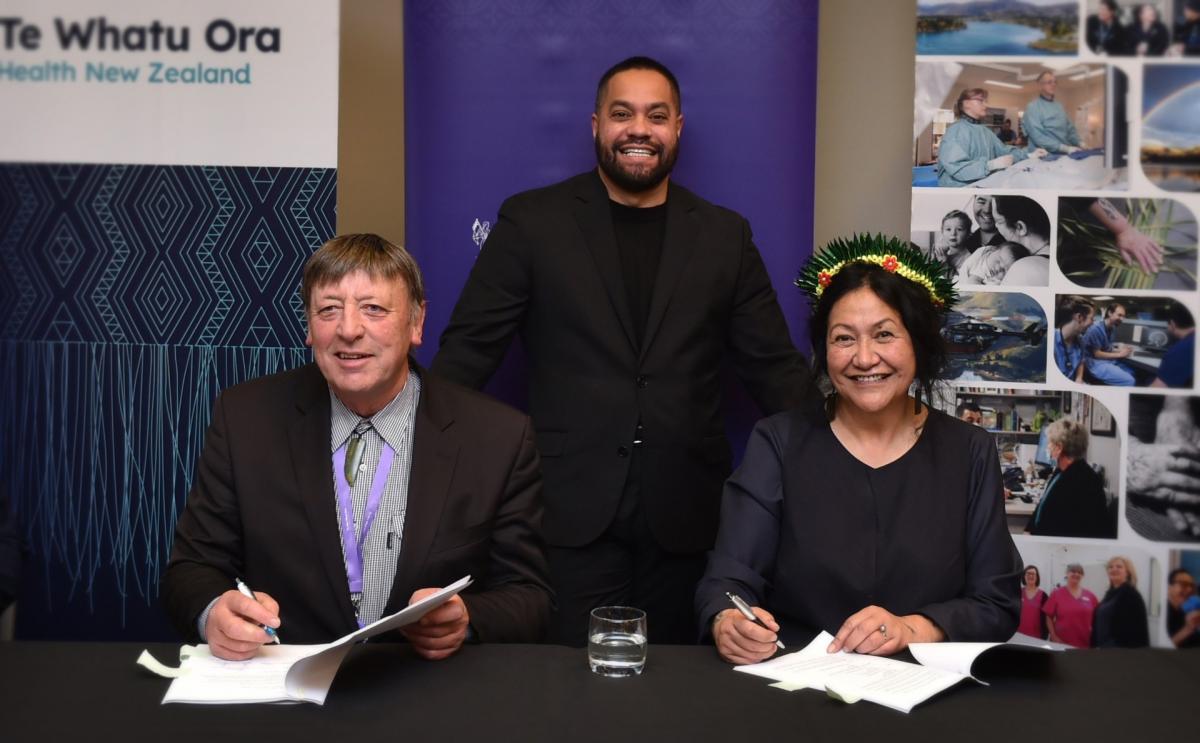
A feted Dunedin charity has rapidly expanded on the back of government funding and promises of health and social equity, but is now under Department of Internal Affairs scrutiny.
Mary Williams took a closer look at Te Kāika’s performance, governance and oversight.
The goal was, and remains, important: Te Kāika’s 2015 founding constitution said it existed to develop low-cost, wraparound primary care services that would ‘‘meet the needs of whānau and low-income families in Dunedin’’.
Since then, its financial growth has been remarkably rapid and not entirely constrained to its original remit.
Te Kāika, meaning village, started life as a Caversham GP practice, but its 2024 accounts reported more than $14 million revenue, 148 staff and $29m assets including a 2500sq m Caversham ‘‘wellbeing hub’’ which it shares with government health and welfare services.
It held 41 contracts to deliver social services and its GP surgeries had 8859 patients, including in Oamaru and Queenstown. A visit to Te Kāika in Caversham is low-cost, but Te Kāika’s Queenstown practice charges $67 without a community card.
Revenue levels have enabled Te Kāika to splash out on advertising deals – $606,000 in 2023 and 2024 – including with the Highlanders rugby team.
However, the publicity is now not all good. Te Kāika is under investigation by the Department of Internal Affairs Te Tari Taiwhenua (DIA).
The investigation has been triggered by concerns about loans to Te Kāika’s leaders using Te Kāika funds, and there have been wider concerns swirling in the Dunedin community.
People in Dunedin who spoke to the Otago Daily Times about Te Kāika stressed ardent support for mana whenua getting equitable care and would only speak on the basis of anonymity – the city is a small place.
A common concern about Te Kāika was staff instability.
Sandra* said she would never have guessed her Te Kāika GP’s advice late last year.
‘‘They said all the doctors are leaving and I might want to register elsewhere, so I did.’’
One city social leader said Te Kāika staffing issues meant it was a challenge to partner with it.
‘‘The social sector depends on trusted partnerships – but you meet someone who works at Te Kāika then they quickly leave.’’
Another said they had briefly partnered with Te Kāika to provide care for young people but Te Kāika staffing had been inadequate to meet the youths’ high needs.
Several city leaders blamed Te Kāika leadership, describing it as controlling or out of control, and expressed frustration.
One said: ‘‘This is an avoidable place for Te Kāika. The model could and should work.’’
The ODT investigated and found Te Kāika had a tiny governance board that had broken its own constitutional rules requiring it to be bigger, and had employed close relatives into senior paid Te Kāika roles. There were large and largely unexplained loans and payments to the leadership.
Performance reporting about its multimillion expenditure of public funds was limited and flagged both staffing and delivery problems.
Charity governance experts expressed concern about both the setup and lack of government oversight.
Tiny board, family affair
Behind the brand of Te Kāika there is a registered charity called Otakou Health Ltd and for nearly five years, until September 2023, its only board members were Kāi Tahu’s Donna Matahaere-Atariki and Matapura Ellison.
Chairwoman Ms Matahaere-Atariki has been a prominent voice for Māori health and wellbeing, until recently holding the post of Deputy Children’s Commissioner and also, in the past, roles at Well South, the University of Otago and elsewhere. Behind OHL is another layer; two separate organisations with shareholder voting rights.
One is a deregistered charity called Arai Te Uru Whare Hauora and its board members are also Ms Matahaere-Atariki and Mr Ellison. The other is Te Rūnaka o Ōtākou (the Dunedin Ngāi Tahu authority) and Ms Matahaere-Atariki is a board member.
The setup has broken rules designed for democracy and competency.
Section 28 of OHL’s constitution (amended in 2017) stipulates three board members, minimum. Arai Te Uru Whare Hauora’s 2008 constitution stipulates four.
OHL’s company records show it was not always this way.
In 2015, the charity’s board comprised Ms Matahaere-Atariki, a charity worker Albie Laurence and the University of Otago’s Peter Crampton, Professor of Public Health in Kōhatu (Centre for Hauora Māori). In 2017 they were joined by Mr Ellison and the university’s chief operating officer Steve Willis.
Shares were split between the university, Te Rūnaka o Ōtākou, and Arai Te Uru Whare Hauora.
However, in 2017, Mr Laurence resigned to become Te Kāika chief executive. Prof Crampton left in 2018, Mr Willis left in 2019 and the university ditched its shares in 2020. There was rapid growth after OHL’s board membership had shrunk to two people. The charity’s 2021-22 accounts show revenue trebling in a year – from $4m to more than $12m. Staff grew from about 20 to 120.
Then, in June 2022, there was a major shift at the top of the tree of paid staff. Mr Laurence was suddenly out of his chief executive role and unavailable for comment.
Matt Matahaere, Ms Matahaere-Atariki’s son, was appointed chief executive. Ms Matahaere-Atariki’s daughter, Winnie Matahaere, manages social services.
Accounts do not specify how much the board has been paying Ms Matahaere-Atariki’s children, but salaries and ‘‘short-term benefits’’ paid to 4.83 fulltime equivalent (FTE) staff in ‘‘key’’ roles in 2022-23 was $904,117, up more than $100,000 compared with the previous year for similar staff numbers.
In 2023, the board was expanded, by only one, and it was an eyebrow-raising choice. Accountant James Hennessy was previously suspended from practising for two years for breaching the NZ Institute of Chartered Accountants’ ethical code in activities unrelated to Te Kāika.
Ms Matahaere-Atariki said Mr Hennessy’s appointment was ‘‘a condition of a refinance at the request of a secured creditor’’.
‘‘The other board members have every confidence in his judgement,’’ she said.
The ODT asked a leading charity expert for their opinion on charity board sizes and problems that might ensue.
Garth Nowland-Foreman is director of Lead, a national organisation that helps charities improve governance and management.
He said: ‘‘Even in the smallest organisations, two people would be unlikely to have enough robustness and mix of skills to oversee the complex environment that charities operate in today.
‘‘When a board is weak and compromised there are likely to be other accountability failures and in far too many cases we need smarter oversight by government that leads to higher quality and better outcomes from public expenditure.’’
Payments spark investigation
It is usual for charity board members to be unpaid and OHL’s 2021-22 accounts said Ms Matahaere-Atariki and Mr Ellison received no remuneration.
However, this statement does not appear in the 2022-23 accounts, which say $80,123 was paid to board members plus $8695 in 2023-24.
The latter accounts also highlight the ‘‘unsecured staff loans’’ to Ms Matahaere-Atariki and her chief executive son which are being investigated by the DIA.
OHL’s constitution requires its shareholders to give approval for payments to board members, but in the case of Ms Matahaere-Atariki and Mr Ellison, they are board members and shareholders.
A note in its 2021-22 accounts says Arai Te Uru Whare Hauora ‘‘merged’’ into OHL on September 30, 2022, and it has been deregistered as a charity for not filing returns, but it is still an OHL shareholder.
The ODT asked Ōtākou Rūnaka, as the other shareholder, whether it had approved payments to OHL board members and chief executive or been invited to annual meetings, as required under OHL’s constitution.
Its reply distanced itself: ‘‘OHL operates independently from Te Rūnaka o Ōtākou and is best placed to respond to your query.’’
The ODT asked the DIA about OHL’s governance setup and legality, in the context of the payments to board members and family members, but DIA said it could not comment due to ‘‘actively looking’’ into the charity.
Gaps in reporting
Social sector charities are expected to track and report performance so funders can see whether services being provided are stable, effective and that no harm is being done, as notes Memo Musa, chief executive of Atamira Platform which represents charities in the addiction sector.
Te Kāika promotes its He Korowai Manaaki service as “transforming” healthcare and addressing the ‘‘comprehensive wellbeing of whānau’’, but its recent reporting provides little evidence to back those claims.
Instead, its documents give limited detail on how funding was used, staff capability or the actual impact of the support provided, offering some basic numbers without context.
Mr Musa notes it is not always easy to do perfect outcome reporting, but it does charities no favours not to report.
Te Whatu Ora Health New Zealand (HNZ) is a particularly important Te Kāika financial partner.
It provides funding for every patient registered with Te Kāika GP practices.
It spent $1.93m furnishing the Caversham hub for 15 of its own health services and three clinics – including women’s health, paediatrics, rheumatology and mental health – and funds multiple Te Kāika social service contracts.
Te Kāika’s short performance statement said 240 whānau were engaged in all its social services but mentioned just one internal evaluation of its work – a focus group for users of an HNZ-funded alcohol and drugs social service called Te Whare.
Focus group attendees had ‘‘highlighted the positive impact’’ of activities including a weaving workshop, pamper day and self-defence workshop, the statement said.
The ODT asked HNZ for the contract’s specification and performance reporting about its delivery.
It took months, and repeated requests, to get answers.
A released specification described a service for adults suffering serious alcohol or drug use and requiring serious levels of care by qualified staff.
Further HNZ replies revealed a major contract requirement – the employment of seven fulltime employees – had not been met and performance reporting contained errors and indicated delayed service delivery.
HNZ had funded Te Kāika nearly $1.8m for two years to mid-2025 to care for clients by assessing their needs and then providing them with evidence-informed interventions, including counselling and clinical groups. Te Kāika was required to report using a national data collection system (Programme for the Integration of Mental Health Data) and use ‘‘an expert workforce’’ registered with the Addiction Practitioners Association.
HNZ did not initially provide the ODT with performance reports, only saying that Te Kāika was ‘‘required to report on FTE’’ (fulltime equivalent staff numbers).
The ODT subsequently asked for numbers of staff employed, and, in May this year, HNZ replied that ‘‘reports from Te Kāika … do not include FTE numbers’’ and explained an additional reporting problem about use of the service. Te Kāika had reported on people entering the service for the year to March 2024 but data for the following quarter was: ‘‘not received’’. ‘‘Data submitted by Te Kāika for April to June 2024 was the same as data submitted for October to December 2023.’’
The ODT repeated requests for performance information including staffing, and asked to see correspondence about the contract.
HNZ replied that a reporting template had failed to include anywhere for Te Kāika to report on staffing. An email exchange from this February was also released, in which an HNZ civil servant explained to Te Kāika a need to provide staffing numbers due to ‘‘an OIA request’’ and reminding the charity HNZ had funded seven fulltime posts.
Te Kāika’s general manager for addiction and mental health Jo Kingi had replied with staff data; 5.8 FTE for most of 2024. Ms Kingi, a former midwife, said staffing problems had included not enough ‘‘office space’’ for them; and challenges finding staff ‘‘whose values/purpose align’’.
There was no information in the correspondence about where the government funds earmarked for more staff had gone.
HNZ then finally released a series of quarterly performance reports that Te Kāika had submitted. The ODT compared a report for the first quarter of this year with one for the same quarter last year and found identical text; group therapy sessions were ‘‘ready to commence’’ and clinical groups were ‘‘planning to commence’’.
Platform’s Mr Musa said such performance-reporting requirements were important.
‘‘There are conversations that need to happen if people have got vacancies limiting capacity to deliver services. So that sounds highly unusual to me.’’
Information hard to come by
The ODT sought performance information from other government agencies funding Te Kāika.
The Ministry of Social Development (MSD), which runs a Work and Income office from the Te Kāika Caversham hub, had funded Te Kāika to deliver social service contracts worth $2.7m, including supporting people impacted by family violence.
One performance report released by MSD, written by a Te Kāika family harm social worker, said it was proving ‘‘incredibly challenging’’ to replace a departed employee and the ‘‘hub requires a more accessible social worker to oversee and case manage complex, high-risk whanau’’.
The worker whistleblew their concern that, for safety reasons, two staff should attend home visits – but they were not always available.
There is a section in the worker’s report for client feedback; but none is recorded.
A note at the end of the report says the worker has also left.
HNZ’s Māori directorate said it had given Te Kāika a $587,000 contract to provide clinical services to people with gambling addictions between 2024 and 2027. The contract specification required clinical staff delivering clinical services and evidence of ‘‘impact’’.
No Te Kāika reporting on the contract was provided, so the ODT asked again. HNZ released some quarterly reports but no staff or client numbers. The reports said a once-weekly gambling anonymous meeting had been set up, but the employee running the service was ‘‘looking forward’’ to clinical staff coming on board.
The ODT asked for more information, twice. Eventually, data was provided about numbers of people helped, but no clarity was given regarding how. Another, later, quarterly report was released that repeated the same statement about ‘‘looking forward’’ to clinical staff.
HNZ head of government services Sasha Wood said HNZ expected the service to be led by clinical staff and had ‘‘no reason to believe that this is not occurring’’, but did not collect the data.
Oranga Tamariki said it had funded eight contracts worth more than $3.5m for delivery in 2023-24, including shared homes for people on remand or trying to live independently and a service for young offenders.
However, six of the 2023-24 contracts had ‘‘funds reconciled due to underutilisation’’.
Its deputy chief executive for commissioning Benesia Smith said the agency held ‘‘regular hui’’ with Te Kāika but provided no performance information, citing commercial sensitivity.
Social sector leaders in Dunedin were asked their thoughts about charity reporting to government and its scrutiny.
One said you could ‘‘drive a bus’’ through some charities’ reports. Another said reports were ‘‘rarely read’’ by civil servants.
Recruitment challenges
Responding to the ODT, Ms Matahaere-Atariki said Te Kaika ‘‘is not alone in facing recruitment challenges’’.
She provided numbers of staff in Te Kāika services for children and youth (14) and numbers of young people in those services at the time (41), but no additional performance information.
She said Te Kāika ‘‘consistently receives positive feedback about our service provision from organisations that we work with’’.
The ODT asked how Mr Matahaere, as chief executive, could have been held to account independently when his bosses were his family? She replied that the governance board has ‘‘absolute confidence’’ in him.
She declined to answer 18 further questions about governance, payments to the board, staff and their qualifications, funding, performance and whether the charity had a succession plan for her leadership.
An OHL-hired PR agency said no further comments would be provided by the charity and complained about ODT ‘‘persistence’’.