Australia is at serious risk of losing its fight against its most formidable biosecurity threat, with a $2 billion fire ant disaster looming on the horizon. The invasive superpest’s terrifying ability to decimate crops, kill livestock and cause potentially deadly allergic reactions to Australians has been widely documented in recent years.
However, the exhausting toll they take on property owners across southern Queensland — where the largest infestation lies — is just now starting to emerge.
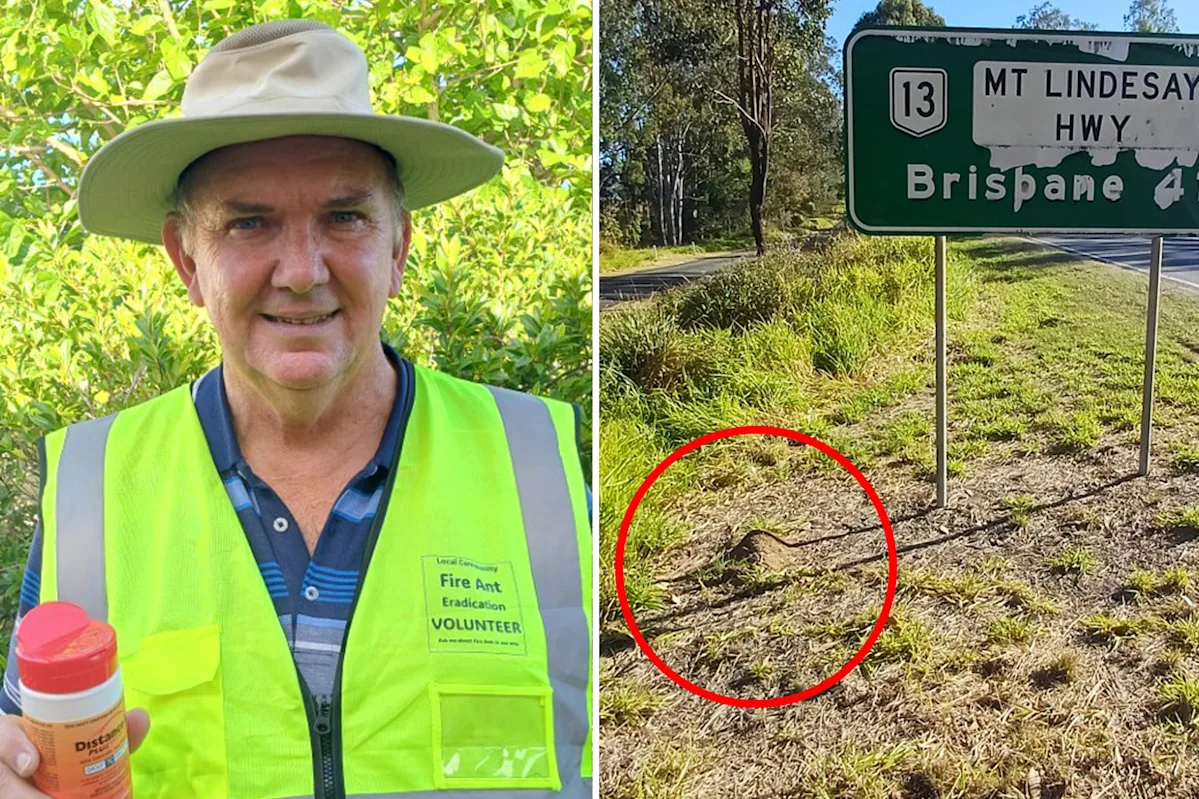
Bruce Reimers, who lives in Ormeau, has experienced the battle firsthand, and told Yahoo News he has taken it upon himself to try and help stamp out the disastrous species.
The 65-year-old moved to the area from Toowoomba roughly two years ago when his son William was diagnosed with bowel cancer.
Until then, he’d never seen fire ants before.
But it didn’t take him long to realise how hugely destructive they could be.
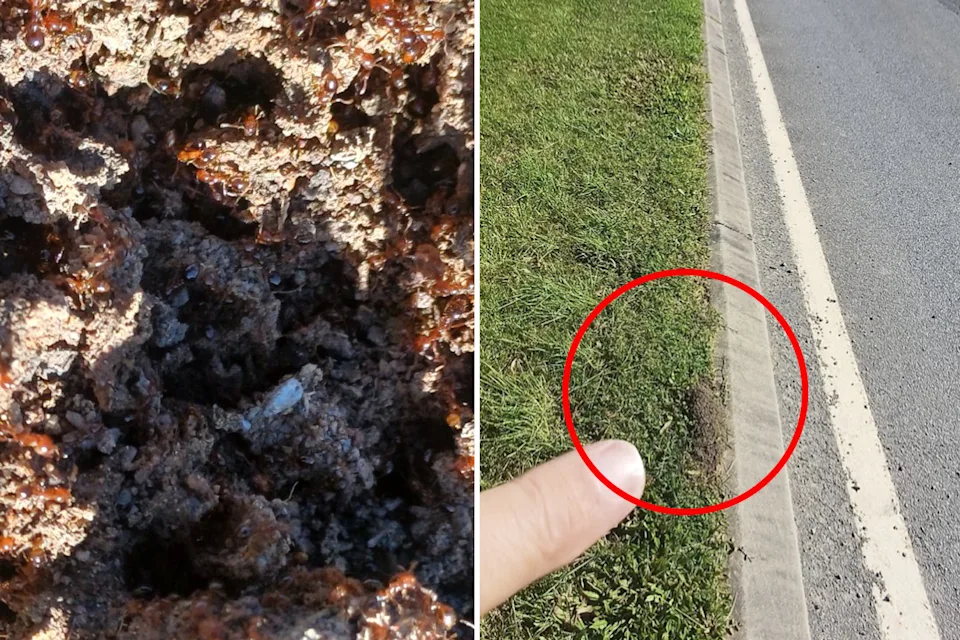
Bruce has encountered hundreds of fire ant nests. Source: Supplied
“They were literally hundreds of nests, and that is not an exaggeration,” he told Yahoo News Australia.
Taking matters into his own hands, the retiree began treating his new 5,000sqm property, and the neighbouring roadsides and athletic fields, with bait.
After William’s health continued to fail, and the chemotherapy took its toll, Bruce stepped up and also began treating the 40-year-old’s home in neighbouring South Maclean.
“He worked tirelessly to protect his young family, determined to keep them safe from fire ants,” the 65-year-old tearfully explained.
Tragically, William died in March.
“I have now taken up that responsibility, and I am committed to carrying on his efforts with the same dedication and care he showed every day,” Bruce said, noting his concerns that his young granddaughters, aged 3, 8 and 10, will be bitten by the insects.
“It is deeply important to me to continue the fight against fire ants on behalf of my late son.”
Have you been impacted by the spread of fire ants? Contact newsroomau@yahoonews.com
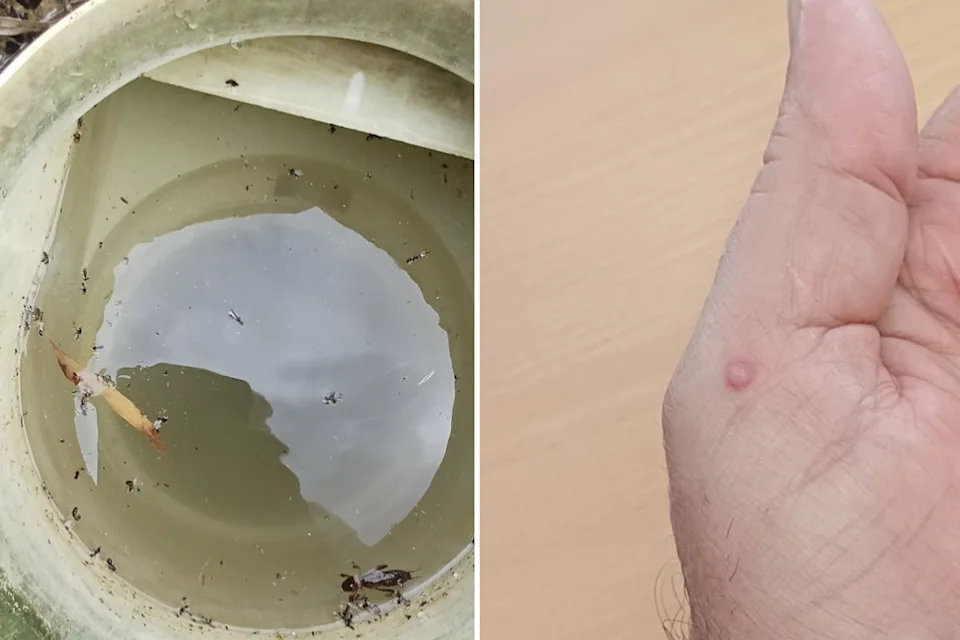
Bruce was bitten by a fire ant while cleaning his pool filter. Source: Supplied
Aussie works to protect young granddaughters from invasive pest
Bruce was initially forking out at least $50 a week to consistently treat both properties and some public areas.
“I just seem to disappear outside and come back in and tell them I got some… grandpa just sort of disappears for a while,” he laughed.
“We let them play outside because where they play, and I am watching it all the time, and over-treating it because I know they’re around.”
The full-time volunteer is now receiving help from the National Fire Ant Eradication Program, and has created his own high-vis vest so people know what he’s up to.
About a month ago, Bruce was cleaning his daughter-in-law’s pool filter when he was bitten, leaving welts on his hand.
“The girls could still get bitten without seeing a nest,” he said, pointing to the death of a young boy in Texas who accidentally stood on a pile of fire ants during a soccer game.
Why are fire ants so dangerous?
The red imported fire ant (RIFA) is one of Australia’s most destructive invasive pests. Their stings are painful and can trigger serious allergic reactions in humans and pets.
Earlier this year, Yahoo spoke to a mother who shared a harrowing tale about her son’s experience with fire ants after being stung.
They threaten wildlife by preying on native insects, birds and small animals, and they can damage crops, livestock, and infrastructure, including irrigation systems and electrical equipment.
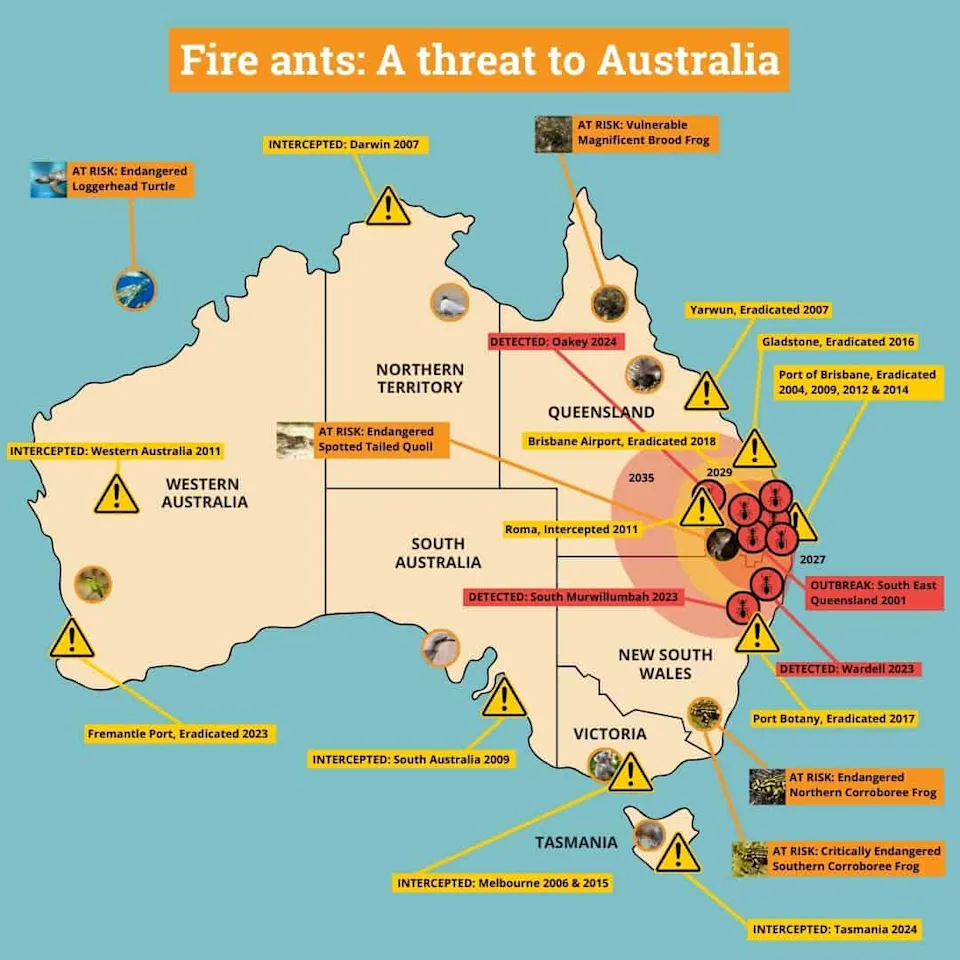
The Invasive Species Council of Australia says fire ants are an environmental and national disaster. Source: Invasive Species Council of Australia
Fire ants also spread quickly and can establish large colonies, making eradication extremely difficult once infestations take hold.
Following isolated detections across towns and suburbs, the NFAEP has implemented a series of treatments, including aerial dispersal of bait using helicopters and drones, as well as ground operations on smaller properties.
Despite some claims from homeowners, the NFAEP maintains that treatment is safe for both people and animals.
Some Aussies have even tried to stop biosecurity authorities from coming onto their property, a move that could land them a $16,690 fine.
“Imagine if your next-door neighbour was breeding venomous snakes, and these snakes were escaping from their yard into neighbouring properties,” Bruce said.
“Would it be ok if the owners refused to allow snake catchers or authorities to enter their property to relocate the breeding venomous snakes. Fire ants can kill people too.”
To learn more about the National Fire Ant Eradication program, click here. To donate to bowel cancer research in honour of William, click here.
Do you have a story tip? Email: newsroomau@yahoonews.com.
You can also follow us on Facebook, Instagram, TikTok, Twitter and YouTube.