
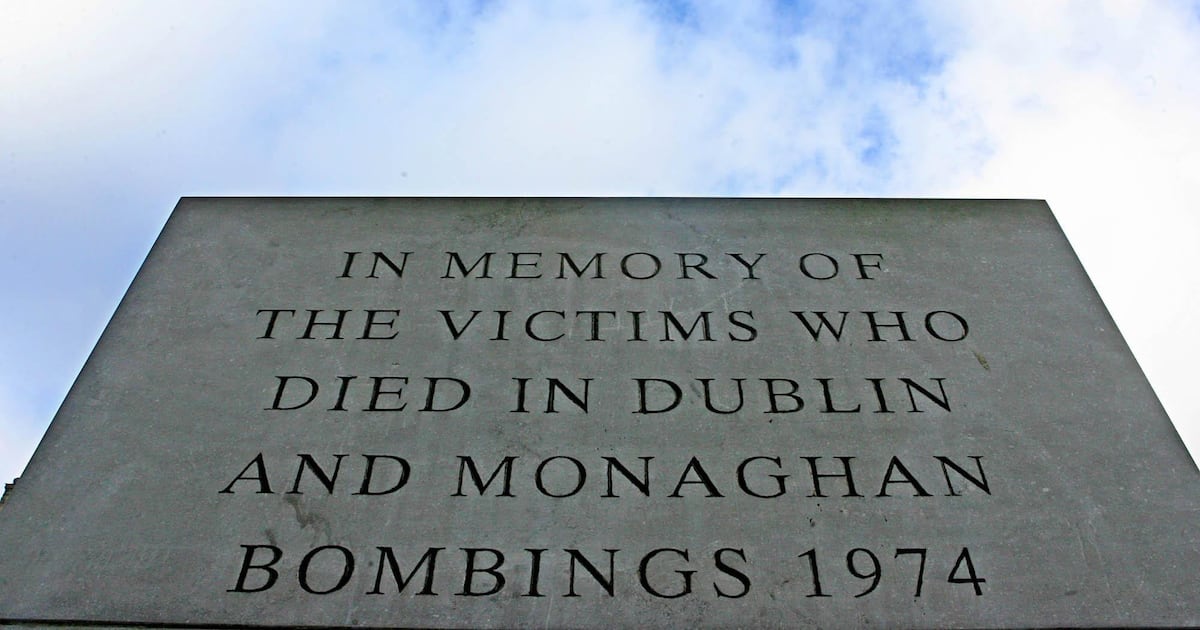
The family of a murdered loyalist failed tonight in a High Court bid to block publication of findings from a police investigation into a notorious terrorist gang behind the Dublin and Monaghan bombings.
Emergency proceedings were issued amid claims William Marchant could be wrongly implicated in the atrocity through a summary set to be released on Tuesday as part of the final Operation Kenova report.
But a judge refused to grant an interim injunction following assurances from the PSNI that no-one will be named in findings released at this stage in the probe into the Glenanne Gang.
Mr Justice McLaughlin ruled: “The balance of convenience in this issue is very firmly against the applicant.”
Set up to examine the activities of the British spy inside the IRA codenamed Stakeknife, the Operation Kenova investigation team also carried out a separate review into the activities of the loyalist Glenanne Gang.
That subsidiary probe, known as Operation Denton, involved scrutinising nearly 130 murders linked to a terror unit said to have comprised members of the UVF along with some RUC officers and locally-recruited UDR soldiers.
Based in Mid Ulster, the Glenanne Gang is suspected to have been responsible for Dublin and Monaghan bombings. Thirty three people, including a pregnant woman were killed and almost 300 others injured in the coordinated explosions during evening rush hour in May 1974.
But amid a wider legal challenge, publication of the Operation Denton report is currently on hold. Instead, a summary of the findings will feature in the final Kenova report without naming any specific individuals.
Concerns were raised that Marchant could still be linked to the Dublin and Monaghan attacks through jigsaw identification. Widely reported to have been a leading loyalist figure, he was shot dead by the IRA on Belfast’s Shankill Road in April 1987.
Lawyers representing his family claim police do not have legal power to commission a non-criminal investigation through Operation Denton. They are seeking an order to quash any part of the Denton report naming their father or making adverse findings against him, based on alleged breaches of the Police (Northern Ireland) Act and Articles 2 and 8 of the European Convention on Human Rights.
Part of the case relates to an alleged briefing of campaign groups in Dublin back in October. The Marchant family also contend there was no statutory authority to permit the disclosure of intelligence material outside the jurisdiction.
In court today, they sought to restrain publication of the Operation Denton summary due to fears it could involve serious allegations of criminal culpability and cause irreparable reputational damage without any opportunity to respond.
Barrister Emma McIlveen argued that there had been no checks or balances on the interim findings.
“We are seeking a temporary delay to postpone publication until the legality of this process has been adjudicated on,” she said.
But John Rafferty, responding for the PSNI as commissioners of the report, stressed that Marchant will not be named or identified in the summary. The court also heard it is already known through an official inquiry report that he was arrested and interned during the 1970s in connection with the investigation into the Dublin and Monaghan bombings.
Denying the application for an injunction, Mr Justice McLaughlin cited both the public interest and existing information in the public domain. He added: “I am being invited to treat solemn promises by the PSNI about the content of the report as unreliable, that is not something I am prepared to do.”