
If any ambiguity remained about the ultimate goal of the current administration’s public health policy, last week shattered it.
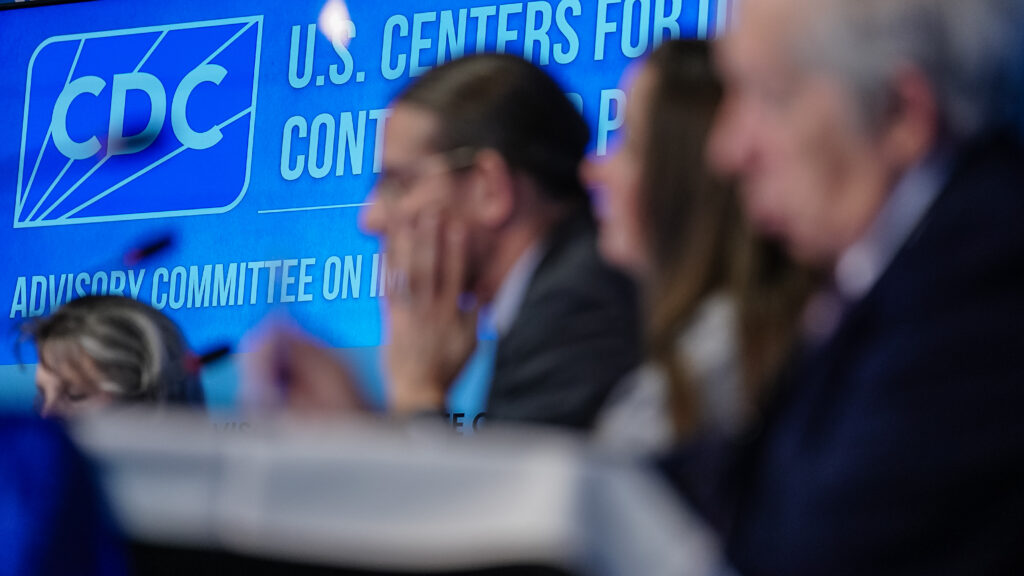
On Friday, following a disastrous two-day meeting of the Centers for Disease Control and Prevention’s Advisory Committee on Immunization Practices (ACIP), President Trump signed a memorandum directing the Department of Health and Human Services to align the U.S. vaccine schedule with peer, developed countries — a seemingly reasonable but fraught suggestion. This directive follows the explicit road map laid out by Health and Human Services Secretary Robert F. Kennedy Jr., whose stated goal is upending the childhood vaccination schedule.
To the uninitiated, this might look like a sudden, erratic pivot. It is not. It is the culmination of a calculated campaign I have watched unfold all year — a strategy of weaponized incrementalism.
For months this captured committee has engaged in a form of bureaucratic attrition. They haven’t sought to ban vaccines outright; instead, they have introduced regulatory friction to create chaos, confusion, and massive barriers to access. A controversial issue is surfaced under the guise of safety, widely debated to seed doubt and then used later as the justification for dismantling a recommendation. Comparing the U.S. vaccine schedule with those of other developed nations without context is just the latest tactic.
We saw this earlier this year when the committee rescinded guidance for influenza vaccines containing thimerosal, elevating a long-debunked conspiracy theory to federal policy. We saw it when they voted to restrict access to the measles, mumps, rubella, and varicella (chickenpox) vaccine, forcing some low-income parents to seek multiple injections rather than a single combination shot.
RFK Jr.’s vaccine panel is laying the groundwork for more scrutiny of childhood shots
But last week the incrementalism gave way to demolition. The committee voted to remove the universal recommendation for the hepatitis B birth dose, effectively destroying a safety net that has protected American infants for a generation.
The ‘alignment’ lie
A core argument driving this dismantling — championed by the President and Kennedy — is that the U.S. is an outlier compared to nations like Denmark or Japan that administer fewer doses. This argument is a lethal fallacy that relies on the public’s lack of knowledge about international health care infrastructure.
Proponents ask, “Why does the U.S. give so many more shots?” They conveniently omit the context that makes those other schedules possible.
First, European children benefit from structural protective cocoons that do not exist in America. In countries like Denmark, new parents are granted extensive paid leave. A Danish newborn is often shielded from the public for the first year of life, kept at home and away from daycare centers or crowded public spaces.
In the U.S. we do not live in isolation. American parents often return to work within weeks, sending infants into group child care settings where viral transmission is rampant. In this context the vaccine schedule is the necessary shield for a society that demands early participation in the public sphere.
Second, the U.S. has historically offered superior biological protection because we refuse to accept mild diseases as a necessary tax on childhood.
We have forgotten what this actually means. In 1995 a mother wrote to the New York Times regarding the chickenpox vaccine. She noted that while a vaccine was available as early as 1990, cost-benefit considerations had kept it off the market, making it unavailable to her family when they needed it most. She described how her 24-year-old son caught the virus from his sister and suffered the worst case his doctor had ever seen, with complications that included hepatitis. She called the calculations that trivialized these diseases misleading and even cruel. By stripping away vaccines to match European schedules, we are inviting this cruelty back into American homes.
The early December ACIP meeting was a display of weaponized incompetence. It was not a scientific deliberation; it was a platform for misinformation designed to support a predetermined outcome.
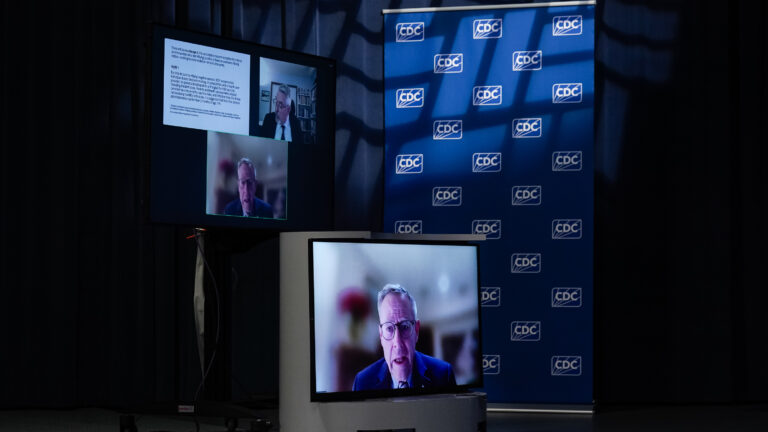
Nowhere was this clearer than in the presentation given by attorney Aaron Siri. Lawyers can and should play a role in public health discourse — I certainly do within the bounds of my expertise- — but Siri lacks requisite expertise to educate the ACIP on the childhood immunization schedule and his participation is obviously part of a premeditated plan to dismantle it.


Siri argued that the U.S. schedule is bloated and untested, specifically criticizing the use of existing vaccines as control groups in clinical trials rather than saline placebos. This is a seductive argument to a layperson, but it is ethically bankrupt. It is a violation of basic medical ethics to withhold a known, protective vaccine from a child in order to test a new one. We do not expose children to preventable pathogens in the name of pure science.
Siri’s remarks were so egregious that the last remaining scientific voices on the committee, such as Cody Meissner, felt compelled to push back, labeling the presentation a terrible distortion of the facts. Yet Siri was given the floor, legitimized by the CDC, to lay the groundwork for the schedule’s destruction.
The cynicism of the proceedings was perhaps best encapsulated by the committee’s new chair, Kirk Milhoan. He was caught on a hot mic referring to himself and the other committee members as “puppets.” It was a rare moment of honesty: The committee members know they are not there to deliberate. They are there to execute an order.
The damage done last week to norms, procedures, and confidence in science is profound, but it is not over. The incremental strategy has proven effective and its timeline is accelerating.
Based on the rhetoric from this week, we can expect the committee to target aluminum adjuvants by early 2026. Since manufacturers cannot reformulate these complex biologics overnight, removing the preference for adjuvanted vaccines will create an immediate, insurmountable supply barrier.
What comes after that is no mystery. At the committee’s June meeting, the then-newly installed chairman, Martin Kulldorff, announced a working group with the obvious purpose of dismantling the schedule further. And any remaining doubt about whether this committee will go that far has now dissipated. (Kulldorff has since left ACIP for a job at Health and Human Services.)
This approach is neither America First nor is it Making America Healthy Again. It is the deliberate importation of foreign health care rationing without the foreign social safety nets that make it survivable.
Richard Hughes IV is a partner with the law firm Epstein Becker Green and a professorial lecturer in law at the George Washington University Law School. He previously served as vice president of public policy at Moderna.