
The release of the 2025 United States National Security Strategy (NSS) marks a pivotal recalibration in American foreign policy, one that underscores a pragmatic, if controversial, desire to re-engage with Russia while delivering unsparing criticism toward Europe. Crafted under the Trump administration’s ‘America First’ ethos, the document reflects a broader strategic pivot away from entrenched transatlantic commitments and toward a more transactional approach to global affairs. At its core, the NSS signals Washington’s intent to de-escalate tensions with Moscow, viewing Russia not as an existential adversary but as a nuclear peer with whom ‘strategic stability’ must be restored to prevent unintended escalation and free up resources for pressing challenges elsewhere, particularly in the Indo-Pacific. This re-engagement is framed as essential for resolving the Ukraine conflict swiftly, through negotiation rather than prolonged military support, allowing the US to redirect its focus to countering China’s rise. Yet, this olive branch to Russia comes juxtaposed with a blistering indictment of European allies, accused of civilisational decay, unrealistic warmongering, and burdensome dependency on American security guarantees. The result is a strategy that has elicited jubilation in Moscow, consternation in Brussels, and a profound debate about the future of the western alliance.
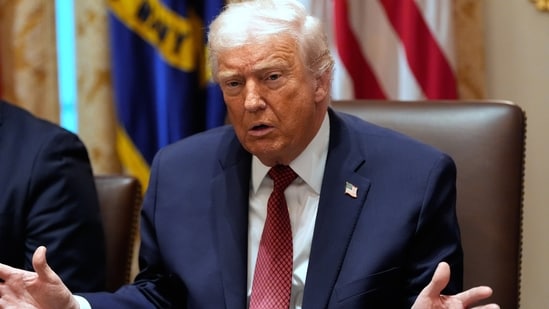 Donald Trump (AP)
The NSS’s approach to Russia represents a deliberate departure from the confrontational posture of previous administrations. Where the 2022 Biden-era strategy labelled Russia a “revisionist power” bent on undermining the international order, the 2025 document omits such rhetoric, instead emphasising mutual de-escalation and arms control dialogues akin to extensions of treaties like New START. This shift is rooted in a realist assessment: Russia’s invasion of Ukraine, while acknowledged as disruptive, is portrayed as a regional issue that has exposed Europe’s vulnerabilities rather than posing a direct threat to US vital interests. The strategy advocates for an “expeditious cessation of hostilities” in Ukraine, linking it to broader US-Russia stability, and implicitly suggests freezing the conflict along current lines in exchange for security assurances. Proponents argue this pragmatism could avert nuclear risks and enable a grand bargain, where Russia curbs its aggression in Europe in return for eased sanctions and normalised economic ties. Indeed, Russian officials have hailed the document as “aligned with Russian thinking,” with Dmitry Peskov and Dmitry Medvedev praising its echoes of Moscow’s worldview, including critiques of the EU.
However, this olive branch carries significant risks. Critics (mostly western) contend it rewards Russian aggression, potentially emboldening Vladimir Putin to pursue further revanchism in the Eastern Europe region where NATO’s Article 5 commitments could be tested. For Ukraine, the push for rapid negotiations risks ceding territory and sovereignty, undermining Kyiv’s agency and the principles of international law that have underpinned post-World War II stability. European frontline states, viewing Russia as an “existential threat,” fear this approach signals US abandonment, eroding deterrence and inviting hybrid warfare tactics like cyberattacks and disinformation campaigns that Moscow has honed over years. Moreover, re-engaging Russia without robust conditions could alienate US allies in Asia, who see parallels between Ukraine and Taiwan, questioning Washington’s reliability in collective defence pacts. Observers also point out that while Trump’s deal-making style might yield short-term gains such as energy deals or Arctic cooperation, the long-term erosion of trust in US leadership could accelerate a multipolar world where Russia and China deepen their “no-limits” partnership, contrary to American interests.
Intertwined with this reengagement is the NSS’s scathing critique of Europe, which has provoked a firestorm across the Atlantic. The document warns of Europe’s impending “civilisational erasure” due to mass migration, declining birth rates, and a lack of “civilisational self-confidence,” painting the continent as a declining power enfeebled by its own policies. It accuses European leaders of subverting democracy through unstable minority governments and suppressing opposition, while harbouring “unrealistic expectations” for the Ukraine war that ignore public desires for peace. The strategy goes further, advocating for the US to “cultivate resistance” within European nations against the EU’s “supranational overreach,” effectively endorsing internal dissent to realign Europe with American values and trade interests.
This language flips historical narratives, casting Europe not Russia as the problematic actor, a reversal that has stunned allies accustomed to US support against Moscow’s threats. European reactions have been swift and vehement, blending alarm with defiance. EU Council President António Costa decried the NSS as signalling a “changed relationship,” warning against US interference in European affairs and emphasising that Europe will not tolerate external meddling in its democracies. German officials and media have labelled it a slight to Europe, arguing it cedes the continent to Russian influence while undermining transatlantic unity. In France and the UK, commentators evoke historical lessons of appeasement, asserting that rewarding Russian aggression invites catastrophe, and decry the NSS’s subversion rhetoric as corrosive to allied trust. Yet, not all responses are uniformly negative; some Central and Eastern European voices, wary of Brussels’ bureaucracy, see opportunity in bilateral deals with Washington, potentially fracturing EU cohesion.
This bashing, while resonant with certain US domestic audiences frustrated by alliance burden-sharing, risks alienating partners essential for global challenges like climate change and trade. In nuance, the NSS’s dual thrust, reengaging Russia while lambasting Europe embodies the tensions of Trump-era diplomacy: a blend of isolationism and assertiveness. On one hand, it addresses legitimate grievances, such as Europe’s chronic underinvestment in defence (with only a handful meeting NATO’s 2% GDP target) and the need for the US to pivot resources amid great-power competition. By urging Europe to “take charge of its own defence,” it could spur long-overdue reforms, fostering a more equitable alliance and allowing America to focus on domestic renewal.
Historically, such tough love echoes post-Cold War debates, where US leaders like Madeleine Albright cautioned against a “free ride” for allies. On the other hand, the strategy’s inflammatory tone and flirtation with internal interference could accelerate NATO’s unravelling, embolden Putin and deepen transatlantic rifts at a time when unity is crucial against hybrid threats. This could be termed as an absolute win for Putin, potentially ceding Europe to Moscow’s sphere while Washington withdraws.
Ultimately, the 2025 NSS crystallises a moment of reckoning for the US-Russia relations and the broader western order. Re-engagement with Moscow, if successful, might yield a fragile peace in Ukraine and strategic breathing room for America, but at the cost of moral authority and allied cohesion. The Europe-bashing, while highlighting real demographic and policy challenges, veers into cultural warfare that alienates rather than motivates. As Europe grapples with this geopolitical punch, leaders must heed the call for self-reliance without succumbing to division, while Washington navigates the perils of transactionalism in a world where alliances remain indispensable. The coming months, with potential Ukraine talks and NATO summits, will test whether this strategy fortifies American security or sows the seeds of its isolation.
This article is authored by Pravesh Kumar Gupta, associate fellow (Eurasia), Vivekananda International Foundation, New Delhi.