
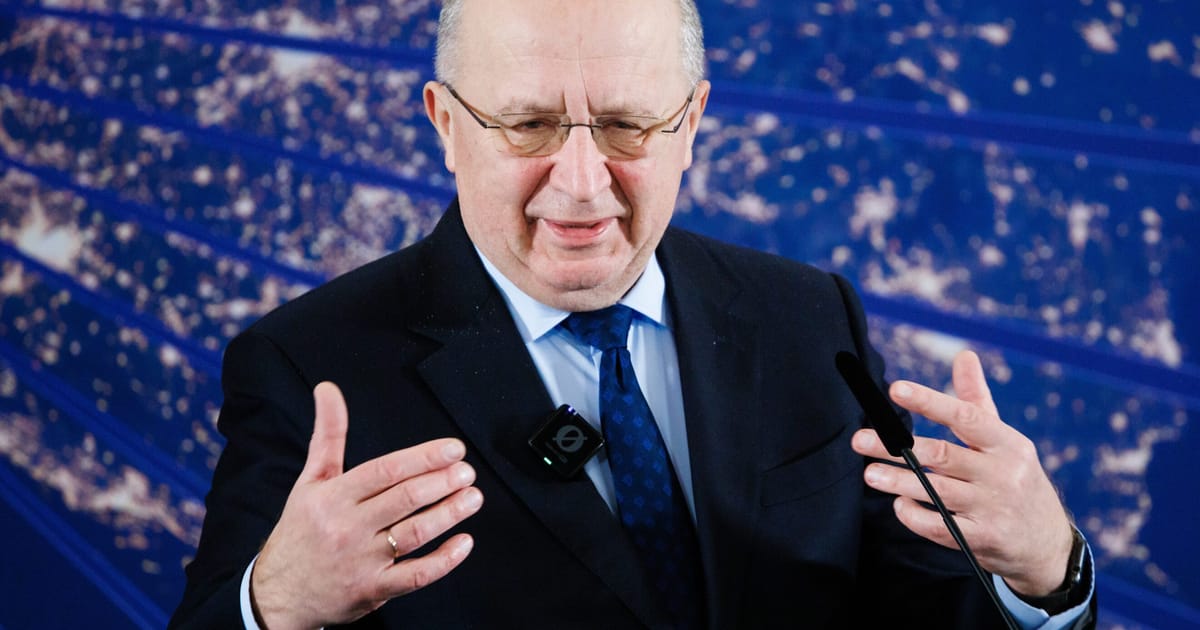
He pointed to passages in the strategy urging Washington to “cultivate resistance” inside European countries and to work with nationalist parties opposed to deeper integration, language he interpreted as evidence the U.S. is ready “to fight against the European Union, against our strength through unity.”
Trump’s view on Europe was underlined in an interview with POLITICO where he denounced European leaders as “weak” and that he would endorse candidates in European elections, even at the risk of offending local sensitivities.
Kubilius wrote that the U.S. now sees a more cohesive EU as a potential challenger to American influence.
“The US National Security Strategy’s antagonistic language on the European Union comes not from American sentimental emotions about ‘good old Europe,’ but from deep strategic considerations,” he wrote.
Kubilius linked the strategy’s worldview to the ideas of Elbridge Colby — now a senior Pentagon official — whose book “The Strategy of Denial” argues that the U.S. must prevent any region from forming a dominant power capable of constraining American access to markets.
Kubilius noted that Colby identifies “the European Union or a more cohesive entity emerging from it” as being “capable of establishing regional hegemony and unduly burdening or even excluding US trade and engagement.”
Kubilius argued that this strategic perspective, rather than ideological disagreements, explain the NSS’s unusually hostile tone toward Brussels.
“Let’s hope,” he concluded, there “will be enough prudence on American soil not to fight against the emerging power of European unity.”