
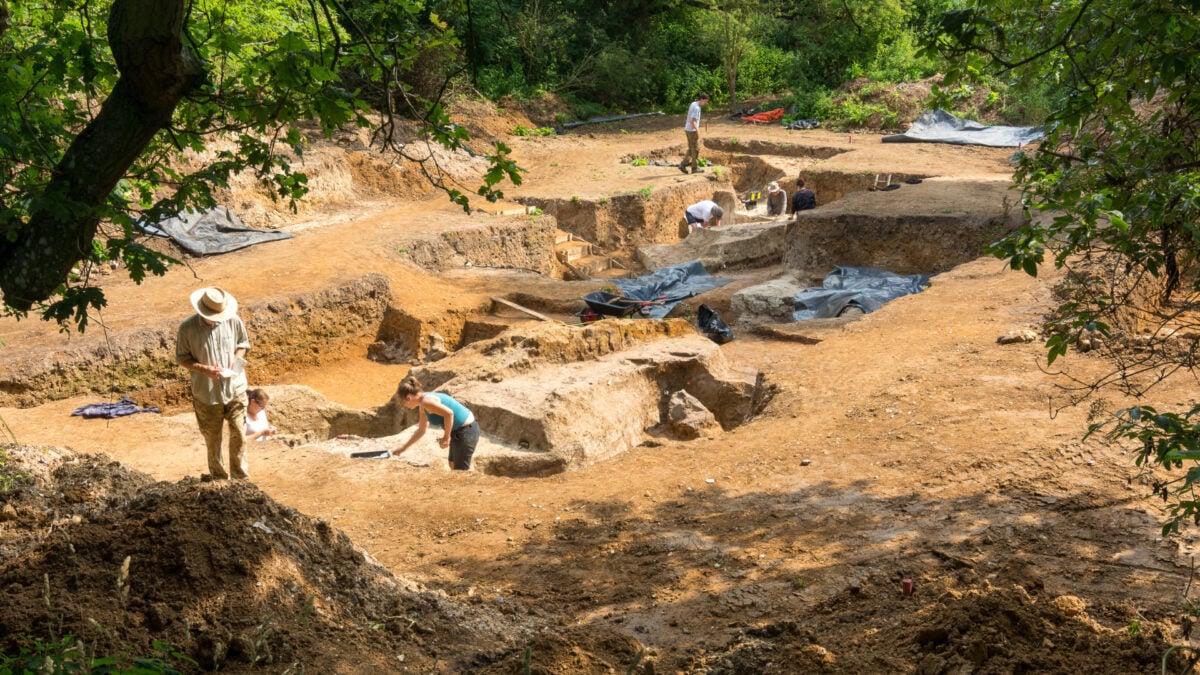
While few of us today know how to start a bonfire without matches or a lighter, learning to make fire was one of the most critical developments in human history. New evidence suggests humans figured it out hundreds of thousands of years earlier than previously thought.
In a study published today in the journal Nature, a team of researchers claims to have discovered the earliest evidence of fire-making known to science at a Paleolithic site in Barnham, England, dated to over 400,000 years ago. It suggests that humans knew how to make fire approximately 350,000 years earlier than anthropologists believed.
A fiery timeline
While prehistoric sites in Africa indicate that humans have been using fire for over a million years, pinpointing when humans learned how to make it is difficult. People likely started using fire by collecting it from natural wildfires before learning how to start it intentionally.
“Fire-making is a uniquely human innovation that stands apart from other complex behaviours such as tool production, symbolic culture and social communication. Controlled fire use provided adaptive opportunities that had profound effects on human evolution,” the researchers wrote in the paper. “Benefits included warmth, protection from predators, cooking and creation of illuminated spaces that became focal points for social interaction.”
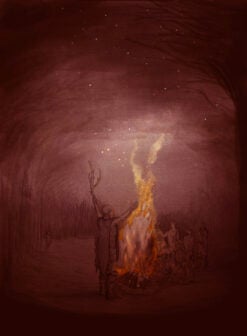 An artistic rendering by Craig Williams of a prehistoric campfire in Barnham. Credit: The Trustees of the British Museum.
Before this study, the earliest evidence of fire making came from handaxes found at Neanderthal sites in northern France, dating to 50,000 years ago. These tools are believed to have been used to create sparks by striking pyrite. (Can you even imagine how excited the British must be about taking this prehistoric honor from their traditional rivals?)
The new evidence consists of a patch of heated clay in soil around 415,000 years old, heat-shattered flint handaxes, and two small pieces of iron pyrite, probably left behind by some of the earliest Neanderthal communities. The first two pieces of evidence suggest that humans were controlling fire within a settlement, but it’s the iron pyrite that really points to intentional fire-making.
Iron pyrite is a natural mineral that, when struck against flint, creates sparks that can start a fire. Because pyrite is rare in the area of the Paleolithic site, researchers believe that the people there knew where to find it and how to use it and brought it to the site to make fire.
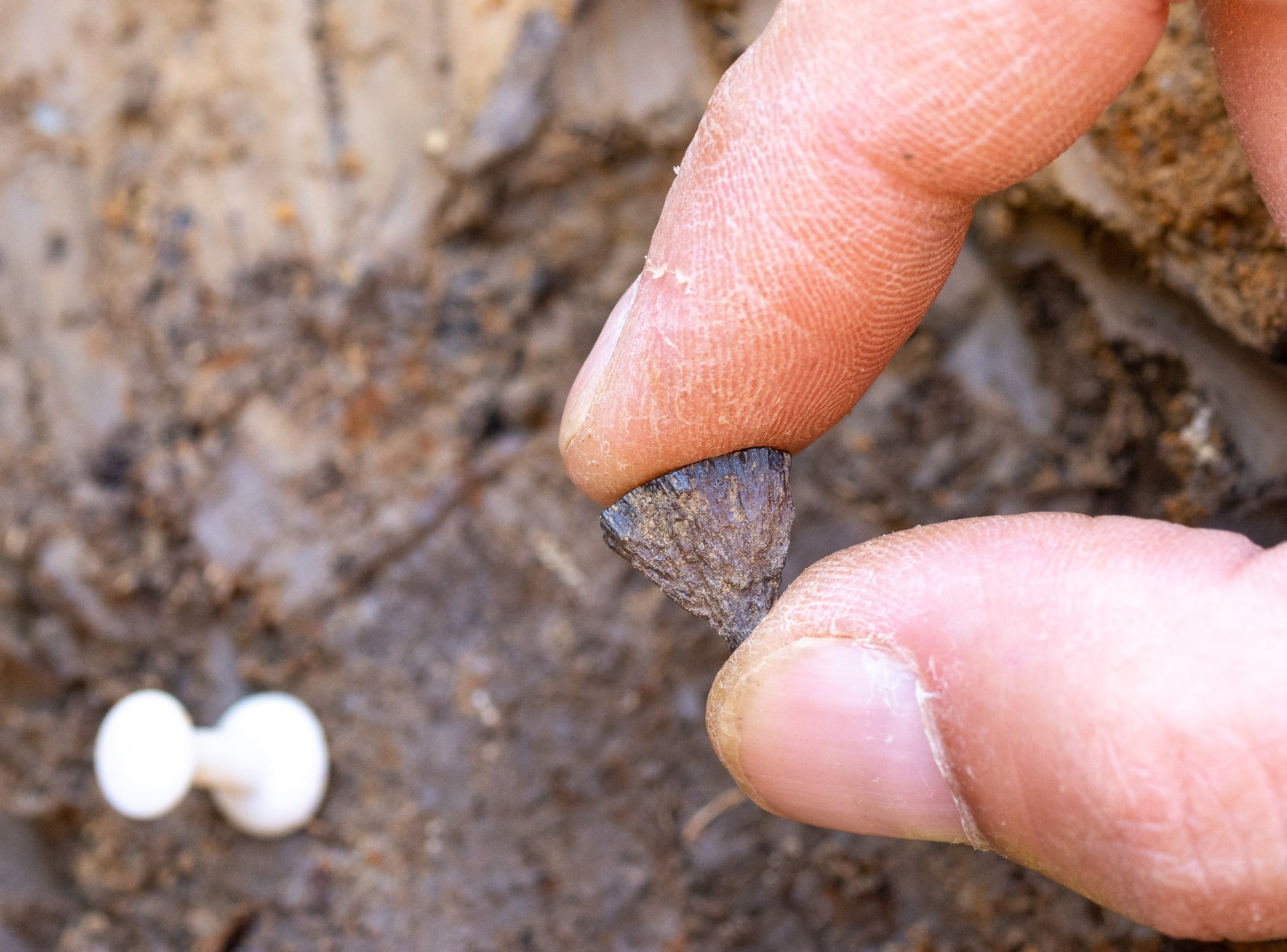 The first piece of iron pyrite found in Barnham. Credit: Pathways to Ancient Britain Project. Photo: Jordan Mansfield
Over the course of four years, the team, led by the British Museum’s curator Nick Ashton and project curator Rob Davis, showed that the clay was not heated by wildfire. Geochemical tests revealed temperatures of over 1,292 degrees Fahrenheit (over 700 degrees Celsius) with recurrent use of fires in the site’s same location. This suggests a campfire or hearth that people used a number of times.
Still, one reviewer of the work, archaeologist Ségolène Vandevelde from the University of Quebec at Chicoutimi, noted in an accompanying News & Views article that the team did not find direct physical signs that the pyrite and handaxes were used to light fires, which would be unequivocal evidence that these humans were making their own fires.
Leveling up
The study indicates that humans at Barnham could make and control fire and points to a behavioral change that could have played a role in developing larger brains and more advanced cognitive abilities. In other words, it seems like these ancient humans were executing complex behaviors over 400,000 years ago, during a time period when their brain sizes were nearing those of modern people.
When early humans could only start campfires by gathering fire from wildfires, it meant they also had to maintain them as long as needed. The ability to start fires at will meant humans didn’t have to constantly feed them—they could build them whenever and wherever needed, choosing locations for settlements more freely.
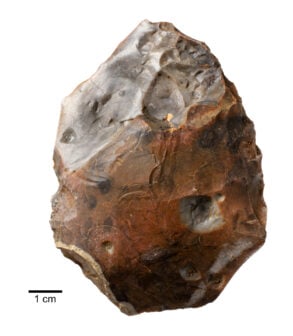 The handaxe found near the Barnham campfire. © The Trustees of the British Museum
“The emergence of this technological capability provided important social and adaptive benefits, including the ability to cook food on demand—particularly meat—thereby enhancing digestibility and energy availability, which may have been crucial for hominin brain evolution,” the team explained.
Access to fire also made it safe for humans to eat a wider range of foods and may have contributed to the progression of technologies like glue for tools with handles, which could in turn have played a role in human behavioral development. Furthermore, fire control also provided protection and warmth, which allowed humans to live in colder and tougher environments.
But wait, there’s more! The study aligns with the important sites in the UK, France, and Portugal, suggesting that fire became more important to early humans between 500,000 and 400,000 years ago. Maybe it was because they figured out how to start it themselves.