
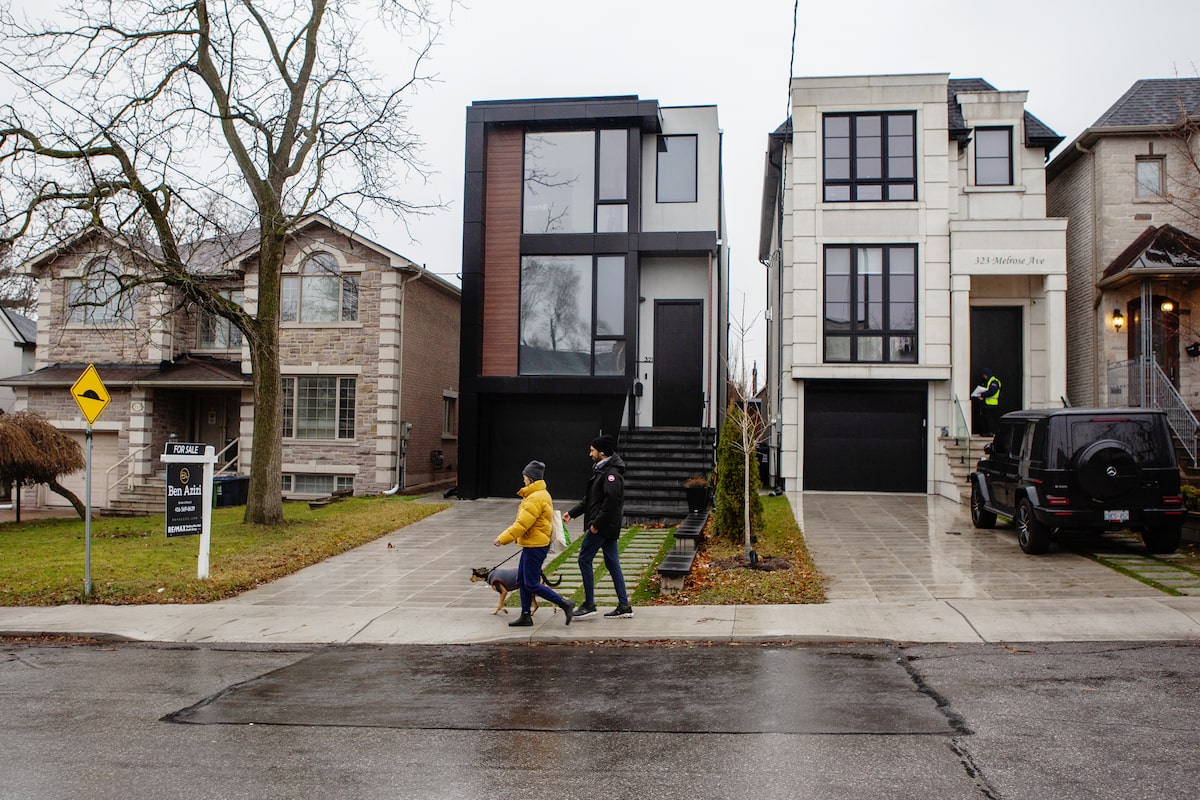
A home for sale in Toronto in 2023. With the Bank of Canada expected to keep rates on hold, cautious buyers and sellers might finally jump into the market, realtors say.Sarah Palmer/The Globe and Mail
The Bank of Canada announced Wednesday that it is holding its key interest rate steady after an aggressive cycle of cuts over the past year. Realtors and economists say the pause could bring both buyers and sellers back into the housing market after months of hesitation.
The central bank kept its overnight rate at 2.25 per cent, and economists expect it to remain unchanged for several months.
Read the latest updates and analysis on the Bank of Canada’s rate decision
Carolyn Rogers, senior deputy governor of the Bank of Canada, said at a press conference that she expects a “better balance in the housing market,” between sales and new listings.
The central bank does not “expect another surge in house prices,” but “maybe a continued correction in some of the higher-price markets,” she said.
The predictability that comes with an extended rate hold can be a catalyst for activity in a market that has been marked by volatility and shifting expectations, said Royal LePage sales representative Tom Storey.
“Certainty is a wonderful thing for the housing market,” Mr. Storey said.
Mr. Storey said that during the cutting cycle, many buyers delayed decisions in hopes that rates would fall further. Sellers were also cautious, waiting to see whether additional cuts might spark more competition.
Canadian home sales have been increasing steadily over the last couple of months but are still much lower than in 2024.
There were 40,423 homes sold nationally in October, a 0.9-per-cent increase from September, but still 4.3 per cent below October, 2024, according to the most recent data from the Canadian Real Estate Association. New listings decreased by 1.4 per cent to 77,479 units from September to October.
With rates now on pause, Mr. Storey said both buyers and sellers may feel more confident moving ahead.
He expects an upward trend in sales activity, but said that more transactions do not automatically mean higher prices.
“In fact, prices could still fall as sales transactions go up,” he said.
“Sellers are now recognizing, this is the price of today. I’m either going to take it or I’m going to get off the market,” he added.
That dynamic, he said, is especially positive for buyers looking to upsize or enter the market for the first time.
“People that are exiting the market… you might have to wait a few more years to get the price you really want.”
Benjamin Tal, CIBC’s deputy chief economist, said that while the rate hold may draw some buyers off the sidelines, housing activity will ultimately depend on whether consumers feel confident about the broader economy.
“We are in a stable environment for mortgage rates,” said Mr. Tal, who expects rates to remain steady until 2027.
But interest rates are “secondary” when it comes to what will spark the changes in the housing market, he said. The labour market and consumer sentiment, he said, will play a large part in whether people decide to move.
Variable-rate mortgages are making a comeback, but some economists are already predicting rate hikes
A Bank of Nova Scotia survey released last week found that 62 per cent of prospective buyers said economic uncertainty is negatively affecting their finances and delaying their plans to purchase a home.
On the ground, realtors say the same hesitancy has played out in conversations with clients.
“A disproportionate amount of both buyers and sellers have been waiting for the market to improve,” said Mike Kearns, a realtor in Ontario’s southern Georgian Bay.
Now that the central bank is signalling that rates are likely to remain stable, he said some may finally decide to act, “knowing that interest rates are not necessarily going to become any more accommodating than they already are.”
For those considering locking in a mortgage, Mr. Kearns stressed the importance of careful research.
Buyers should weigh “whether or not a variable rate is worth the risk,” he said, adding that “now may very well be the cheapest it’s going to be for a fixed-rate mortgage for the foreseeable future.”