
If you could save someone’s life, would you do it? Around 1,630 people died in Australian hospitals in circumstances where organ donation could have been possible last year.
Yet of the 1,450 families who were asked to donate, only 53 per cent agreed, according to DonateLife donation and transplantation data from 2024. That gap matters because one organ donor can save up to seven people.
An organ or tissue donation can mean the difference between life and death, being healthy or sick, seeing or being blind, or being active or never walking again.
And about 1,800 Australians are waiting for the gift of life this Christmas, that being a life-saving organ transplant.
But becoming an organ donor isn’t just about ticking a box, it’s about having a conversation.
A significant barrier in the organ donation process is that families simply don’t know what their loved one wanted.
When it comes time, they’re asked for consent — and too often, without clear instructions, they say no.
People who achieved ‘gift giving’ status
One of our service officers Lisa, who at one of the darkest times of her life, made a courageous decision that saved the lives of others.
Lisa lost her much-loved daughter Harper when she was just five years old. But despite her grief, she didn’t hesitate to donate Harper’s organs.
Harper’s precious gifts saved three people, and Lisa takes comfort knowing that Harper’s spark lives on in others through her donations.
But there’s also living organ donation as well. One of our other Services Australia staff members Karen Beckett gave the gift of life, by donating a kidney to her cousin.
The process of donating her kidney took over 16 months and was intensive, including many medical appointments and travel from her home near Newcastle to Brisbane. Despite this, Karen said it was one of the best decisions she’s ever made
A huge commitment that reflects her generosity and courage.
With around 14,000 people on dialysis, many could benefit from a kidney transplant just like this.
Thanks to selfless donors and their families like Harper, Lisa, and Karen, countless individuals gain the chance to lead normal, healthy lives.
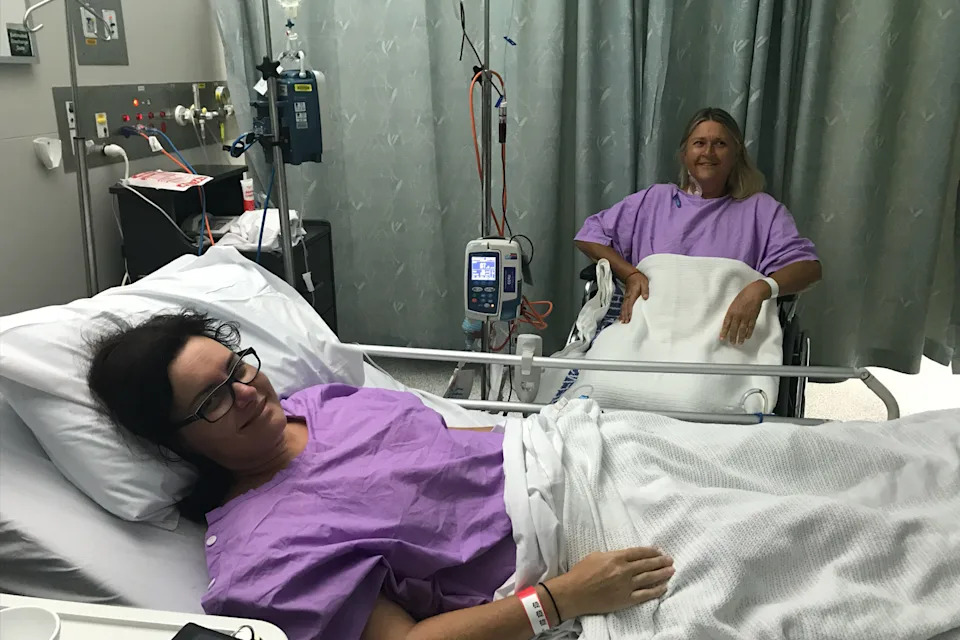
Kidney organ donor Source: Supplied
Talk to your loved ones
Your family will be asked to say yes to donation in the hospital if you’re ever in a position to donate, so it’s important that you tell them you want to be a donor.
Whether it’s at the Christmas family lunch or another time is totally up to you.
The topic of Christmas miracles could be a good way to start a conversation — after all by becoming an organ donor you’re potentially saving seven lives in one day.
Unless you’re a surgeon or triple-0 operator, not many of us can say that.
Prepare for some curly questions by reading up on donation at donatelife.gov.au and bust some common myths with your family.
Don’t let your family fall for the common myth that if ‘organ donor’ is on your driver’s licence or you’re a known organ donor, then doctors won’t try as hard to save your life.
A doctor’s first priority is always to save your life. Organ and tissue donation will only be considered if you have died, or when death is expected and all life-saving measures have been exhausted.
Who can donate their organs in Australia?
In Australia, anyone aged 16 or older can register as an organ and tissue donor on the Australian Organ Donor Register.
It doesn’t matter how old you are, your lifestyle, what country you’re from or how healthy you are — you can still register.
Most Australians aged 16 years and over say they support organ donation (80%), yet only 7.9 million have registered.
That number should be much closer to 16 million.
The good news? Signing up is simple.

Services Australia General Manager Hank Jongan has urged Aussies to consider giving the gift of life this Christmas. Source: Supplied
How to become an organ donor
Registering is easy, and it only takes one minute or a few clicks.
You can register as an organ and tissue donor in your Medicare online account through the myGov app or at donatelife.gov.au.
Once you’ve registered, you can add a digital organ donor card to your myGov app wallet.
You can use the myGov app and go to your Medicare online account to update your donation preferences at any time.
DonateLife is the Australian Government’s national program to increase organ and tissue donation so that more people can receive a life-saving transplant.
Read more information about how donation works, who will be helped by donation and stories from donor families and transplant recipients at donatelife.gov.au
Hank Jongen is Services Australia General Manager
Do you have a story tip? Email: newsroomau@yahoonews.com.
You can also follow us on Facebook, Instagram, TikTok, Twitter and YouTube.