
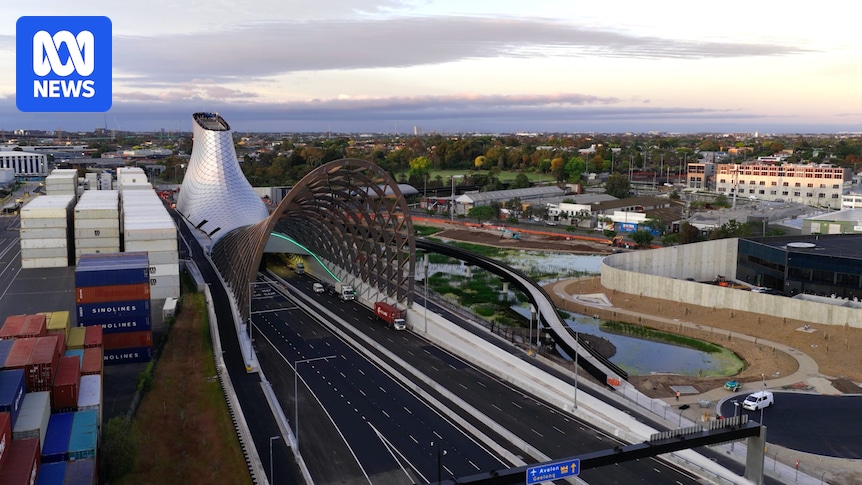
Melbourne’s West Gate Tunnel has officially opened to the public, with drivers traversing its path for the first time — for a fee.
The project was initially costed at $5.5 billion with just $400 million of taxpayer investment, but that has since blown out to $10.2 billion with the state chipping in $4.2 billion.
The twin tunnels have been designed to provide an alternative route for freight trucks travelling through the city’s west to the Port of Melbourne, reduce travel time for commuters and traffic on the West Gate Bridge, while also improving bike paths to enable cyclists to travel more safely into the city.
The road tunnel’s opening comes a fortnight after the opening of the Metro Tunnel rail project drew thousands of curious first-time passengers.
“It’s going to be a massive game-changer for the way people travel around this great city and state,” Premier Jacinta Allan said.
“It means families can get home sooner, congestion will be slashed and most importantly too, for residents here in the western suburbs, it’ll get trucks off local roads because they’ll have that much-talked-about, long-needed alternative to the West Gate Bridge through the West Gate Tunnel, providing direct access to the Port of Melbourne.”
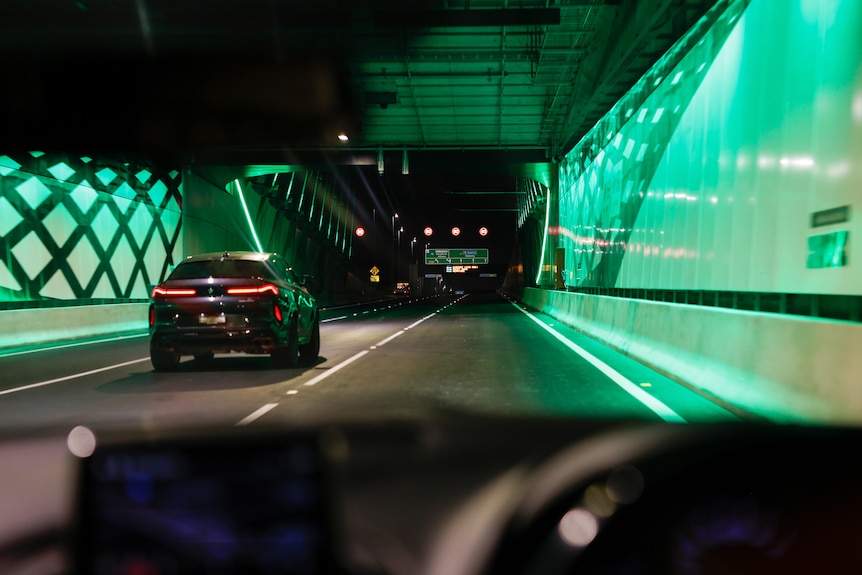
The West Gate Tunnel opened in the early hours of Sunday morning. (Supplied: Victorian Infrastructure Delivery Authority)
The twin tunnels opened to travellers while most Victorians were sleeping, with the outbound tunnel opening at 12:10am, the inbound route at 2:15am and the Wurundjeri Way extension at 2:45am.
Tolls for the tunnel will include an extra $6.54 for cars using the city exits during the morning peak — from 7am-9am on weekdays — on top of a flat toll of $4.09 to use other parts of the tunnel, and at off-peak times. Motorcylists will be charged less, while those driving light-heavy vehicles will be charged an extra $10.47 to use the city exit during the peak.
Throughout January, the tunnel will be free for all drivers on weekends.
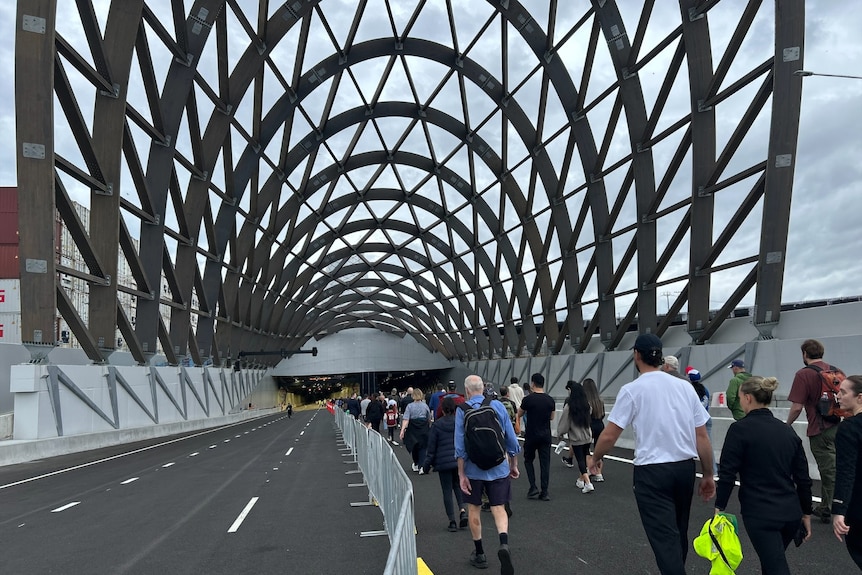
Melburnians had the chance to walk through parts of the tunnel in November. (ABC News: Leanne Wong)
The opposition poured cold water on the opening celebrations, saying the billions spent on cost overruns could have funded essential services around the state.
“Jacinta Allan might be popping the champagne today but Victorian taxpayers are going to be left with the hangover,” Shadow Minister for Transport Infrastructure Evan Mulholland said.
“$4.7 billion of taxpayers’ money has blown out on this project.”
As well as cost overruns and the project overshooting its estimated completion date by three years, issues such as how and where to dispose of contaminated soil have also been sources of angst.
The premier defended the project running over budget.
“These are big and complex projects and they do come … along the journey, with some additional challenges and I will acknowledge with the delivery of the West Gate Tunnel project there were some additional challenges that came along as we were getting in and delivering the project,” Ms Allan said.
“But ultimately we had a choice to make. Do you get on, address the challenges, roll up your sleeves and do the hard work, or do you turn away from these projects like the Liberal Party would have you do?”
Early in 2018, the opposition and the Greens teamed up to temporarily revoke the project’s planning approval, but months later the Liberals pledged support for building the West Gate Tunnel.
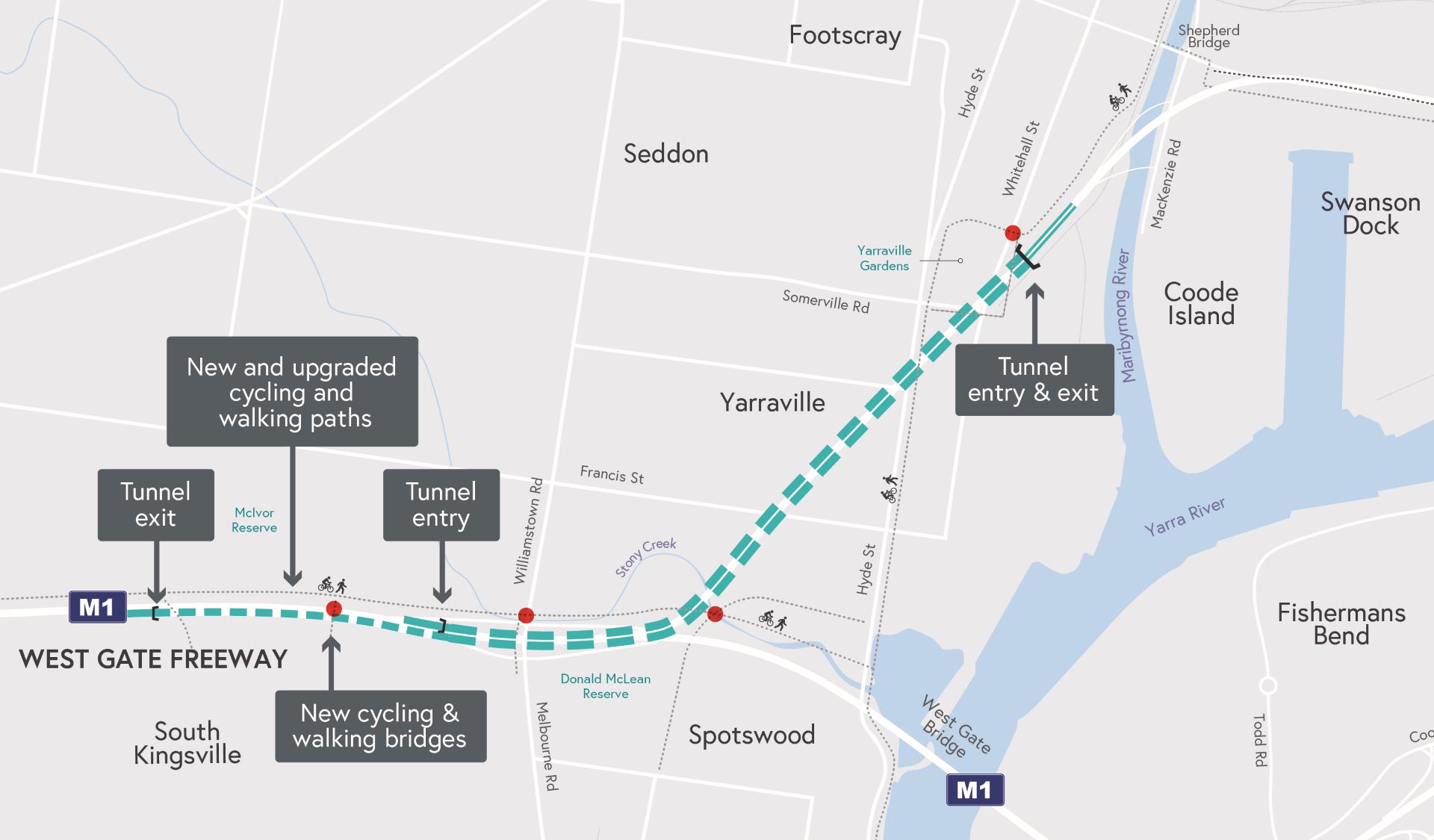
A map showing the West Gate Tunnel project, which is officially open. (Supplied: Victoria’s Big Build)
Western suburbs residents welcome ‘better health’
The opening of the tunnel will see 9,000 fewer trucks on western suburbs roads daily, according to the state government.
In some areas, there will be zones where freight trucks are banned around the clock, while curfews will apply on key arterial routes in the west, including Williamstown Road.
Martin Wurt, from community group the Maribyrnong Truck Action Group, which has long campaigned for measures to reduce the number of trucks travelling through residential areas in the western suburbs, said the tunnel would help improve living standards.
He said residents in the area were “heavily impacted” by air pollution.
“To get these trucks off our streets, away from our schools, away from our kindergartens, away from our shops, hopefully is going to lead to a better health outcome,” Mr Wurt said.