
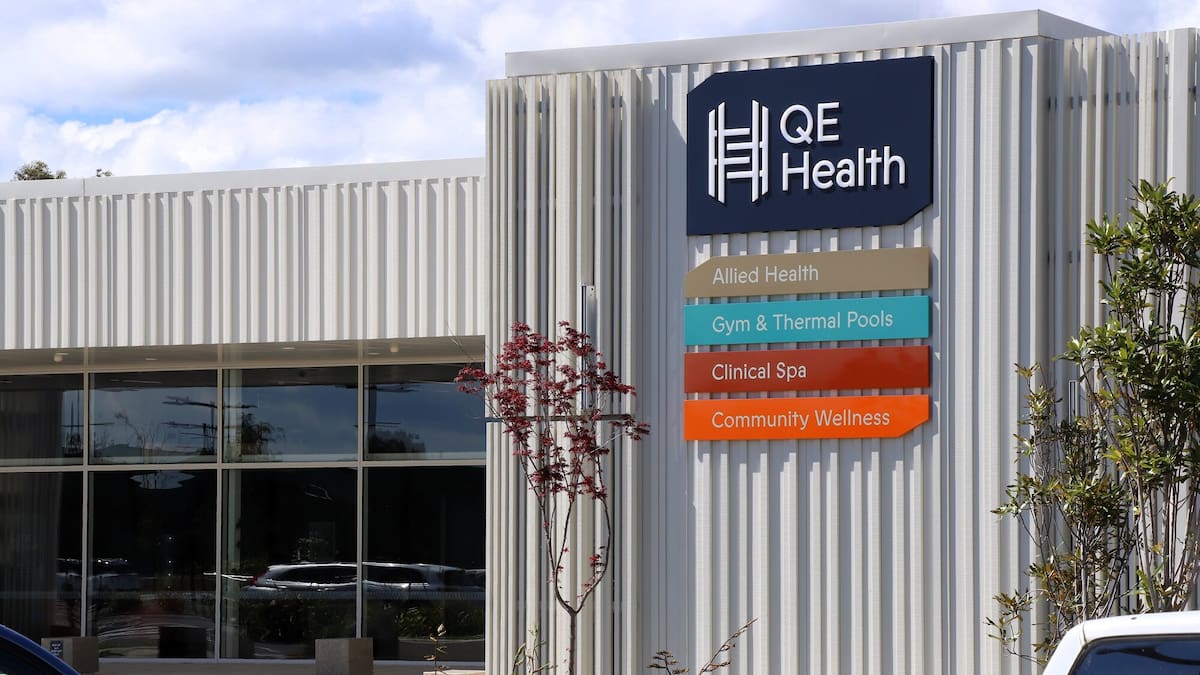
The first liquidator’s report on November 27 said 11 parties had expressed interest in buying QE Health.
QE Health former interim chief executive Craig Wilson told the Rotorua Daily Post the primary reason for its closure was Health NZ’s “lack of meaningful increases” since 2018 to contract funding, making it “impossible” to cover operating costs.
Wilson said about 80% of QE Health’s income came from Health NZ contracts.
In 2022, QE Health was prevented from accepting referrals from outside the Lakes and Waikato regions, except for five Taranaki patients annually. This was despite being the only provider of its specialist chronic pain services nationally, he said.
“The last straw for many of the interested parties was that Health NZ terminated our contracts last Monday and refused to consider transferring them to a new owner, meaning the majority of the business ceased to exist and became unsaleable.”
Wilson said this was “heartbreaking”, particularly for staff who had dedicated years to delivering specialist services that “significantly improved” patients’ lives.
He said QE Health employed 46 people at the time of liquidation and had about a dozen contractors.
Following liquidation, almost all staff were made redundant, and as of Friday, the remainder would be out of work.
Some had secured new roles, others were retiring or leaving the country and some would become unemployed, Wilson said.
He said Health NZ had been advised “at multiple points” in the past six months about QE Health’s struggles, including warning letters and in a “crisis letter”.
Steven Khov of Auckland-based Khov Jones Limited has been appointed the new liquidator for Rotorua’s QE Health.
Liquidator Steven Khov of Auckland-based Khov Jones Limited said the 11 interested parties did not proceed for “various reasons”, however one remained interested up until late Friday morning.
“That party withdrew their interest on Friday once Health NZ confirmed that they would not consider transferring the contracts to a potential purchaser.”
He said more time could not be given to find a buyer as QE Health was already trading at a loss.
“We are disappointed that we were not able to find a buyer.”
Its priority was working with Health NZ to transition patients and no decisions had been made for the building.
Khov thanked staff for their resilience and professionalism in continuing service delivery in the hope a buyer could be found.
It was not clear if they would be paid any redundancy, as this depended on the amount recovered from the liquidation.
He said Wilson did not speak for QE Health or the liquidator.
Health NZ Midland Te Manawa Taki regional planning, funding and outcomes director Nicola Ehau said its priority was ensuring patients’ continuity of care and supporting the Rotorua community.
The agency was working with QE Health to transition patients to appropriate services. Patients would be contacted with new appointment arrangements.
She said the loss of a health service was an unfortunate outcome for any community.
Ehau said Health NZ had been working with QE Health’s previous leadership to address “service sizing and the alignment of existing agreements”.
“Health New Zealand does not believe its contracting decisions caused QE Health’s closure and understands that the decision to place QE Health into liquidation was not based on whether service contracts would transfer.
“Matters relating to the closure remain under the liquidator’s control, and it would not be appropriate to comment further.”
Ehau said decisions to limit referrals outside the Lakes and Waikato regions were made under the former district health board system.
Funding increases for community services were set nationally and, since Health NZ was formed, had been “applied consistently across all non-government organisations”, Ehau said.
Former Rotorua Mayor Steve Chadwick, pictured in 2022. Photo / Laura Smith
Former Labour MP and Rotorua Mayor Steve Chadwick said she had hoped the Government would “pay the bill” after QE Health went into liquidation and asked Rotorua MP Todd McClay “to intervene”.
“I was the MP once when QE struggled, and the Minister of Health at the time, Annette King, intervened and got the contracts on a sustainable payment.
“I think it’s exactly the same.”
Chadwick said QE Health had “enormous potential but doesn’t really fit a current funding model”.
“I just think it’s sad – it shouldn’t have come to this.”
McClay said there was “sadly … no bill to pay”.
“It was clear that over an extended period of time, QE was losing significant substantial amounts of money.”
He said he intervened at the end of last year and the Government came up with a support package, including more capital and removing debt from one bank.
“This allowed QE to focus on restructuring to be able to live within their means.”
McClay said it also included “the Government and others” not taking repayments on the “significant debt that was held for a period of time”.
QE Health was not able to turn things around and became insolvent, McClay said.
QE Health is owned by a charitable trust, the Queen Elizabeth Hospital Community Trust.
Assisted by significant public grants and loans, the business moved from its original location into a $19m purpose-built facility on Hinemaru St in 2023.
Landowner Pukeroa Oruawhata Trust chief executive Mark Gibb said the liquidator had control of the building, which was owned by QE Health. Its land was not part of the liquidation process.
“Like many in the community, we are saddened by the news that QE Health will close this week, and our thoughts are with their team and clients.”
Gibb said the trust had no further comment at this time.
Megan Wilson is a health and general news reporter for the Bay of Plenty Times and the Rotorua Daily Post. She has been a journalist since 2021.