
Think before you post
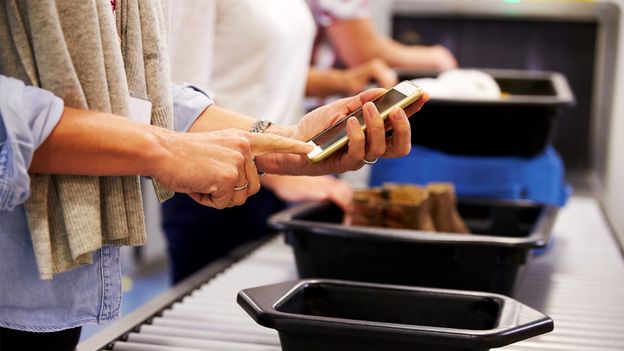
The US is far from the only nation to implement such surveillance measures. Governments around the world are increasingly monitoring travellers’ social media activity, and a person’s digital footprint can still cause problems long after they cross a border. In 2018, New Zealand introduced what they said was the world’s first law allowing border officials to demand access to travellers’ phones, with hefty fines for those who refuse to share their passwords. The United Arab Emirates goes further still: authorities can detain foreigners who post or even repost defamatory content, as one Irishman discovered last year when he left a negative online review of a former local employer.
The risks are also rising because travellers are generating ever-increasing volumes of potentially sensitive content. A survey of British travellers by Virgin Mobile found that more than half “can’t imagine not taking pictures on holiday”, typically uploading seven images a week to social media. In the arms race of “travel porn”, many users get competitive. One-in-10 survey respondents said they would go to extreme lengths for a holiday selfie, including standing on a cliff edge or posing with wild animals.
The problem is that those shots are often taken without regard for local norms, leading to backlash that can quickly escalate. In 2022, a Russian influencer and her husband were deported from Bali after staging a nude photoshoot under a sacred tree. Shortly after the photos were uploaded to social media, local politician Niluh Djelantic asked fellow citizens to report the influencer to the police. “She should be responsible for the cost of the cleaning ceremony to be carried out by villagers,” Djelantik wrote. “Trashy tourist. Go home!”
Incidents like this have led to governments scrambling to educate their globe-trotting citizens, with web pages dedicated to ever-shifting social media etiquette abroad, or cultural norms that many travellers may not realise exist. Canada’s government portal, for example, warns that in Thailand it is illegal to promote alcohol consumption, and you can be fined for posting pictures with alcohol on social media.
The spectrum of misunderstanding
Sucheta Rawal, a travel keynote speaker and children’s book author, has experienced how quickly a holiday post can spiral. On a trip to Africa last year, one of her posts was viewed by a contact, who then angrily reshared it globally. “I didn’t feel I was being insensitive,” she says, “but it led to misinterpretation, blame and hostility towards me, which made the rest of my trip very difficult. All content is vulnerable – whether you are posting personally or privately. In today’s environment, it is not very difficult to take comments out of context, or to thread them into stories that you did not intend to be told.”
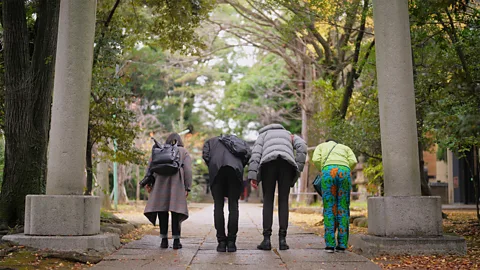 Getty ImagesTravellers can unintentionally breach local customs – such turning their backs on a torii gate at the entrance to a Shinto shrine (Credit: Getty Images)

At a time when more travellers are becoming content creators and posting gigabytes of material every month, the scope for misunderstanding grows. “When I was writing Beato Goes to Japan,” says Rawal, “I realised that I had to be mindful of so many subtle cultural nuances in my images.” The wrapping of a yukata (summer kimono) differs between living people and corpses, she notes, while facing your back to a torii gate, the entrance to a Shinto shrine, is disrespectful.
More like this:
• Where are all the Canadians going?
• The new tourist fines sweeping Europe
• The perils of letting AI plan your next trip
As travel photography becomes increasingly performative, millions of people take selfies wearing local clothing or visiting religious shrines. Such missteps can offend those nearby long before an image is posted online.
Context is everything
Often, it is unfamiliarity with cultural norms – rather than malice – that lies behind these incidents. For example, Japan, along with many Asian and Middle Eastern nations, is an example of a “high-context society“. In a talk on the subject, intercultural communication expert Erin Meyer explains that in such cultures, communication “is more implicit, or layered or nuanced”, and much is said through symbolic gestures or implied understanding.
Travellers from “low-context societies”, which prioritise direct verbal communication, may find such layered, understated communication a minefield of potential rudeness – one where even if you avoid words, you don’t necessarily avoid causing offence. When social posts today come with the option of adding a plethora of emojis, a simple video upload at a foreign fruit market, with an accompanying watermelon icon could easily trigger viewers who see that as a sign of antisemitism or a racist stereotype against black Americans.