
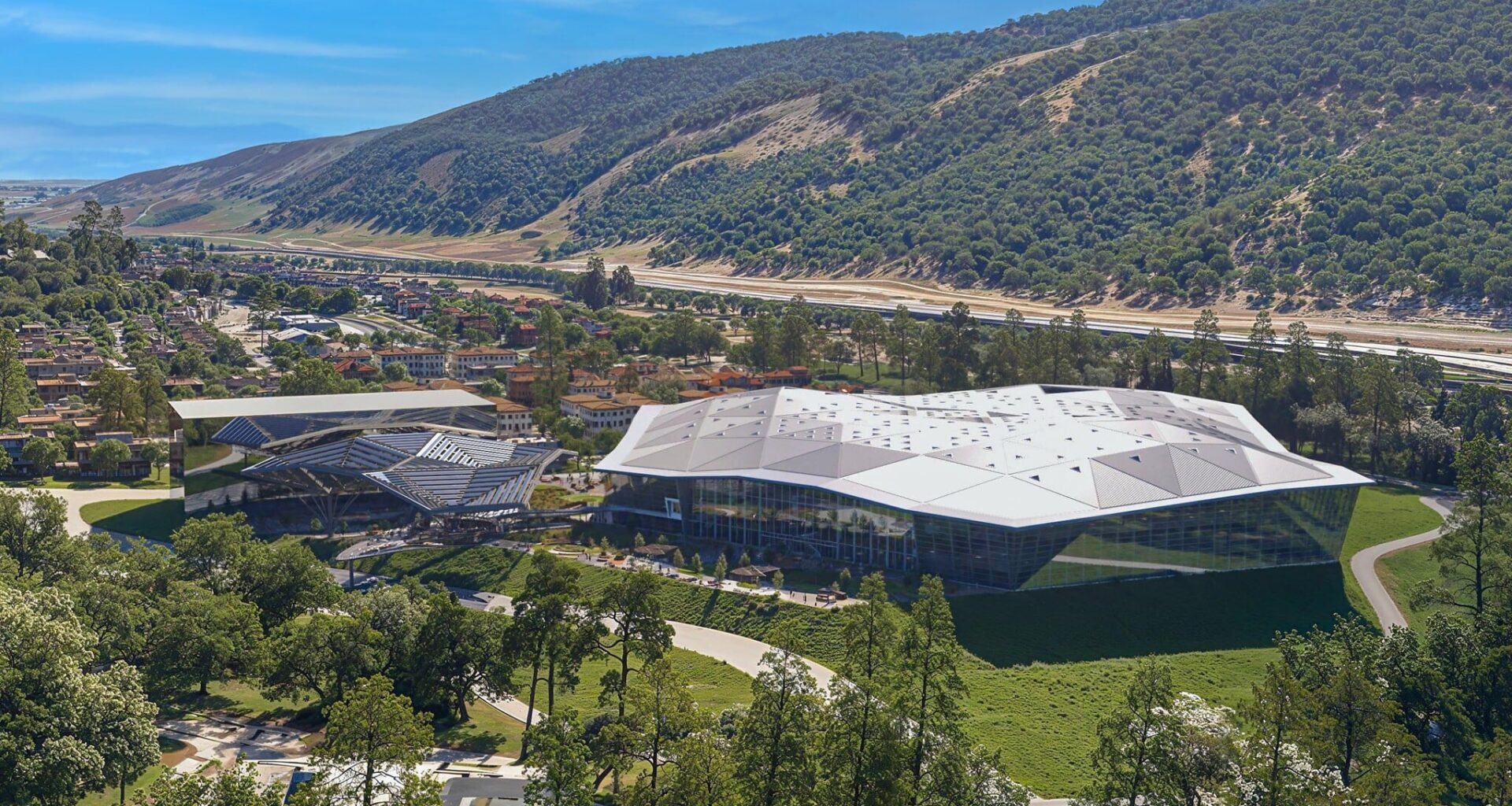
US chip giant Nvidia announced Thursday that it would build a planned “multibillion-shekel” research and development campus in the northern town of Kiryat Tivon, bringing thousands of jobs to a region outside Haifa with designs of creating a tech hub.
Construction on the 160,000-square-meter tech campus is expected to begin in 2027 and be completed by 2031, the chipmaker said, announcing Nvidia’s eighth such center in the country.
The R&D center, which will be designed along the lines of the company’s spaceship-like buildings at its Santa Clara, California, headquarters, will provide jobs for 10,000 people, doubling its current workforce here, and include a park, a visitor center and cafés, according to Nvidia.
The computing juggernaut said that the new campus will also include labs and collaborative areas that “foster innovation within Nvidia and with partners, startups, and the broader ecosystem, supporting Nvidia’s growth in the country.”
“Our new campus will be a place where our teams can collaborate, invent, and build the future of AI,” Nvidia founder and CEO Jensen Huang said in a statement.
Sign up for the Tech Israel Daily
and never miss Israel’s top tech stories
By signing up, you agree to the terms
The campus will be built on a 90-dunam (22-acre) plot purchased by Nvidia for about NIS 90 million ($29 million), according to the Israel Land Authority. The chipmaker was reportedly granted a NIS 70 million discount on the land purchase. Beyond that, Nvidia did not request and was not given any additional tax or other benefits, the Finance Ministry said.
“Israel is home to some of the world’s most brilliant technologists and has become Nvidia’s second home,” Huang said. “This investment reflects our deep and enduring commitment to our families in Israel and their unique contributions to the AI era.”
Nvidia has not said how much it expects to spend on the center, beyond calling it a “long-term, multibillion shekel investment.”
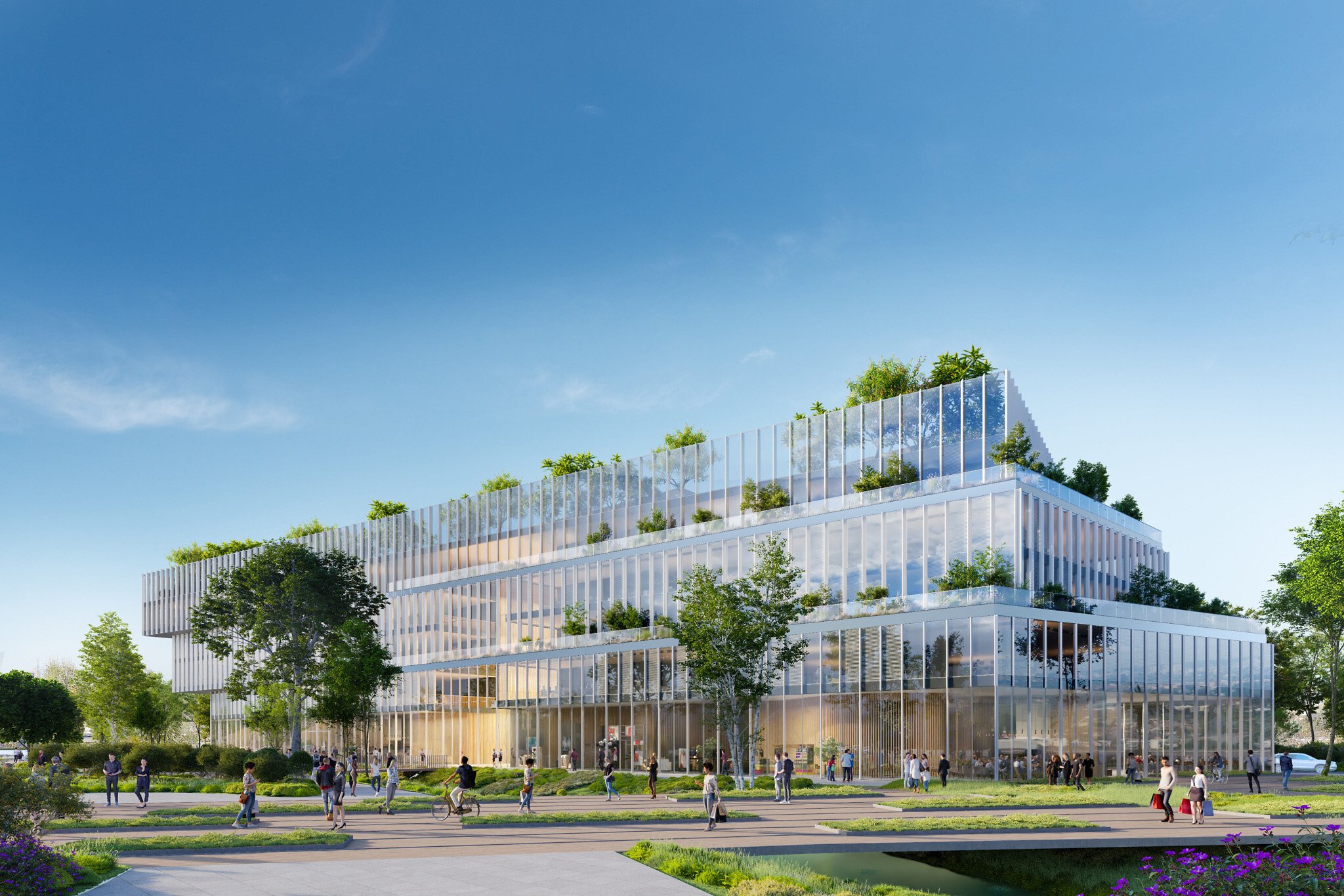
Illustration of Nvidia’s new R&D center located in the southern city of Beersheba. (Courtesy of Moshe Tzur Architects)
Nvidia’s R&D activities in Israel are already the firm’s largest outside of the US. The chipmaker employs over 5,000 workers in Israel in seven R&D centers, from nearby Yokne’am, the headquarters of Mellanox, which was acquired by Nvidia in 2020, to Tel Aviv, Jerusalem, Ra’anana and Beersheba in the south.
Many of Nvidia’s high-end processors and networking chips, essential for training the largest AI models, are developed at its R&D centers in Israel. As global tech firms including Microsoft, Amazon, Alphabet and Tesla race to build AI data centers and dominate the emerging technology, demand for Nvidia’s most advanced processors is surging.
“If a company of this magnitude, which builds the most sophisticated technologies in AI, decides to take such a strategic step, it is going to position Israel at the core of AI solutions,” Shlomi Kofman, vice president of global partnerships at the Israel Innovation Authority, told The Times of Israel.
“Having such an R&D center will have a huge and long-term impact on the economy and education in the northern part of the country, as well as contribute to the economy as a whole,” he added.
“Naturally, it is going to create a whole concentration of knowledge, experience, and talent and attract more investment than just the startups that will be created around it,” said Kofman, who previously served as Israel’s Consul General in San Francisco.
After Nvidia announced a plan to expand its presence in Israel in July, the Israel Land Authority proposed numerous potential plots that would be suitable for the new R&D campus.
Kiryat Tivon is an upper-middle class community of less than 20,000 about 30 minutes from Haifa by car. It sits just to the north of Yokne’am Illit, where several tech firms have established offices.

Homes on the hills in the Israeli town of Kiryat Tivon, in Northern Israel, on June 19, 2015. (Hadas Parush/Flash90)
Israel views the establishment of Nvidia’s R&D center in Kiryat Tivon as a catalyst to bring more tech jobs to areas outside of the crowded Tel Aviv region, which remains the country’s central high-tech hub.
“We are proud and pleased by Nvidia’s decision to build its new campus in Kiryat Tivon,” Ido Greenblum, head of the Kiryat Tivon regional council said in an e-mailed statement. “We offered a winning location, combining a green environment, high quality of life, a strong education system, and excellent transportation access.”
“We are committed to turning the partnership with Nvidia into new opportunities for residents of the entire region,” Greenblum promised.
Greenblum said the council is working to create an infrastructure that includes small businesses, hotels and restaurants, which will serve the campus, Kiryat Tivon residents, and the entire area.
The appetite for Nvidia’s chips has been driving the company’s stock price rapidly since early 2023, turning it into the world’s first $5 trillion company at the end of October.
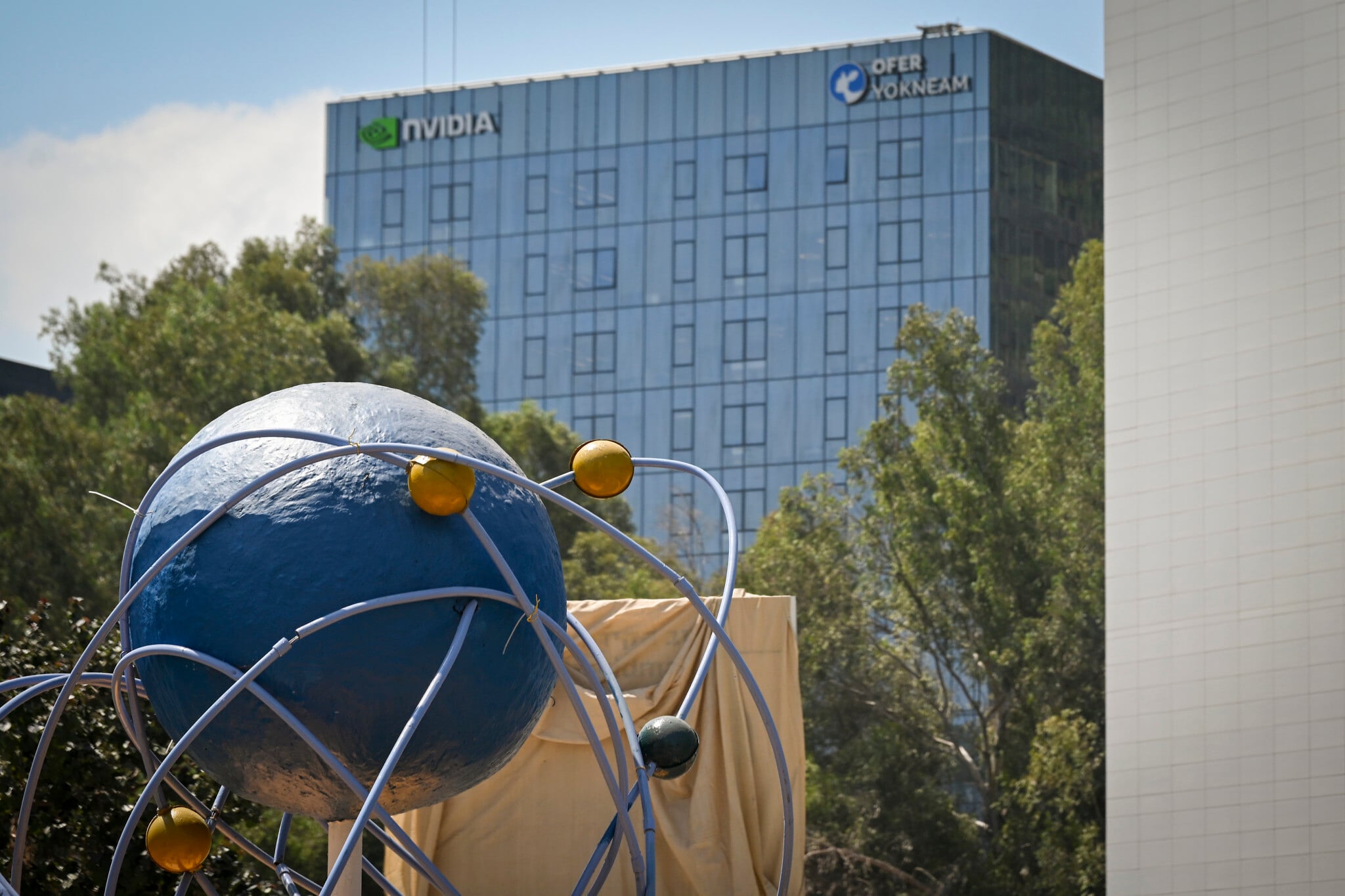
View of the Nvidia offices at the Yokneam High-Tech Park, September 8, 2024. (Michael Giladi/Flash90)
“Nvidia’s growth in Israel has been remarkable, driven by the extraordinary talent and engineering excellence of our teams,” said Amit Krig, Nvidia senior vice president of software engineering and Israel site leader.
At the end of October, Nvidia announced plans to triple the size of its R&D presence in Beersheba, a city in the country’s south, and hire hundreds of additional Israeli staff. The new site, located at Beersheba’s Gav Yam tech park, covers about 3,000 sqm and is expected to be fully operational by the end of the first half of 2026.
Alongside its R&D operations, Nvidia has made a number of mega acquisition deals in Israel over the past decade. In December 2024, the chipmaker completed the purchase of Israeli AI workload management startup Run:ai for an estimated $700 million.
It marked Nvidia’s largest acquisition in the country since buying Israel’s Mellanox Technologies Ltd., a maker of high-speed servers and storage switching solutions used in supercomputers globally, for a massive $7 billion in 2020.