
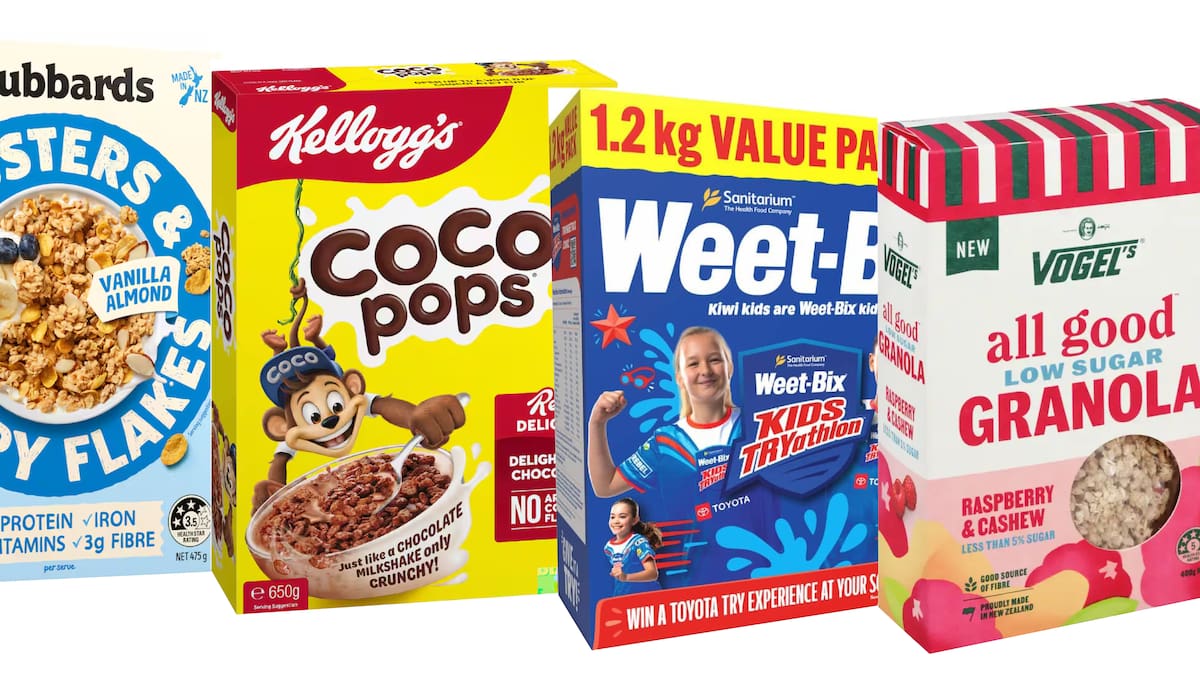
“A good rule of thumb is to look for cereals with less than 10g of sugar per 100g,” says Henderson. “Anything around 5g or less is considered low sugar, but aiming for under 10g is a realistic goal with what’s on supermarket shelves.”
It is also important to understand where that sweetness comes from. Sugars may be added during manufacturing, or they may come from ingredients such as dried fruit. Either way, they all contribute to the total sugar load.
What fibre level actually counts as high
Under the Food Standards Code, a cereal must contain at least 7g of fibre per 100g to be considered an excellent source. Products containing more than 4g per 100g can still claim to be a source of fibre but that lower threshold often sits alongside higher sugar levels.
“Breakfast is one of the easiest times to top up your fibre, especially since most New Zealanders don’t get enough,” says Henderson. “Adding fruit to your cereal will give you another source of fibre.”
A fibre-rich start also delivers real-world benefits. It supports gut health, helps keep people fuller for longer and promotes steadier energy through the morning rather than the spike-and-crash effect many associate with sugary cereals.
Weet-Bix get the thumbs up from dietitians. Photo / File
Why whole grains still matter
Whole grain remains another key marker – and one that is often misunderstood. Under the Food Standards Code, wholegrain cereals must contain either intact grains or flour made from the entire grain: bran, germ and endosperm, in their original proportions.
“Whole oats, whole wheat, brown rice, barley and rye are all whole grains commonly used in New Zealand cereals,” says Sekula. “They are a big plus – they’re linked with better heart health, good digestion and a lower risk of long-term health issues.”
As a rule of thumb, she advises choosing cereals where a whole grain appears first on the ingredient list, or where the label shows a whole-grain content of at least 50%.
Are high-protein cereals worth the hype?
Protein has become one of the loudest selling points in the cereal aisle, but it should not overshadow other fundamentals.
“Protein is important, but most of us get plenty at breakfast once we add milk, yoghurt or a handful of nuts or seeds,” says Henderson.
“High-protein cereals can suit some people, but they’re often a bit more processed, so it’s worth looking at the whole picture rather than the protein number alone.”
She also urges caution around keto, paleo and grain-free cereals, many of which are marketed as natural or premium. These products can be very energy-dense because of their reliance on nuts, seeds, oils and sweeteners, and often come with a higher price tag. They can work well as yoghurt or smoothie toppings, she says, but are not always the best fit as an everyday breakfast cereal.
Packaging claims that mislead shoppers
Front-of-pack language can easily bamboozle.
“Words like ‘natural’, ‘no refined sugar’, ‘wholefood’ or ‘grain-free’ can make a cereal sound healthier than it really is, even if it’s still high in added sugars or low in whole grains,” says Sekula.
“No added sugar” is another claim that is frequently misunderstood. These cereals can still derive sweetness from fruit purees or dried fruit, so total sugar can still add up. Some may also contain natural or artificial sweeteners, making it essential to check the ingredient list and the sugar per 100g.
Coco Pops don’t pass the health test – consider it an occasional treat rather than an everyday option.
Highly processed cereals and long ingredient lists
Highly processed cereals often reveal themselves through long ingredient lists.
“Some cereals use several different types of added sugars, plus added fats or oils to help clusters stick together and may have quite a long ingredient list,” says Henderson.
“These can be a clue that the product is more processed than people expect. It doesn’t mean you can’t enjoy them, but it’s a gentle reminder to check the nutrition panel and think about how often they fit into your week.”
Portion size: the hidden trap
One of the biggest blind spots for cereal lovers is portion size. The suggested serving on the box is nowhere near the amount that often gets casually tipped into our bowls.
“Portion sizes can catch people out, the serving on the box is often much smaller than what we naturally pour, so the sugar and energy can add up more quickly than we realise,” says Henderson.
This is where many people fall into the trap of assuming that a large bowl of “healthy” cereal is automatically virtuous. In reality, a modest serve paired with yoghurt, milk, fruit and even nuts is often far more filling and nutritionally balanced. The cereal becomes the base, not the bulk.
For many New Zealanders, cereal remains a practical, low-fuss way to fuel up when time is tight. The key is choosing well, keeping portions realistic and building the bowl out with yoghurt, fruit and other sources of protein rather than simply pouring more from the box.
These are five of the best types of cereal in terms of nutrition available in NZ supermarkets.
Five cereals that tick the boxes
1. Rolled oats
“One of the most affordable cereals on the market,” says Sekula. “Oats are 100% whole grain, naturally low in sugar, high in fibre and minimally processed.”
2. Weet-Bix and wheat biscuits
“A reliable, budget-friendly staple,” she says. “They are low in sugar, made from whole-grain wheat and provide a good source of fibre.”
3. Kellogg’s Sultana Bran and Pams-style alternatives
High in fibre at about 12–15g per 100g and based on whole grains. Sugar is moderate for this style, with some coming naturally from dried fruit.
4. Vogel’s Cafe-Style Muesli – low-sugar varieties
These offer whole grains, nuts and seeds with lower added sugar than many traditional mueslis and sit mid-range on price.
5. Kellogg’s All-Bran Original
Very high in fibre, made from whole-grain wheat bran and low in sugar. Only a small serve is needed to boost daily fibre intake.
These cereals have fewer nutritional benefits than some others available in NZ supermarkets.
Five cereals that don’t meet the criteria
1. Coco Pops (Kellogg’s)
High in added sugars and low in fibre, offering little in the way of sustained energy.
2. Froot Loops (Kellogg’s)
Mostly refined grains with high added sugar, very little fibre and a long ingredients list.
3. Crunchy Nut Cornflakes (Kellogg’s)
Higher sugar content and based largely on refined grains, with less fibre than whole-grain options.
4. Cluster-style granolas (various brands)
Often rely on added sugars and fats to bind clusters, making them higher in energy and added oils than many people expect.
5. Paleo or grain-free granolas (various brands)
Very energy-dense because of concentrated nuts, seeds, oils and sweeteners.
What to look for on cereal nutrition labels
Sugar: Less than 10g per 100g.Fibre: Ideally 7g or more fibre per 100g (but at least 4g).Whole grains: Whole oats, whole wheat, brown rice, barley and rye. Look for cereals that have these grains first on the ingredient list, or as at least 50% of whole-grain content.Ingredients lists: The shorter, the better.Portion size: Pay attention to the suggested serving size on the label.
Herald contributor Nikki Birrell has worked in food and travel publishing for nearly 20 years. From managing your kitchen to cutting costs, she’s shared some helpful advice recently, including how to prep your barbecue for summer grilling, gourmet hacks for elevating budget ingredients and what toppings to choose for different crackers.