
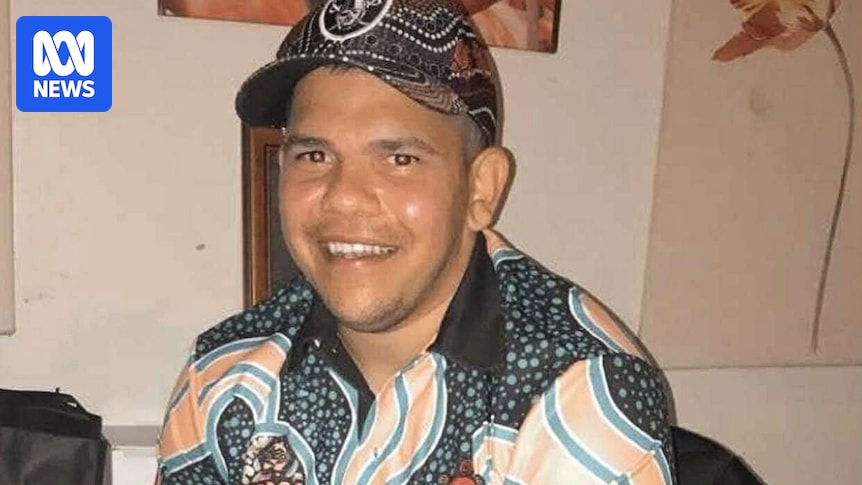
The family of an Aboriginal man hospitalised after his arrest in western NSW wants an independent investigation to determine whether the force used by police was excessive.
Darren Biles, 29, was arrested by officers from the Western Region Operation Group after a pursuit through local streets in Dubbo around 11pm on December 10.
The arrest attracted the attention of bystanders, some of whom filmed and live-streamed it to social media.
Mr Biles’s mother, Annette Biles, sobbed when describing what she saw in the videos.
“I didn’t want to watch — I said ‘no, take it away from me,'” she said.
“It hurt when I seen what they’ve done to my son.”
Videos show arrestLoading…
In footage seen by the ABC (which runs for about 11 minutes), Mr Biles is lying on the ground when an officer appears to make a kicking or stomping action, but a car blocks the view so it is unclear if Mr Biles is being struck.
Several minutes later, an officer is seen kneeling on Mr Biles’s chest and head.
At one stage, one of the officers is heard telling Mr Biles “we’re going to give you one more chance” to let go of the car and stop resisting arrest.
NSW Police told the ABC the actions of the officers would be subject to a Police Powers Panel review: an internal mechanism for police to decide if the use of force was justified.
Darren Biles’s sister, Erica Biles, said the family was seeking legal representation and would push for an investigation by the Law Enforcement Conduct Commission, which has powers to compel witnesses and make recommendations for disciplinary action.
Ms Biles, who lives with her brother at Narromine, 30 kilometres west of Dubbo, said her phone “blew up” as the arrest unfolded on social media.
Erica Biles (right) and her mother Annette Biles (left) have raised concerns about a police arrest in Dubbo. (Catherin James: ABC Western Plains)
Police visited home
Ms Biles said police had been called to their home as recently as December 1.
She said her brother had started having episodes of what she described as anxiety about being followed and chased, and was receiving some medical supervision.
Bystanders live-streamed and recorded the arrest of Darren Biles in Dubbo. (Supplied: Biles family)
“Police and paramedics came out [December 1] and told him he needed to take his medication,” she said, adding that her brother had called police for help from his own phone.
NSW Police told the ABC officers visited the home at around 10pm on December 10, about an hour before the arrest, acting on “a concern for welfare”.
It said those who went to the Biles’s home were not the same officers involved in the arrest.
In a statement about the arrest, police said they were conducting “high-visibility patrols to target and reduce crime” when around 11pm they attempted to stop Mr Biles’s car in Dubbo.
He allegedly drove on for several streets before stopping.
“Police spoke with the driver, a 29-year-old man, who allegedly failed to comply with directions and was subsequently arrested, during which he allegedly resisted and assaulted officers.”
Mr Biles was charged with a number of offences including failure to stop, two counts of assaulting police (one with actual bodily harm) and resisting police.
‘His face was all busted’
Immediately after he was taken to the police station, he was taken to Dubbo Hospital.
Erica Biles, who had not been allowed to see her brother at the station, said she saw his bloodied face as paramedics urged him into the ambulance.
“His face was all busted,” she said.
“All blood was coming from his nose and mouth.
“It was disturbing, but I was trying to keep it cool too so I didn’t get into trouble.”
Ms Biles said her brother has since been discharged from Dubbo Hospital “with a broken nose, cracked ribs and a swollen knee” and is currently in custody at Wellington Correctional Centre after being refused bail at a bedside hearing.
Use of force against Aboriginal people
While not commenting on this case, which is still being investigated, legal advocates said there were persistent concerns about the use of force by police against First Nations people.
“NSW Police use force against Aboriginal people at vastly disproportionate rates,” Aboriginal Legal Service NSW/ACT principal legal officer Nadine Miles said.
“Forty-five per cent of excessive force incidents involve Aboriginal people, despite Aboriginal people making up only 3.8 per cent of the population.”
Tobias Elliott-Orr says there are clear legal parameters for the use of force by police in NSW. (Supplied: Redfern Legal Centre)
First Nations solicitor with the Redfern Legal Centre, Tobias Elliott-Orr, said police needed more and better training to handle mental health triggers and how to de-escalate situations.
“This is for First Nations and non-First Nations,” he said.
“A huge amount of people that come into contact with the criminal justice system are suffering from some kind of mental health condition or episode.”
While Mr Elliott-Orr emphasised the challenging job police officers faced, he said the legal parameters of their powers were clear that use of force must be proportionate and reasonable.
Ms Miles said the police saying they would review their officers’ actions internally could erode public confidence.
“Police should never investigate police,” she said.