
For most other governments, a $2.5 billion surplus would be news to shout from the rooftops.
For the Western Australian government though, it’s a headache with little prospect of relief.
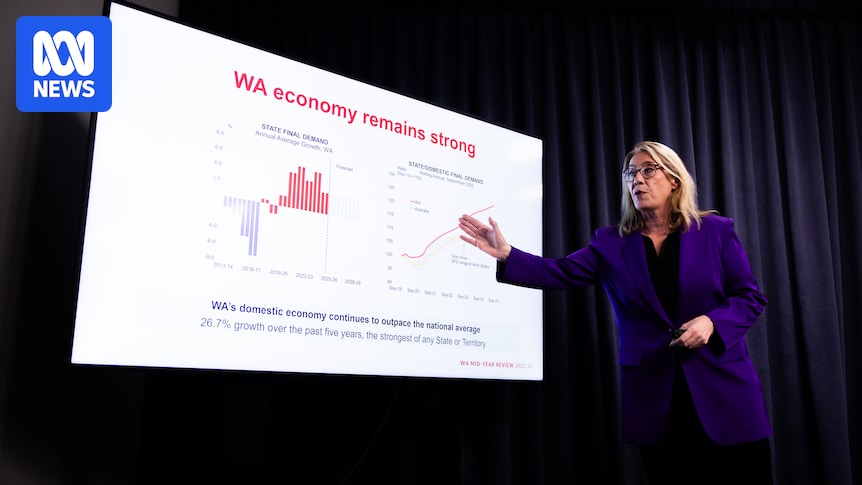
And Treasurer Rita Saffioti appeared to understand that, because her mid-year budget update on Thursday — which in years gone by has been an opportunity to crow about her books being the envy of the nation — was a much more subdued affair.
“The focus of this mid-year review is steady as it goes but making sure we fund key priorities like health and housing,” was her summary.
It’s hardly exciting, and for most people, will probably go largely unnoticed.
WA government to buy private hospital
Because the tricky reality for this government is that despite its glaring problems in health and housing, its hands are largely tied.
An over-capacity hospital system requires a mix of more aged care funding from the Commonwealth, investment to stop people getting sick in the first place and more hospital beds.
And although there are signs of improvement in the housing sector with approvals and commencements starting to rise, workforce challenges are still restricting how many homes can be built.
No quick fixes
Saffioti and her cabinet colleagues understand there are no quick fixes, which leave it open to the opposition’s standard line of attack: Western Australians aren’t feeling the benefits of the state’s budget surpluses.
One reason is that inflation remains high, and spraying around cost of living relief isn’t going to help bring it down.
WA Treasurer Rita Saffioti delivered her mid-year budget update on Thursday. (ABC News: Keane Bourke)
The budget update does contain some $165 million of new measures, including targeted energy bill support and an extension of a rent relief program.
It’s welcome news for WA Council of Social Service, but they argue it doesn’t go far enough.
“Years of relentless cost growth have already eroded household saving and pushed many into debt, leaving no buffer for any unexpected costs,” CEO Louise Giolitto said.
Louise Giolitto wants to see more cost-of-living relief. (ABC News: Keane Bourke)
“We have a nation-leading economy but too many Western Australians are struggling to afford the bare essentials needed to survive.
“We continue to call for targeted measures that help people afford the basics, the cost of survival.”
No ‘rainy day’ plan
That disconnect between the size of the surplus and the scale of need on the ground might be part of the reason why surpluses in the years ahead have been reduced from what they might have been.
WA budget aims to build fortress around economy
Around $2.5 billion has been squirrelled away for the years ahead to be spent “on priority services to be considered as part of the 2026-27 budget”.
That means, for example, next year’s forecast surplus is reduced from about $3.9 billion to $2.9 billion — without having to commit to what that money is spent on.
In the long ago pre-COVID times, a fresh-faced Mark McGowan had promised to spend much more of the state’s extra money on paying down debt — something the government has been less keen to do since taking the reins of the budget.
Shadow Treasurer Sandra Brewer said that was a mistake.
“There will be a time in our future when international events or economic circumstances mean that windfall revenue won’t be there anymore,” Brewer said.
Sandra Brewer fears what shape the books may be in when the Liberal Party next forms government. (ABC News: Keane Bourke)
“It will be future governments that find it extremely difficult to navigate those circumstances, because Treasurer Rita Saffioti has failed to put money away for a rainy day.”
Saffioti and the government argue that the scale of WA’s debt compared to the size of its economy is lower than anywhere else in the nation, and the investments the government is making — including to try and diversify the economy — will help protect the state from future economic shocks.
It’s also been argued the current approach is needed because of the immense pressures facing the state today.
Rita Saffioti faces a tricky balance managing big-ticket infrastructure items while keeping the spending in check. (ABC News: Keane Bourke)
“This approach reflects WA’s unique circumstances — the state currently has the strongest population growth in the nation, which creates significant pressure on essential services and housing supply,” EY senior economist Paula Gadsby said.
“Balancing immediate infrastructure needs with long-term fiscal sustainability is therefore a complex challenge but remains important.”
Problem of the government’s making
The opposition seems to largely agree that infrastructure is needed, and should set the state up for the future, but Brewer argues the government is playing catch up and won’t be able to do it all at once.
“It’s a hard decision to make about what the government might have to do to be able to reduce the demand in the economy,” she said.
Brewer said the government had overspent for years on road and rail projects, contributing to the situation it finds itself in now.
Sandra Brewer says the government has spent too much on big infrastructure items. (ABC News: Keane Bourke)
“It makes it really hard now for the government to deliver all of the hospitals that we need, plus education and all the business-as-usual things that government needs to do in water infrastructure, in power infrastructure, but this is a problem that they’ve created,” she said.
That’s especially so because private investment in the state is continuing to fuel growth, leaving less room for the government’s money.
In order to keep that going, Saffioti is directing a good chunk of the government’s money towards projects which support new industries to get off the ground.
“We’ve got to make sure we remain globally competitive and we need to make sure we can do all we can to support new jobs,” she said.
Risky strategy
If the government’s plans pay off, some continued short-term pain will leave the state set up for the future with a more stable economy and housing market, and money in the bank to buy their way out of any future problems.
But that’s little comfort for those continuing to do it tough now.
Iron ore continues to prop up the WA economy. (ABC News: Kathryn Diss)
With three-and-a-half years until the next election, it has some time for pressures to ease and to convince people it struck the right balance.
In a time of global uncertainty though, there’s no guarantee WA’s trade-exposed economy will see that smooth landing the government is hoping for.
Loading