
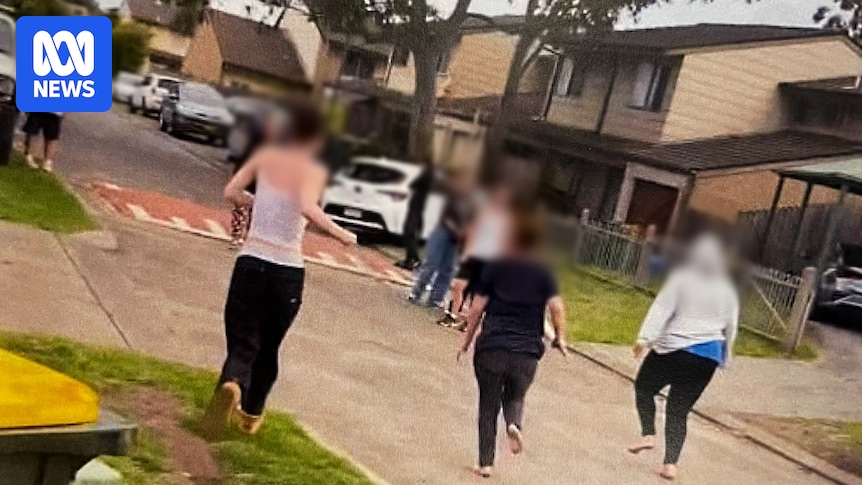
The teenager who stabbed 39-year-old Kristie McBride in a street brawl in Wollongong two years ago could be eligible for parole in February next year.
Three other teenage girls were also sentenced in the NSW Supreme Court in Sydney today after previously pleading guilty to manslaughter.
They had been charged as part of a joint criminal enterprise.
Justice Richard Cavanagh told the court the Crown had accepted the manslaughter plea because the offenders were acting in self-defence, although with “excessive force”.
The brawl erupted on the evening of November 22, 2023, when a group of teenage girls armed with knives arrived on Wegit Way, Warrawong, to confront another group that included Kristie McBride and her sister, Carly McBride.
The confrontation had been arranged on social media and quickly escalated into violence.

Kristie McBride was remembered by family and friends after the fatal Wollongong attack. (Supplied: McBride family)
The court heard the main offender, who was 15 at the time and is now 17, stabbed Kristie McBride three times in the space of two seconds.
Ms McBride died nine days later in hospital.
The teenager was sentenced today to four years and three months in prison for manslaughter with a non-parole period of two years and three months.
Her sentence will expire in February 2028, but she will be eligible for parole in February next year.
Justice Cavanagh said although none of the other teenagers stabbed Kristie McBride they acknowledged their participation in the brawl.
The second teenager, who was 15 at the time, was sentenced to three years in prison with a non-parole period of one year and 10 months, and is already eligible for parole.
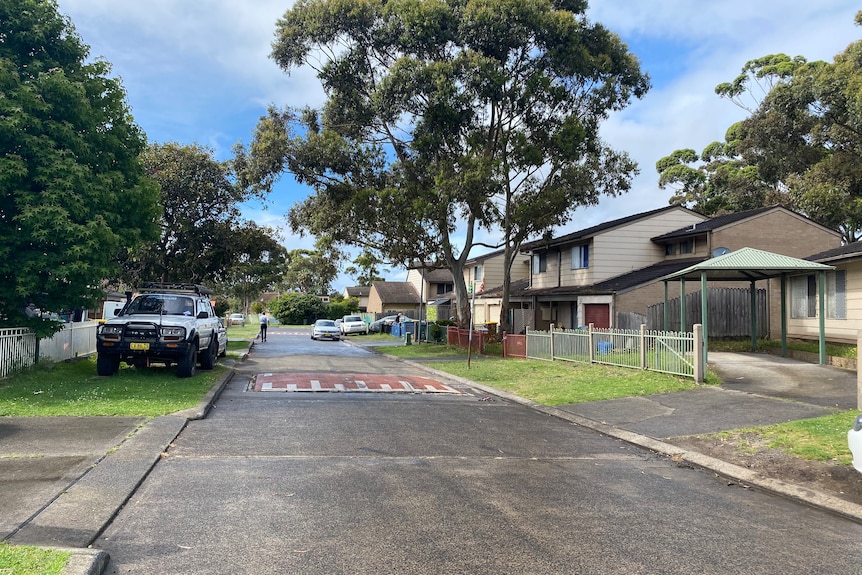
The four teenagers were charged as part of a joint criminal enterprise. (ABC Illawarra: Kiara Martin)
The third was 14 years old at the time and received a sentence of two years and 10 months, with a non-parole period of one year and eight months.
She will serve the remainder of her sentence in a juvenile facility and will be eligible for parole in June.
The fourth was also 14 years old and received a two-year community corrections order, allowing her to remain in the community under supervision.
Justice Cavanagh said the brawl had its origins in a falling out between the two groups but the “original motive is not really known”.
He told the court the group chat created on Instagram named “The Big Yappers” was designed to “direct insults and threats at each other”.
He said it degenerated to “sexual references — threats of rape and homophobic slurs”.
Teen conflict spirals
Court documents noted three of offenders bought kitchen knives from a supermarket and unwrapped them in a shopping centre bathroom in Wollongong.
A fourth member then joined the group and they caught a bus to Warrawong.
The documents outlined that Carly McBride armed herself with a metal baseball bat, while another in the group grabbed a plank of wood, another a sock filled with tins of cat food, while Kristie McBride grabbed an object that could not be identified in footage from the scene.
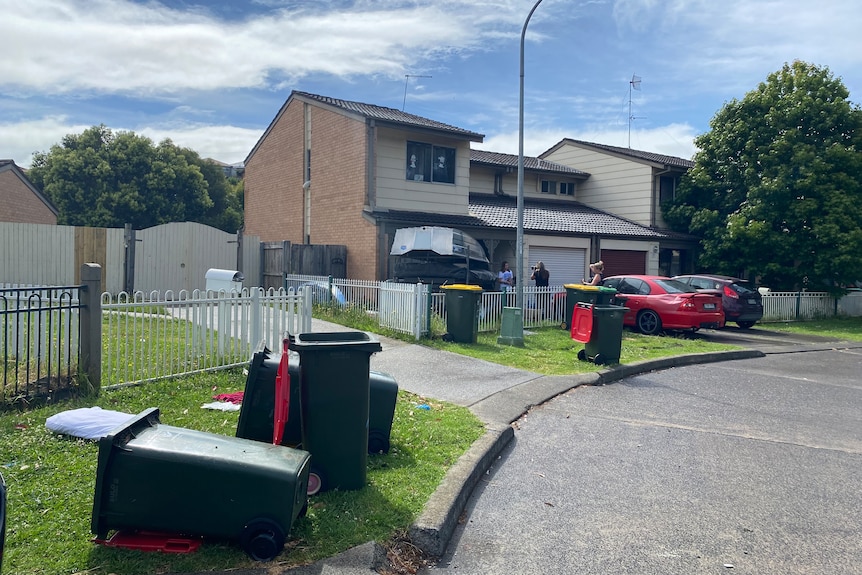
The brawl involving up to 15 young people occurred at Wegit Way in Warrawong. (ABC Illawarra: Kiara Martin)
The fight was partially captured on footage taken from two phones.
The documents said Carly McBride ran towards the offenders and hit one on the head with the bat.
The main offender thrust a knife into Kristie McBride three times in two seconds.
Two of the offenders discarded their knives as they fled, while one was still carrying a knife when police officers stopped them.
Paramedics were called and took Kristie McBride to hospital where she was placed in an induced coma.
She died nine days later from complications of her injuries.
Sentencing considerations
In his sentencing Justice Cavanagh acknowledged the grief and feelings of deep loss experienced by Ms McBride’s family.
He reiterated the main offender was only 15 at the time of the stabbing and the others ranged from 14 to 16.
He said they were “very immature” and “susceptible to peer pressure”.
He referenced the group chat as an example of their “reduced capacity to engage in rational and mature thinking”.
He said the main offender believed “she was defending herself or another person, but her conduct was not a reasonable response in the circumstances”.
He highlighted that three of the four had experienced significant disadvantage and trauma, including family conflict, violence, sexual abuse, and unstable care arrangements.
The judge said rehabilitation should be central to sentencing young offenders and several had actively engaged with schooling, counselling, and behavioural programs while in custody.
He said it showed increasing maturity and a willingness to address their behaviour.