
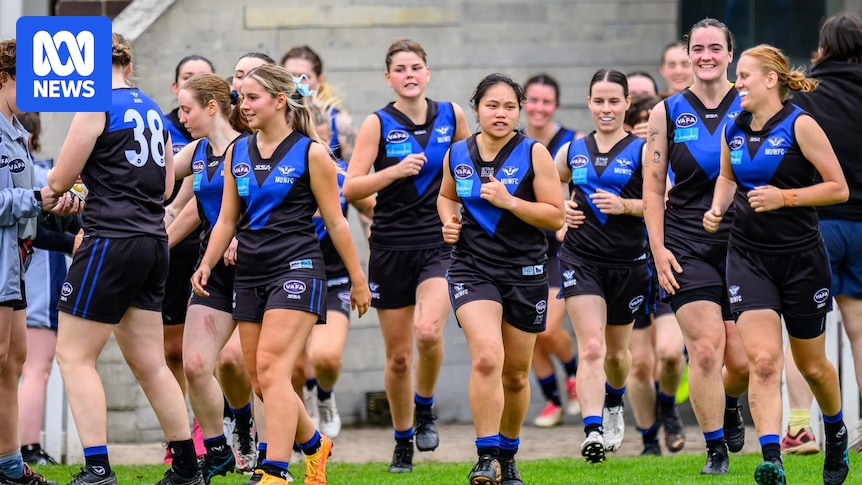
Melbourne University Women’s Football Club (MUWFC) is one of the oldest women-led community clubs in Australian Rules football history.
Its alumni includes recently crowned AFLW best and fairest Ash Riddell and three-time premiership player Emma Kearney, with more players recruited from MUWFC than any other club in the first three seasons of AFLW.
But as new co-president Michelle Andrews puts it, the club is in an active fight for survival.
“I would say the club came very, very close to folding, and if I’m honest with you, it still is,” she said.
The near demise of the club is multi-faceted, reflecting significant change in the landscape of grassroots women’s football, as well as internal politics and leadership issues.
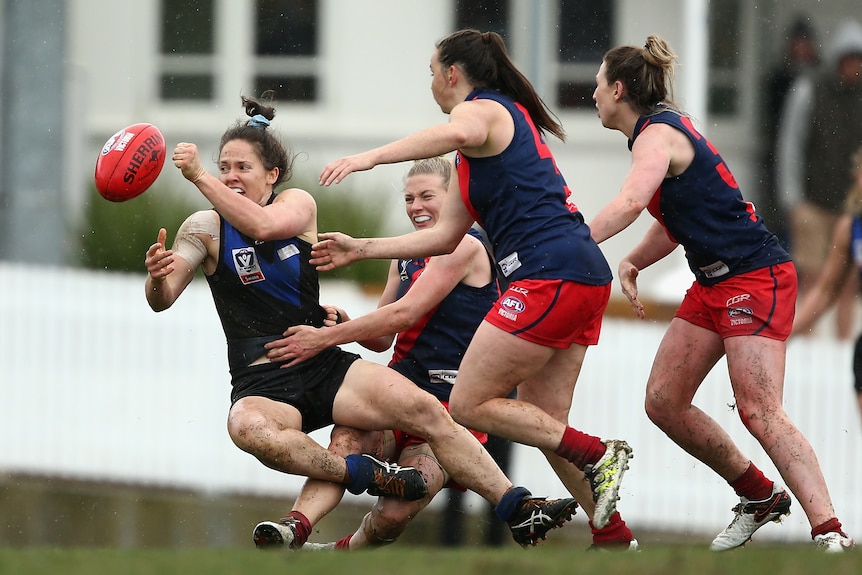
Emma Kearney is one of many star AFLW players who have come through Melbourne Uni. (AFL Media/Getty Images: Robert Prezioso)
This includes the resignation of former president Maddy Noack, after MUWFC was reduced to just one senior team after fielding three in 2023.
It also follows a drying up of women and gender-diverse people coming to Australian Rules football, 10 years on from the launch of AFLW.
Player exodus followed ‘lack of leadership’
Earlier this year, MUWFC lost its opening three games of the Victorian Amateur Football Association (VAFA) season by a cumulative margin of 368 points, forcing it to request a historic mid-season re-grading.
MUWFC previously competed in the VFLW, the tier below AFLW, but gave its licence to the Kangaroos, who it was once formally partnered with, dropping a tier down to the VAFA.
In 2025, the club experienced what was reported as a “player exodus”, with just five senior players returning over the off-season.
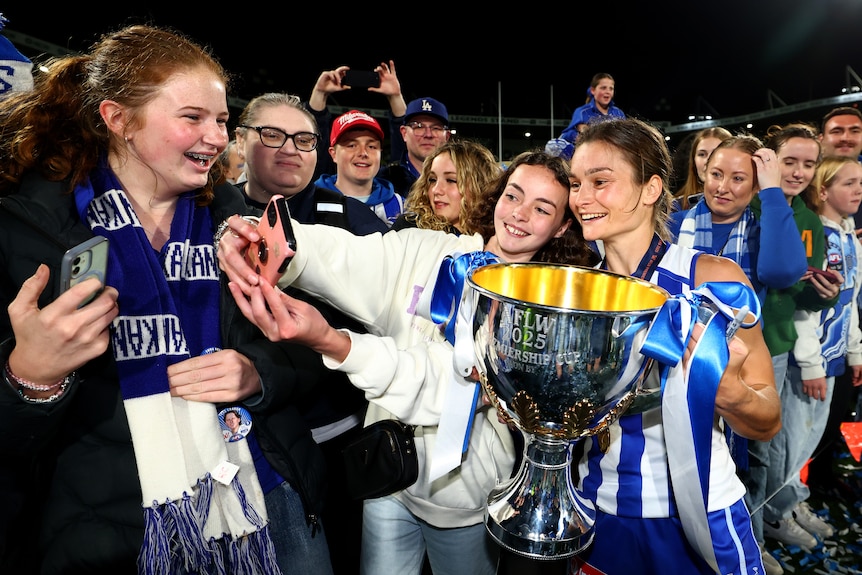
Ash Riddell now plays for premiership-winning team the Kangaroos. (AFL Photos/Getty Images: Josh Chadwhick)
At the time, Noack put the club’s challenges down to too much emphasis on “performance”.
“We tried to run the club like a VFL club, because we thought it would boost results,” she told CODE sports.
“But all of a sudden, it felt like all we cared about was on-field performance.”
Andrews respectfully disagrees with that take.
“People didn’t run away because there were standards … there was conflict that wasn’t managed well,” she said.
“There was probably a lack of clear direction on how to create what should be a really long-lasting program.”
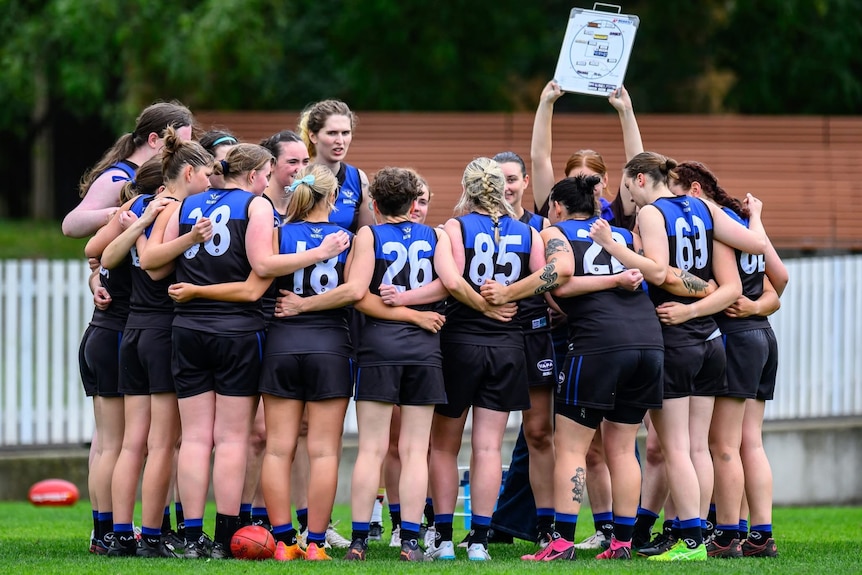
New leadership is now running the club, and hoping to secure its future. (Supplied)
Andrews is confident she and co-president Fiona Hudson can steer the club in a different direction.
That’s not to say she’s flush with time. She founded and owns an osteopathic clinic and gym in Kensington, where she works full-time.
MUWFC is volunteer-run, and like most community organisations, relies on the goodwill and generosity of its people to stay afloat.
“There’s a spirit to the club that only people who have been involved in it would understand,” Andrews said.
“I’m probably wired to see opportunity, and to be optimistic … and there’s a massive opportunity with the club. It’d be a real shame if it didn’t reach its potential.”
MUWFC ‘normalised’ women in leadership
Another staunch believer in the club’s potential is Laura Kane, general manager of football at the AFL and president of MUWFC from 2015 to 2019.
She holds no current official affiliation with the club apart from, as she puts it, “being a life member and loving them”.
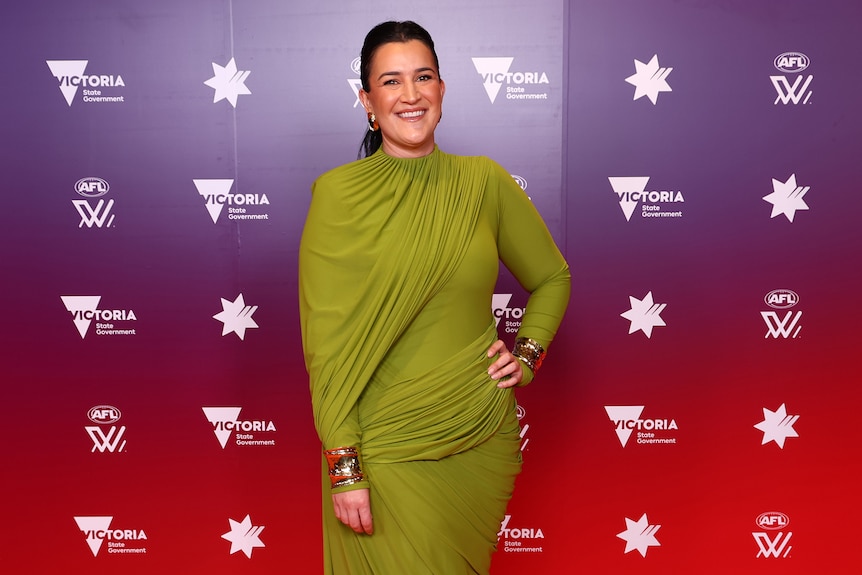
Laura Kane still has close ties to MUWFC. (Getty Images: Graham Denholm)
Kane recently approached Andrews, as well as other alumni, to ask if they would step in to steer the ship, and does not rule out joining the board in future.
“I’m always open to helping the club, so it might look like [joining the board] in the future … but for now it’s really just supporting the new committee and two new presidents,” she said.
From her time on the committee, Kane learned valuable football operations and governance lessons, and says being part of a women-led environment ‘normalised’ the idea of female leaders in sport.
“The club has been a powerhouse for women in football, and not just on the field,” she said.
“We’ve got more than a team’s worth of people who forged entire careers in the AFL industry — including AFLW players, coaches, administrators and player managers — who developed and literally grew up in that place.”
The positives in changing grassroots landscape
Like Andrews, Kane is aware that the landscape of women’s football has changed since her time at the club.
Andrews worked as a strength and conditioning coach in the glory days of the MUWFC, when the launch of AFLW was fast-tracked by head office, and the VFLW competition was first established in 2016.
“The players didn’t like me at the start, because I made them do a warm-up,” Andrews laughs.
“Women’s footy was very different; it wasn’t professional and there were no pathways.”
In those heady days, Andrews remembers a “massive influx” of women arriving to play footy, inspired by the launch of an elite women’s competition.
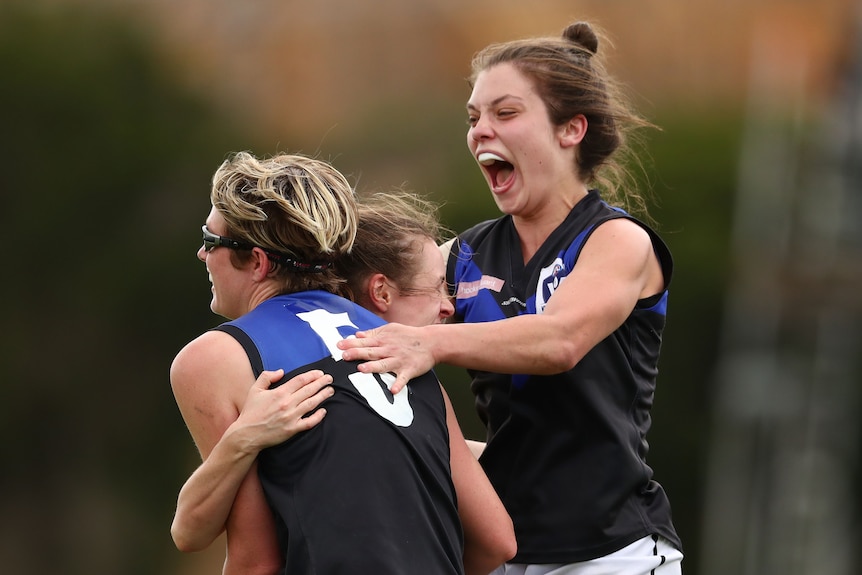
The Western Bulldogs’ Ellie Blackburn during her Melbourne Uni playing days. (AFL Media/Getty Images: Scott Barbour)
Ten years on, the numbers have dried up, at least for the ‘powerhouse’ clubs of Victorian women’s football.
The Darebin Falcons, who once appeared in every VWFL grand final from 2005 to 2015 (and won eight premierships during that period), recently asked the AFL for a financial lifeline, with its future under threat.
Darebin Falcons face financial pressure to stay in VFLW
It was just one day before this year’s AGM, meanwhile, that MUWFC released a statement with a plan to stop the club from folding.
But Kane isn’t worried about the future of grassroots women’s footy, saying it’s all a matter of perspective.
“We should stay philosophical and insightful about this, because we have an elite competition 1766181248,” she said.
“Back then [pre-AFLW] you could play at five different places. Now there are hundreds of women’s and girls’ teams in the state, and thousands across the country.
“It’s hard to keep a community club going because there are so many places for women to play now.”
Do you have a story idea about women in sport?
Email us abcsport5050@your.abc.net.au
Players ‘devastated’ at prospect of losing women-led club
From a player perspective, 20-year-old Reg Hudson, who is in her fourth year at MUWFC, says it is critical that women-led and community clubs survive.
Like many girls, Hudson was inspired by the launch of AFLW, while she was in year 12 at high school. Prior to that, her mum, who is now one of the club’s co-presidents, wouldn’t let her play footy.
“She thought it was too dangerous for me, but once AFLW launched, I think it was like ‘well, there are pathways for women now, there’s actually a future,'” Hudson said.
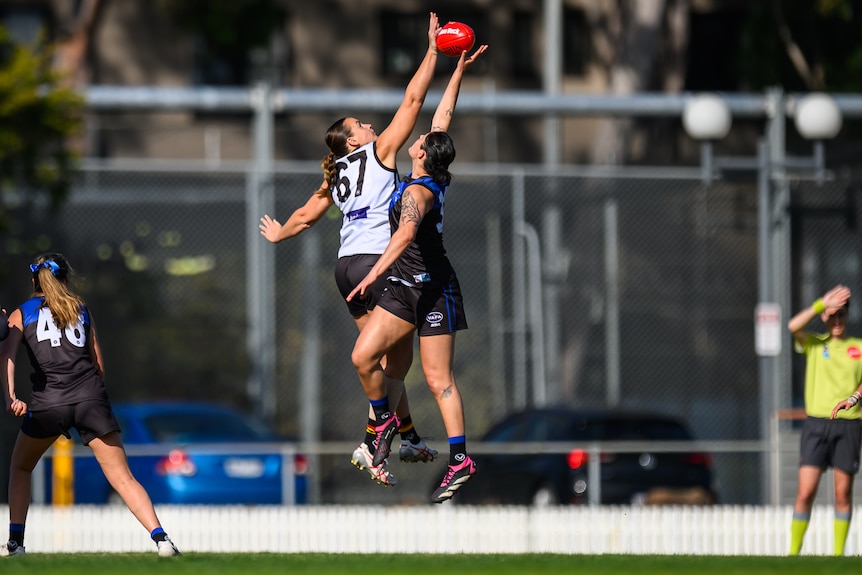
With the launch of AFLW inspiring more women to get into the sport, it is critical that women-led clubs survive. (Supplied)
Hudson says the club has a positive, inclusive and ‘fun’ culture, but laments a tough few seasons.
“Everyone’s welcome, no matter your skill level, or whether you’ve played before,” she said.
“Last year was definitely difficult and I think that’s why a lot of people left. The vibes just weren’t good. It felt like there was a disconnect within the club.”
But when word filtered through of MUWFC’s possible demise, Hudson says the players rallied around the club.
“It would be upsetting and disappointing [to lose MUWFC] because we have such a great history,” she said.
“We would probably get replaced by another men’s club, and I think that would be a real step back for women in sport, and women’s footy especially.
“It would be quite devastating for a lot of people.”
Andrews’ mission is to ensure that MUWFC’s storied history doesn’t end here.
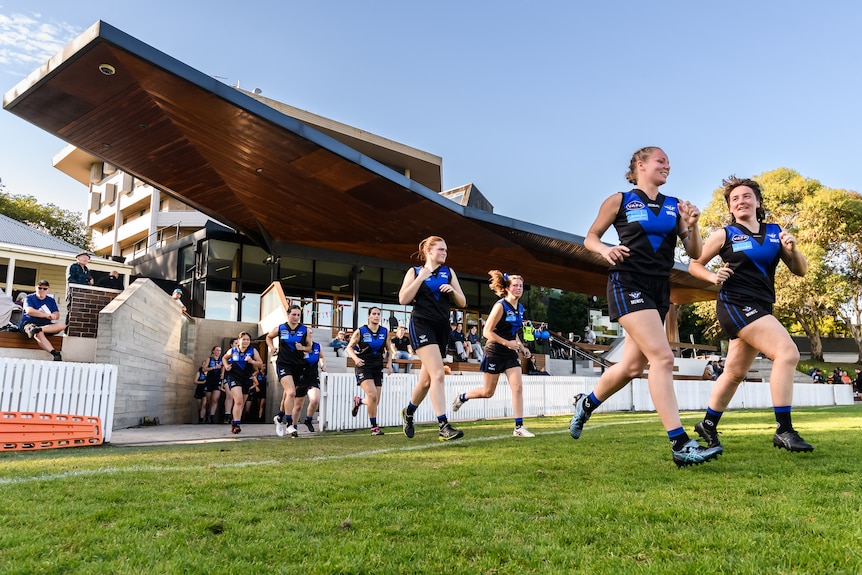
After a few tough seasons, players hope to push through and make the club a powerhouse again. (Supplied)
She has big plans for the club, including strengthening ties with the University’s two men’s teams — and drawing on the multitude of resources a tertiary education institution has to offer.
Then there’s the final piece of the puzzle: a new coach.
“Our goal is to find a really good coach who’s willing to be involved in creating something,” Andrews said.
“It’s going to be a challenging season, but they will have full scope, capacity and support to really make this club a powerhouse [again].”