
He ambled past and seemed like a throwback to a vanished figure: an office man, with his tie loosened at the neck, sauntering along the snowy street with a briefcase and puffing on a cigarette as he made his way home for the evening. And he stood out because he seemed indifferent to the cold and, also, he was the only person to be seen in what was notionally rush hour in a major US city.
This was about 7pm on a December Monday in downtown Minneapolis, -15 degrees and falling, the streets snow covered, with eddies of cold air moving between the higher buildings.
“Oh, it’s just brutal,” the man laughed as he walked past.
And it was.
Downtown was ghostly quiet, even though this was a regular working evening: no pedestrians and the traffic lights changing from green to red for cars that were not there. The weather partly accounted for the stillness, but still: the Twin Cities of Minneapolis and St Paul have a combined population of 3.7 million people and yet the commercial heart of the city was all but empty in a pretty December freeze. Where was everyone?
It’s a question that has tortured city planners and officials for too long. Throughout the decade, Minneapolis has been coping with the narrative that of all the major cities, it has struggled to regain its post-pandemic mojo.
The trauma of the George Floyd murder in 2020 and subsequent riots, followed by a knee-jerk policy of defunding the city’s police force, with the inevitable consequence of spiking crime rates, led into the pandemic seasons: it has been a tough few years.
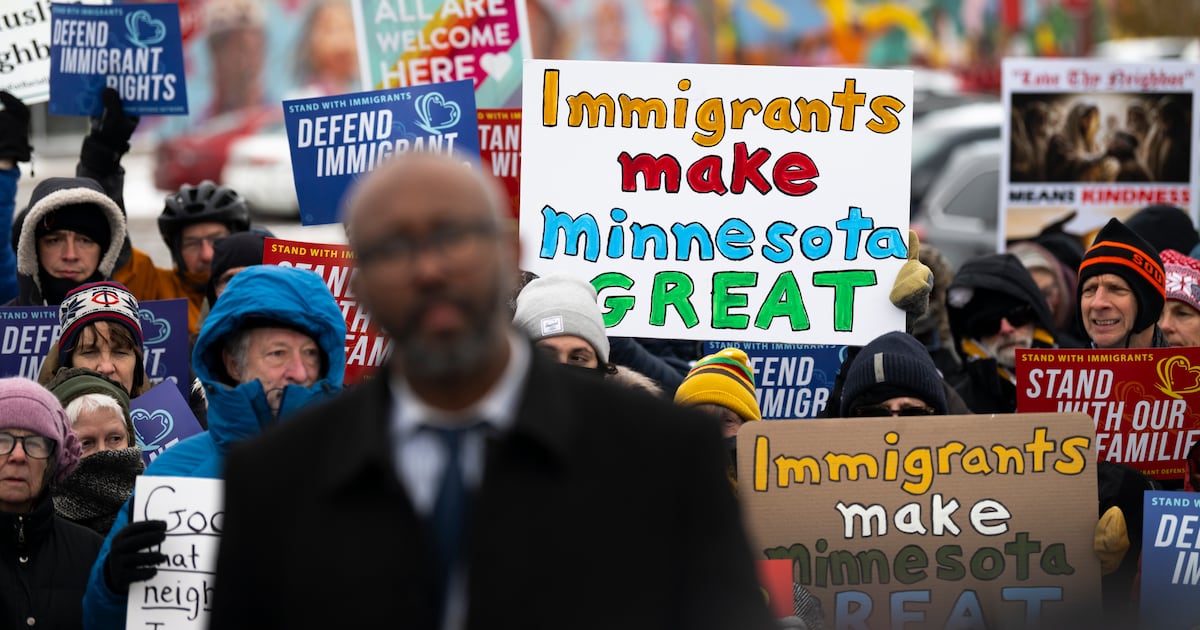
Recently, Minneapolis has been in the news again as president Donald Trump launched a savage verbal attack on the Somali-Minnesotan community in the city, describing them as “garbage” and claiming that Somali gangs were “roaming the streets looking for prey.”
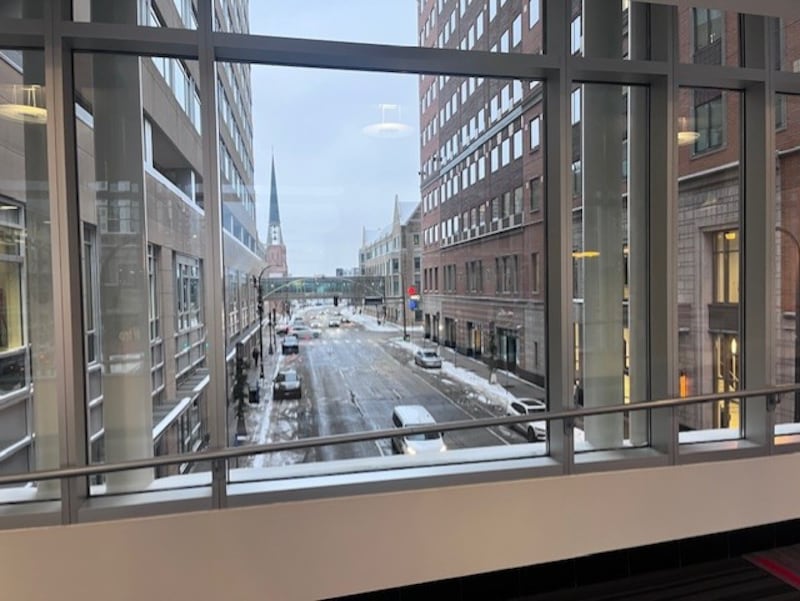 Minneapolis has struggled to regain its post-Covid mojo. Photograph: Keith Duggan
Agents from the Immigration Customs Enforcement (Ice) had begun to make their presence known in the city. Immediately after Trump’s comments, Minneapolis locals of all ethnicity – although it is a predominantly white city – staged informal protests against the Ice arrests. In the following days, grainy footage of combative detentions in the snow made their way on to social media.
The Twin Cities pride themselves in a temperament that is progressive, open-minded and unruffled: fundamentally Scandinavian. Trump’s ongoing verbal warfare with Minnesota’s governor Tim Walz and Ilhan Omar, the high-profile Somali-born congresswoman from Minnesota, has caused him to fixate on the both the state and the Somali population in general.
“He can’t do s**t,” one person told me as I made my way to the neighbourhood of Cedar-Riverside.
“I don’t care what he says. I’m an American citizen. Trump’s an American citizen. We’re no different. He needs to watch how he speaks. He’s supposed to be president.”
I was in Cedar-Riverside to meet AJ Awed, who works with a neighbourhood revitalisation project. There is something wonderful, even comical, about the idea that a people from east Africa would choose one of the wintriest states of America as their adopted homeland. But it wasn’t just coincidence.
“The really fascinating thing about Minnesota is that it welcomes immigrants,” says Awed after serving up tea in the Sagal cafe.
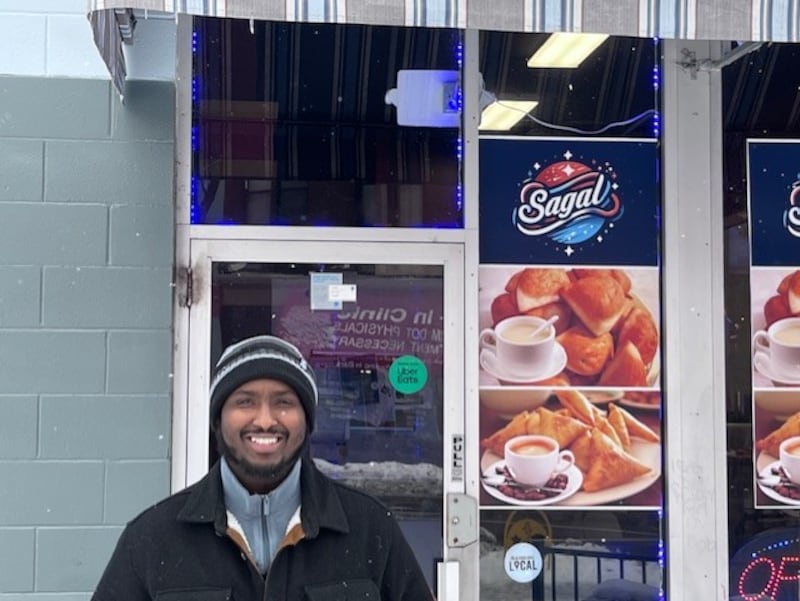 Like many immigrant stories, AJ Awed’s is at once commonplace and extraordinary. Photograph: Keith Duggan
“It attracts people because the policies are very liberal and progressive and I think the Somalis who came here first really had a lot of advantages in terms of a job market being here, housing support and an inclusive community. Somalis are very tribal in nature and I think word just spread: Minnesota is the best place to be.”
He laughs at this. Awed’s is a benign counterargument to the Trumpian narrative that the Somali community have come to “rip-off” Minnesota. The first wave of Somali immigrants arrived in the early 1990s as refugees from their country’s civil war. Awed’s mother has told him about his own early years in his native country: “Of her literally running through woods with me as a baby in her arms and taking a rest to drink water where deer were drinking water. I have baby memories of Kenya but nothing of Somalia.”
My family were immigrants a few generations ago and no one would say, ‘Oh, get all the Irish immigrants out.’ But when there is melanin in your skin all of a sudden it is a different standard
— Katie Cashman, city councillor
Like many immigrant stories, Awed’s is at once commonplace and extraordinary. After months in a refugee camp in Kenya in the early 1990s, the family followed his elder sister, who had been sponsored by US nuns, to where she was living and working in Virginia. A stroke and illness left their father incapacitated when AJ was eight. By then, his sister was nursing in Minnesota and encouraged them to move there.
“Our father was in like a child state and needed 24-hour care and then he hit his head on the stairs and had a tube in his neck. And if it wasn’t for Minnesota – how the policies are organised and support services for citizens, I wouldn’t have had my dad until 2016. His name was Yusuf. Even though he couldn’t be in my life the way a traditional father would be, it made a big difference, I think, having him there.”
Like any Minneapolitan, Awed will acknowledge that the city has its problems – one of the issues his group deals with is the lingering aftermath of the post-Covid opioid crisis which took its toll on the city.
The spur for Trump’s spate of verbal attacks was provided by the revelation of mass federal fraud within Minnesota, led by a not-for-profit food provision group called Feeding Our Future, which claimed some $300 million for meals that were never served.
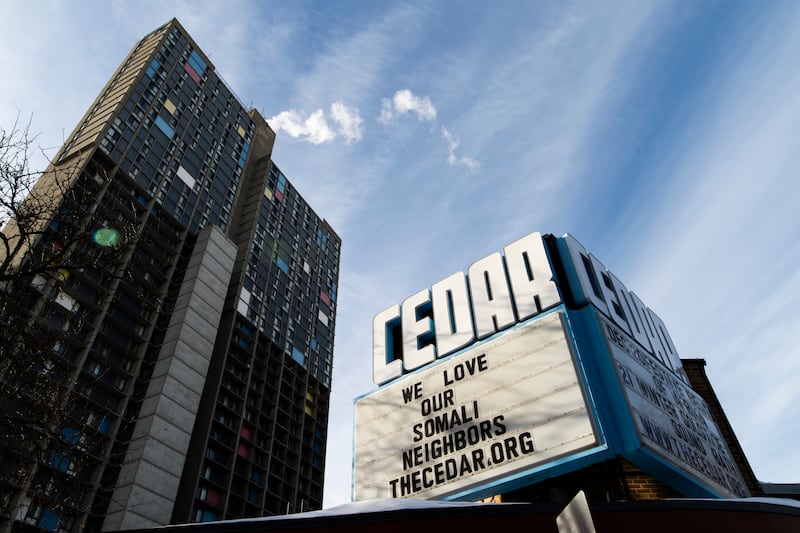 Signs of solidarity at the Cedar Cultural Center in Minneapolis. Photograph: Stephen Maturen/Getty Images
A small number of the Somali community was involved with the fraud, including Salim Said, who ran a restaurant named Safari in Cedar-Riverside. But according to the US department of justice, the fraud was “masterminded” by Aimee Bock, a white woman and executive director of the non-profit.
The scandal was quickly used to whip up general anti-immigrant sentiment, which can surface more readily in the outer suburbs and the rural heartlands surrounding Duluth and the Twin Cities.
Fears that the Twin Cities are in a doom-laden spiral were exacerbated after the broadcast of a polished, if slanted, documentary earlier this year titled A Perilous State. It sombrely and quietly presents the decline of Minneapolis and St Paul, with both the traditional business hub of downtown and the nightlife spots in uptown utterly transformed over the past decade.
The tone of the documentary echoes the message which Trump has been sounding for the past decade: a gilded past destroyed by disastrous social-democratic policies and a soft approach to crime. It all feeds into the sense that outside forces – immigrants – are the cause of the perceived demise.
“I think you have nailed it there,” says Katie Cashman, a city councillor for the Seventh Ward in Minneapolis.
“Scapegoating immigrant populations is part of the issue and it is not unique to here. I think it happens in a lot of places and it is kind of a feature of white supremacy to think that if it was all white people here, it would be safe and sunny and roses.
“I think immigrants have added so much to the vibrancy of this city. I mean, my family were immigrants a few generations ago and no one would say, ‘Oh, get all the Irish immigrants out.’ But when there is melanin in your skin all of a sudden it is a different standard.
“I do think that Minneapolis had a really hard time in 2020. The social fabric deteriorated because of Covid but also because of social unrest and the riots. Lake Street, which was a very diverse immigrant corridor, did physically deteriorate because of the riots and Uptown has been slow to come back.
“But that’s not because of immigrants living here. It’s because retail patterns have changed and people are slower to return to those habits. So uptown does have a feeling of being hollowed out. But scapegoating immigrant communities for changes in shopping patterns is just inappropriate.”
Cashman was among a new wave of young city politicians elected in 2023. She recently narrowly lost that seat in the latest council elections but is convinced she will remain in politics, either running again or supporting others. She was disappointed by the outcome but is far from disenchanted.
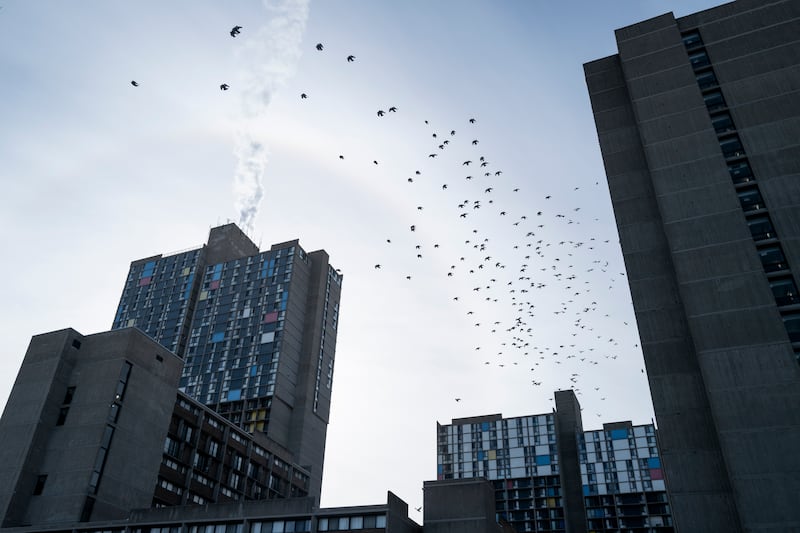 Riverside Plaza, an apartment complex that is home to hundreds of Somali-Americans. Photograph: Stephen Maturen/Getty Images
“There’s a lot of money and wealth in the area I represent and I can see how they don’t all see themselves as represented by a 30-something renter. That’s what happens. But I’ll stay involved. For sure. I will step up in any way I can.”
In recent weeks, Cashman’s office phone has been busy with fearful Minneapolitans reporting that a family member has been detained by Ice.
“They say: he was taken by Ice and we have no idea where he is. What should we do? And it’s been quite the learning curve for me to try and figure out how to get that information for them. So, we are trying to provide know-your-rights training and legal services. It is like an extra job that we are doing.”
But unlike other “sanctuary cities” that contain high volumes of undocumented immigrants, the vast majority of Somali Minnesotans are resident on legal permits or fully fledged citizens. Numerous television reports over the past few weeks have featured young Somali men recounting being forcefully detained despite offering to show passport identification. The mood is one of bewilderment, anger and confusion at the caustic tone of Trump’s remarks.
“We are not at all shocked about his rhetoric,” says Awed.
“It’s part and parcel of his rhetoric and how he does business. And he also has a true obsession with our congresswoman, Ilhan Omar. I think that’s where a lot of this comes from for him – trying to stick it to her. We are really proud of how she is not buckling. But I think what people are more fearful of is the impact of what he says on crazy people.
“Minnesota’s had some traumatising incidents of late, with the assassination of our state legislator [Melissa Hortman was murdered in June] and burnings of mosques. So, there are people on the fringes who may take matters into their own hands. And that is worrying.”
The funding fraud could not have come at a worse time but Awed points out that the vast majority of the 80,000 Somalis in Minnesota are just as aggrieved by the theft as their neighbours whose family line in the US can be traced through the centuries.
 Ilhan Omar has maintained a cool and even amused detachment through the torrent of abuse directed at her by Donald Trump. Photograph: Chip Somodevilla/Getty Images
In a recent interview on local television, Omar said her son had been stopped by Ice on his way into a Target shop: he had his passport identification and was not detained. Omar has maintained a cool and even amused detachment through the torrent of abuse directed at her by Trump, stating that it is “a wild thing, it is easily mockable and it is embarrassing that the president is willing to denigrate the presidency like this”.
Omar also made the point that because her generation had fled the chaos and mass death and displacement on 1990s Somalia, they revere the order and reliability of US civic structures – and know its constitution.
Awed echoes that in relation to the accusation that Somalis were responsible for the food-aid fraud.
“The only thing you can do is fight it with the facts. This is all Covid-era-related dollars. And the majority of people who committed fraud were white. There were Somalis involved here but the ringleader was a white person. She went above and beyond to continue this.
“The paper trail, if you do some digging, is more complicated. In any community there are wrongdoers, and our community has condemned those Somalians involved. But it is trying to paint us all with one big broad brush.
“There are serious ills within the economy and I think this is just another tactic to distract Americans from the real issues. Trump is not delivering on what he has promised so the only thing he can deliver is dog whistles to the most racist part of his base. So, we are getting to a place of … I think it is easy for the president to give red meat to his base by calling out the black Muslim immigrants. But I think the majority of Americans are too smart for this.”
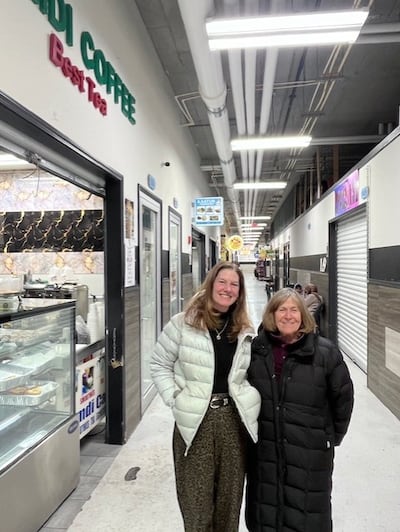 Ruth Hornstein and Barbara Fermon. Photograph: Keith Duggan
Minneapolis is a city of shopping malls. In 2009, the Karmel Mall was the first designated Somali mall in the United States, with small cafes and clothes stores, a business centre, a prayer room and a day care centre.
On the day I call over, small, printed signs instructing Ice agents not to enter have been taped to the doors. Inside, the alleyways are quiet. Two women, neither Somali, sit drinking tea and pastries.
“We are here to support them,” Ruth Horstein explains.
“We are both Jewish and there has been tension since October 7th between the Jewish communities and Muslim communities. But we just feel as if everyone is born in the image of the divine. We wanted to show up. And we are disappointed because there are lot of shops closed here.”
“We did not go for the goat,” says her friend Barbara Fermon.
“Or the camel,” Hornstein adds.
“But this is delicious,” says Fermon of their lunch.
“One man was so appreciative to see us and he just came up to us and said: ‘Thank you, Minneapolis.’
“You know you just look at this building and the community that built it and what they have done here. And then you look at what Trump says. Are you serious?”
On Monday, a team of Ice agents showed up at the Karmel Mall to make arrests. They were met by a crowd of mostly white local protesters who outnumbered them and heckled the agents, blocking their path until they left.
The protests against Ice have been unflagging despite the terrible weather. But the impact of the raids is obvious inside the Karmel Mall, which has been all but empty for the past fortnight. Local immigrant business owners are reporting an 80 per cent drop in trade. Many Somalians who were long ago granted US citizenship find it easier just to remain at home, or out of sight, until all of this passes.
 By moving Minneapolitans one level up, the Skyway has contributed to empty streets. Photograph: Keith Duggan
In the meantime, Minneapolis is still trying to work its way out of its post-Covid fugue. One of the most striking architectural features of the city is the Skyway, the maze of interconnecting covered glass overhead walkways that connect hundreds of commercial buildings. It means locals can walk for nine miles through the city, through the worst winter storms, in light summer clothes if they wish.
It’s a strange concept and experience: at once futuristic and sci-fi retro, conceived and built during the late 1950s, when the office-based nine-to-five culture was at its zenith.
In 2023, an in-depth Wall Street Journal report on the decline of the American city centre quoted a statistic that foot traffic in Minneapolis had fallen by 44 per cent from 2019, lagging only behind St Louis and Kentucky.
Jacob Frey, the mayor of Minneapolis, told the Journal that the challenge facing civic planners throughout the country is to “reinvent downtowns”.
“It’s about having more people in the core of downtown doing something other than just working. It’s about having fun.”
And the Minneapolis 2035 plan is framed around the ambition of turning the city to face its neglected treasure, the Mississippi river, which runs through it, as well as reimagining the point of its strange, unique Skyway. By moving Minneapolitans one level up, the Skyway has contributed to those empty streets. In other words, they have to figure out how to make a city that was a 20th-century jewel of the Midwest fit for purpose in the 21st.
That’s a long-term aim. For now, the city’s energies are revolving around its response to the Ice raids. About 400 people have been detained by Ice, with the White House issuing a press release and photofit stating that those apprehended included “pedophiles, rapists and violent thugs”. Of the compilation, one came from Somalia. If Minnesotans know anything about storms, it’s that they pass.
“We have so much faith in our neighbours – black, white, Latino, it doesn’t matter,” says Awed.
“Everyone will be more vigilant. But the culture of Minnesota won’t change because of attacks from the White House. And nothing makes me feel more American than that.”