
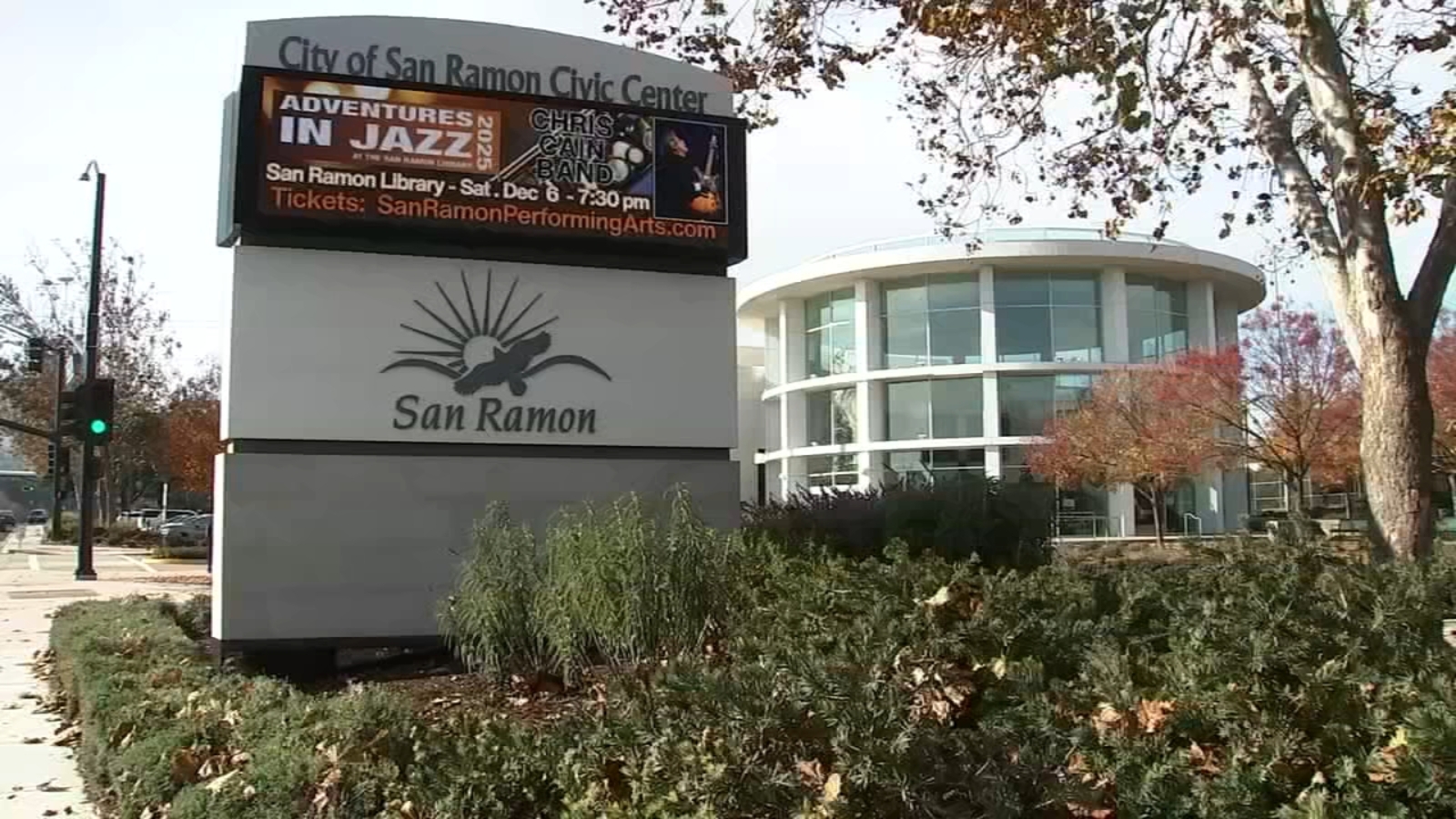
SAN RAMON, Calif. (KGO) — A wave of at least nine earthquakes ranging up to a preliminary magnitude of 4.0 struck southeast of San Ramon about 8 p.m. Friday, the U.S. Geological Survey said.
Revised data showed the 4.0-magnitude temblor struck at 7:56 p.m., three miles southeast of the city, at a depth of 6.2 miles.
A quake of 3.8 magnitude occurred at 7:49 p.m., two miles southeast of San Ramon, the USGS said
Other earthquakes in the same area were measured at 2.5 at 7:41 p.m., 2.9 at 7:49 p.m., 3.1 at 7:57 p.m., 2.2 at 7:58 p.m., 2.1 at 8:06 p.m., 2.9 at 8:10 p.m., and 2.3 at 8:15 p.m.
MORE: Several earthquakes strike East Bay; largest being 3.7, USGS says
The quakes were measured at depths of between 2.9 and 5.8 kilometers. The closer to the surface an earthquake occurs, the more ground shaking and potential damage it will cause.
According to the Geological Survey, people typically report feeling earthquakes larger than about magnitude 2.5.
This comes as the area has been hit by nearly 150 earthquakes in the past month.
ABC7 News spoke with several people at the City Center shopping mall as they were fitting in their holiday shopping.
“I was just picking her up, my friend, and then everything was shaking for a while,” said Michala, a Danville resident.
“The first one was – and it’s just kind of weird they’re all coming out of San Ramon,” said Becky Zylberman.
We also spoke with USGS to help explain the reason this area is getting hit so often lately by these earthquakes.
“We think what’s happening in San Ramon, there’s just a lot of cracked up complex geometry as the Calaveras Fault ends, there’s another thrust force coming in from Mt. Diablo, there are other faults to the east, like the Castro Green Valley Fault, and it’s just created this cracked, messed up, geometrically very strange area and these cracks allow fluids to infiltrate,” said Sarah Minson, a geophysicist at USGS. “And those fluids allow the faults to have many little earthquakes right after another
The largest of the earthquakes is registered as 4.0, but that could change as USGS gathers more information.
Bay City News contributed to this report.

Copyright © 2025 KGO-TV. All Rights Reserved.