
As Sydney marks one week since the antisemitic Bondi attack, the Jewish community is grappling with the question of where to go from here.
Joel Adler wasn’t looking at his phone much last Sunday evening.
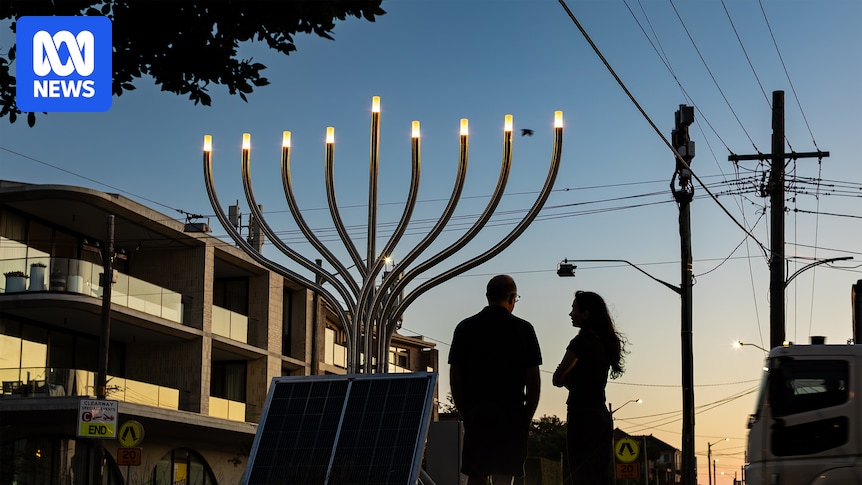
The artist, who grew up in Sydney’s Jewish community, had just posted a photo on Instagram of his latest public artwork. It is a giant sculpture of a hanukkiah, the special candelabra used during the Jewish holiday Hanukkah, which he’d installed for the local council just minutes from Bondi Beach.
When he did check his phone, he says, “I just saw a complete influx of… constant messages from people.” The first texts were warnings, friends saying don’t go to Bondi, something is happening; the latter, panicked, were desperately seeking confirmation he was safe.
Amid the messages, fuzzy details came into focus. Two gunmen had tumbled from a car on Bondi’s main street and started shooting. From a squat concrete bridge, they had fired scores of bullets at the Jewish people gathered for Chanukah by the Sea, an annual community fair to mark the beginning of Hanukkah.
The event was organised by the Chabad of Bondi, an Orthodox Jewish sect, but it was the kind of thing any local Jewish person might stop by to grab a traditional Hanukkah doughnut, known as sufganiyot. Many in attendance had brought their children along to get their faces painted or visit the petting zoo.
Before they were finally stopped by bystanders and local police, the shooters, father and son Sajid and Naveed Akram, killed 15 people. The scenes of horror, captured from every angle on phones, dashcams and even a drone hovering above, played and replayed in the days since, escape both description and comprehension.
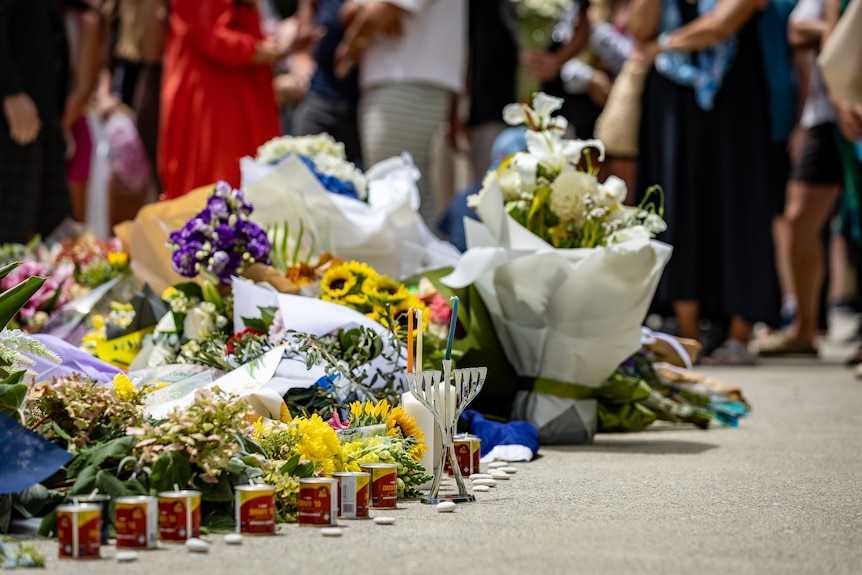 Floral tributes left at the Bondi Pavilion.(ABC News: Teresa Tan)’I’m okay, love you’
Adler’s first thought, when he saw the messages, was pragmatic, sending off scores of replies. “The common message I was sending was ‘I’m okay, love you,’ ” he says, and was receiving the same from his Jewish friends. He checked his parents were safe at home, and learned his sister, a volunteer for the Jewish-run Community Health Support ambulance service, was on her way to the scene.
“ I was on the phone to my mum and I basically just pulled over in the middle of the street and just started crying uncontrollably,” he says. “I’m not someone who cries ever.”
The unreality of the moment was underlined by the fact that, soon after the attack, his sculpture, this three-metre tall solar-powered hanukkiah, so close to the site of the massacre, illuminated automatically for the first time, to mark the beginning of Hanukkah. “ Almost like a silent piece of resilience just in the middle of the street,” Adler says.
He reflects that this sculpture might be the first visibly Jewish artwork he’s posted about publicly since October 7. “I feel like it has been a tension for me for the last few years, being an artist, being Jewish, and trying to decide when to talk about that,” he says. “It wasn’t fear of violence, it was just fear of unwanted attention and politicisation.”
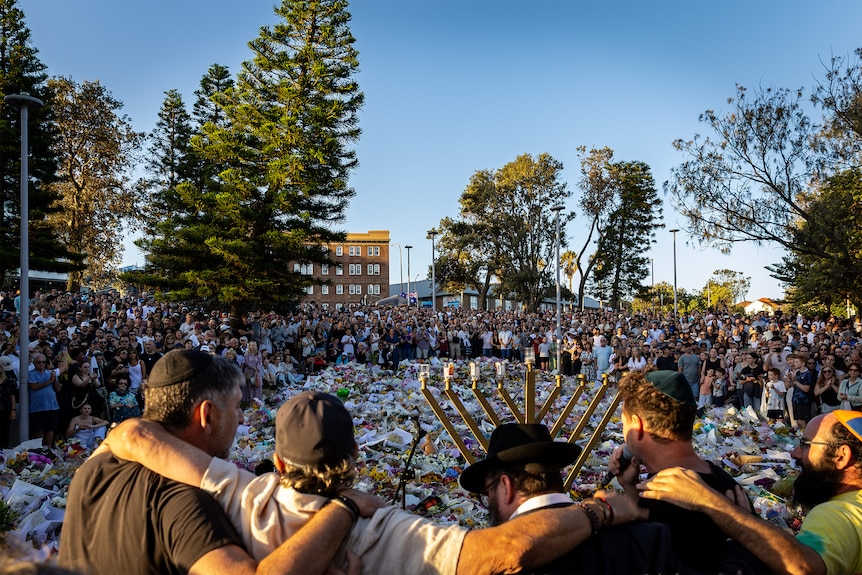 Rabbis sing prayers with mourners at the Bondi Pavilion memorial site.(ABC News: Teresa Tan)
He doesn’t see his art as political. “ I’m just trying to make beautiful things for the community and beautiful installations that people can appreciate,” he says. But when he’d first told Jewish friends about the hanukkiah project, they worried it would be vandalised.
“I kept on just saying, ‘I think we need to have hope that people aren’t going to do that. And if someone wants to break it, we’ll fix it. Or if someone wants to spray paint it, we’ll paint over it’,” he says.
After the Bondi attack, he still feels this quiet resistance to antisemitic acts is needed, but the emotion has become streaked with something darker. “It’s not that people want to graffiti this, and it’s not that people want to destroy it, it’s that they want to kill us,” he says. “And that was something I completely refused to believe.”
A before and an after
No community is a monolith. But this week many Jewish people in Sydney speak of the Bondi attack in the same terms to Adler, as a sort of rupture of their reality, that there is a before and an after.
Sarah Vanunu, whose son’s bar mitzvah was taking place at the Bondi Pavilion when the shooters started firing, says that for many of the nearly 100 children at the party, just metres from the bridge, this was their first experience of terrorism.
“ We started to see people run… strangers and people barefoot carrying surfboards and pushing strollers,” she says. “Many of the children just got caught up with the stampede of adults that were running, saying, ‘Run for your life. There’s a gun, there’s a gun.'”
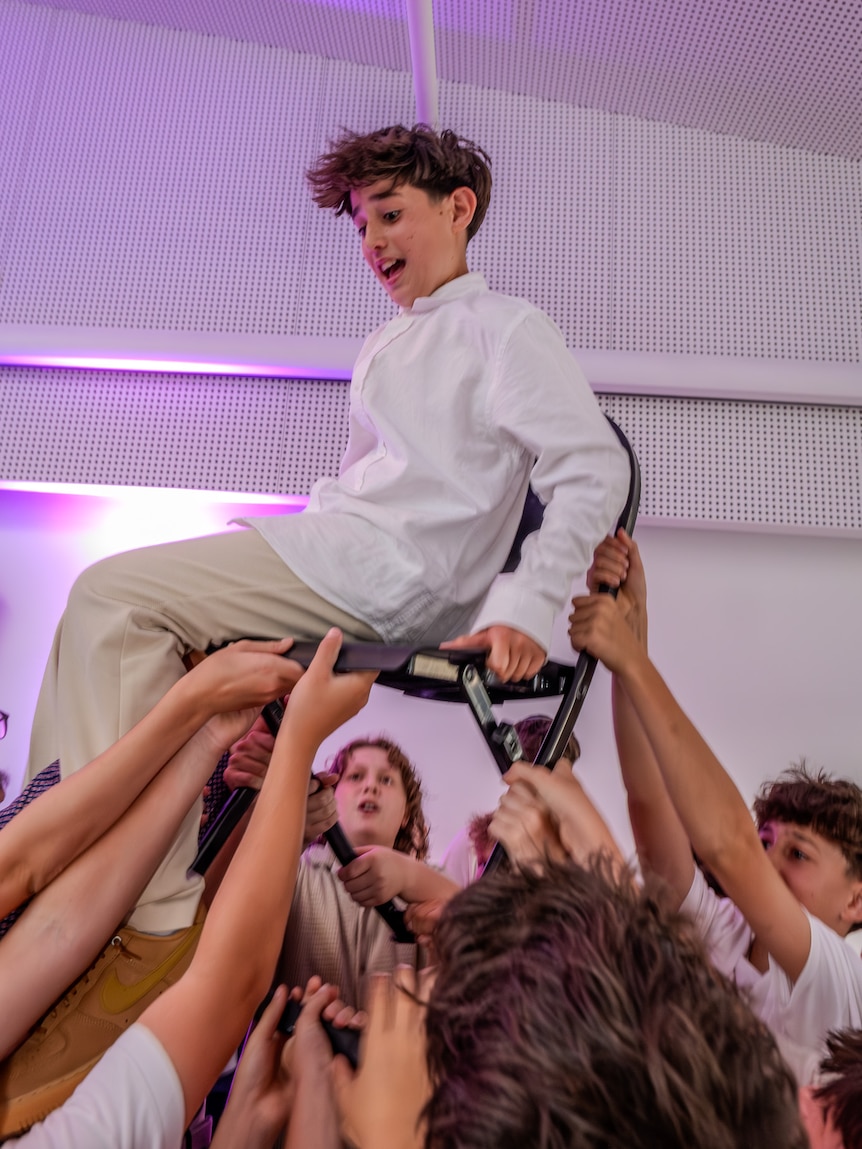 Sarah Vanunu’s son at his bar mitzvah.(Supplied)
Turning off the music, she ushered the children away from the wall of glass doors that opened onto where the shooters were firing. They were so close, her husband said he could hear the click-click of reloading. The whole party hid in a storeroom, crammed alongside strangers who’d run inside seeking safety.
“There was no air and kids were starting to hyperventilate, and also start to scream, ‘Where’s my mum?'” Vanunu says. “And people start yelling, ‘Is Micah here? Has anyone seen Asher? Has anyone seen Jonah?’ And when people don’t answer, you know, where could they be? They’re outside.”
Even once the gunshots finally stopped, Vanunu’s party was held in the building for hours as paramedics and police worked to clear the scene. She and her husband tried to keep the children calm and reach those who’d fled the party, and they fed everyone from the bar mitzvah catering, including the strangers who’d taken shelter with them.
At one point, her husband wandered over and said to her, “Sarah, let’s just show the slide show.” The two of them had spent hours putting it together for the bar mitzvah, a visual collage of their son’s life up to 13.
”I said, I don’t think people have the attention span right now, they’re on their phones. And he said, well, it’ll get them off their phones. We may as well, we’ve got a captive audience here,” she recalls, laughing about the absurdity of the idea.
But they played the slide show for everyone there — a super-cut of childhood joy, while just beyond the glass doors, first responders continued to pack bullet wounds. “So there were some moments of light, you know?” she says.
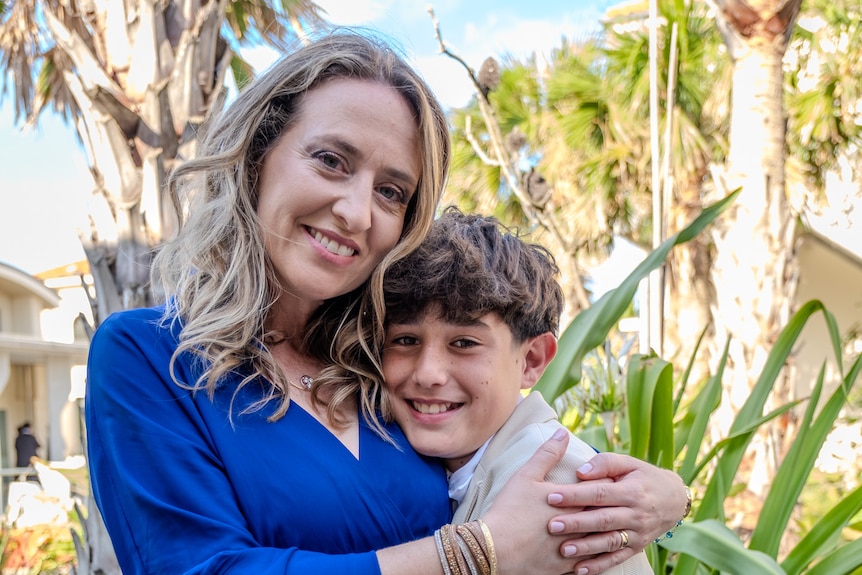 Sarah Vanunu and her son.(Supplied)Children who can’t sleep alone
In the days since the attack, Vanunu says she’s seen the impact on children who were at the bar mitzvah. “All the stories are now surfacing of each child’s narrative, what they saw and what they did,” she says.
Some kids hid behind bins or sprinted to the nearby police station, sheltering there; others ran all the way home in tears. All have since been accounted for and are safe, but many have relatives who were killed or injured at Chanukah by the Sea.
“ I think it was a bit triggering for my youngest, she’s eight. We’ve been through October 7th,” says Vanunu, who moved from Israel to Australia two years ago as Israel emissary for the Jewish National Fund of Australia. “She doesn’t like rockets or sirens or getting into safe rooms, bomb shelters and all that sort of surfaced up again.”
Although her son’s school had finished for the year before the shooting, it recalled students this week for trauma counselling. Parents were instructed to take their children back to Bondi as soon as possible, to aid their recovery. Some kids were refusing to sleep in their own beds.
“ I think what happened on Sunday has sort of divided the community in their visceral response,” Vanunu says. There are those, like her, who are angry. “Then there are those who talk about being more vigilant, and we need to be more cautious and we need to be careful, and we need to cancel all the Hanukkah events and cancel the gatherings.”
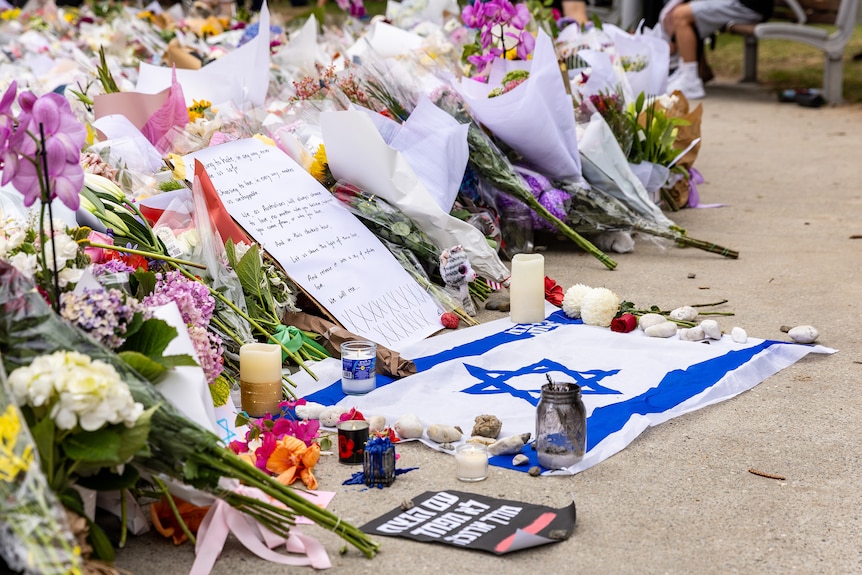 The scale of the tribute has grown as mourners return to Bondi.(ABC News: Teresa Tan)
Around Bondi this week, this sense of fear has been palpable. Security is everywhere, both police and Community Security Group, a volunteer-run Jewish security organisation, which NSW Premier Chris Minns has said he’s now open to allowing to carry firearms. The street leading to the Chabad of Bondi, whose assistant rabbi Eli Schlanger was killed in the attack, has been closed to traffic and is heavily guarded.
In group chats, many Jewish Sydneysiders shared the news that chef Ed Halmagyi had decided to permanently close his bakery Avner’s because of safety concerns about antisemitic violence. Others got messages from friends thinking, for the first time, about moving to Israel.
It’s hard to overstate the intensity of feeling that’s been pulled to the surface. The memorial site outside of the Bondi Pavilion, where a circle of flowers has swelled through the week, has become a place of shared public mourning. Every day, local rabbis lead songs, onlookers regularly crumbling into tears. Young boys in yarmulkes thread their arms around each other’s shoulders and sway. Under a small tent at the top of the hill, Orthodox men teach others how to pray using tefillin, wrapping a black leather strap around their forearms and placing a small box on their head. All as the world’s media watches on, craning for the picture of the day.
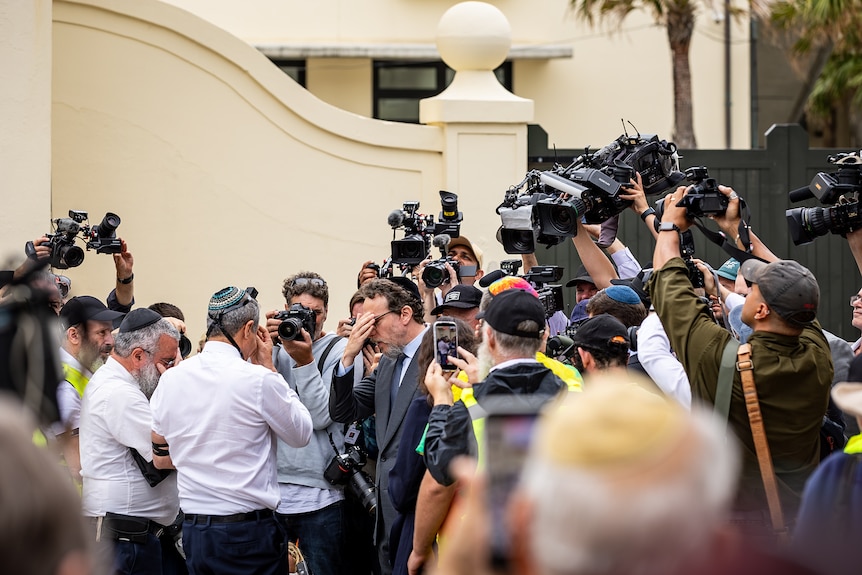 Rabbi Levi Wolff helps Israeli ambassador Amir Maimon with tefillin, ringed by media.(ABC News: Teresa Tan)
Nathalie, who asked to use her first name because of safety concerns, grew up Jewish in Bondi as the granddaughter of Holocaust survivors. She came down to the flower memorial on Tuesday with her six-month-old son in tow. Her close friend, 35 weeks pregnant, had been caught up in the Bondi attack and had to run for her life, sheltering in a car.
She says the scene at the memorial was incredibly moving, especially as the names of those killed were read out, including 87-year-old Holocaust survivor Alex Kleytman and 10-year-old Matilda. “They were reading the names and someone there in the crowd cried out,” she says. “They knew the person and were just finding out.”
Soon after, Matilda’s parents spoke publicly for the first time, addressing the gathered crowd ringed around the flowers. “The fact they named her Matilda, because they thought it was the most Australian name,” Nathalie says, her voice trailing off.
Sadness hardens into anger
In the days after the massacre though, as the Jewish community began to bury its dead, this profound sadness started to harden into anger. Anger that Naveed Akram had been pinged by ASIO years ago for possible Islamic State links, yet his father, who he lived with, was still able to get a gun licence. Anger about the lack of security provided to Chanukah by the Sea by NSW Police, despite reports of rising antisemitic violence in the past two years. Anger at the media and its coverage since October 7.
And, intensely, anger towards Prime Minister Anthony Albanese who many in the Jewish community feel didn’t take seriously enough the threat of antisemitic violence, even after events like the firebombing of the Adass Israel Synagogue, which ASIO determined was backed by Iran. His government’s focus on gun reform in the wake of this tragedy, has been seen by many in the community as picking the low-hanging fruit, rather than addressing the deeper issue of antisemitism taking root.
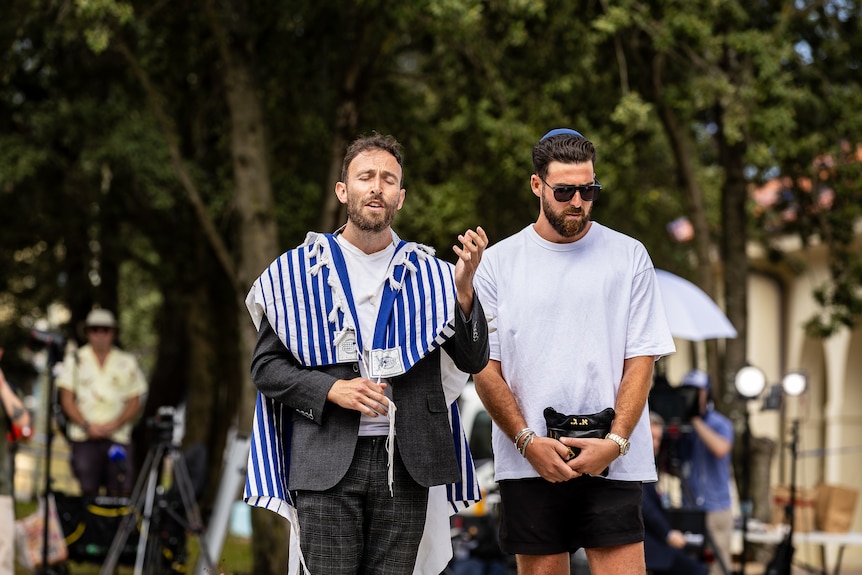 Rabbi Yossi Friedman, left, pays tribute to his late friend Eli Schlanger through song.(ABC News: Teresa Tan )
Rabbi Mendel Super, whose brother Yaakov was one of 40 people injured during the Bondi attack, told the ABC the prime minister should resign. “There is just so much anger that the prime minister hasn’t been at any of the three funerals that have happened,” he said. The prime minister said he would attend the funerals if invited, wanting to respect the families’ wishes.
There has been anger, too, towards the pro-Palestine movement. Many Jewish leaders this week sought to draw a straight line from high-profile protests since October 7 against Israel’s war on Gaza and the violence in Bondi. This flared at the Bondi memorial when anti-Zionist activist Michelle Berkon, a member of the group Jews Against the Occupation ’48, arrived at the site wearing a keffiyeh. Police told her someone in the crowd had complained her attire was hostile and they asked her to leave.
“I came here today because I’m a Jewish person,” Berkon told the media from within a phalanx of police as she was escorted away. “Were there no Israeli flags here, we would not have worn a keffiyeh.”
Berkon says she has since received death threats from people identifying themselves as prominent Australian neo-Nazi figures.
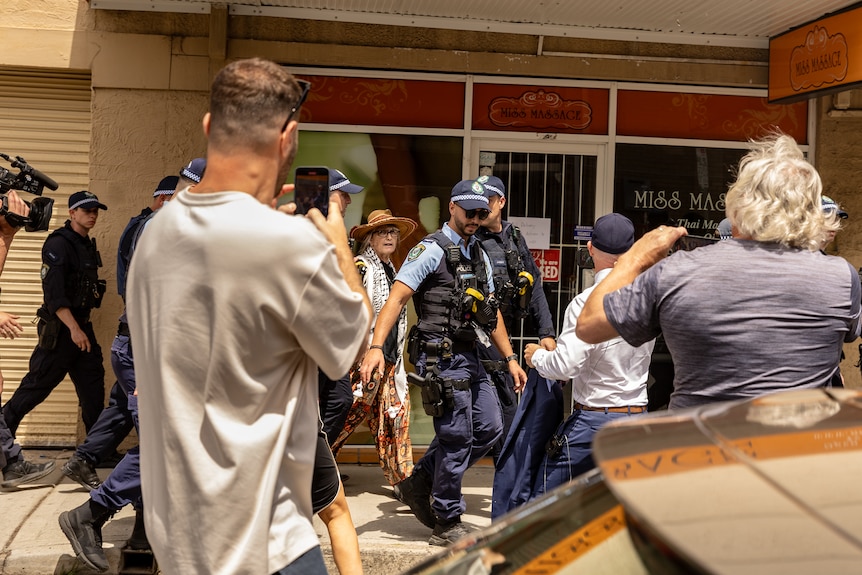 Jewish activist Michelle Berkon, wearing a keffiyeh, was escorted away from Bondi Beach by police.(ABC News: Teresa Tan )A growing discomfort
Nathalie says she’s felt growing discomfort with the pro-Palestine movement since October 9, 2023, when crowds gathered to protest the projection of the Israeli flag on the Sydney Opera House, some chanting “where are the Jews?”
“It was a very indescribable feeling seeing those videos and what was happening at the Opera House and that this can happen in Australia,” she says. “That was actually probably the biggest changing point here in this country.”
In the wake of October 7, she found herself drawn back to Jewish life in a way she hadn’t been since she was a child, and says she believes something shifted as protests built to the March for Humanity in August this year, when an estimated 100,000 people walked across the Sydney Harbour Bridge in protest of the Gaza war.
“The spread of that kind of mindset that you’ve seen pervading into now everyday people, that’s what’s been unsettling… to the point that you become not surprised, I think, these things are happening,” she says.
Late in the week, Opposition Leader Sussan Ley sought to tap into this feeling in the Jewish community during a speech at the memorial site, saying: “First they came for the Opera House. Then they came for the Harbour Bridge. Now they’ve come for Bondi.” Her words were met with a rousing cheer from some in the crowd.
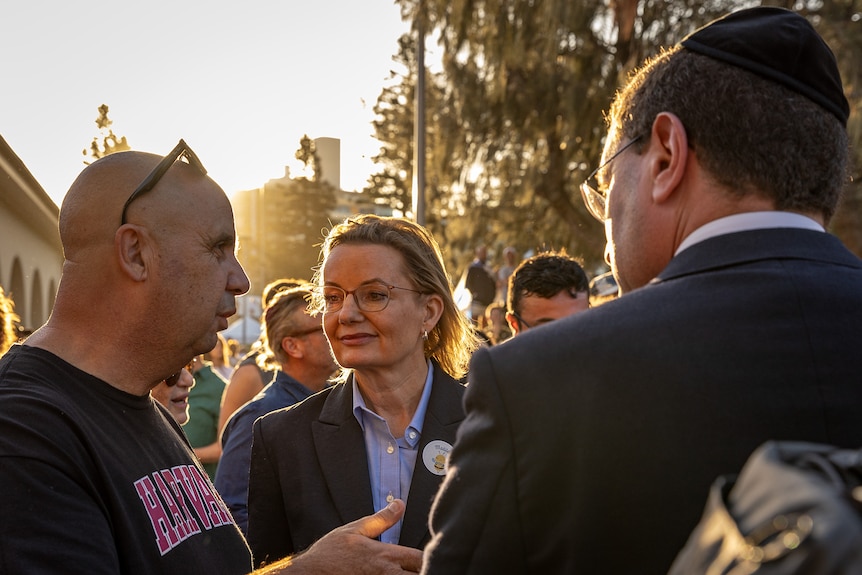 Opposition leader Sussan Ley visits the Bondi Pavilion memorial site.(ABC News: Teresa Tan)’Divisions cut through families’
Bart Shteinman, who grew up Jewish in Bondi, and now sits on the executive of the Jewish Council of Australia (JCA), rejects that there’s any link between pro-Palestine protests in Australia and the violence in Bondi.
“We’re deeply concerned about the immediate opportunistic weaponisation of this attack by pro-Israel voices, not least of all the Israeli prime minister who in the hours after this attack was already blaming the Albanese government’s recognition of Palestine,” he says.
He says he still sees an opportunity for unity in the wake of this massacre, but feels this moment is fragile. For him, recent years have opened very personal schisms, in part because JCA, set up in the wake of October 7, has attracted ire from some in the Jewish community due to its support for the pro-Palestine movement and criticism of the Israeli government.
“ In the context of everything that’s happened over the last two years, we are an incredibly divided community. Those divisions cut through families,” Shteinman says. “I have family members I can’t speak to right now, even after this, because of those divisions.”
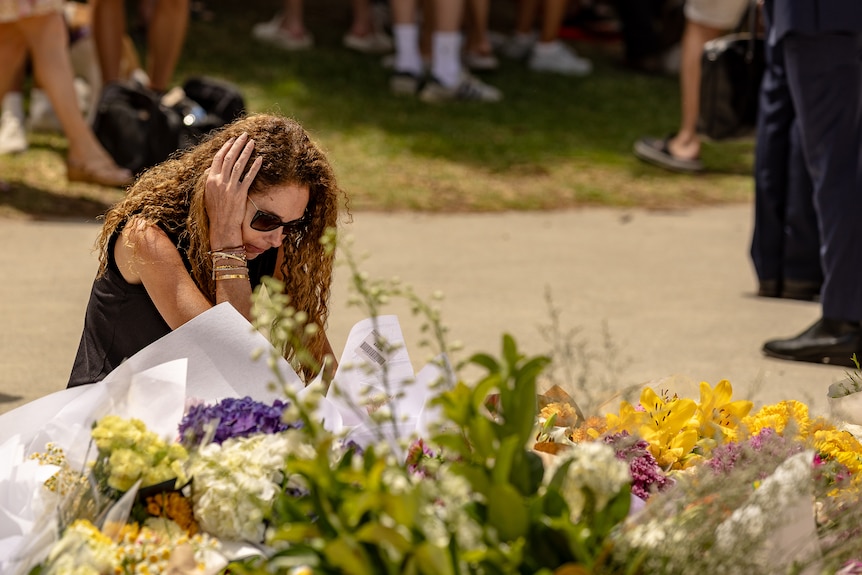 Bondi Pavilion became a community hub for those in mourning. (ABC News: Teresa Tan )
The JCA has been outspoken in its opposition to any clampdown on pro-Palestine protest and also to some of the recommendations made earlier this year by Australia’s government-appointed antisemitism envoy Jillian Segal.
Shteinman says it’s unclear to him how some of the measures outlined by Segal, such as a report card about university’s progress in addressing antisemitism, would make Jewish Australians safer.
“ Not least because we don’t actually understand the full motivations of this attack,” he says. “It seems like it was motivated by, or inspired by, ISIS, which of course, as an organisation preceded October 7th, and preceded what the United Nations has called a genocide in Gaza.”
On Thursday though, Albanese announced his government was adopting Segal’s plan, and would push through new laws against hate speech. In NSW, Premier Chris Minns pledged to restrict protest activity during “high risk” periods, such as after a declared terrorist attack, using “extradordinary” new powers, for a period of up to three months.
‘An absolute tragedy’
Alex Ryvchin, co-chief executive of the Executive Council of Australian Jewry (ECAJ) told the ABC this week his whole community was in a state of shock.
“At the moment, we’re broken and we have to grieve. We have to process this, we have to work out what to say to our children,” he said.
But he has expressed some skepticism over whether the Albanese government’s announced reforms will be delivered, with EJAC’s leadership noting that it’s “an absolute tragedy that it has taken a massacre of Jewish and other Australians for that step to be taken”.
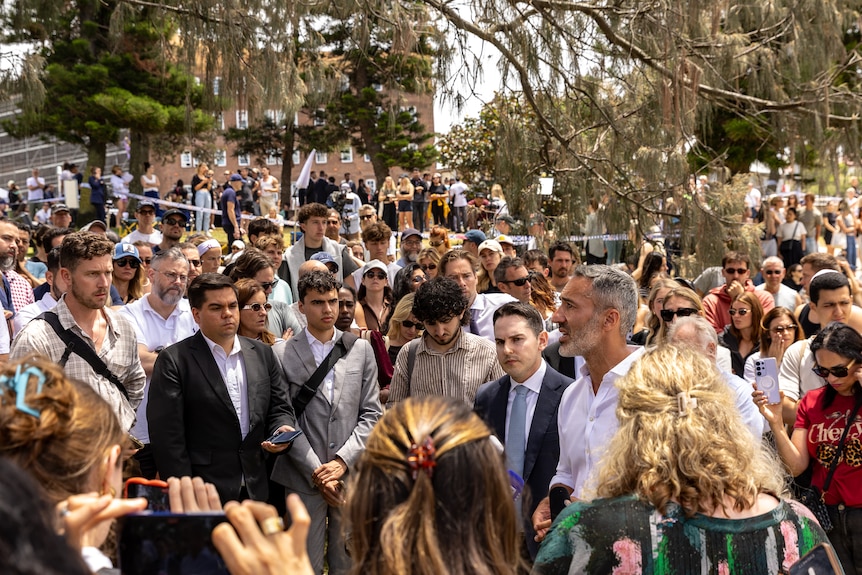 Alex Ryvchin, co-chief of the Executive Council of Australian Jewry, the day after the attack.(ABC News: Teresa Tan )
As Sydney marks one week since the Bondi attack, many are beginning to grapple with the question of where to from here.
“ I say the only antidote to this kind of hatred and radicalisation and antisemitism, the only thing we can do right now is to be more proudly Jewish. We have nothing to hide,” says Sarah Vanunu, saying there’s nothing to be ashamed of in celebrating Hanukkah or a friend’s bar mitzvah.
“We are proud Jews here in Australia, and that shouldn’t change because as soon as it does, terrorism has won.”
For Nathalie, thoughts of the future are shaped by the reality that her son will grow up in a country profoundly changed by this attack.
“The sad thing is we’re going to get more funding to have more security but at what point are we just going to be building our own ghetto? Yes in the short term we need it, for sure,” she says. “But we should be working towards not having to live in a society where it’s necessary anymore.”
She wonders if her son could attend a Jewish school, like she did, but not have to walk past armed guards every morning — only to quickly admit she thinks that’s unlikely now.
“But do I think in time that we could get to a new era where we feel much more integrated back into society and not othered? I hope so. I really do hope so.”
 Ryvchin prays at the Bondi memorial site. (ABC News: Teresa Tan )The word friends can’t say
Joel Adler says that as he begins to reckon with the Bondi attack, he’s been heartened by an inundation of messages from non-Jewish friends. Although he’s noticed that some won’t publicly use the words Jew, or Jewish community when posting about it.
“ It feels like it’s taboo to do that. And I just want to say that you shouldn’t be scared to say that this was a targeted attack on Jews,” he says.
At the same time, he worries about the intense grief Jewish people are experiencing morphing, for some, into hatred of people who had nothing to do with the Bondi attack.
“ I follow a lot of different people in the Jewish community from across the political spectrum, and I’m seeing a lot of love. But I’m also seeing people who are really angry, and I understand that anger, and I feel some people are directing that anger at other religions or other groups,” he says.
“And I just think that if you can’t see that this is the same kind of hatred that led to this attack, then you need to take a step back from social media and just think about what it means to be a good human and a good Jew.”
For Adler, the path forward from here, from this horror to some sense of safety, is not yet clear. But in the days after the Bondi attack, he says he’s found some solace in art, abstract scribblings that haven’t yet found their form. And his mind has started to turn to some sort of public memorial for Bondi.
One evening this week, Adler’s dad headed down at sunset to see the next light on his son’s hanukkiah illuminate. In the twilight, he chatted with old friends who walked past on their evening stroll, showing off the towering artwork as proud fathers are wont to do. A police car circled the block a few times, an 18-wheeler truck passed with a load of plastic bollards, bound for a nearby synagogue. And passers-by wound down their car windows, leaning out to wave and shout the traditional Hanukkah greeting, “Chag Sameach”.
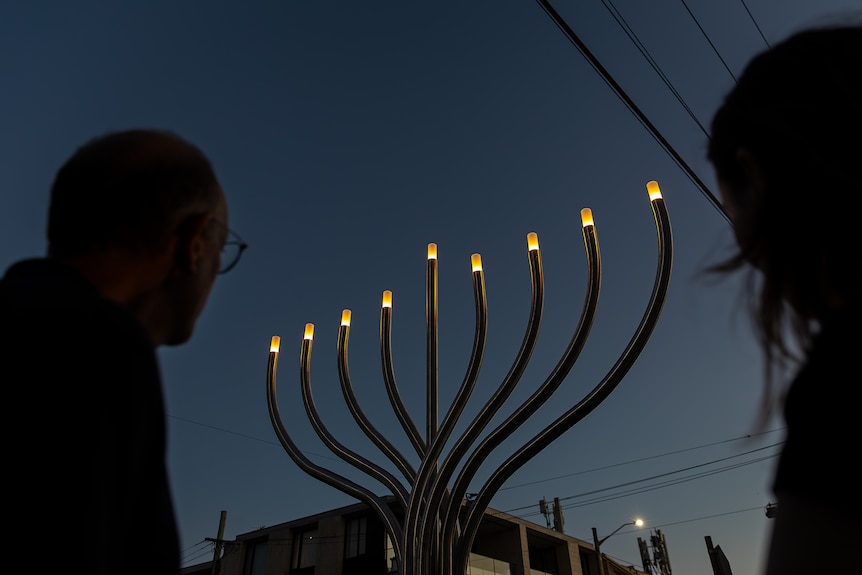 Australian artist Joel Adler’s solar-powered sculptural hanukkiah.(ABC News: Teresa Tan )Catch up on our latest Long ReadsCredits
Words: Maddison Connaughton
Photographs: Teresa Tan
Editing: Gina Rushton