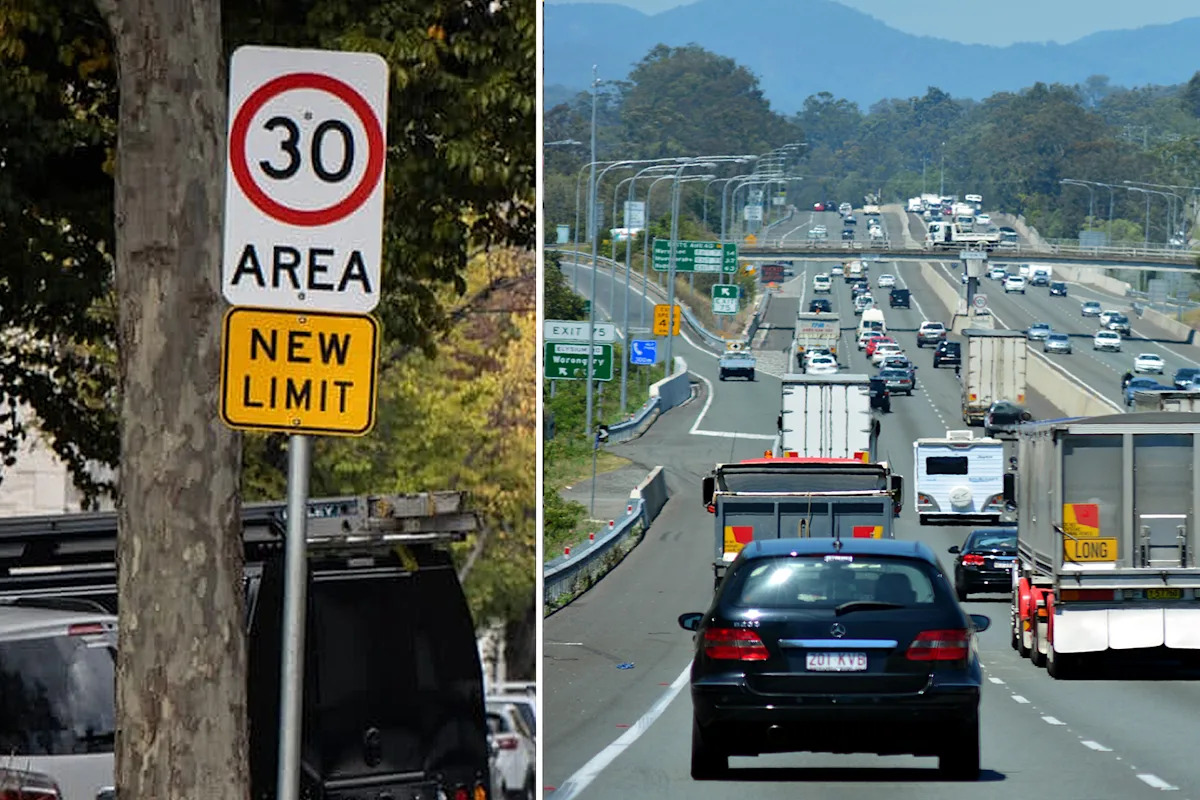
A regulatory shake-up is set to sweep across Australia’s roads in 2026, with many jurisdictions already rolling out major changes such as lower speed limits, soaring penalties, and AI-powered enforcement in 2025. The changes are designed to improve safety, and some also come with brutal fines.
Speaking to Yahoo News, Sydney-based lawyer Avinash Singh provided a breakdown of what to expect in future, as well as some recent changes drivers may not already be aware of.
NSW to review school zone speed limits
From next year, novice motorbike riders will face a major overhaul of the Motorcycle Graduated Licensing Scheme (MGLS).
With changes expected mid-year, riders will be required to wear protective gloves and high-visibility vests, making safety gear as standard as helmets.
Meanwhile, school zones and high pedestrian areas could soon see speed limits drop from 40 km/h to 30 km/h, a measure aimed at protecting kids and pedestrians.
It’s about giving the government and councils more flexibility to implement the globally recommended safe speed limit of 30km/h.
This change is still before Parliament and won’t take effect until 2026 if passed.
As part of the National Heavy Vehicle Driver Competency Framework (NHVDCF), scheduled to begin rollout in July 2026, there will also be competency-based assessments for people who have their driver’s licence cancelled or refused “before they are allowed to be reissued with a licence”, Singh said.
Do you have a story? Contact newsroomau@yahoonews.com

Novice motorbike riders will be required to wear protective gloves and high-visibility vests, making safety gear as standard as helmets. Source: Getty
Victoria set to change penalties for fine defaulters
From July 1 next year, the Fines Reform Regulations 2026 and Infringements Regulations 2026 will overhaul the penalties for fine defaulters, changing how much and how quickly people pay when they breach the law.
Already, drivers are required to slow down to 40 km/h when approaching and passing stationary or slow-moving vehicles — and from July 1, 2025, this rule now also applies to roadside assistance vehicles, protecting workers at the side of the road.
“Drivers must slow to 40km/h when approaching and passing stationary or slow-moving vehicles to apply to roadside assistance vehicles,” Singh said.
Queensland to reduce more speed limits in 2026
Queensland is gradually lowering speed limits in busy areas, with more changes on the horizon in 2026.
The rollout of reduced speed limits will continue over the next year, targeting high-traffic zones to improve safety for drivers and pedestrians alike.
Already, some areas have seen their limits drop from 50 km/h to 40 km/h under changes enabled by the Transport Operations (Road Use Management—Road Rules) Regulation 2009.
For instance, local authorities are phasing in 40 km/h zones in areas like the Hervey Bay Esplanade and parts of the Cairns CBD following crash reduction success, with further urban reductions expected across the state in 2026.
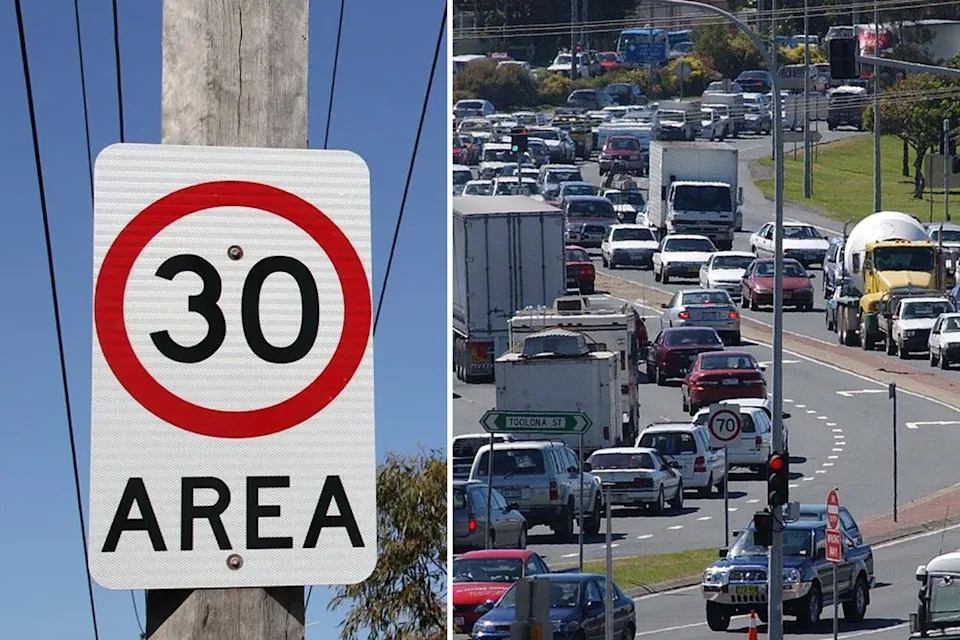
The rollout of reduced speed limits will continue over the next year in Queensland. Source: Getty/Gold Coast Bulletin
ACT’s AI cameras cracking down on seatbelt offences
The ACT is stepping up road safety with a new AI-powered traffic camera network.
Passed in 2025, the enabling legislation allows cameras to automatically detect seatbelt offences.
“These are designed to detect offenders who do not wear seatbelts correctly,” Singh said.
Enforcement began on November 3, 2025, and the system is now actively monitoring drivers across the territory.
More 40km/h school zones for South Australia
South Australia is expanding school zone safety with new speed limits on busy arterial roads.
By the end of 2026, all identified school-adjacent main roads will have 40 km/h time-based limits in place, protecting children during peak school hours.
The rollout began in late 2025 and is steadily progressing across the state.
Northern Territory and Western Australia
Australia is introducing stricter, more frequent licensing requirements for older drivers, with full nationwide integration planned for 2026.
From December 1, 2025, most eastern states began rolling out a national framework requiring drivers aged 75 and over to undergo mandatory medical checks.
These checks increase in frequency and stringency as drivers age, with those 80 and older requiring annual medical assessments.
Western Australia and the Northern Territory are set to complete their adoption of the framework by early 2026, meaning all older drivers across the country will face non-automatic licence renewals tied to health and driving ability.

Australia is introducing stricter, more frequent licensing requirements for older drivers. Source: Getty.
Do you have a story tip? Email: newsroomau@yahoonews.com.
You can also follow us on Facebook, Instagram, TikTok, Twitter and YouTube.