
Draft law aims to address Lebanon’s funding shortfalls, repay depositorsDepositors to recover money through instalments and asset-backed securitiesInternational auditing firm to evaluate central bank’s assets post-law adoption
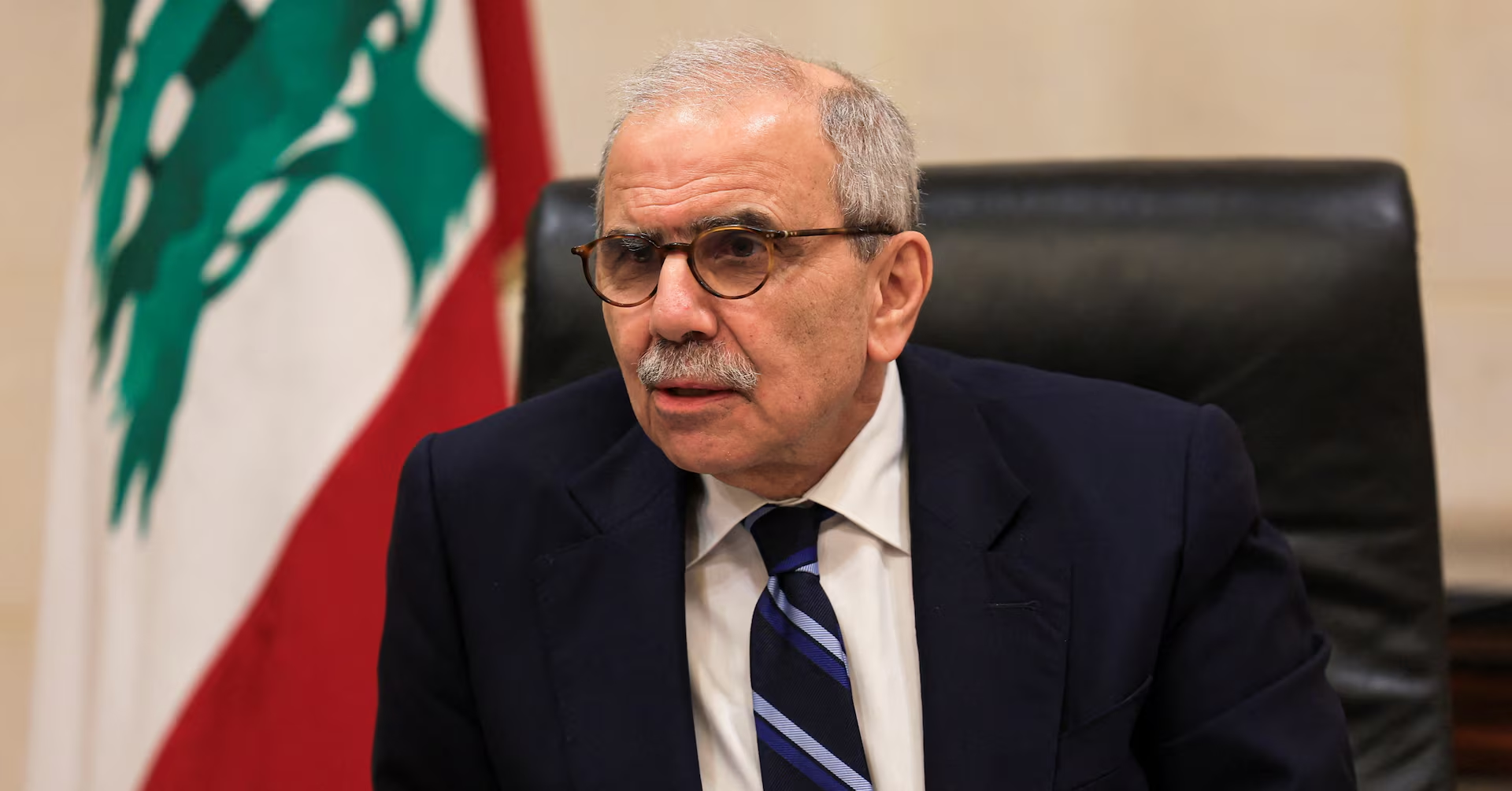
BEIRUT, Dec 19 (Reuters) – Lebanese Prime Minister Nawaf Salam said on Friday the government had put forward a draft law to address a financial crisis that has crippled the economy for six years, saying it conforms to International Monetary Fund standards and would restore faith in Lebanon.
The draft law, which will be discussed by the cabinet on Monday, aims to address a vast funding shortfall in the financial system and allow depositors who have been frozen out of their savings to gradually recover their money.
Sign up here.
It needs to be approved by Lebanon’s fractious parliament.
The draft law is the first to surface since Lebanon’s financial system collapsed in 2019 after decades of corruption, waste and unsustainable financial policies.
The World Bank ranks the crisis among the worst globally since the mid-19th century. It froze depositors out of dollar accounts, prevented withdrawals and drove the Lebanese pound down by more than 90%. In 2022, the government put losses from the crisis at about $70 billion, a figure that is now likely higher.
The draft law, which was distributed to the media ahead of Salam’s press conference, envisions repayments to small depositors – or those with deposits valued at less than $100,000 – in monthly or quarterly instalments over four years.
Deposits larger than $100,000 will be repaid via asset-backed securities to be issued by the central bank, with no less than 2% of the value paid annually to holders, according to the draft law.
The maturity period for those securities will be set at 10 years for deposits valued at up to $1 million, at 15 years for deposits valued from $1 million to $5 million, and at 20 years for deposits valued at more than $5 million.
The certificates to be issued by the central bank for the repayment of some deposits will be backed by the income, revenues and returns of assets owned by the central bank and any proceeds from the sale of assets, if any occur.
The draft law requires an international auditing firm to carry out an evaluation of the central bank’s assets within one month of the law’s adoption, to determine the size of the funding shortfall.
Debt owed by the Lebanese state to the central bank will be converted into “a bond whose maturity and annual interest rate shall be agreed upon between the Ministry of Finance and the Banque du Liban”.
“The draft law puts the responsibility of reimbursing the cash component of the deposits on commercial banks essentially, and deflects any responsibility of the State”, Nassib Ghobril, chief economist at Byblos Bank, told Reuters.
The draft law also seeks to force the repatriation of large transfers out of Lebanon during the months leading up to the collapse. It said people, including major shareholders in banks, would have three months to repatriate the funds or face a tax of 30% on their value.
“The draft law may not be perfect — and it is not — but it is a realistic and equitable step toward restoring rights and addressing the collapse,” Salam added.
Reporting by Laila Bassam and Ahmed Tolba; Writing by Yomna Ehab; Editing by Kevin Liffey, Ros Russell, Edmund Klamann and David Gregorio
Our Standards: The Thomson Reuters Trust Principles., opens new tab