
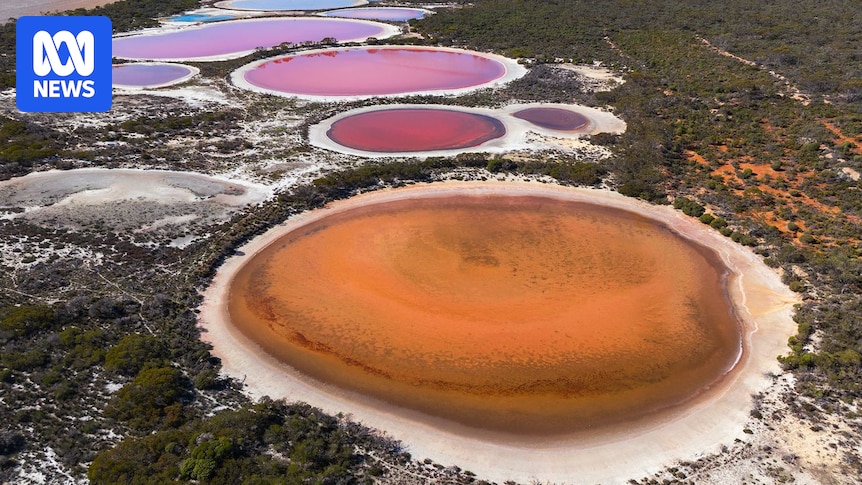
Scott Jon McCook says the West Australian salt lakes he photographs from the sky can be like “little paint pots of colour” dotted across the landscape.
For the past five years, he has spent hundreds of hours capturing their unique features, mainly in the central Wheatbelt.
“Flying over them and seeing yellows and pinks and reds and your brain just doesn’t quite compute that, that can’t be real, and that started my deep dive,” he said.
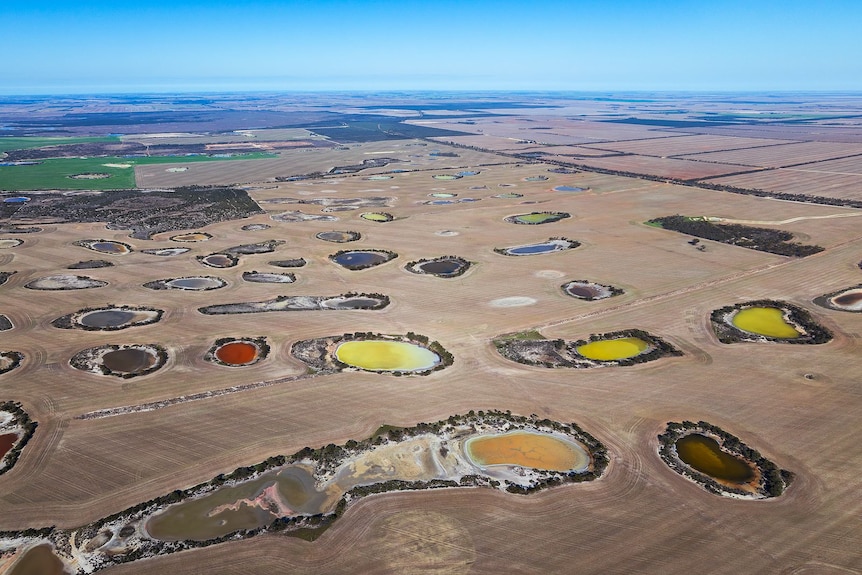
Some of the salt lakes are millions of years old. (Supplied: Scott Jon McCook)
McCook analyses satellite data to determine the best time to head out.
“When they’re colourful they are just incredible, but you would drive past in your car 100 times and not even know they’re there,” he said.
“You don’t really see the colour until you’re in the air, so they’re just lying there, secretly hidden, a lot of them.”
Scott Jon McCook has dedicated hundreds of hours to filming the salt lakes. (Supplied)
McCook said he mainly filmed from helicopters or aircraft, and was mindful of private property and not interfering with the work of farmers, particularly when using drones.
“I sometimes spend weeks out there travelling around either on my own or with other people just from lake system to lake system,” he said.
“They are spread over such a vast area.”
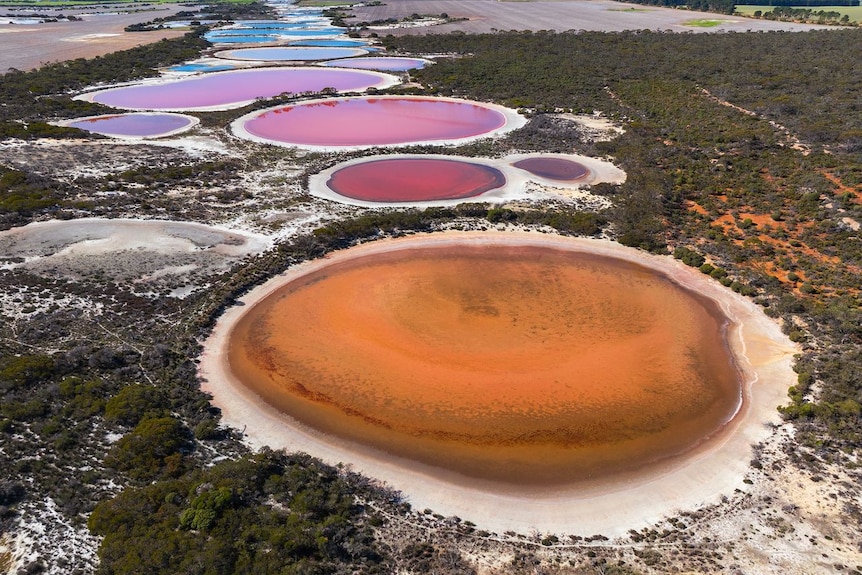
Several animals are endemic to WA’s salt lakes. (Supplied: Scott Jon McCook)
Changing with the season
Curtin University conservation biologist Angus Lawrie said a lot of the lakes completely dried out over summer.
“If you go to them in … July to September, there’ll be a really deep blue colour when they’re a bit fuller with water,” he said.
“As they start drying out, they really do start changing into these yellows, greens, browns, purples, orange and pinks.”
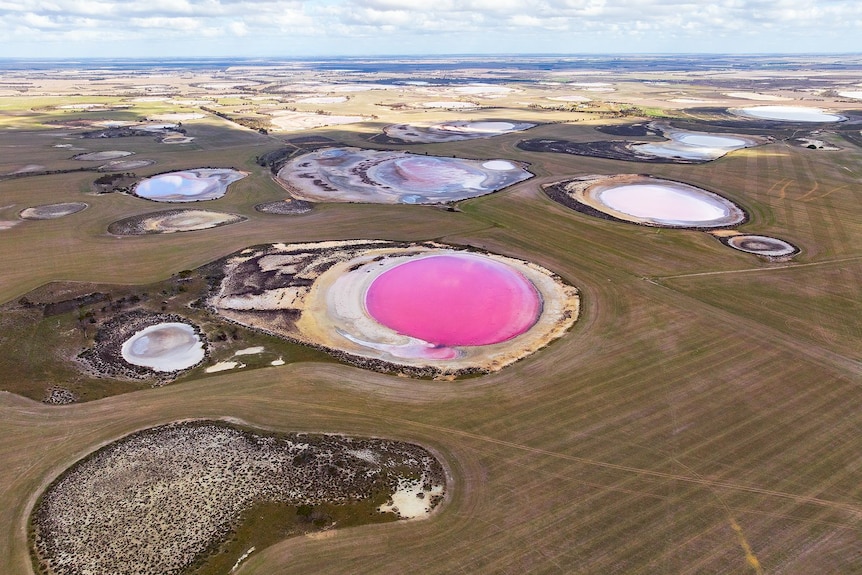
Pink lakes in areas including near Esperance and Northampton are popular tourist attractions. (Supplied: Scott Jon McCook)
Dr Lawrie said the unique bacterial and phytoplankton communities were responsible for the colour.
“Why carrots are orange is the same reason why salt lakes are pink,” he said.
“That’s because they’re producing a protective coating basically to protect them from the sun called beta carotene.”
Living spaces
Dr Lawrie said native brine shrimp, Paratemia, were among the animals that were able to survive in the harsh environment.
“These are aquatic animals and they’re basically just sitting in the dirt as eggs, waiting for the next time that it rains, and that might not be every year,” he said.
“That might be every other year and in really extreme cases we certainly see that these animals can tolerate up to decades at least of being dry in the dirt.”
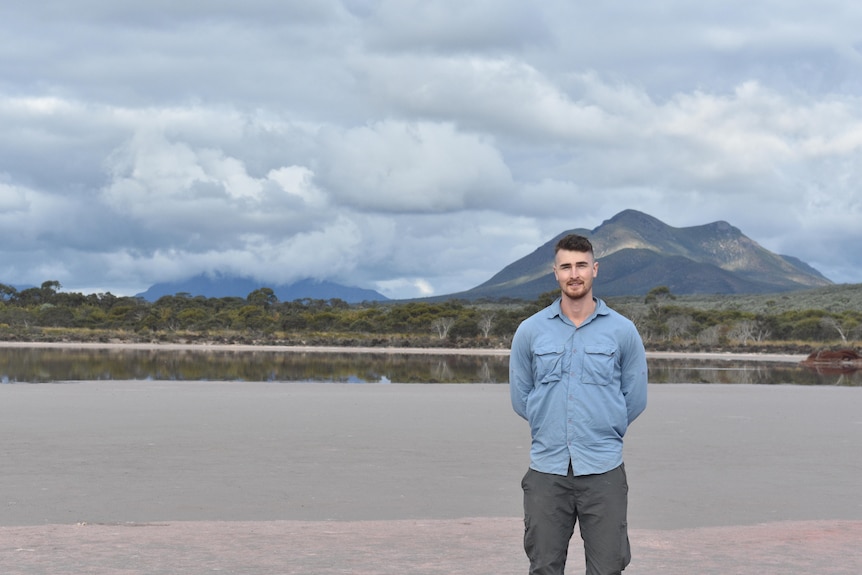
Angus Lawrie researched salt lakes in the Wheatbelt for his PhD. (Supplied)
The salt lakes are also home to the snails, Coxiella, that have adapted to survive in these extremely saline environments.
“These invertebrate communities might sound like not much, but what they actually are is an incredibly important food source for a variety of different migratory bird species, some of which their diets rely very significantly on these aquatic invertebrates in these salt lakes,” Dr Lawrie said.