
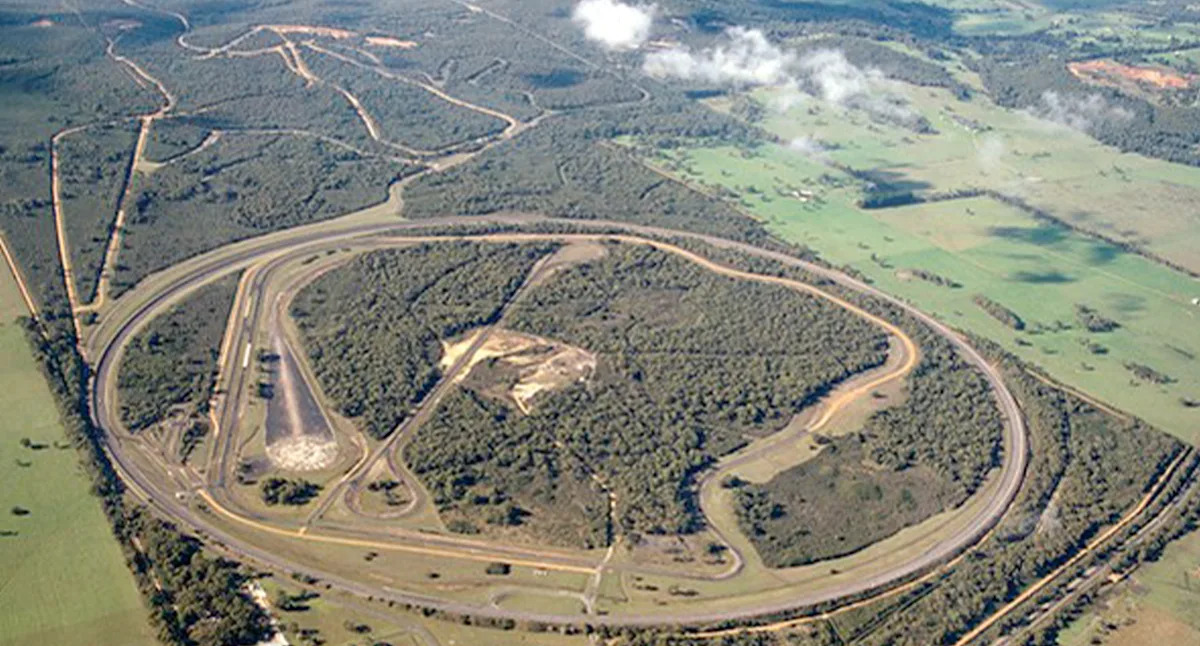
Behind Holden’s old 44km testing track is an incredible secret that few Australians know. There’s a patch of bushland that’s remained relatively untouched since the facility opened in 1957, which is home to thriving populations of rare animals and plants, and is described as a “wonderland”.
The 877-hectare Holden Proving Ground property, 100km southeast of Melbourne, was sold by General Motors after it stopped manufacturing in Australia.
Conservationists believe the testing ground and habitat area can exist in harmony, and they don’t see a problem with the track continuing to be used for motoring.
But they’re mounting a campaign, calling on the state government to purchase the bushland section to help safeguard the state’s natural heritage.
Jordan Crook from the Victorian National Parks Association explained to Yahoo News that most of the surrounding Gippsland Plains bioregion has been destroyed and fragmented, and less than five per cent remains intact.
“The government has a once-in-a-lifetime opportunity to buy the property,” he said.
“It’s some of the last habitat in the region, and once it’s gone, it’s not coming back.”
Property could be sold to ‘right purchaser’
The Lang Lang property was purchased in 2020 by VinFast, reportedly for $36 million.
The Vietnamese EV manufacturer had initially planned to test vehicles there, but it rapidly exited the Australian market during the Covid-19 pandemic.
Amid a downturn, it was thought the property may only fetch $25 million, and in 2024, Drive.com.au reported that there were several interested parties, but it ultimately failed to sell.
How the track is currently being used remains unclear, and VinFast has been contacted for comment.
Lee Holsworth, a former Supercars endurance driver and current manager at CBRE real estate, confirmed with Yahoo this week that the company is now not actively looking to sell.
“But if the right purchaser comes along, they may still consider it,” he said.
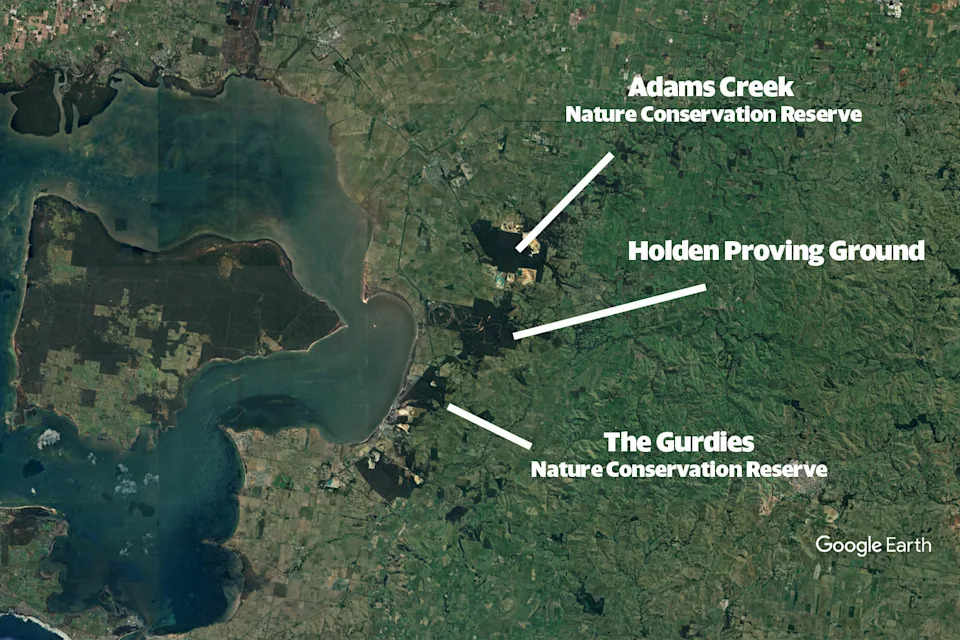
Very little bushland remains on Victoria’s Bass Coast, and the Holden Proving Ground acts as an important wildlife corridor between two nature conservation reserves. Source: Google Earth
Inside the ‘wonderland’ that time forgot
The site is situated between the Adams Creek Nature Conservation Reserve and the Gurdies Nature Conservation Reserve, making it an important green corridor for wildlife.
It’s officially recognised as the largest remnant patch of vegetation in the entire Bass Coast Shire across both private and public land.
A Bass Coast Council document shared with Yahoo confirms the property is home to endangered and critically endangered species.
It contains close to 200 types of indigenous plants, and around 100 native bird and mammal species.
The site was previously inaccessible, but with permission from VinFast, Crook and other conservationists have inspected the site several times over the last two years.
In the bush, it’s possible to imagine how the Bass Coast region would have looked before it was cleared following European settlement.
There are rare Strzelecki koalas bellowing, nesting wedge-tailed eagles high in the trees, and long-nosed bandicoots shuffling about on the ground.
“It is literally a wonderland that’s been relatively untouched by the outside world,” Crook said.
“There are old-growth Strzelecki gum forests, which are only found there and nowhere else in the world.
“It’s been held in time, which is an amazing thing.”
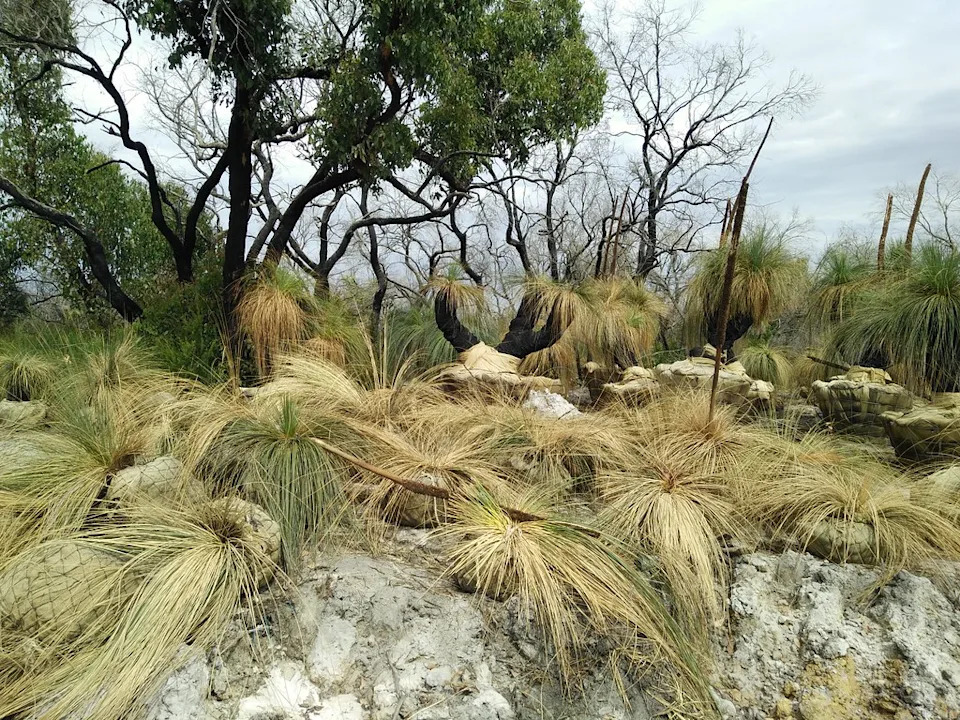
Elsewhere, sandmining has destroyed forest, and killed off ancient grass-trees which grow at a staggeringly slow rate of around 1cm per year. Source: VNPA
Will the government buy this rare bushland?
Yahoo contacted Victoria’s environment department (DEECA) about the property’s ecological value, but it did not respond.
The Victorian National Parks Association (VNPA) is a member of the Western Port Woodland Alliance, which advocates for the protection of the region’s last remaining forest.
Habitat in the wider area is threatened by land clearing, sand mining, housing development, climate change and invasive species.
Crook claimed there have been opportunities to buy the property, but they failed to get support from the government.
“We had a motoring enthusiast who was willing to pay two-thirds of it, and if we could find the other third, we could have the back,” he said.
“He just wanted the track and the infrastructure at the front.
“We gave all that to the government, and they just kept on coming back saying no, which has been really disappointing, because it’s actually quite cheap for land out that way.”
The VNPA has offered to take Environment Minister Steve Dimopoulos on a chartered helicopter flight over the site, so he can witness firsthand how rare it is, but to date, that offer has not been accepted.
The group is also advocating for a nearby 318-hectare bush block to be purchased by the state — it’s listed online with an asking price of $3.2 million.
A government spokesperson responded to questions sent to the minister’s office, saying, “There are currently no plans to purchase the former proving ground site or nearby private land.”
Dimopoulos was praised earlier in 2025 for protecting tens of thousands of hectares of habitat by announcing three new national parks in the state’s southwest — the Wombat-Lerderderg, Mount Buangor and Pyrenees.
To the north, the NSW Government has also been creating new national parks for its residents, protecting a further 176,000 hectares in the Great Koala National Park alone.
It has splashed tens of millions to safeguard other key habitats in rural areas, but also close to Sydney where land values are high.
Love Australia’s weird and wonderful environment? 🐊🦘😳 Get our new newsletter showcasing the week’s best stories.
