
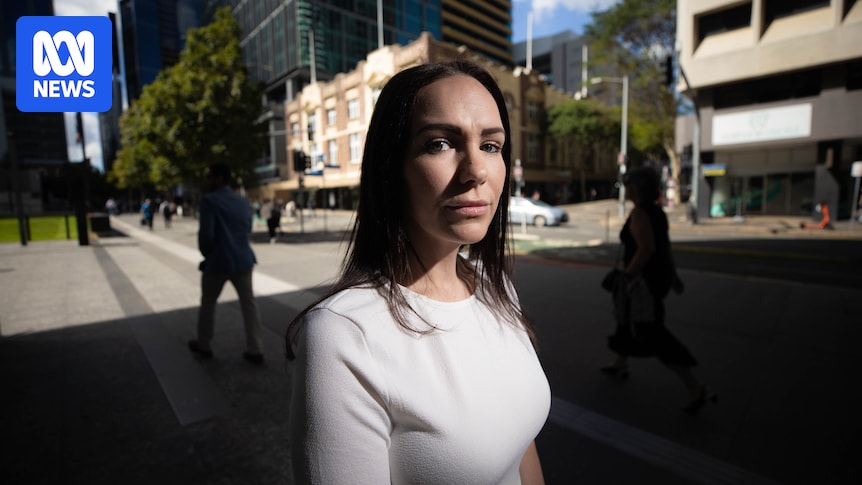
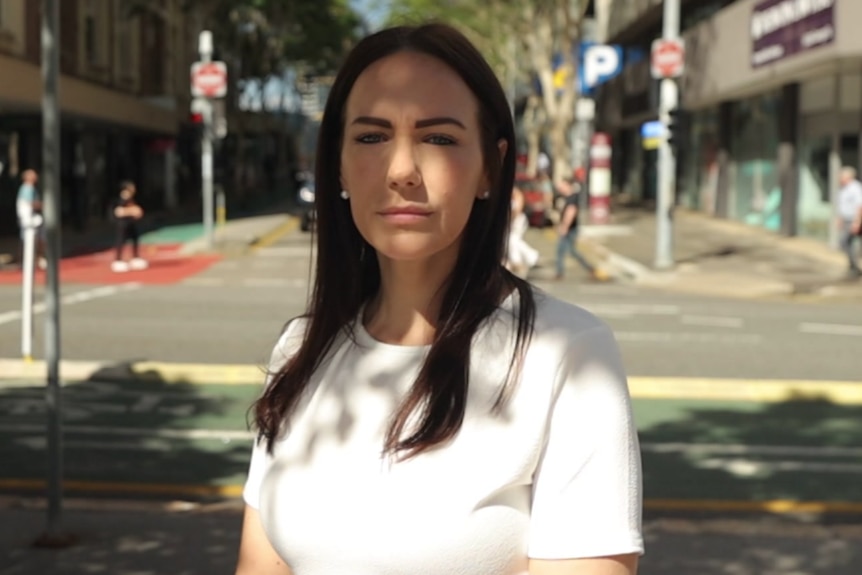
 Jessica Seage fought for six years for the man who raped her to be convicted.(ABC News: Luke Bowden)
The ABC has followed one domestic violence survivor’s gruelling experience through the courts for 18 months — just a quarter of the time she’s waited for an outcome.
Jessica Seage fought for six years for the man who raped her to be convicted.
The case was before the courts more than 50 times. And with each delay she considered giving up.
During this time, the rapist — her ex-husband — was granted bail to live interstate where he was arrested and accused of strangling another woman.
Jessica was furious.
She claims the advice of police interstate was to “have a bath and a glass of wine and just calm down a bit”.
Experts say her experience is a stark example of how perpetrators abuse the system to inflict more pain on their victims.
WARNING: Some readers may find this content distressing.
The toll of countless delays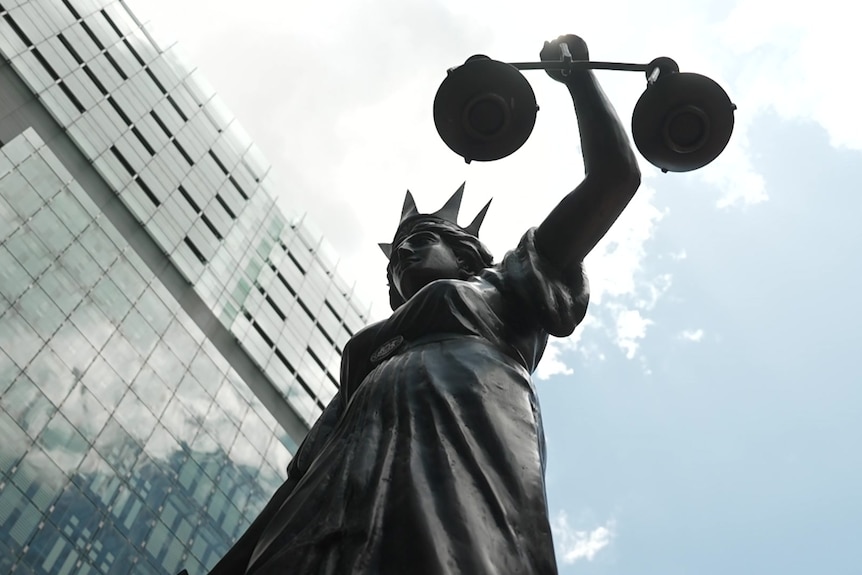 William Wells was due to be sentenced in Brisbane on November 6.(ABC News)
It’s the day William Wells is due to be sentenced in Brisbane for raping and assaulting Jessica.
She can’t help but feel like something will go wrong.
It should be a straightforward hearing; her ex-husband is in custody and has pleaded guilty.
But since she reported the abuse in 2019, no part of the process has been easy.
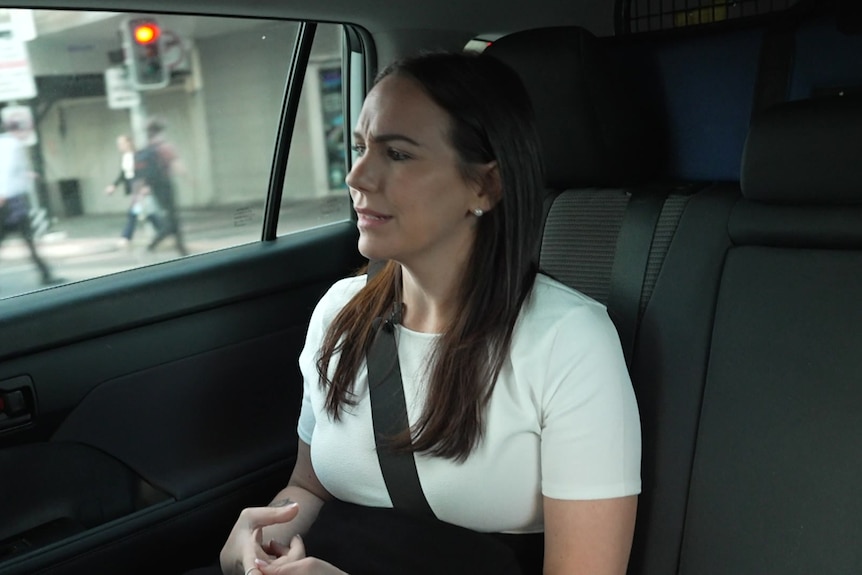 Jessica Seage on the way to court.(ABC News: Luke Bowden)
“I’m hoping he shows up, even though I don’t want to see him,” she says.
“Even though he’s coming in from custody, I’m nervous.
“He always has a way of manipulating things or getting a medical certificate or something along those lines.”
As Jessica enters the courtroom, the prosecutor pulls her aside.
Wells isn’t on the prison bus.
It’s an administrative error that causes another heart-wrenching delay.
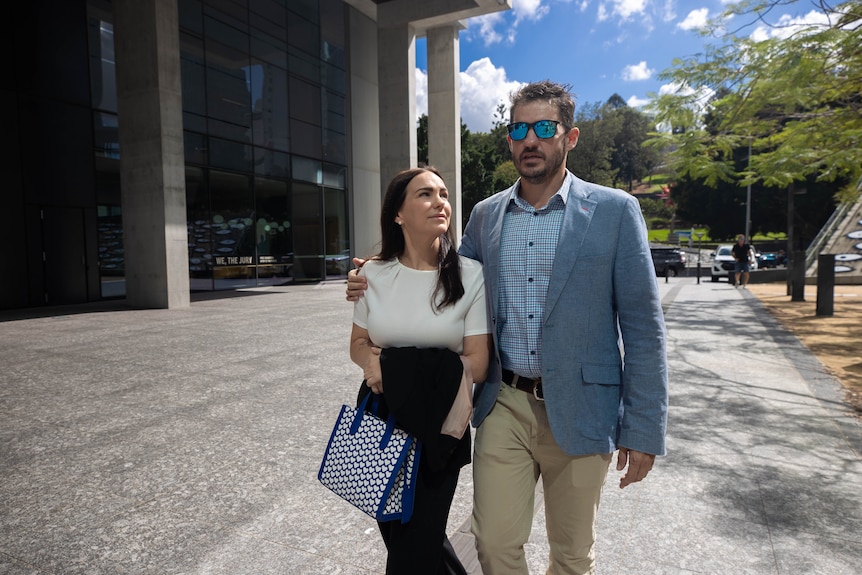 Jessica Seage walks into the Supreme Court in Brisbane with her partner Nathan Davis for the sentencing of her ex-husband.(ABC News: Luke Bowden)
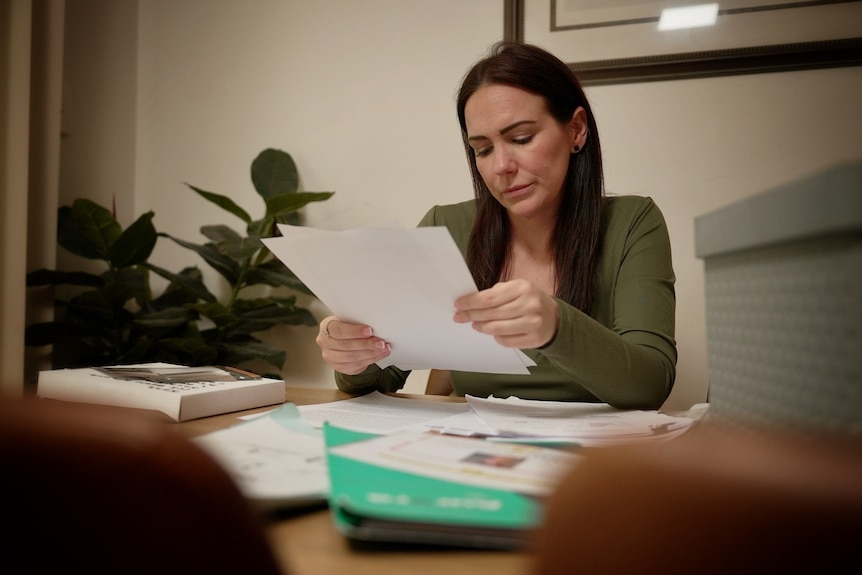 It took six years and more than 50 court mentions for Jessica’s ex-husband to be convicted.(ABC News: Mark Leonardi)
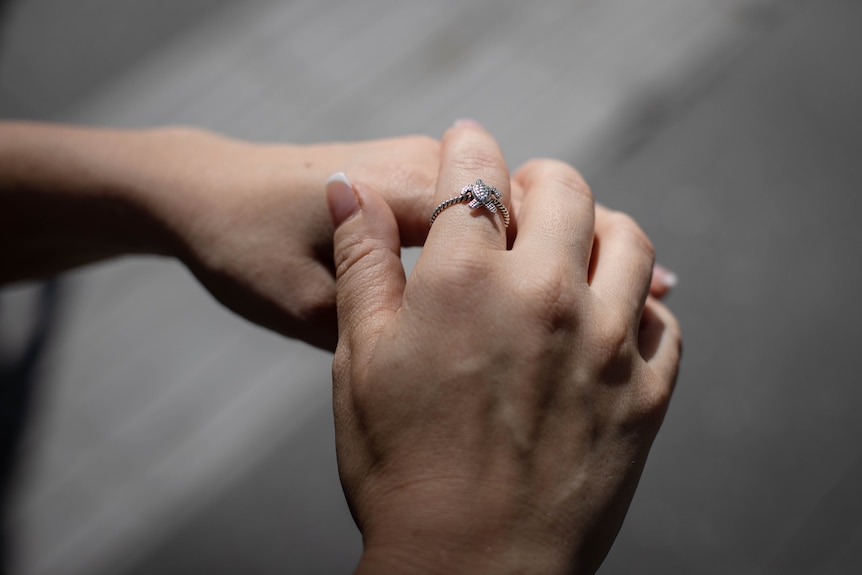 Jessica says the delays in the case left her feeling let down by the court system.(ABC News: Luke Bowden)
Jessica has shared her disappointment about the delays with the ABC in several voice messages across 18 months, including on July 30.
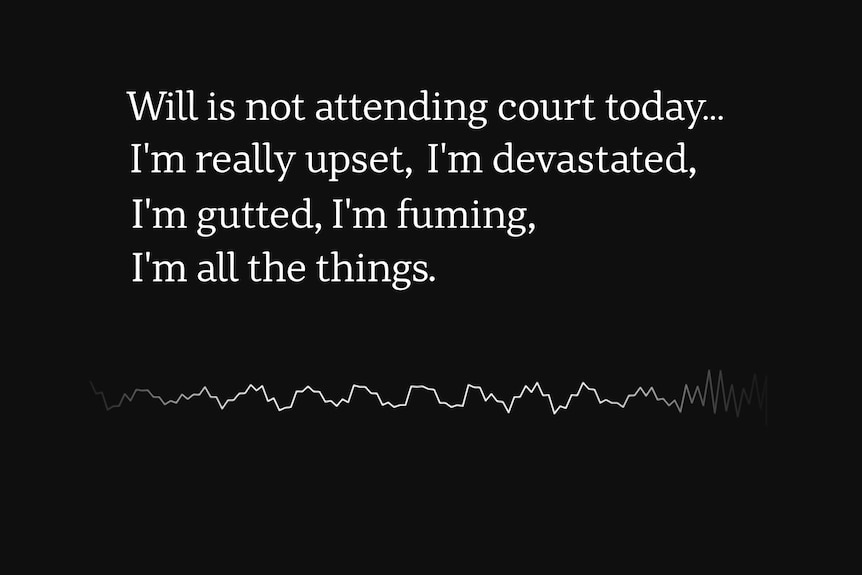 Jessica has shared her disappointment following delays with the ABC in several voice messages.(ABC News: Peter Mullins)The bail ‘loophole’
Jessica was working at a Brisbane gym when she first met Wells.
They were both in their early 20s.
“He was charming and love-bombed me from the very start,” Jessica says.
The relationship moved fast. Within six months, she was pregnant.
Looking back, she now says she can see things “were amping up to be quite disastrous”.
Jessica says the violence started soon after they said their vows — something that continued for the six years of their marriage.
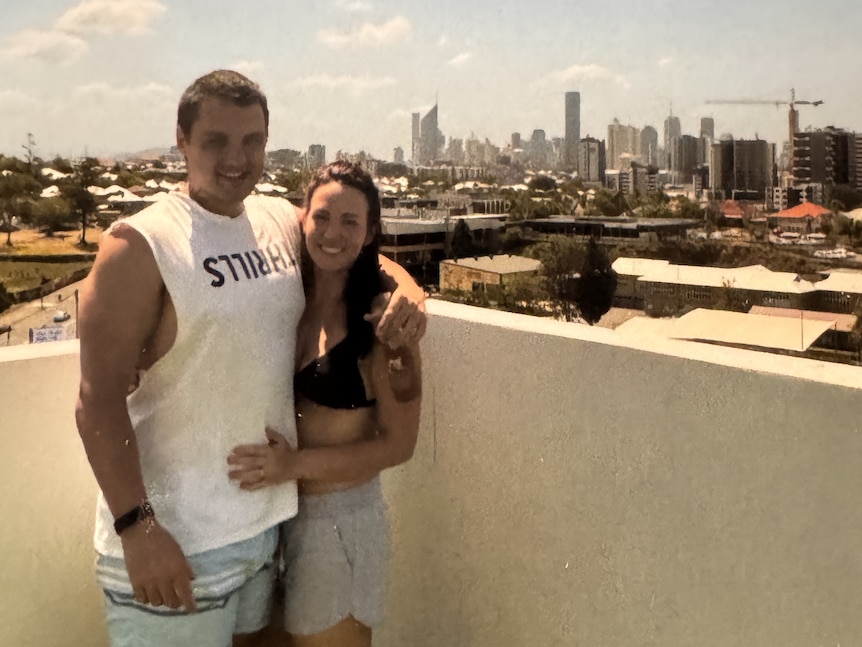 Jessica Seage and William Wells were together for eight years, including six as husband and wife.(Supplied)
Wells was no stranger to police during this time.
Jessica finally left in 2019 when he threatened to call someone to shoot her after she bought a $22 pizza.
That year, she reported the abuse. But it didn’t stop Wells from contacting her.
Jessica provided statements and evidence to police, and in 2021 Wells was arrested on 14 charges, including rape and assault.
He spent almost two years on remand until he was granted bail to live in South Australia in 2023.
Jessica was assured by her prosecutor he would have strict bail conditions, but was later told by South Australian police they couldn’t enforce them from another state.
“It’s a loophole for perpetrators that needs to be immediately rectified,” she says.
Jessica says when she raised her concerns, the advice from police was to “have a bath and a glass of wine and just calm down a bit”. When asked about this, SA Police said it was unable to comment on specific cases.
Jessica was constantly looking over her shoulder, worried he would hurt her or somebody else.
Then she received an email.
Wells was in custody, accused of strangling another woman.
Jessica’s case was put on the backburner until the charges were downgraded, then dropped, and he was freed from remand.
Wells was out of custody, but he still failed to attend court.
Eventually, an arrest warrant was issued. He then made his way to Brisbane.
In August this year, he agreed to plead guilty on the condition Jessica would drop two of the 14 charges — one count of rape and one count of drink spiking.
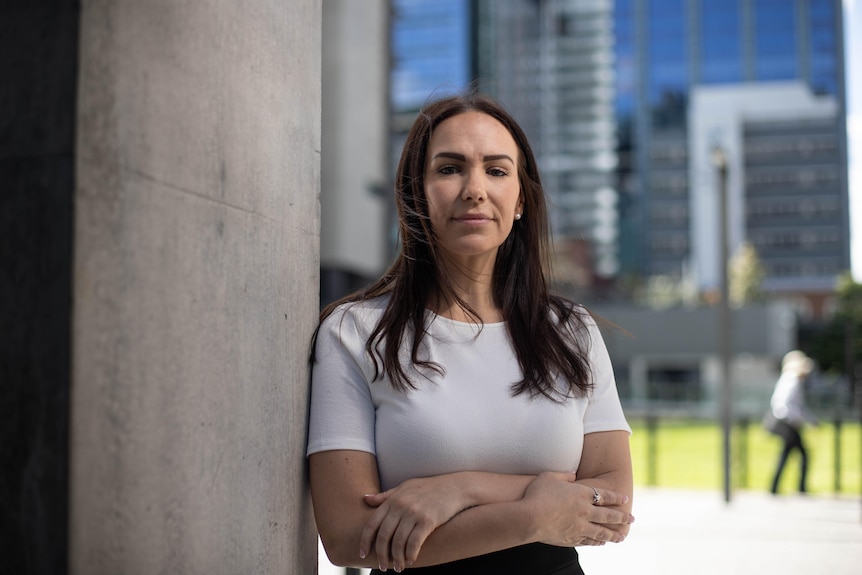 Jessica says she continued with the court process to ensure he did not “hurt anyone else”.(ABC News: Luke Bowden)
Jessica felt “cornered” but agreed to the deal instead of continuing in limbo.
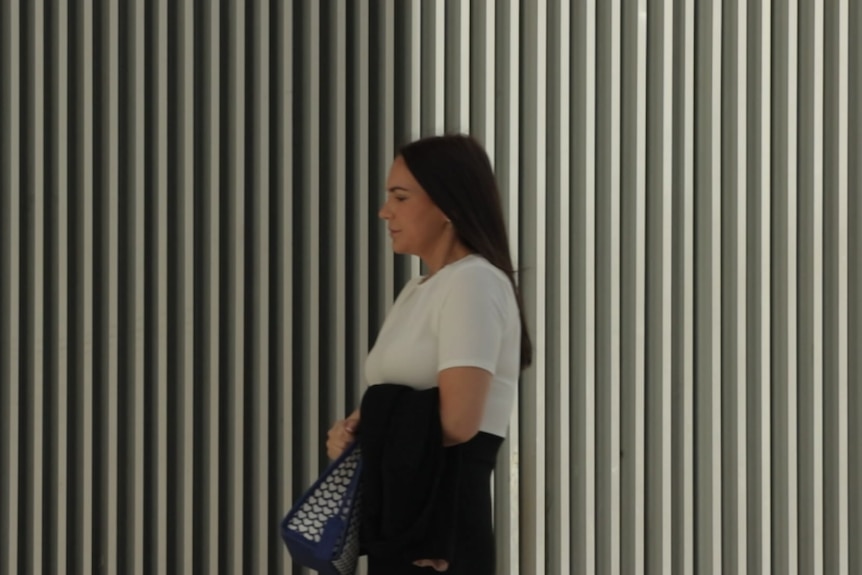 Jessica Seage arriving at the Supreme Court in Brisbane for the sentencing of her ex-husband.(ABC News: Luke Bowden)
“The one thing that made me go forward was for him not to hurt anyone else.”
‘Trapped’ by court process
Back in the courtroom, Wells is staring blankly ahead.
He avoids eye contact with Jessica as she tearfully reads her victim impact statement.
The media is not allowed to film inside the courtroom, so we have asked Jessica to re-read it.
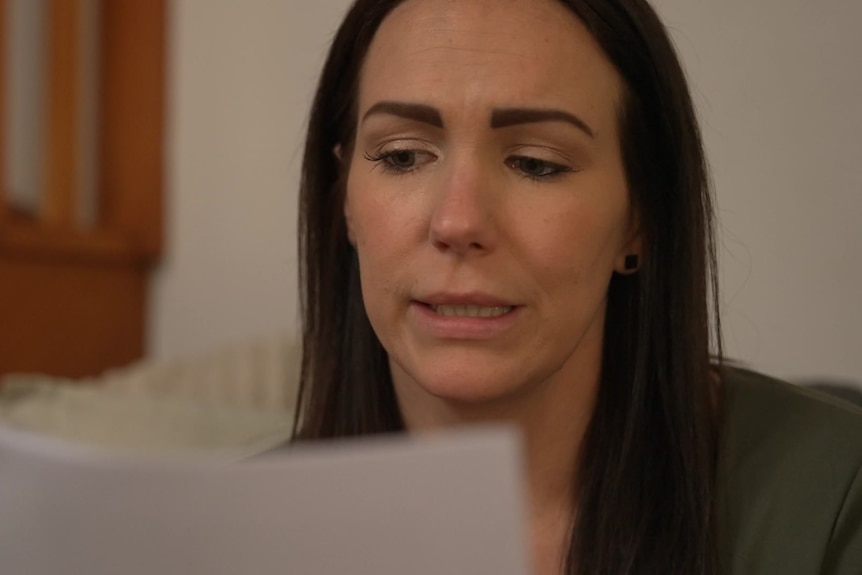 In her victim impact statment, Jessica said hearing Wells’ name “over and over” had “kept the wounds open”.(ABC News)
“Each date circled on a calendar has kept me tethered to the trauma, forcing me to wait and relive what happened.
“Hearing his name over and over, mention after mention, has kept the wounds open.
“Each delay, each adjournment, some by the court, and others caused by the offender’s own actions and refusal to take accountability sooner, kept me trapped in this process, living in limbo, unable to move on from what he did.”
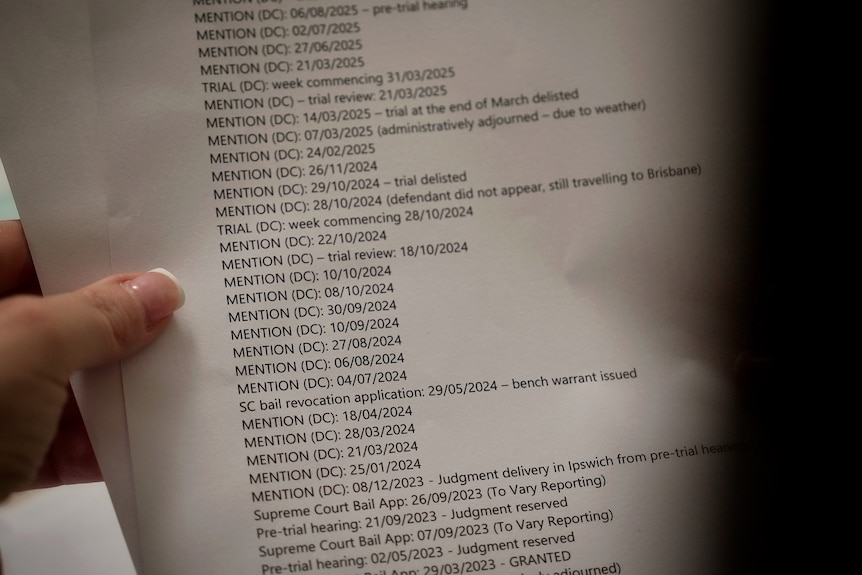 The case was mentioned in court more than 50 times and three attempts were made to go to trial.(ABC News: Mark Leonardi)
To reach this point, the case was heard in court 54 times and there were three attempts to go to trial.
Queensland Sexual Assault Network chief executive Angela Lynch says it’s a blatant example of “systems abuse”.
“It’s an indictment on the judicial system,” she says.
Griffith University criminology professor Molly Dragiewicz says it’s not uncommon for domestic violence perpetrators to manipulate systems — including the court — to cause further harm to victims.
“So many survivors … take time off work … They arrange and pay for childcare, and then on the day, the perpetrator just doesn’t show up,” Professor Dragiewicz says.
“It just gets extended to the next court date. So, this can be a way of continuing the abuse that perpetrators inflict on victims.”
Family and domestic violence support services:1800 Respect National Helpline: 1800 737 732DV Connect Women’s Line: 1800 811 811MensLine: 1300 789 978Kids Helpline: 1800 55 1800Lifeline (24-hour Crisis Line): 13 11 14’Sustained domestic violence’
It’s not the first time Wells has been in the dock.
 In 2016, William Wells was jailed for three months for strangling Jessica.(ABC News: Peter Mullins)
In 2016, he was jailed for three months for strangling Jessica.
He wrote to her from prison, begging for her forgiveness.
Jessica took him back, believing he would change. And for a little while, things got better.
But the court heard a psychologist’s report in 2019, while Wells was on parole, found he had a “severe risk of reoffending” against Jessica.
The court heard the psychologist claimed Wells would not benefit from group therapy because he would learn new manipulation techniques.
In sentencing Wells, Judge John Allen KC noted that “unfortunately, those concerns proved to be true”.
This year, Wells pleaded guilty to 12 charges, including rape, assault occasioning bodily harm and contravention of a domestic violence order.
Judge Allen told Wells his offending against Jessica, who he shares children with, was “a disgraceful and sustained course of domestic violence”.
 The court heard that in 2014, Wells anally raped Jessica after quoting a bible verse.(ABC News: Luke Bowden)
The court heard that in 2014, Wells anally raped Jessica after quoting a bible verse that said women should submit to their husbands.
That same year, in front of his friends, he slapped Jessica with such force that she nearly fell over.
In 2016 their neighbours knocked on the door. While having a barbecue they witnessed Wells hit Jessica across the head and grab her by the neck from behind.
When they asked what had happened, he calmly replied:
“Sometimes you just need to smack them around a bit.”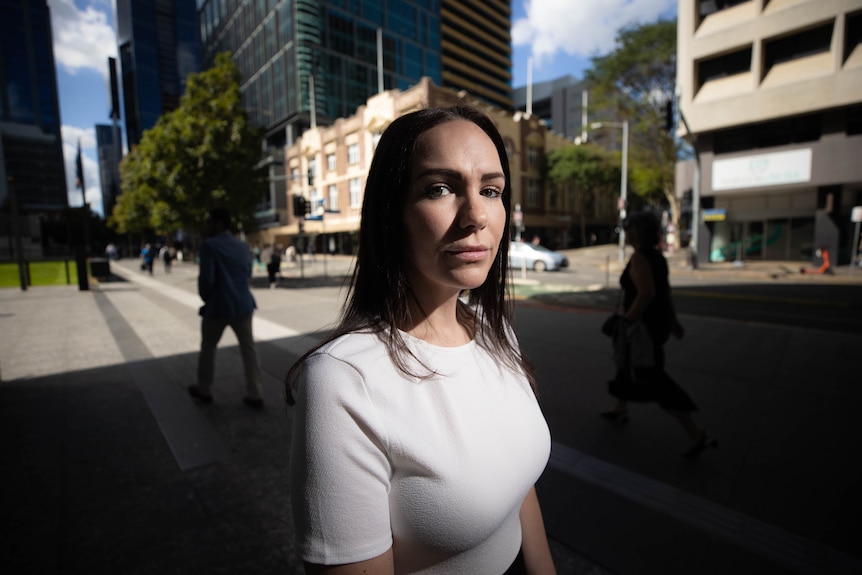 Jessica says the 12 charges Wells has been convicted of don’t scratch the surface of the years of emotional, sexual and physical abuse she endured in her marriage.(ABC News: Luke Bowden)
Jessica says the 12 charges Wells has been convicted of don’t scratch the surface of the years of emotional, sexual and physical abuse she endured in her marriage.
‘What was the f**king point?’
In court, Judge Allen praises Jessica’s “poignant and brave” victim impact statement, her resilience and devotion to her children.
In sentencing, he takes into account a good character reference from Wells’s current partner and a lack of recent reoffending as mitigating factors.
Judge Allen ultimately hands Wells a sentence of six years and six months imprisonment.
With 822 days already served in custody, he is immediately eligible for parole.
Wells’s defence lawyer stretches out his hand and congratulates him.
Jess watches on, frozen, in the back of the courtroom. Once outside, she breaks down.
“What was the f**king point?” she cries.
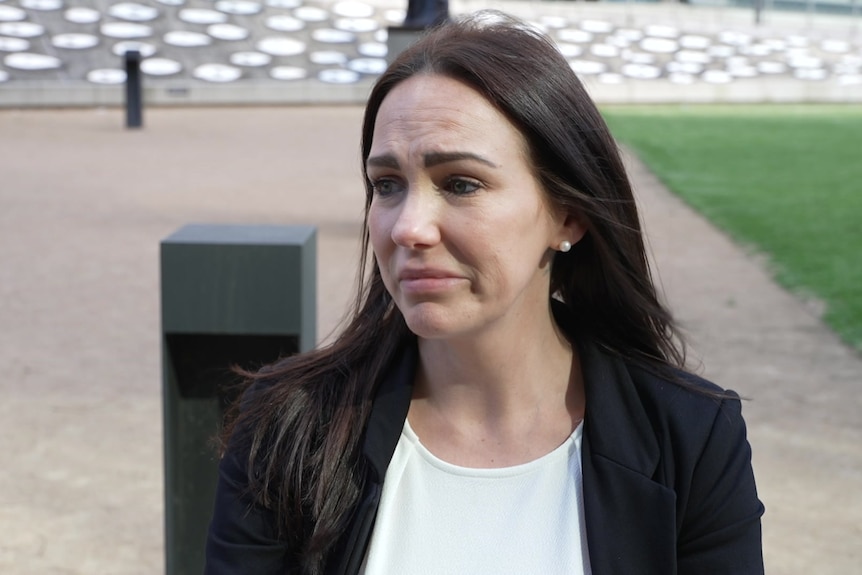 Outside court, Jessica says she feels “disgusted”.(ABC News)
“I feel gutted, disgusted, honestly so let down by the system.”
Jessica says Wells smirked as he left the courtroom, “like it’s a big game”.
“This is not a game, this is my life, this is my children’s lives.”
But now he has a conviction against his name.
“That’s something,” she says.
“I always try to look to the positive, but I don’t know if today I can do that.”
‘Too tough to quit’
Most sexual assaults are never reported — and getting a conviction is even tougher.
Police were contacted in just 8.3 per cent of cases in the 10 years up to 2021-22, according to the most recent data from the Australian Institute of Health and Welfare.
The conviction rate for sexual assault is around 6 per cent in New South Wales. In Victoria, about 14 per cent of incidents reported to police ultimately result in a proven charge in court.
There is no comparable data for Queensland, but Ms Lynch says conviction rates are expected to be similarly low.
That means Jessica’s perpetrator is one of the rare few who will get permanent marks on their records as convicted rapists.
It’s a major feat for Jessica, who says she tried to report that he had raped her in 2017, but was deterred by an officer’s comment that it could be difficult to prove.
After she reported the rape in 2019, she found a supportive officer who stuck by her side.
On the day Wells was sentenced, the officer gave her a plaque, engraved with her name and the words “too tough to quit”.
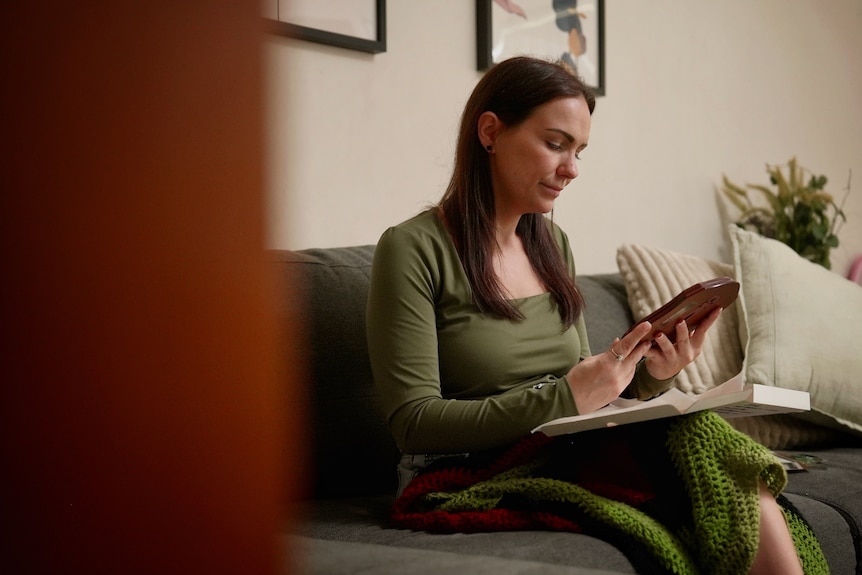 Jessica Seage holding a plaque she was given by an officer once William Wells was convicted.(ABC News: Mark Leonardi)
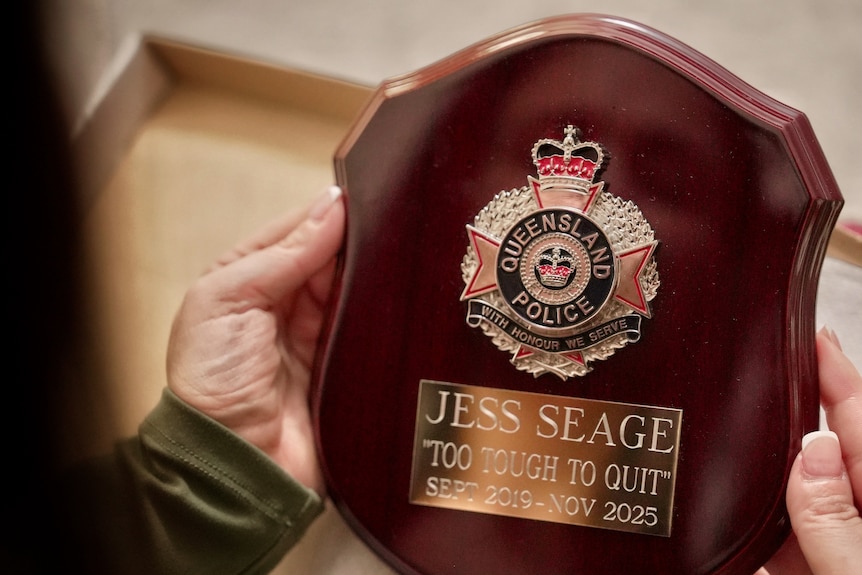 An officer gave Jessica a plaque with the words “too tough to quit” engraved on it.(ABC News: Mark Leonardi )
Professor Dragiewicz says the failure to investigate sexual violence offences is a major issue.
“It’s such a small percentage of survivors that actually report sexual violence to the police, and they’ve already overcome a number of barriers to reach that point,” she says.
“I’d like to see improvements so that the people investigating sexual assault and sexual violence cases have the training and expertise they need.”
In a statement, a Queensland Police Service (QPS) spokesperson said it was committed to improving its response to domestic and sexual violence.
It also pointed to the development of additional training focusing on the nuances of coercive control, and the need for investigations to be holistic, victim-centric and trauma-informed.
“The QPS acknowledges the experiences of victim-survivors of sexual violence and how the criminal justice system can be complex and confronting,” it said.
Ms Lynch wants victims’ rights embedded into the Queensland Human Rights Act and specialist sexual violence courts.
“Obviously, a more national approach when responding to these issues would be of benefit to victim-survivors and the broader community as well,” she says.
Mission to end coercive control
Jessica says the process has felt like a “game of chicken” with her perpetrator.
“It was like, who’s going to give up?” she says. “And he was just hoping I would give up and give in.”
Now, she works at Beyond DV — a Queensland organisation that empowers victim-survivors.
Beyond DV chief executive Caroline Robinson says the conviction is a “vindication” of what Jessica has experienced.
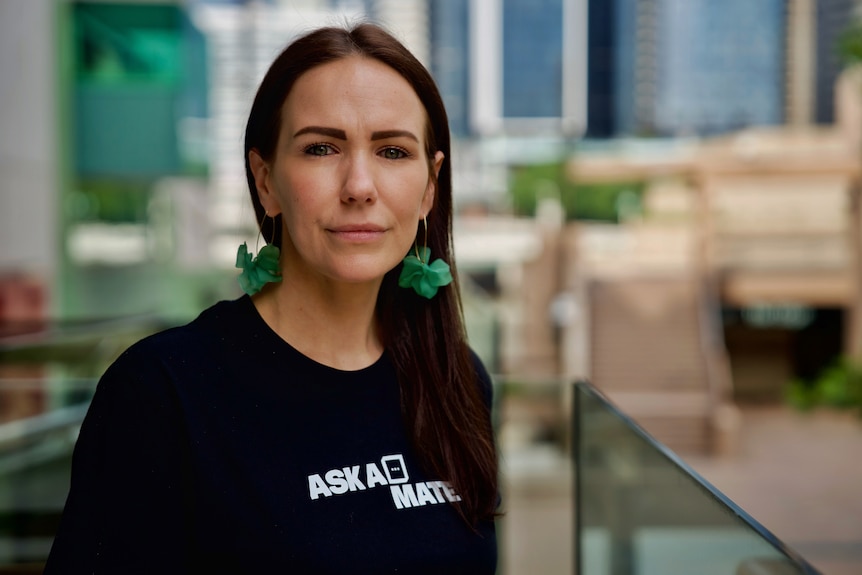 Jessica Seage now works at Beyond DV.(ABC News: Michael Lloyd)
“Jessica has stuck to her guns. She’s used some innate strength and resilience, and now she’s an advocate,” Ms Robinson says.
“She’s someone that other women can look up to, to say, ‘She’s done it, maybe I can as well.'”
Jessica is among the country’s best musicians and sports stars at Beyond DV’s Mates for Mates Day in Brisbane, where hundreds of schoolboys will hear her story.
 Jungle Giants bassist Andrew Dooris, Triple J presenter Dee Salmin and Collingwood Magpies captain Darcy Moore at Beyond DV’s Mates for Mates’ Day.(ABC News)
 Jessica told her story to hundreds of school students.(ABC News)
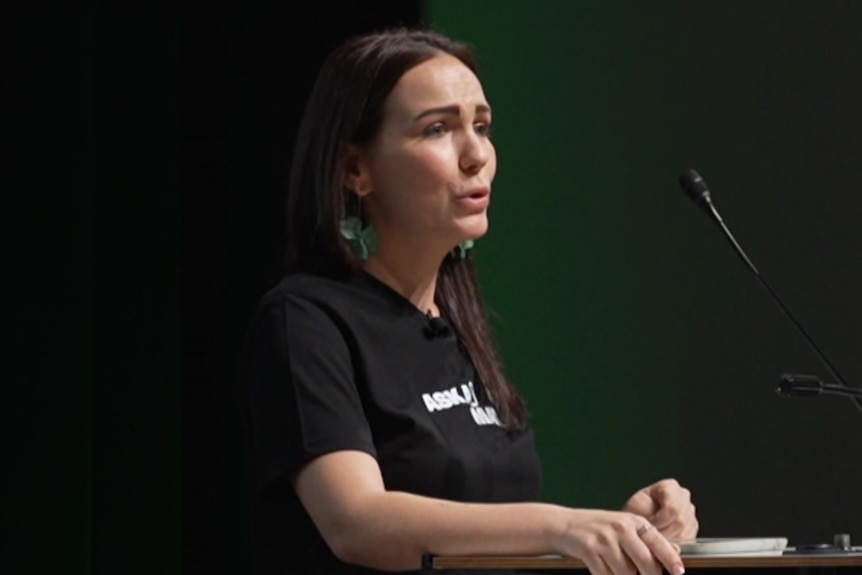 Jessica told the audience they had an “incredible opportunity to be the kind of men that respect and protect the people in your lives”.(ABC News)
“You have an incredible opportunity to be the kind of men that respect and protect the people in your lives,” she says
“So I stand here today to urge you: take control of your own lives, never ever try to control someone else’s.”Credits
Reporting: Eden Gillespie and Jessica Stewart
Editing and digital production: Claudia Williams
Photography and videography: Luke Bowden, Mark Leonardi and Michael Lloyd
Graphic design: Peter Mullins