
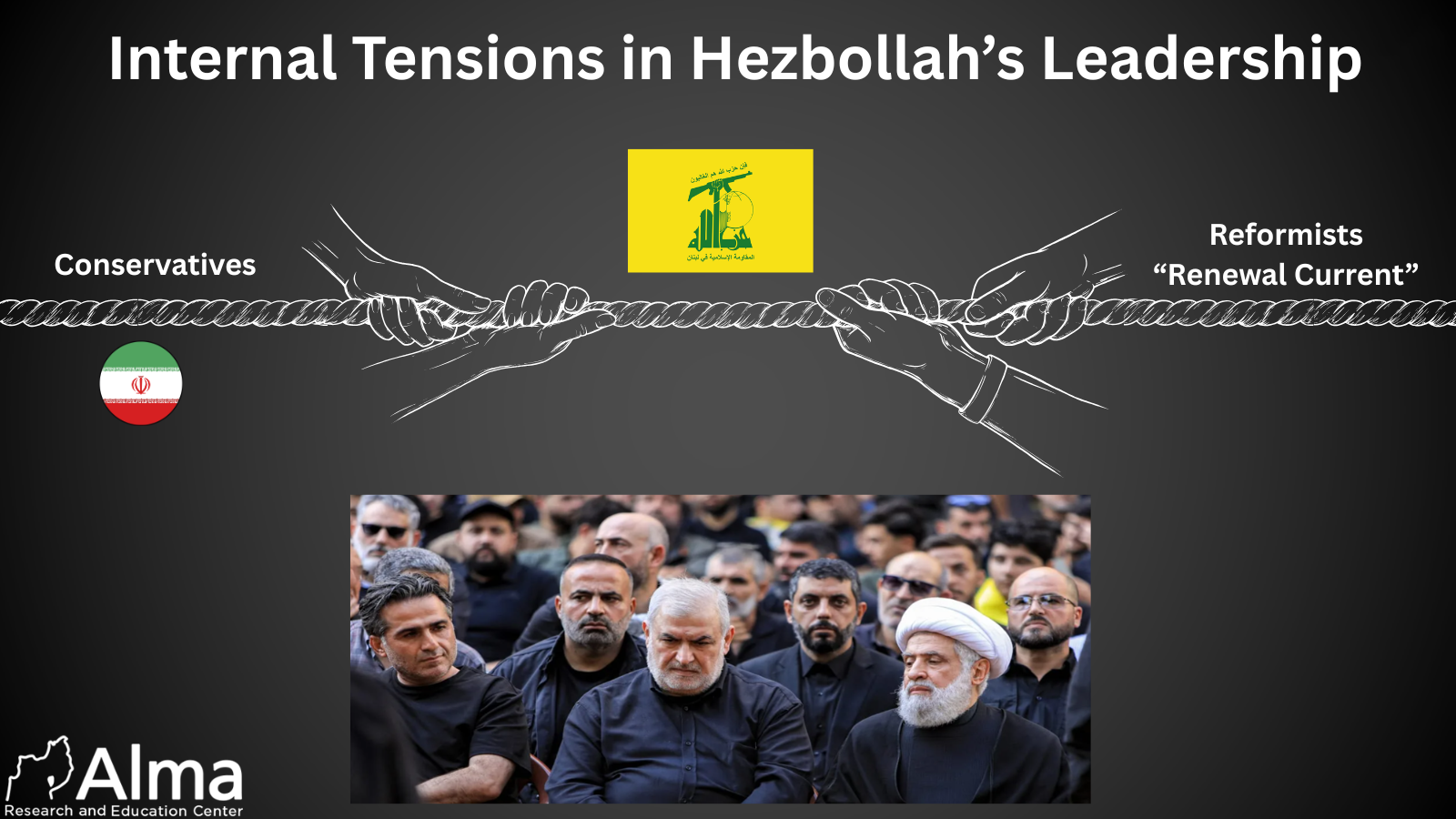
In the wake of the eliminations sustained by Hezbollah during the war—both within its political leadership and its military command—a leadership vacuum has emerged, intensifying disagreements and tensions among the senior figures who survived. Although Naim Qassem was immediately appointed as Hezbollah’s leader, a significant number of senior officials continue to challenge his authority.
Within the military leadership, power struggles appeared to have been resolved with the appointment of Tabbatabai as military commander; however, his recent elimination has revived the longstanding question of who will assume command. Internal tensions and disagreements have likewise persisted within Hezbollah’s political leadership.
For several months, there have been indications of difficulties and delays surrounding the potential appointment of Mohammad Raad as deputy leader of the organization, against the backdrop of Naim Qassem’s difficulty in enforcing organizational discipline and steering key decision-making processes. Raad currently serves as head of Hezbollah’s “Loyalty to the Resistance” parliamentary bloc.
These difficulties stem from disagreements between two central camps within Hezbollah’s Shura Council, the organization’s decision-making body. The first is the conservative camp, identified with traditional lines, a religious–ideological leadership model, and close ties to Iran’s Islamic Revolutionary Guard Corps. This camp, led by Ibrahim Amin al-Sayyid, head of the Political–Strategic Council, opposes the appointment of a figure lacking a clear religious status (like Raad) to a leadership position with an ideological character. On the other side operates the “Renewal Current,” with a reformist orientation, which supports structural changes and the incorporation of figures with political backgrounds into the organization’s senior leadership.
