

 Source: Ministère de l’Économie Numérique,des Postes et Télécommunications
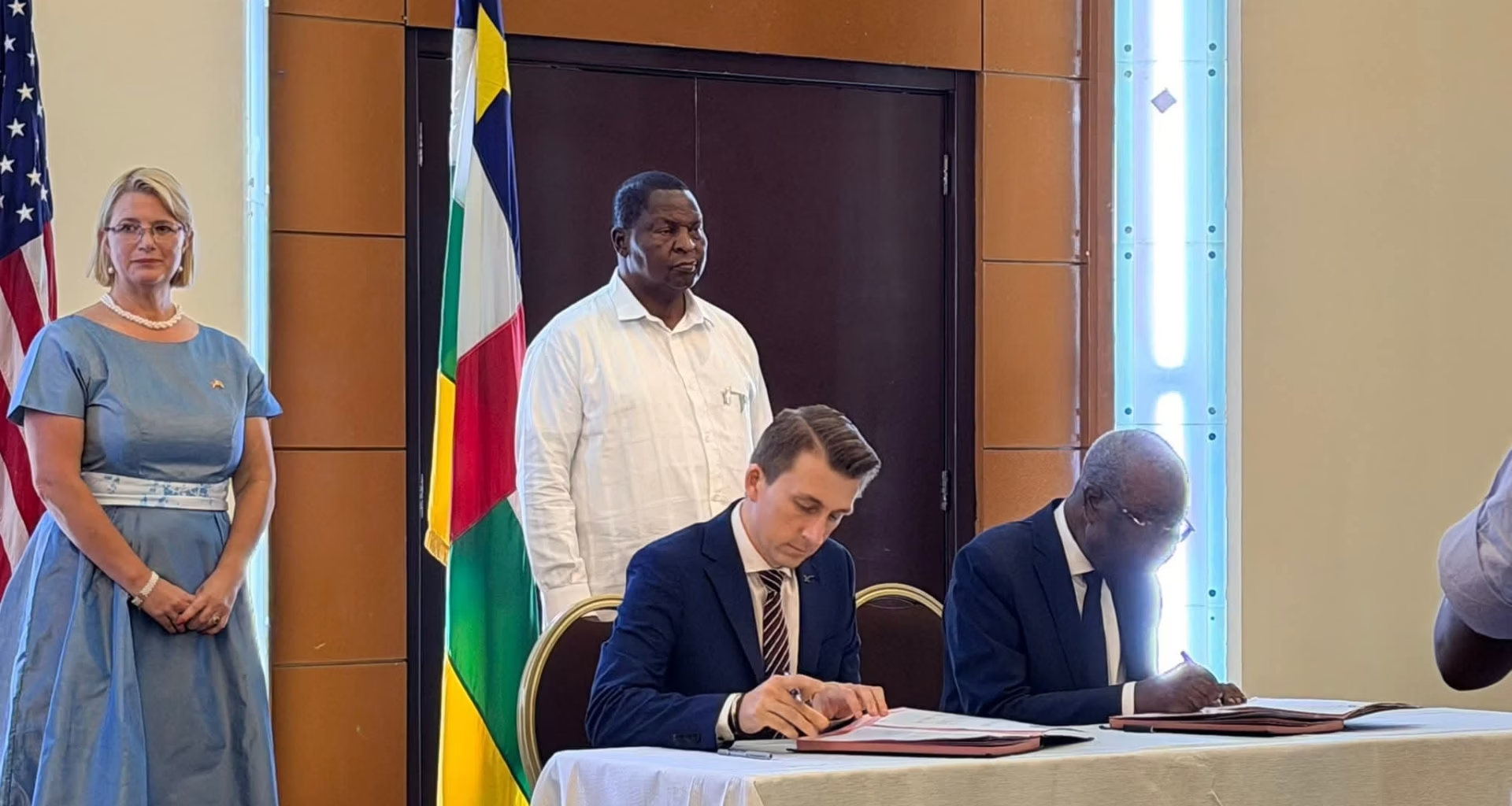
Starlink has launched operations in the Central African Republic following an agreement between the government and the satellite internet provider, aimed at expanding national coverage to rural and remote regions where connectivity remains severely limited.
The agreement was signed during a ceremony hosted by CAR President Mr Faustin-Archange Touadéra, bringing together representatives from the CAR Ministry of Post, Telecommunications, and Digital Economy, U.S. Embassy Chargé d’Affaires Dr Melanie Anne Zimmerman, Starlink officials, as well as the CAR Prime Minister, Minister of Foreign Affairs, and Minister of Post, Telecommunications, and Digital Economy.
Addressing Critical Connectivity Gaps
The launch comes at a crucial time for the Central African Republic, where internet penetration remains amongst the lowest on the continent. According to DataReportal, there were 670,000 internet users in the Central African Republic at the end of 2025, representing just 12.0 per cent of the total population. This means that 4.89 million people, 88.0 per cent of the population, remained offline at the end of the year.
Whilst the data indicates that internet users increased by 51,000 (+8.3 per cent) between October 2024 and October 2025, the gap remains substantial, highlighting the urgent need for expanded connectivity solutions.
Satellite Technology to Transform Access
By relying on high-speed satellite solutions, Starlink aims to expand national coverage and strengthen communications resilience in a country facing significant gaps in terrestrial infrastructure. As a result of the agreement, Starlink’s innovative satellite-based network will be commercially available in CAR for the first time.
President Faustin-Archange Touadéra emphasised that the arrival of satellite technology could bring concrete improvements to public services, support the development of e-learning, enable telemedicine, and improve access to information, all factors that could help accelerate digital inclusion and support socio-economic recovery.
Commitment to Social Impact
In addition to commercial services, Starlink will donate hundreds of kits for distribution throughout the country, enabling access for rural schools, health centres, and government institutions. Increased connectivity is viewed as key to unlocking further opportunities for digital infrastructure and investment, including new businesses, partnerships, and other forms of cooperation between American and local companies.
U.S. Embassy’s Facilitation Role
Chargé d’Affaires Dr Zimmerman welcomed the signing and emphasised the U.S. Embassy’s diplomatic facilitating role in connecting the relevant parties and supporting constructive dialogue. She committed to continuing to strengthen the relationship between the United States and CAR, particularly by working together to expand opportunities for trade, investment, and commercial partnerships.
“The United States supports initiatives that promote economic growth, innovation, and opportunities to deepen the trade and commercial partnership between our countries,” Dr Zimmerman stated.
Challenges Ahead
Authorities acknowledge that several conditions must be met to ensure a tangible impact. Affordability remains a central concern in a context of low purchasing power, and Starlink’s pricing in the Central African Republic has not yet been disclosed. The Ministry of Telecommunications also stressed the need to strengthen energy infrastructure, seen as essential for the sustainable operation of digital equipment, alongside efforts to train young people for digital-related careers.
The establishment of a stable, transparent, and inclusive regulatory framework was also highlighted, aimed at ensuring fair competition amongst operators and consumer protection as the country embarks on this new chapter in its digital transformation.