
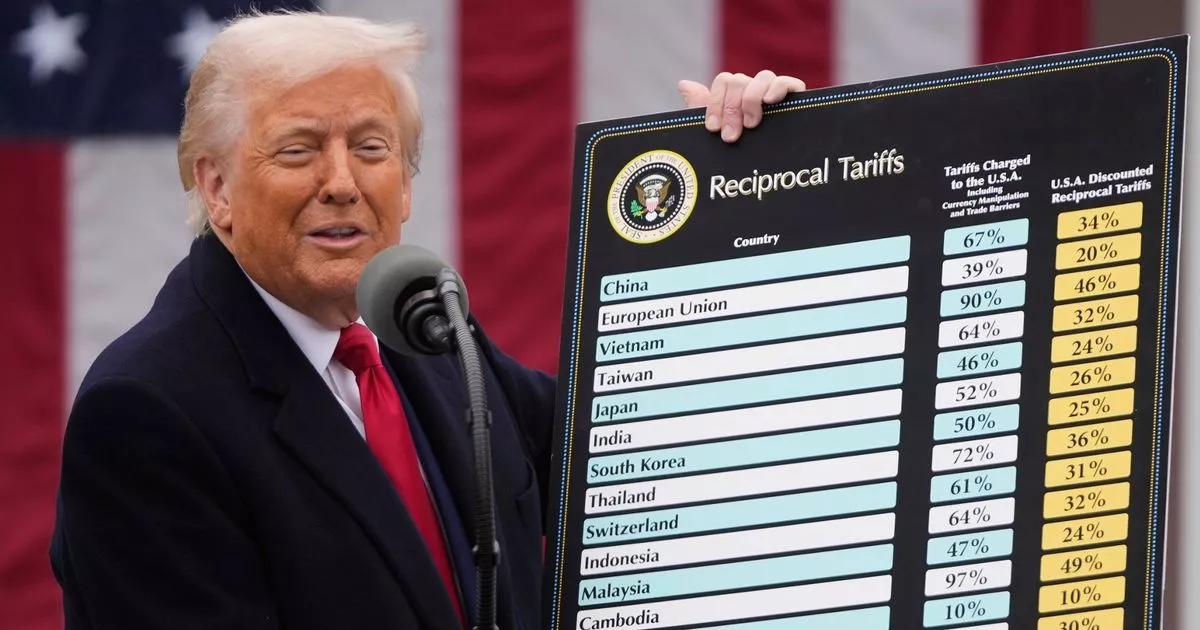
Four of the U.S.’ major allies believe the country has grown unreliable and problematic under the Trump administration
15:23 ET, 23 Dec 2025Updated 15:25 ET, 23 Dec 2025
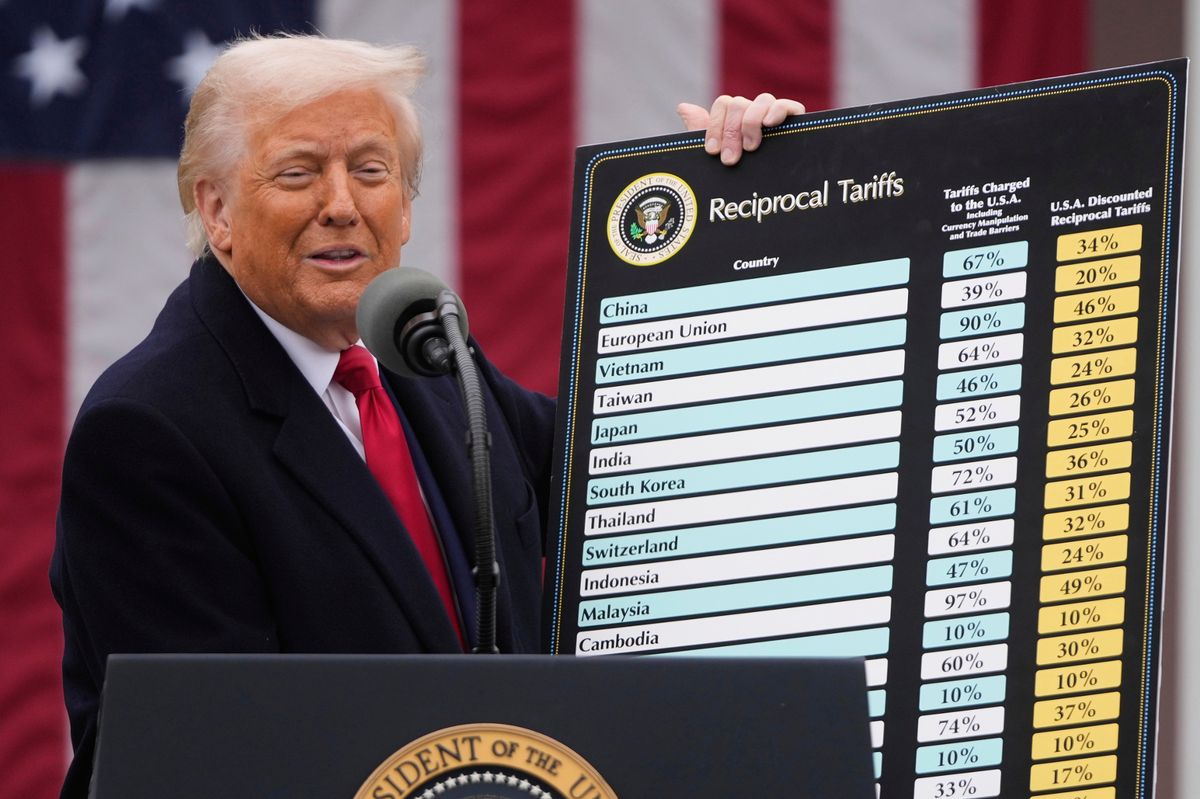 Four of the U.S.’ major allies believe the country has grown unreliable and problematic under the Trump administration(Image: AP)
Almost a year has passed since President Trump returned to the White House for his second term in office, enacting sweeping tariffs, anti-immigration rhetoric, and even travel bans. As the international community reels with the administration’s agenda, it is also grappling with an “unreliable” ally in the U.S.
According to a recent poll from Politico, the majority of U.S. adults in Canada (56%), Germany (40%), and France (40%) see the U.S. as a negative force globally.
By comparison, other adults in Canada (26%), Germany (29%), and France (34%) see the U.S. as a positive force.
READ MORE: Trump lets slip payment date for $1000 check – and it’s sooner than you’d thinkREAD MORE: White House accused of ’embarrssing’ edit of Trump in Christmas photo
Interestingly, another major American ally, the U.K., has a more mixed view, with more than a third of respondents (35%) agreeing that the U.S. is a negative force globally, 41% responding that it is a positive one, and 24% being unsure.
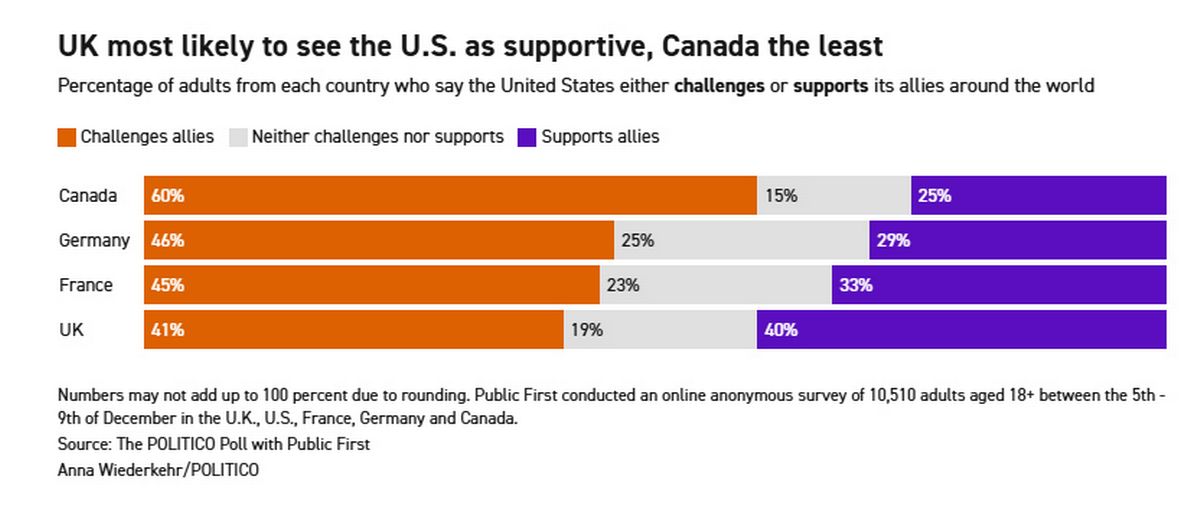
Similarly, 60% of Canadians believe that the U.S. challenges its allies around the world, while 46% of Germans, 45% of French respondents, and 41% of British adults share the same view. By contrast, 25% of Canadian respondents, 29% of German respondents, 33% French respondents, and 40% of British adults believe the U.S. supports its allies.
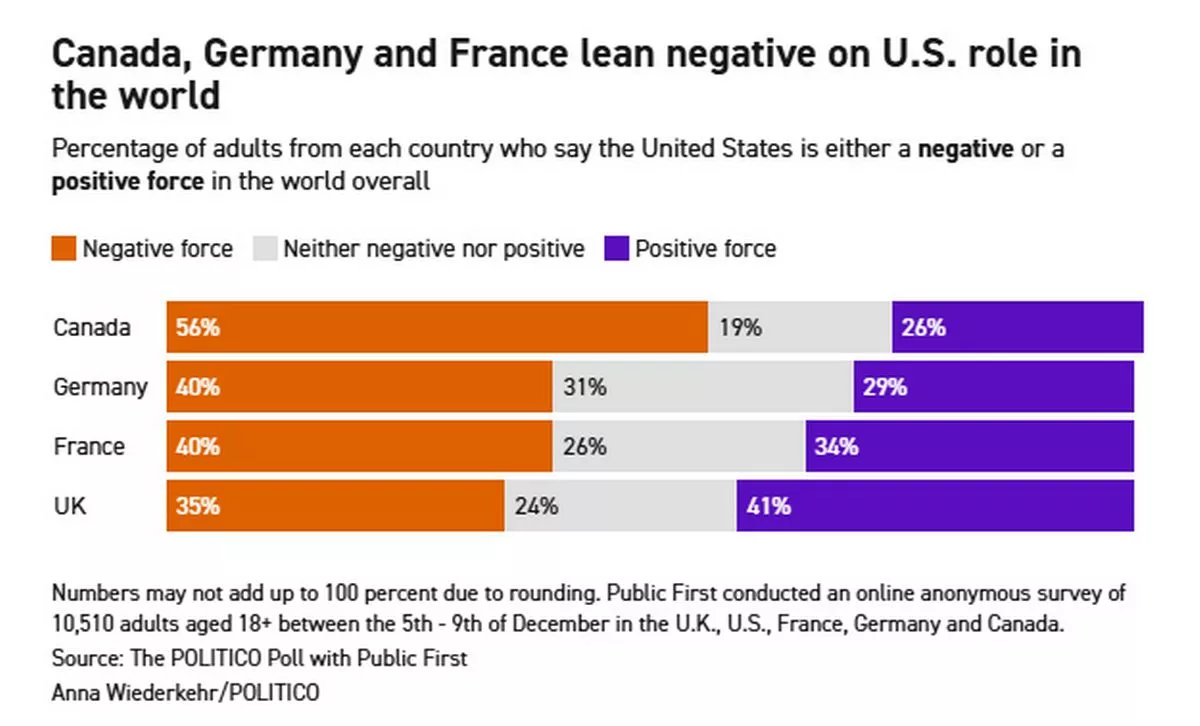 Germany, France, Canada and U.K. adults believe the U.S. is a negative force in the world(Image: politico.)
Furthermore, the four countries also believe that the U.S., under the Trump administration, has created more problems for other countries than it has solved. More specifically, 63% of Canadian respondents, 52% of German respondents, 47% of French respondents, and 46% of U.K. respondents believed the U.S. was creating more problems for foreign nations.
Canadians’ animosity toward the U.S. doesn’t come as a surprise, as the president has consistently attacked the nation, calling for it to become the 51st state by erasing the 5,525-mile-long border that separates the two countries.
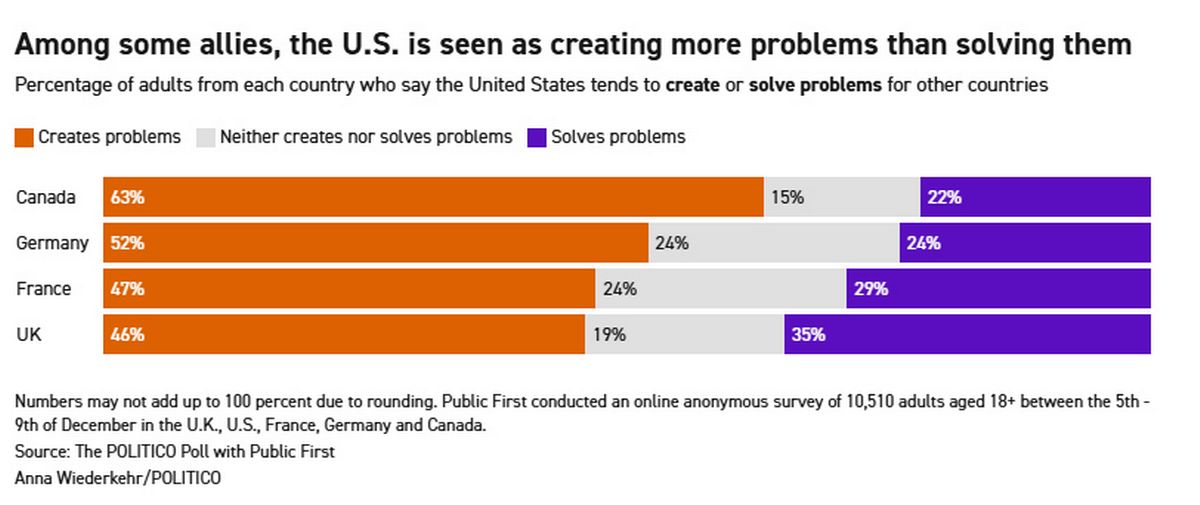 Germany, France, Canada and U.K. adults believe the U.S. creates more problem for its allies(Image: politico.)
The bizarre offer riled up Canadian officials, including Ontario Premier Doug Ford, head of Canada’s most populous province, who issued a tense counteroffer back to the American president.
“How about, if we buy Alaska, and we’ll throw in Minnesota and Minneapolis at the same time,” he said, arguing that Trump’s suggestion is “not realistic.”
But the president has not only insulted Canada; in fact, he has also attacked other regions, including Europe, which he has called a “decaying” group of nations led by “weak” people.
“I think they’re weak,” Trump said of Europe’s political leaders at a recent interview with Politico. “But I also think that they want to be so politically correct.”
 Germany, France, Canada and U.K. adults believe the U.S. is a negative force in the world(Image: politico.)
“I think they don’t know what to do,” he added. “Europe doesn’t know what to do.”
Other members of the administration have also ramped up the rhetoric, including Secretary of State Marco Rubio, who defended the president’s approach and criticisms of Europe.
“I do think that at the core of these special relationships we have is the fact that we have shared history, shared values, shared civilization principles that we should be unapologetic about,” Rubio said during a briefing last week.