
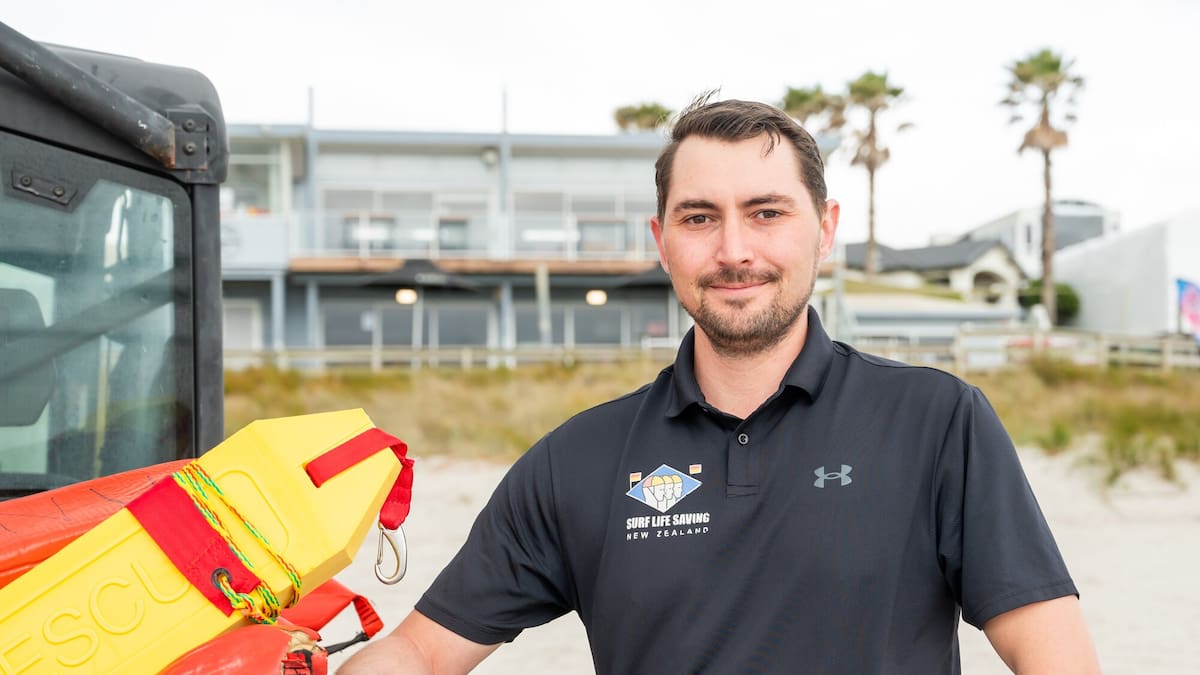
Chaz Gibbons Campbell says one of the best ways to keep yourself safe in the water is to know how to float. Photo / Brydie Thompson
The beach near Coast Boulevard has a powerful rip. Photo / David Hall
Pāpāmoa Surf Life Saving Club’s Marama Mateparae says last season there were several incidents with adults supervising too many children or not paying attention to their child.
Relax and float to conserve energy.Raise your hand to signal for help.Ride the rip until it stops before swimming back to shore.
The danger of rip currents
How are rips formed?
Why are rips dangerous?
They can quickly pull swimmers away from shore.Panic and fatigue often lead to drowning.They’re hard to spot if you don’t know what to look for.
How to identify a rip
Calm patches in the surf with waves breaking on each side. The calm gap may look safe to swim in, but a small patch of calm water in the surf or waves is often a rip current.A ripple pattern on the sand or small holes beneath your feet in the water.Discoloured or foamy water. Regions of deeper, darker water with less wave-breaking activity between areas of white water; think of them as rivers of the sea. The discolouration is created by the current picking up sand in the water as it moves out to sea.Rocky headlands and rocky groynes. Rip currents are also common in areas with piers, jetties and anything else that sticks out from the beach that could catch a longshore current and cause it to start flowing away from shore.
How to avoid them
Swim between the flags – lifeguards avoid placing the flags near rips.Learn to identify rip currents before entering the water.If caught in a rip: stay calm, float, and signal for help – don’t try to swim directly back to shore against the current.
If you do get caught in a rip
RELAX and float to conserve your energy. Stay calm, relax and float. The rip current will not pull you under the water and is just taking you for a ride offshore. Try to fight the urge to swim back to shore against the current; this will use up energy that you need to stay afloat before help arrives. Most people can float for a lot longer than they can swim!RAISE your hand to signal for help. Signal for help by putting your hand up to attract attention from lifeguards, surfers or someone on the beach who can get help.RIDE the rip until it stops and you can swim back to shore or help arrives. Remain floating until the current weakens. Many rips will circulate and bring you back into shallower waters closer to the shore, where you may be able to stand. When the current has subsided, and only if you are sure you can swim to the nearest point on the shore, should you attempt to swim to safety.