
 Sam Skyrme-Blackhall

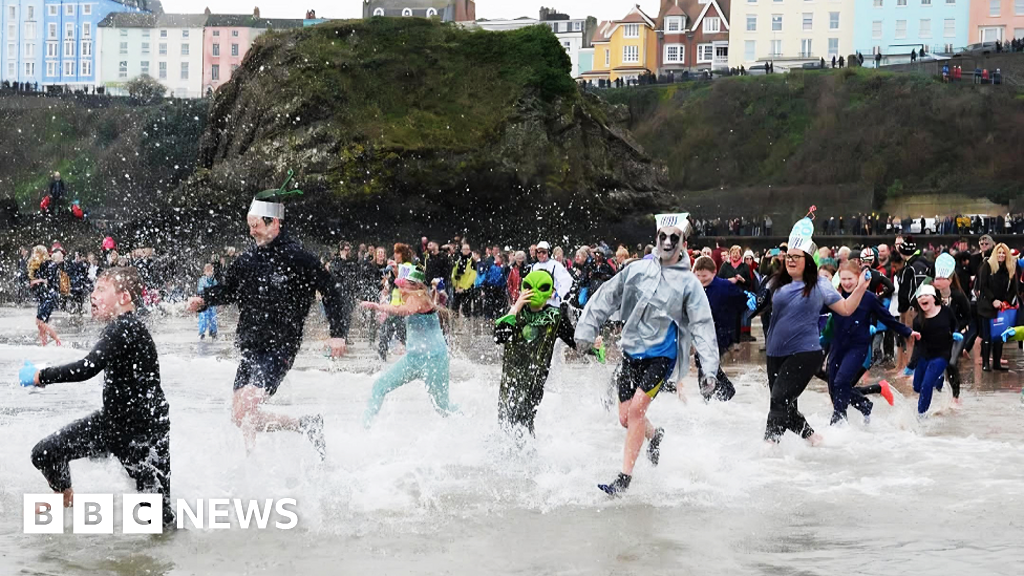
Tenby is one of the many towns across the UK that host a Boxing Day swim
Thousands of people will take to the waters around the UK over the festive season at organised swims that have been held for decades.
But those going it alone may want to heed Maritime and Coastguard Agency warnings not to rely on AI tools when planning outdoor activities as it can make mistakes.
The advice comes after two people became stranded on Sully Island, near Barry, after ChatGPT gave them the wrong tide times and they had to be rescued by the coastguard.
The warning echoes advice from a top tech industry chief not to “blindly trust” everything AI tells people.
The chief executive of Google’s parent company Alphabet, Sundar Pichai, recently said AI models were prone to errors and urged people to use them alongside other tools.
Does this incident show people would be wise to be wary of AI?
One of the rescued men thinks so.
 Alan Hughes/Geograph
The causeway at Sully Island is walkable at low tide, but quickly gets covered once the sea starts to return
He told social media news channel Penarth SMTV: “I made the mistake of using ChatGPT for research, to see when the low tide was.”
The AI programme said low tide would be at 09:30, meaning their early morning departure should have given sufficient time to walk over and back to the island.
But the information was wrong by two hours and the causeway was underwater when they attempted to return.
“Some false information there, but maybe a lesson learned for me,” he said.
HM Coastguard said: “While AI tools can be very useful, they draw from a wide range of sources to gather information and responses which may not be correct for a specific location or area.”
It recommended resources such as the UK Hydrographic Office’s Easy Tide or the Met Office’s service.
Information on tide times is easily available online – a search engine will throw up multiple websites all giving the same, correct information.
However, when the BBC asked ChatGPT the same question as the unlucky visitors, it generated exactly the same, incorrect, response.
On another attempt it was out by five hours.
Open AI, which owns ChatGPT, said improving factual accuracy was a “significant focus” for the industry, and new models had significantly fewer hallucinations but still occurred.
Prof Steven Schockaert, head of the AI and data analytics research section at Cardiff University’s school of computer science, said in this instance the problem may lie with how the information is presented online.
“I think the issue here is that the tide tables are shown in a table, and the model struggles with extracting the correct value from the table,” he explains.
“Traditionally tables have been quite challenging for language models because they’ve been trained on language, so words [written] left to right. Tables don’t have that kind of structure.”
 Steven Schockaert
Steven Schockaert recommends not relying on AI for things like itinerary planning
He advises people to stick to asking AI for information that you can verify yourself, such as drafting emails.
“But if you ask it for factual information then you don’t have any guarantee of whether it’s going to be correct or not.
“I think it’s probably not a good idea to rely on them for information that you can’t verify and that’s somehow important, like in this case the tides.”
 Sam Skyrme-Blackhall
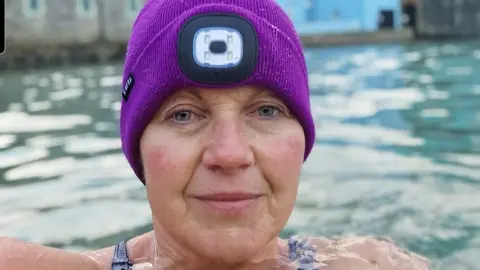
Sam Skyrme-Blackhall grew up in Tenby and knows the dangers the sea can pose
Sam Skyrme-Blackhall chairs Tenby Sea Swim Association, which runs the Boxing Day event.
She swims year-round and knows the challenges the water presents.
For the organised event, there are multiple safety measures in place, with marshals on the beach, surf lifesavers and the RNLI out at sea to watch festive dippers.
On land, St John Ambulance provides medical backup.
However, she believes things like picture-perfect social media portrayals of the coast can make people overestimate what they are capable of.
“It’s like a storybook, isn’t it? It’s all glossy but the reality is there are hidden dangers.
“These are tidal beaches – I check the tide times weekly to see where I am but also check the conditions.
“Listen to the professionals. Listen to the local people who have the knowledge.”
 Gareth Davies
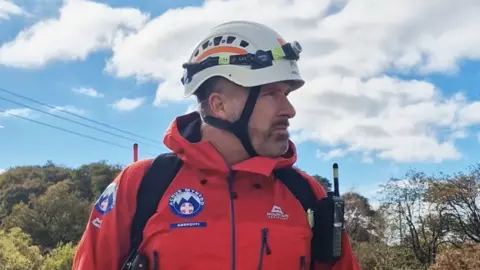
Gareth Davies has been with the Aberdyfi Search and Rescue Team for a decade
Sometimes AI can both help and hinder trips to the outdoors.
Aberdyfi Search and Rescue Team rescued two walkers who had used AI to plan their excursion up Cader Idris near Dolgellau, the highest peak in southern Eryri – also called Snowdonia.
Team leader Phil Britton and deputy leader Gareth Davies have over 50 years of experience between them, and were part of the rescue group.
The pair told Phil they had used AI to check the weather and for equipment suggestions – unfortunately, it was the day Storm Amy hit the UK.
Phil described the pair, new to mountain walking, as “reasonably well prepared”, adding: “If you had a list of stuff you should take, they had it.”
He says their inexperience meant they lacked the right judgement, whatever the information the AI had given them.
“I think they had a report of 60mph winds on top. To them it didn’t mean anything.
“In mountain rescue what we’re finding is, there’s all the information there, but it’s always interpreting it to the real-life situation if you haven’t got the experience.”
‘An error in judgement’
The pair had reached the summit and taken shelter in a hut, but had realised the situation was now beyond their capabilities.
This time, AI came to their rescue.
Gareth, who met the pair after they had been walked partway down the mountain by colleagues, said: “Someone said this is how they’d found out what to do. They’d spoken into an AI provider and said ‘we are stuck on a mountain in the UK, what do we do’?”
Gareth thinks the men were “no fools” and had the kit and the fitness for the trip but made “a little bit of an error in judgement”.
 Getty Images
Cader Idris is popular with walkers but at 893m the weather at the top can quickly turn bad
But it reinforces for him that there is no replacement for human experience.
Like Sam, he recommends seeking out local knowledge, either in person or via online forums.
“I’m a recreational walker. I’ve done some of the more tricky walks, but if an experienced walker said ‘it was a lot for me’, I’d probably want to go with a mate or someone who knew the mountain a bit better.”
For Phil, whether it’s AI, apps or phone batteries, there is a common theme: “Technology’s brilliant, but you’ve got to know its limitations.”